

Updated April 2026. Vancouver was named one of National Geographic’s “Best of the World 2026” destinations, and between FIFA World Cup matches at BC Place, 43,000 cherry trees in full bloom, and a coastline that hits mountains in under 20 minutes, the city has arguably never had a better year to visit.
This is the definitive guide to the best things to do in Vancouver, British Columbia — more than 30 attractions ranked for real value, every price in Canadian dollars, exact addresses, and the transit line you’ll actually take. We wrote it the way we’d brief a friend who just landed at YVR.
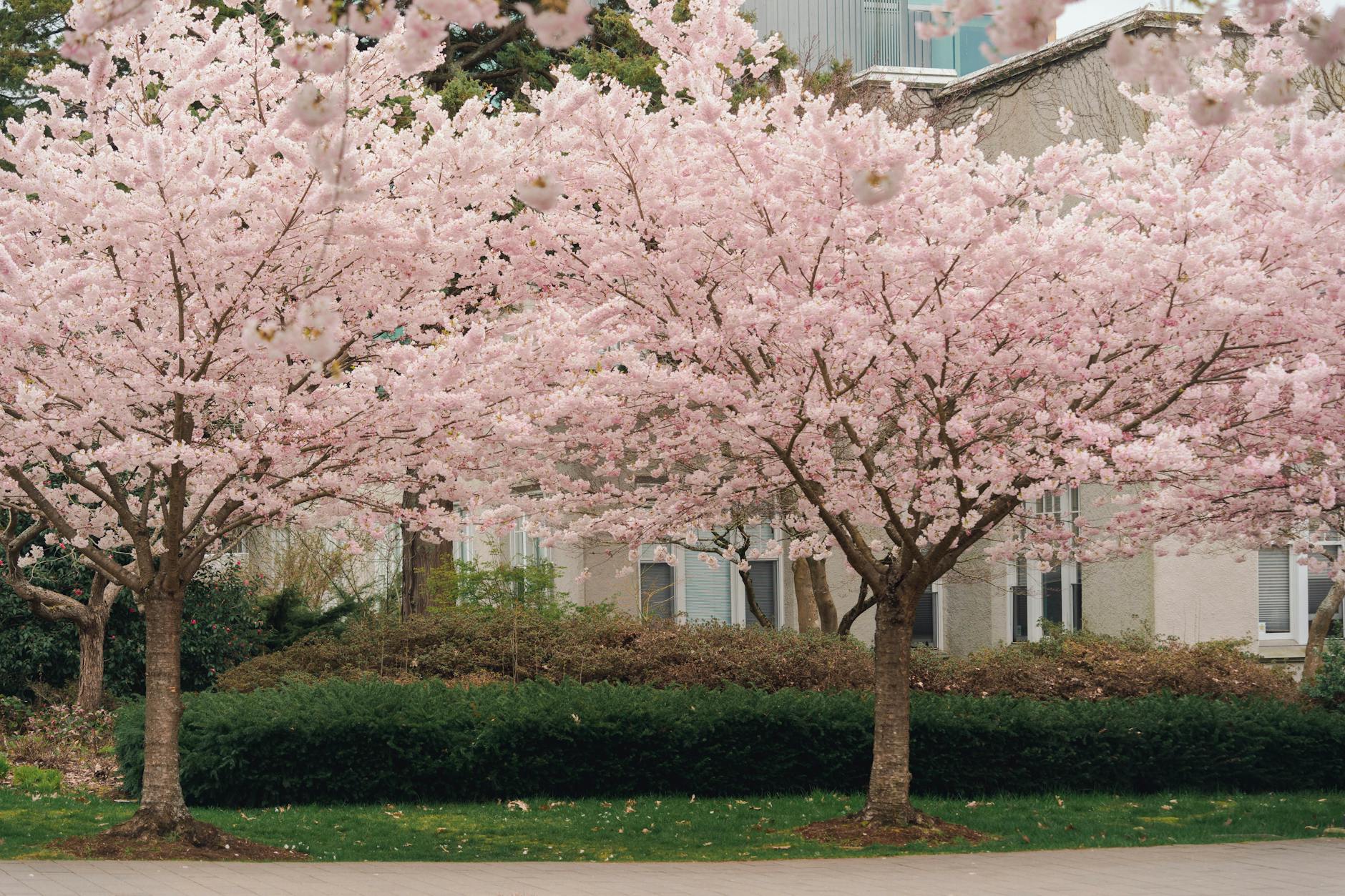
Table of Contents
- Vancouver’s Top 25 Attractions at a Glance
- Stanley Park: The Must-See Anchor
- Granville Island & the Public Market
- Capilano Suspension Bridge & Cliffwalk
- Grouse Mountain: The Peak of Vancouver
- Gastown: Heritage, the Steam Clock & the Evening Hangout
- FlyOver Canada & Canada Place
- Vancouver Lookout at Harbour Centre
- Vancouver Aquarium
- Museum of Anthropology at UBC
- Gardens & Green Spaces in the City
- Water Adventures: Aquabus, Whale Watching, Seaplane, Kayak
- North Shore Adventures (and the Free Alternative to Capilano)
- Neighborhoods Worth Building a Day Around
- FIFA World Cup 2026: Vancouver’s Biggest Tourist Year
- Attractions by Traveler Type
Looking for the best things to do in Vancouver? This guide ranks 50+ attractions by neighbourhood, price, and season — the only things-to-do-in-Vancouver list a 2026 visitor needs.
Quick picks: the top 10 things to do in Vancouver for first-timers are Stanley Park, Granville Island, the Capilano Suspension Bridge, Grouse Mountain, Gastown, Canada Place, Kitsilano Beach, VanDusen Gardens, the Museum of Anthropology, and the Seawall.
Vancouver’s Top 25 Attractions at a Glance
This is the shortlist — the 25 attractions every first-time visitor should at least consider, ranked by a blend of uniqueness, visitor reviews, and how well they represent what makes Vancouver, Vancouver. Detailed write-ups of each follow further down.
| # | Attraction | Neighborhood | Approx. cost (adult, CAD) | Time needed | Best for |
|---|---|---|---|---|---|
| 1 | Stanley Park & the Seawall | Downtown / West End | Free | 3–4 hrs | Everyone |
| 2 | Granville Island & Public Market | False Creek | Free entry | 2–4 hrs | Foodies, families |
| 3 | Capilano Suspension Bridge Park | North Vancouver | $69.95 | 3 hrs | Iconic photos |
| 4 | Grouse Mountain | North Vancouver | $89 Skyride | Half–full day | Views, adventure |
| 5 | Gastown & the Steam Clock | Gastown | Free | 1–2 hrs | Heritage, dining |
| 6 | FlyOver Canada | Canada Place | $33 | 1 hr | First-timers, rainy days |
| 7 | Vancouver Aquarium | Stanley Park | $47 | 2–3 hrs | Families |
| 8 | Museum of Anthropology (MOA) | UBC / Point Grey | $25 | 2–3 hrs | Culture, history |
| 9 | VanDusen Botanical Garden | Shaughnessy | $13.15 | 2 hrs | Gardens, spring |
| 10 | Queen Elizabeth Park | South Cambie | Free | 1–2 hrs | Views, picnics |
| 11 | Chinatown & Dr. Sun Yat-Sen Garden | Chinatown | $16 | 2 hrs | Culture |
| 12 | Vancouver Lookout | Downtown | $19.25 | 1 hr | City views |
| 13 | Science World | Main Street | $34.20 | 2–3 hrs | Families |
| 14 | Vancouver Art Gallery | Downtown | $29 | 1–2 hrs | Art lovers |
| 15 | Lynn Canyon Suspension Bridge | North Vancouver | Free | 2–3 hrs | Budget travelers |
| 16 | Aquabus + False Creek | Downtown | $4–8 | 30 min | Easy sightseeing |
| 17 | Whale watching tour | Coal Harbour / Granville Island | $175–225 | 4–5 hrs | Wildlife |
| 18 | Harbour Air Seaplane | Coal Harbour | $129+ | 20–30 min | Bucket list |
| 19 | Deep Cove & Quarry Rock | North Vancouver | Free | Half day | Hikers |
| 20 | Museum of Vancouver | Kitsilano | $20 | 1–2 hrs | History |
| 21 | Bill Reid Gallery | Downtown | $13 | 1 hr | Indigenous art |
| 22 | Kitsilano Beach | Kitsilano | Free | Half day | Summer chill |
| 23 | Bloedel Conservatory | QE Park | $8 | 45 min | Rainy days |
| 24 | Chinatown Storytelling Centre | Chinatown | $12 | 1 hr | Hidden gem |
| 25 | Indigenous-led walking tour | Various | $45–95 | 1.5–3 hrs | Meaningful travel |
Stanley Park: The Must-See Anchor
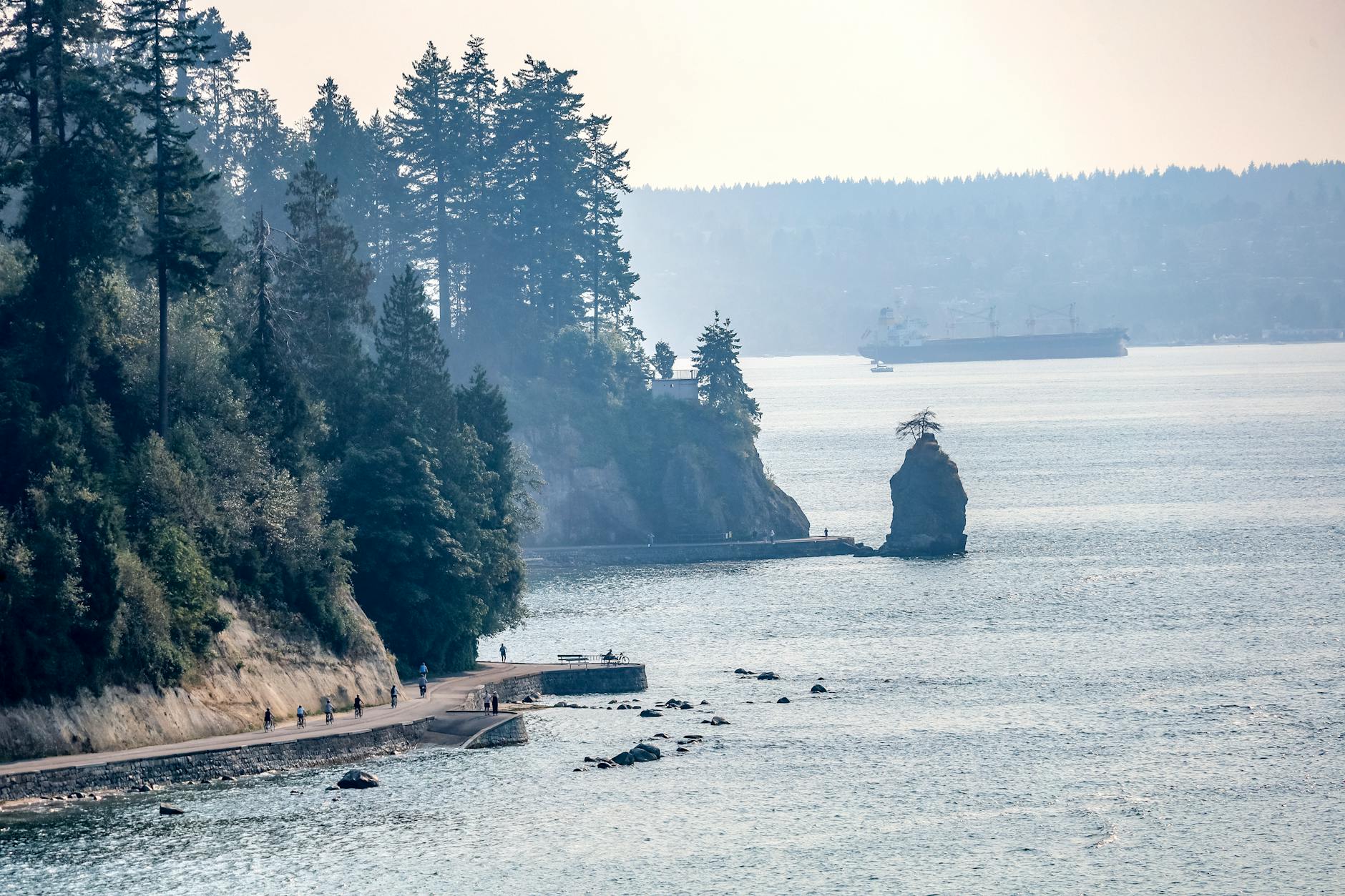
If you have time for only one thing in Vancouver, make it Stanley Park. At 405 hectares — 10% bigger than New York’s Central Park — this isn’t just a park, it’s an old-growth rainforest that the city grew around rather than paved over. It’s also the traditional territory of the xʷməθkʷəy̓əm (Musqueam), Sḵwx̱wú7mesh (Squamish), and Səl̓ílwətaʔ/Selilwitulh (Tsleil-Waututh) Nations, and that heritage is woven into how the park is interpreted today.
The Seawall: Vancouver’s Signature Walk
The Stanley Park Seawall is a flat, 9.5-km paved path that loops around the park’s perimeter. Walking the full loop takes 2.5–3 hours; cycling it (counter-clockwise only) takes about 60 minutes at a leisurely pace. Rental bikes start around $10/hour from Spokes Bicycle Rentals (1798 W Georgia St) right at the park entrance. The seawall is part of a larger 28-km waterfront path that continues through Coal Harbour, False Creek, and out to Kitsilano.
Brockton Point Totem Poles & the new Totem Talks Tour
Nine totem poles stand at Brockton Point, making them one of British Columbia’s most-visited attractions. As of 2025, Destination Vancouver and local Indigenous knowledge keepers run a free Totem Talks tour (typically June–September, daily at 11 a.m. and 2 p.m.) that explains the stories, carvers, and living traditions behind each pole. It’s the respectful, accurate way to engage with these monuments and it’s one of the highest-value free experiences in the city.
Other Stanley Park Highlights
- Prospect Point — the park’s highest point, with straight-on views of the Lions Gate Bridge and North Shore mountains.
- Siwash Rock — a 32-million-year-old sea stack visible from the seawall between Third Beach and Prospect Point.
- Third Beach & Second Beach — calmer than English Bay, with a saltwater outdoor pool at Second Beach (open late May–September, $6.25 adults).
- Rose Garden & Shakespeare Garden — peak bloom late June through August.
- Stanley Park Nature House (free) at Lost Lagoon — great for kids interested in local wildlife.
Getting there: The #19 Stanley Park bus runs along W Pender St and into the park loop. On foot, it’s a pleasant 15-minute walk from Burrard SkyTrain Station along the Coal Harbour waterfront. Drivers: pay-and-display parking runs $4–8/hour (April–September) depending on lot.
Granville Island & the Public Market
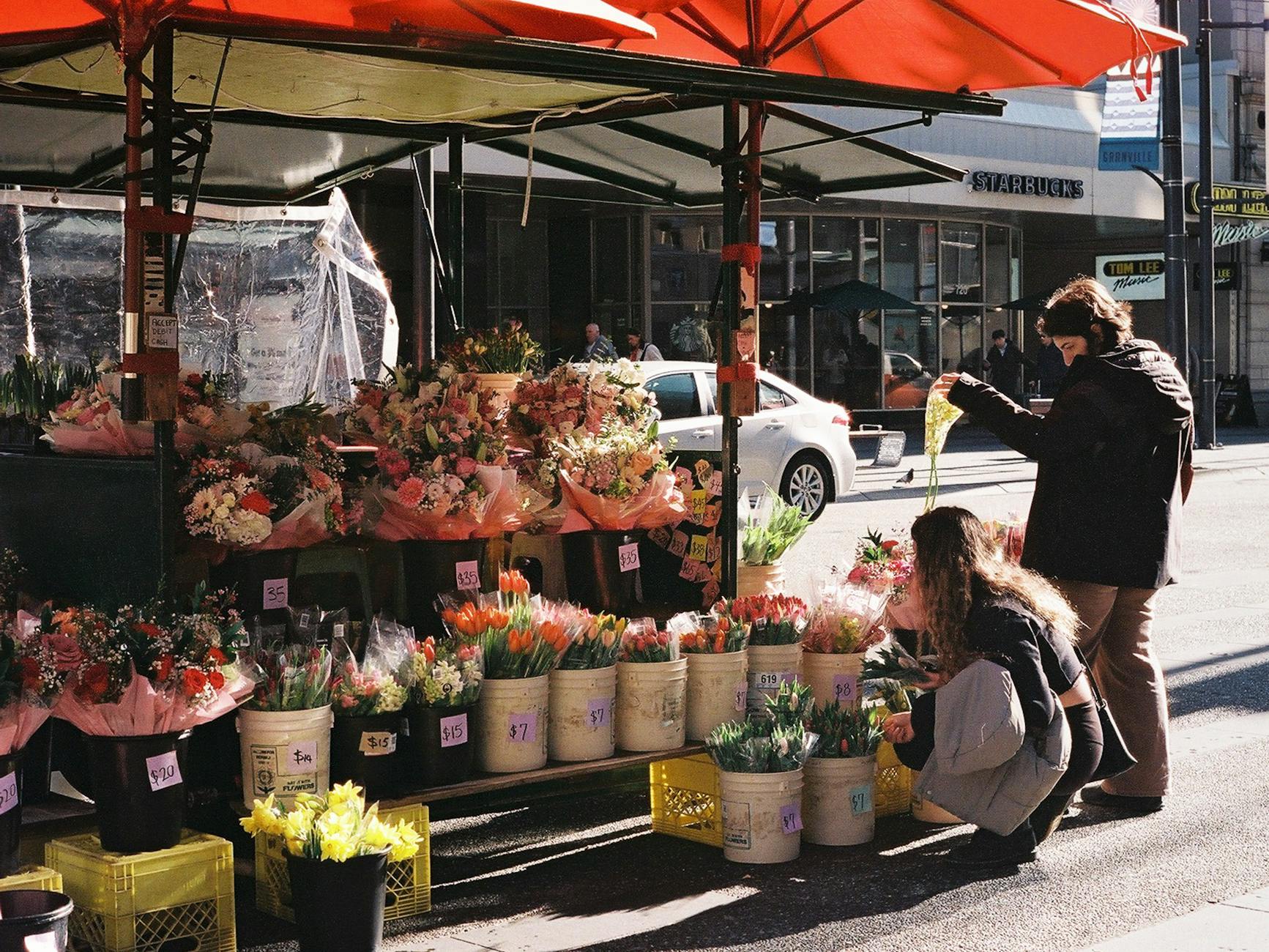
Granville Island isn’t really an island — it’s a peninsula under the south side of Granville Bridge — but it’s a genuine working waterfront, and that’s what keeps it from feeling like a tourist trap. The Public Market (50 vendors; open daily 9 a.m.–6 p.m.) is anchored by stalls that have been there for decades: Lee’s Donuts (try the honey-glazed), Oyama Sausage Co., Siegel’s Bagels, Stuart’s Bakery, and a seafood counter where you can eat fresh-shucked oysters over a crushed-ice tray.
Beyond the market, the Island hosts:
- Kids Market — two levels of toy shops plus the newly expanded Adventure Zone (opened 2024) with indoor climbing and VR exhibits.
- Artisan studios — glass-blowers, potters, letterpress printers working behind glass walls. Free to watch.
- Granville Island Brewing — Canada’s first microbrewery (est. 1984); $12 flight tastings.
- Net Loft — independent paper, yarn, jewelry, and bookstores tucked into a converted industrial building.
Getting there: The best approach is by water. The Aquabus rainbow mini-ferries run every 5–10 minutes from Hornby Street or Yaletown (fare $4–8 depending on zone). It’s part of the experience. Alternatively, bus #50 from Downtown drops you right at the entrance. Driving is possible but weekend parking is a blood sport — try the 3-hour free lot under Granville Bridge if you arrive before 10 a.m.
Capilano Suspension Bridge & Cliffwalk
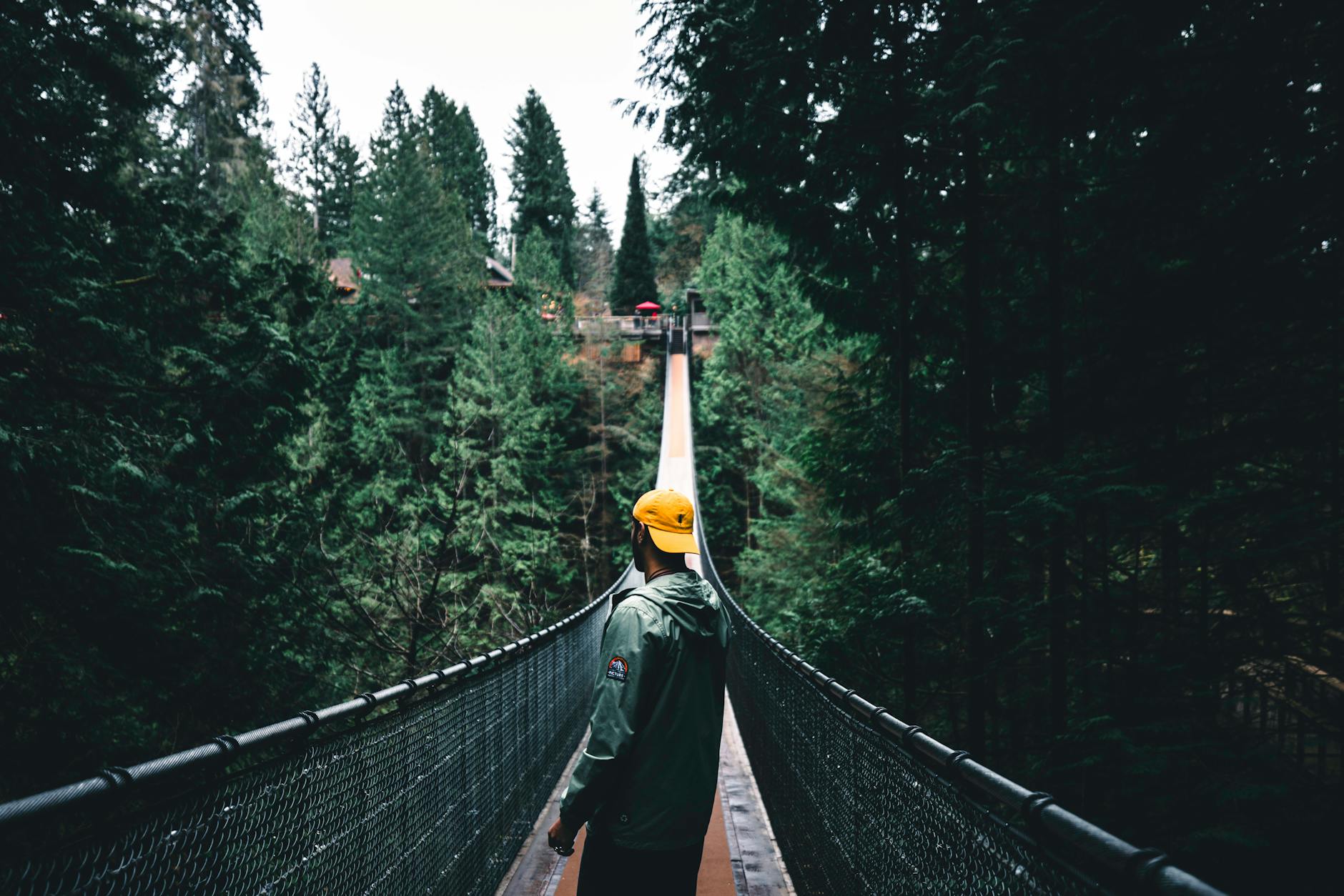
The original Capilano Suspension Bridge has been here since 1889 and it’s still the single most-photographed attraction in Vancouver — about 800,000 people cross it every year. You walk 137 metres across a swaying cedar-plank deck suspended 70 metres above the Capilano River. The bridge itself takes about three minutes to cross, but the park around it is much bigger than you think: the Treetops Adventure winds through a series of seven smaller suspended bridges among 250-year-old Douglas firs, and the Cliffwalk is a glass-and-steel walkway that cantilevers out over the canyon.
2026 adult admission: $69.95 (youth 13–16: $49.95; children 6–12: $21.95; under 5 free). Allow 2.5–3 hours.
Getting there without a car: A free shuttle runs every 15 minutes from downtown pickup points (Canada Place, Westin Bayshore, Blue Horizon, Hyatt Regency, and Melia). You can also take the SeaBus to Lonsdale Quay and transfer to bus #236 (free with transit ticket).
Money-saving tip: If Capilano’s price tag stings, Lynn Canyon (see below) has a 50-metre suspension bridge and it’s completely free. It’s smaller and less polished, but the canyon itself is arguably more dramatic.
Grouse Mountain: The Peak of Vancouver
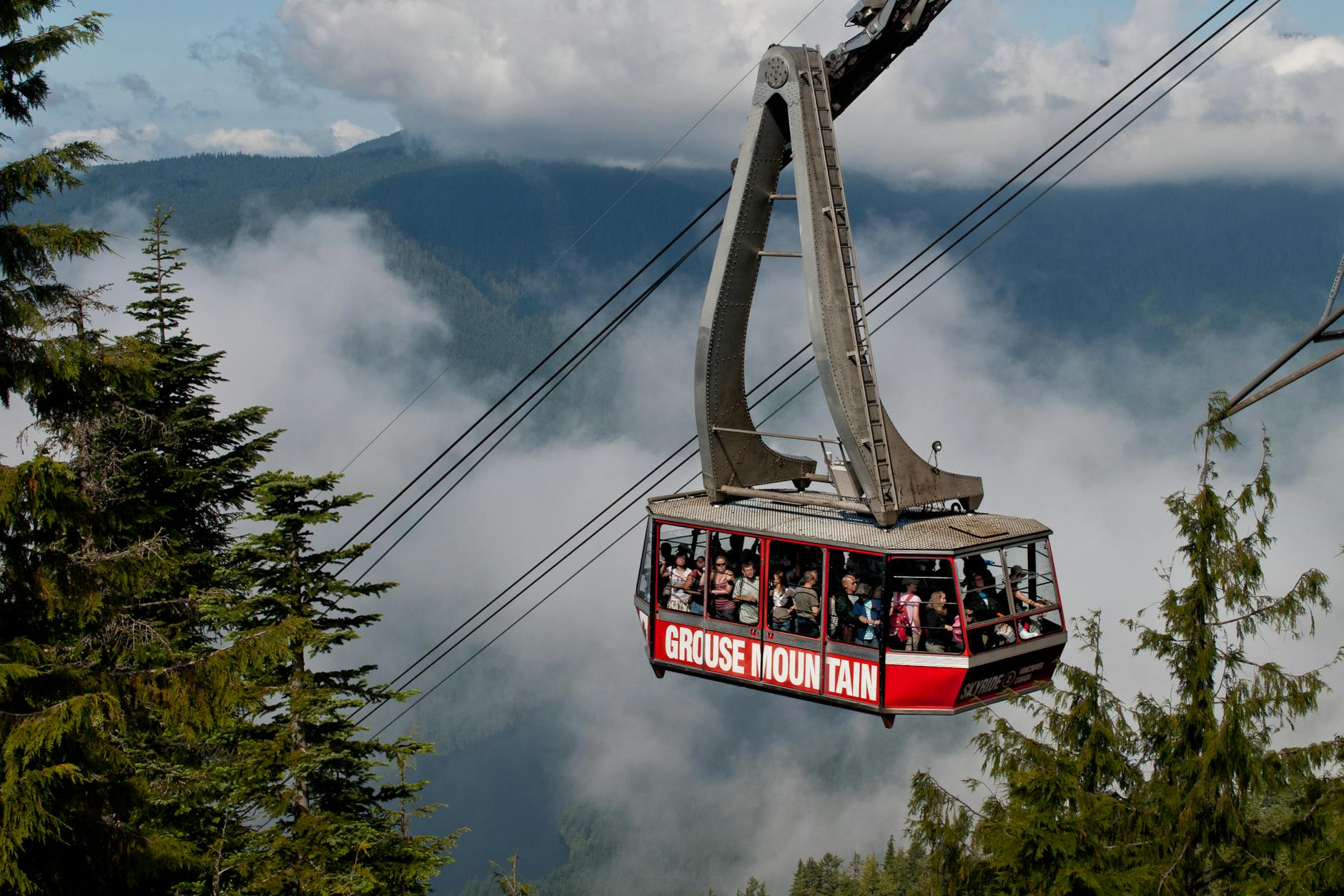
Grouse is the most accessible of the three North Shore ski mountains — the base is 20 minutes from downtown by car. The Skyride aerial tram ($89 round-trip, 2026 gate rate) whisks you 1,250 metres up in about eight minutes, and from the top you get a panorama that includes downtown Vancouver, Vancouver Island, and on clear days Mount Baker rising over Washington State.
What’s actually up there:
- Eye of the Wind — a 20-metre-tall observation pod on top of an active wind turbine; Canada’s only such attraction.
- Grizzly bear habitat — resident bears Grinder and Coola in a 2-hectare natural enclosure (April–November).
- Lumberjack Show — a surprisingly charming live-axe throwing and pole-climbing show, multiple shows daily May–October.
- Grouse Gravity Coaster (opened 2025) — a 298-foot alpine coaster descent, included in Ultimate day pass.
- Grouse Bike Park (summer 2025 expansion) — 11 lift-accessed mountain bike trails from beginner green to advanced black, bike and armor rentals on-site.
- Ice skating pond — winter only, free with admission.
The free alternative: The Grouse Grind is a 2.9-km hiking trail that climbs the same 853 metres of elevation — locals call it “Mother Nature’s Stairmaster.” Hike up (60–90 minutes; fit hikers can do it in 40), then take the Skyride down for a reduced rate of $20. The Grind is typically open May through October.
Gastown: Heritage, the Steam Clock & the Evening Hangout
Gastown is Vancouver’s oldest neighborhood, named for the steam-powered saloonkeeper “Gassy Jack” Deighton who opened the city’s first bar here in 1867. Red-brick warehouses were preserved as a National Historic Site in 1971 and today the neighborhood is where the best design, cocktail bars, and independent boutiques live.
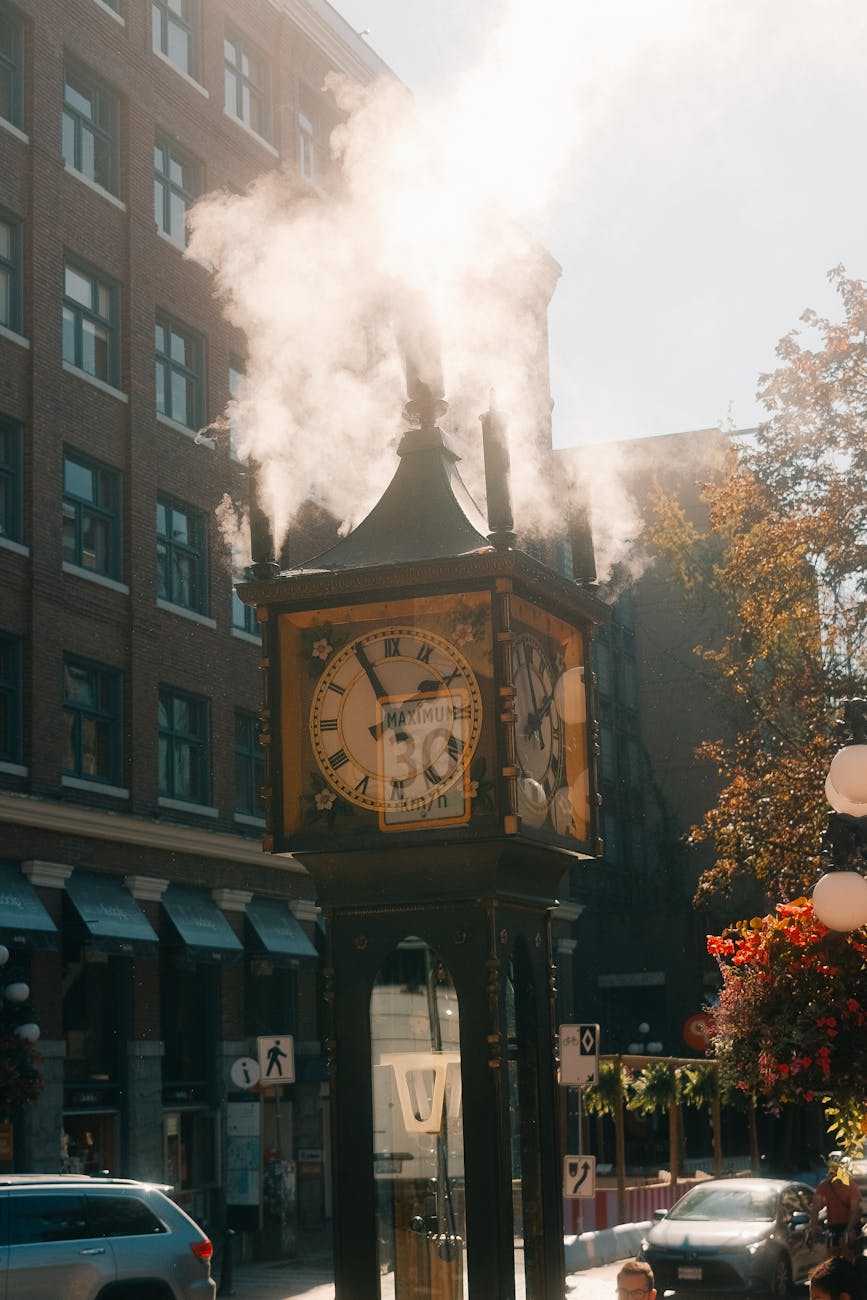
The Steam Clock at Cambie & Water Street is, frankly, an Instagram trap — it’s one of the only working steam-powered clocks in the world, but it was built in 1977, not 1877. Still, stand across the street at the top of the hour and watch the whistle-blowing routine once; it’s a fun minute.
What actually makes Gastown worth an evening:
- L’Abattoir — farm-to-table in a former jail-turned-restaurant; $75–110 per person.
- The Diamond — upstairs cocktail bar behind an unmarked door; consistently rated among Canada’s top 50.
- Alibi Room — craft beer with 60+ rotating taps.
- Nelson the Seagull — daytime coffee and sourdough that locals actually go to.
- Independent shops on Water St — John Fluevog shoes, Inform Interiors, and Old Faithful Shop for curated homeware.
Safety note: The eastern edge of Gastown borders the Downtown Eastside, which has visible poverty and an ongoing opioid crisis. Stick to Water, Cordova, and Alexander streets west of Columbia and you’ll be in the heart of the tourist district. Read more in our safety guide for visitors.
FlyOver Canada & Canada Place
Canada Place is that white-sailed building you’ll see in every Vancouver postcard. It’s simultaneously the cruise ship terminal, the convention centre, and home to FlyOver Canada — an “immersive flight” experience where you’re strapped into a seat that lifts off the floor in front of a 20-metre spherical screen. You glide over the Rocky Mountains, Niagara Falls, the Maritimes, and the Northern Lights. It’s kitschy and it’s a little bit magic. $33 adult; kids $23; sessions every 30 minutes, 10 a.m.–9 p.m.
The Canada Place promenade is free and worth a sunset stroll. Look for the Canadian Trail embedded in the pavement — a 300-metre coast-to-coast walkable map of Canadian history.
Vancouver Lookout at Harbour Centre
The Lookout is a 169-metre-tall observation deck reached by a glass elevator that rockets up the outside of the building in 40 seconds. It’s $19.25 for a 360° panorama that stays valid all day — so buy once, go up at golden hour, then again after dark. There’s a revolving restaurant (Top of Vancouver) at the top if you want to turn it into dinner.
If you’ve already done Grouse Mountain, the Lookout is skippable. If you haven’t, it’s a solid orienting stop on your first day.
Vancouver Aquarium
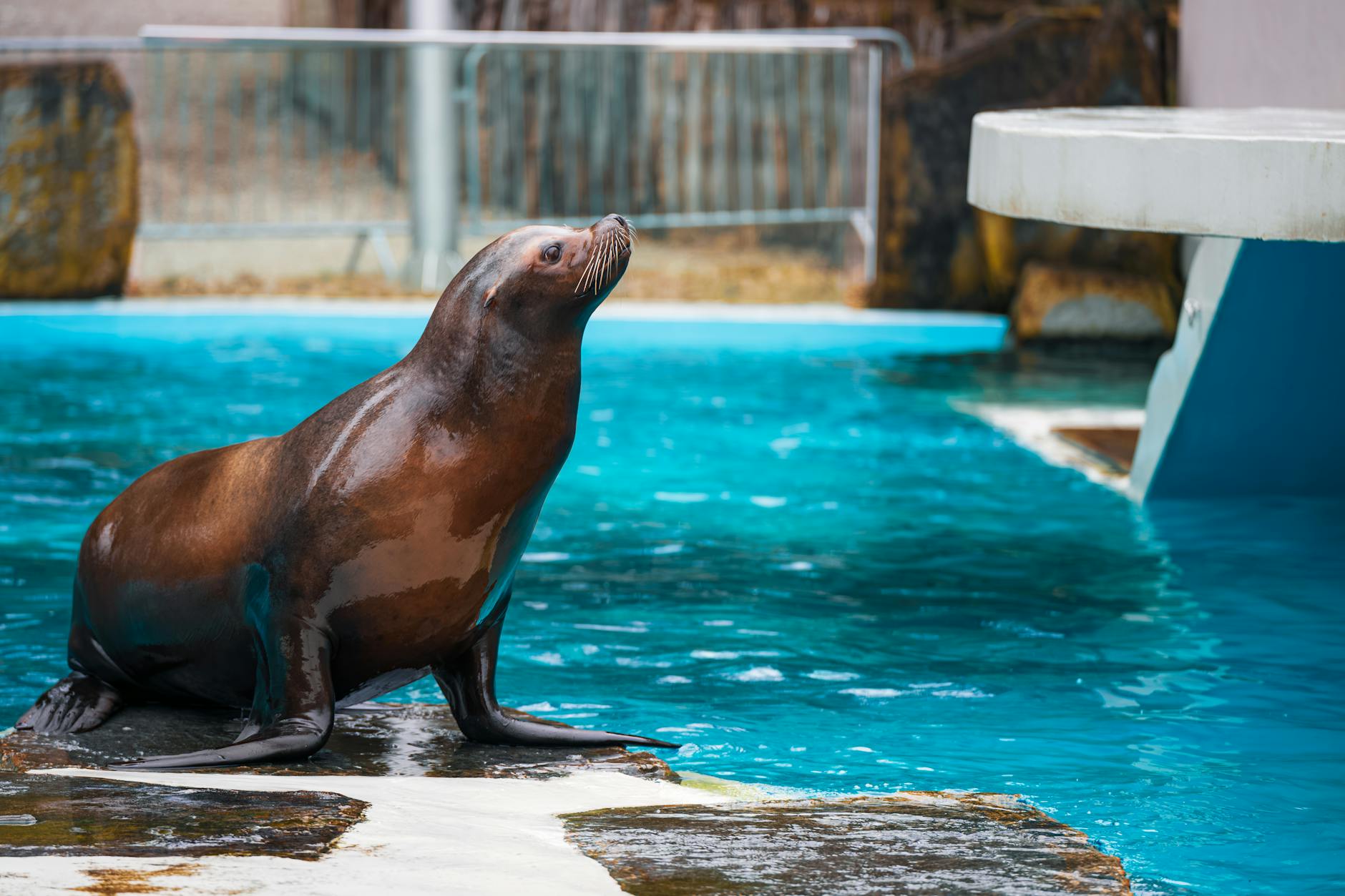
Canada’s largest aquarium, inside Stanley Park, is a rainy-day staple. Since phasing out its cetacean program in 2017, the focus has shifted to rescue, research, and Pacific species: sea otters, jellyfish, a Treasures of the BC Coast gallery, and the 4-D Theatre. $47 adult / $27 child (5–12). Expect 2–3 hours.
If you only have time for one family attraction and kids are between 4 and 10, we’d pick the Aquarium; between 10 and 14, we’d pick Science World.
Museum of Anthropology at UBC
The MOA is a Pacific Northwest masterpiece designed by Arthur Erickson. The Great Hall’s 15-metre glass walls frame totem poles and Haida longhouse forms against Burrard Inlet. The museum holds over 50,000 objects from around the world but is most celebrated for its collection of First Nations art, including Bill Reid’s Raven and the First Men cedar sculpture, arguably the single most important artwork in British Columbia.
$25 adult; $23 senior/student; free every Thursday 5–8 p.m. (2026). The #4 or #14 bus from Downtown reaches UBC campus in 40 minutes. Plan 2–3 hours inside and add an extra hour for the outdoor totem pole park and Nitobe Memorial Garden next door.
Gardens & Green Spaces in the City
VanDusen Botanical Garden
22 hectares of themed gardens in the heart of the city. Peak visit times: late April (laburnum walk golden arches in full bloom), late May/June (roses and perennials), and late November through early January for the Festival of Lights, when 1 million bulbs turn the grounds into a seasonal holiday spectacle. $13.15 adult summer rate; $8.50 winter.
Queen Elizabeth Park & Bloedel Conservatory
At 152 metres, QE Park is the highest point in Vancouver proper — which means unobstructed sightlines from the Quarry Gardens (built into a former basalt mine) all the way to the North Shore mountains. It’s free and popular for wedding photos. Inside the domed Bloedel Conservatory, 200 free-flying tropical birds and 500 exotic plants make it a go-to rainy-day stop ($8 adult).
Dr. Sun Yat-Sen Classical Chinese Garden
The first authentic Ming-era scholar’s garden built outside China, completed in 1986. Every tile, timber, and stone was hand-crafted by artisans using 14th-century techniques. Guided tours run hourly and are included in admission ($16 adult). If you have 30 minutes and no budget, the free adjacent Dr. Sun Yat-Sen Park next door gives you a taste.
Water Adventures: Aquabus, Whale Watching, Seaplane, Kayak
Vancouver is a water city — almost every pillar of the skyline faces a working harbour — so the best way to understand its geography is to get out on it.
False Creek Ferries & the Aquabus
Two competing services run tiny passenger ferries around False Creek (the inlet between Downtown and Kitsilano). Both are $4–8 per zone, both run every 5–10 minutes in summer, and both will deliver you to Granville Island, Yaletown, Olympic Village, the Maritime Museum, or Science World. Day passes are about $17. Honestly, it’s the most charming $5 you’ll spend on Vancouver transport.
Whale Watching
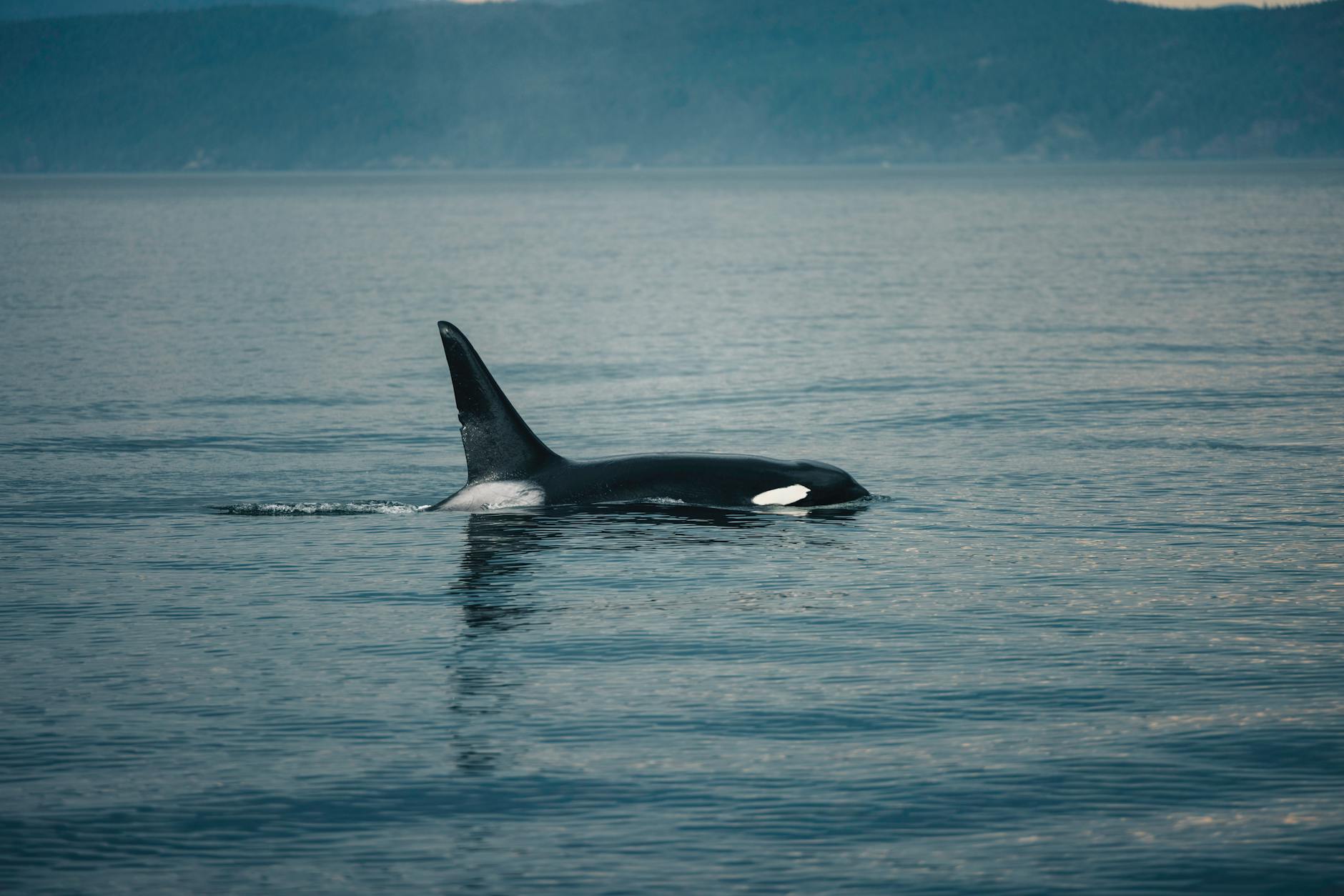
From April through October, whale watching tours depart daily from Coal Harbour and Granville Island. You’re looking for orcas (both resident and transient Bigg’s populations), humpbacks, minkes, harbour porpoises, sea lions, and bald eagles. Trips run 3–5 hours on open-deck Zodiacs ($175–225 adult) or covered catamarans (slightly pricier but easier in cold weather). Prince of Whales, Wild Whales Vancouver, and Vancouver Whale Watch are the three best-reviewed operators. Spotting rates in peak season (June–September) run above 90%.
Harbour Air Seaplane Tours
A 20–30-minute scenic flight from Coal Harbour over the harbour, Stanley Park, and the North Shore mountains runs from $129. It’s Vancouver’s signature bucket-list experience and it’s cheaper than most people expect. If you’re coming from Victoria or Nanaimo, Harbour Air also runs scheduled passenger service.
Kayak & Stand-Up Paddleboard
Ecomarine and Jericho Beach Kayak rent sit-on-top kayaks ($50/2 hr) and SUPs out of Jericho Beach, Kitsilano Beach, and English Bay. Beginners should stick to the protected waters of False Creek. For a guided Indigenous-led paddle, check out Takaya Tours, run by the Tsleil-Waututh Nation.
North Shore Adventures (and the Free Alternative to Capilano)
Lynn Canyon Suspension Bridge
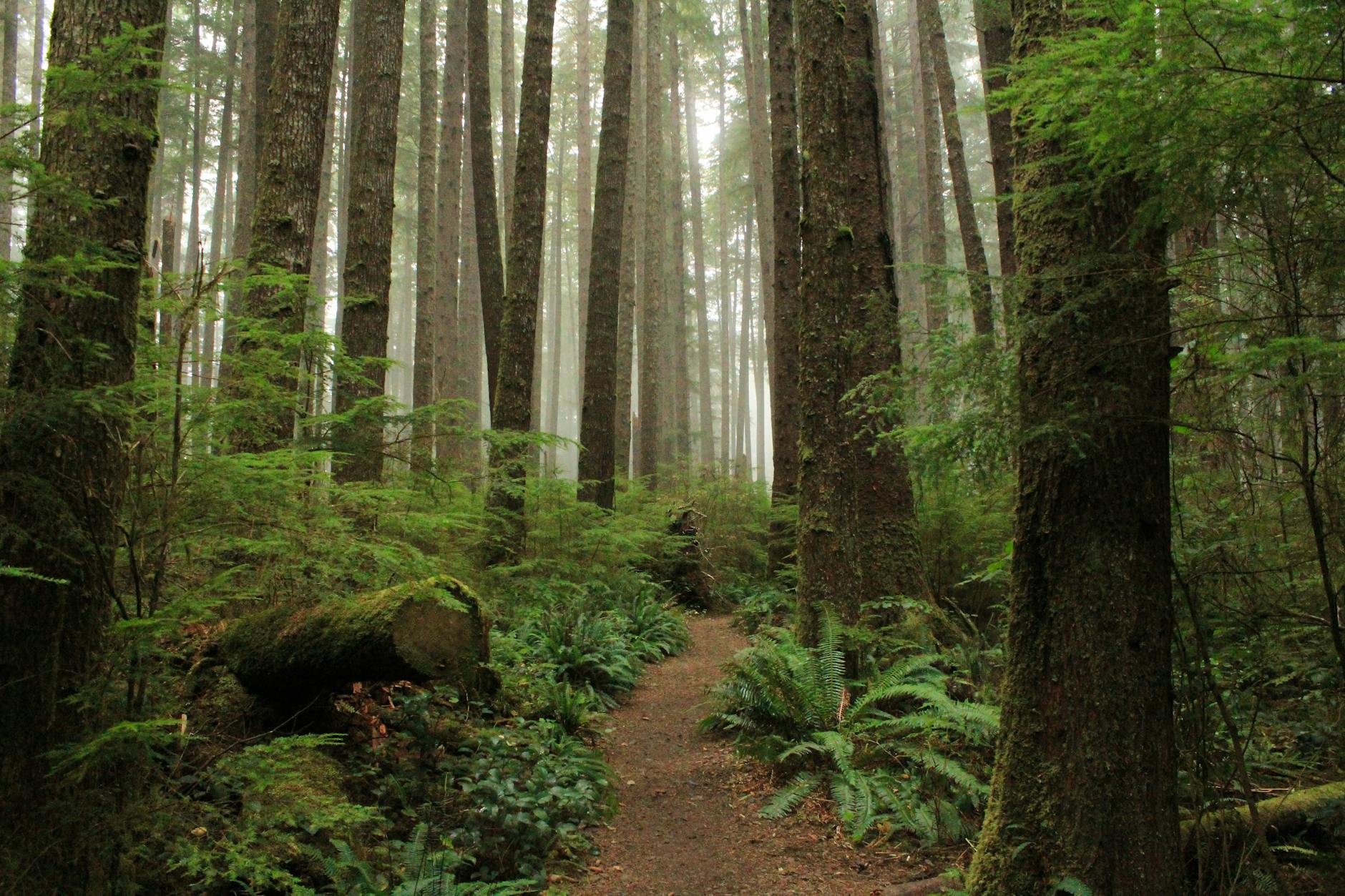
A 50-metre suspension bridge, 50 metres above a turquoise canyon, surrounded by second-growth rainforest — and it’s completely free. Lynn Canyon Park is smaller than Capilano and has no Cliffwalk or Treetops equivalent, but the setting is arguably more dramatic and a fraction as crowded. Take the SeaBus to Lonsdale Quay and transfer to bus #227.
Deep Cove & Quarry Rock
Deep Cove is a village of fewer than 5,000 people at the eastern end of Indian Arm, and it’s one of the prettiest half-day escapes you can do on transit. The Quarry Rock hike is a 3.8-km round-trip climb that ends at a granite outcrop with a jaw-dropping view of the fjord. Reward yourself at Honey Doughnuts & Goodies (the honey-dipped is the move). Bus #212 from Phibbs Exchange gets you there in 20 minutes.
Cleveland Dam & Capilano River Regional Park
Just uphill from Capilano Suspension Bridge. The dam holds back the reservoir that supplies a third of Metro Vancouver’s drinking water, and the viewing platform gives you a mountain panorama and a salmon-ladder view of the river below — again, free.
Neighborhoods Worth Building a Day Around
Chinatown
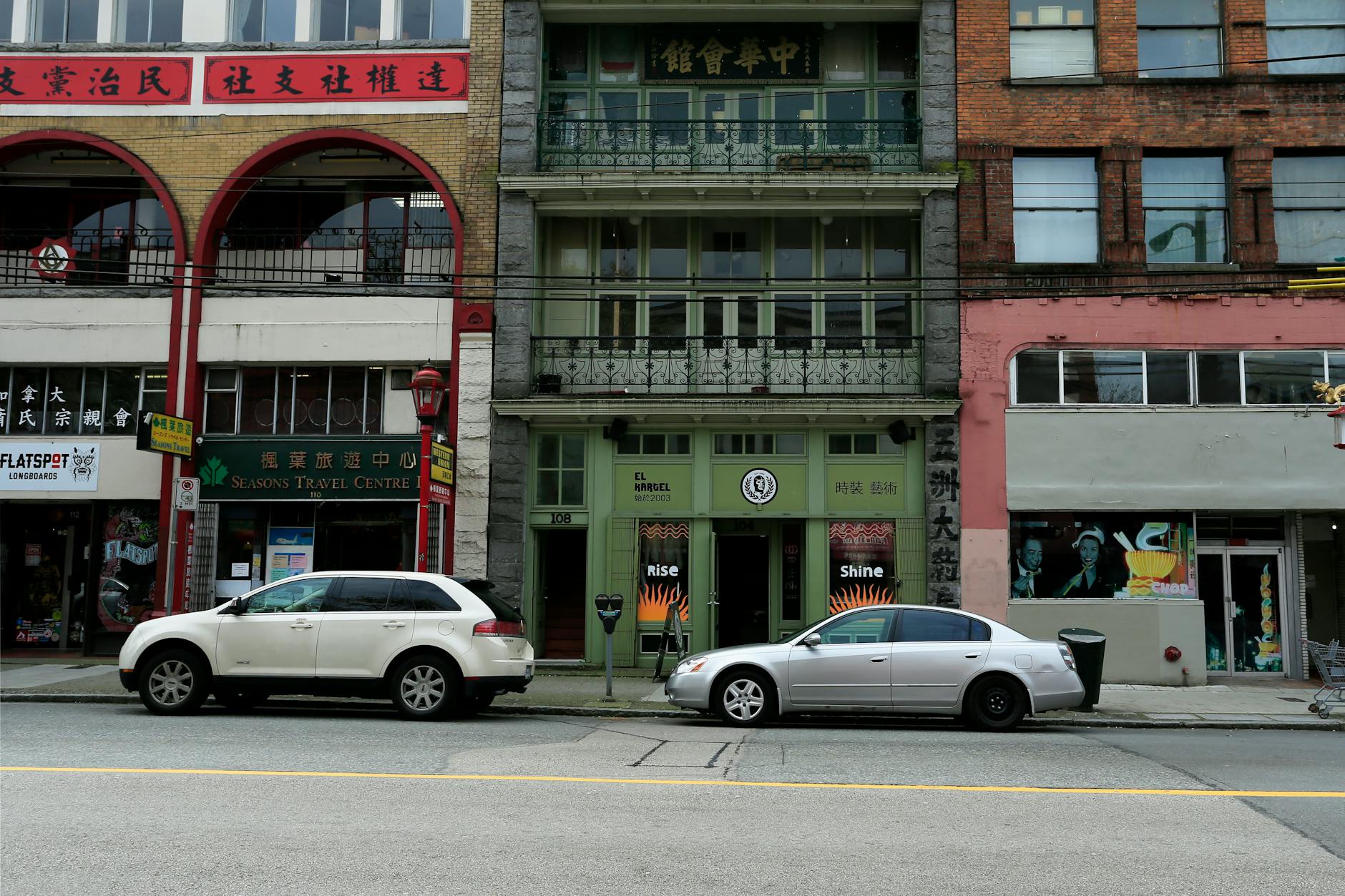
Vancouver has the third-largest Chinatown in North America after San Francisco and New York. Start at the Millennium Gate on Pender Street, visit Dr. Sun Yat-Sen Garden, then duck into the Chinatown Storytelling Centre (168 E Pender; $12) — Canada’s only permanent Chinese-Canadian history museum, opened in 2021. Lunch at New Town Bakery (pork buns and apple tarts) or Kent’s Kitchen for the classic three-item-combo tray.
Kitsilano
West-side surf-town-meets-yoga-studio vibe. The 500-metre Kits Beach is Vancouver’s most social summer beach, with beach volleyball courts, a heated outdoor pool, and a grassy area that becomes an impromptu picnic carpet on warm evenings. West 4th Avenue is the shopping and café strip. The Museum of Vancouver and H.R. MacMillan Space Centre share a waterfront building at Vanier Park.
Mount Pleasant & the Brewery District
Main Street between 5th and 25th Avenue is where locals eat, drink, and second-hand shop. Main & 5th (sometimes called the Brewery District) has six craft breweries within a four-block walk: 33 Acres, Red Truck, Brassneck, Main Street Brewing, R&B Brewing, and Faculty. Most run $10 flights and close at 11 p.m.
Commercial Drive (“The Drive”)
Vancouver’s most eclectic commercial strip — Italian cafés from the 1960s sit next to Ethiopian restaurants, vegan bakeries, and thrift stores. Grab an espresso at Caffè Calabria and walk north to Grandview Park.
FIFA World Cup 2026: Vancouver’s Biggest Tourist Year
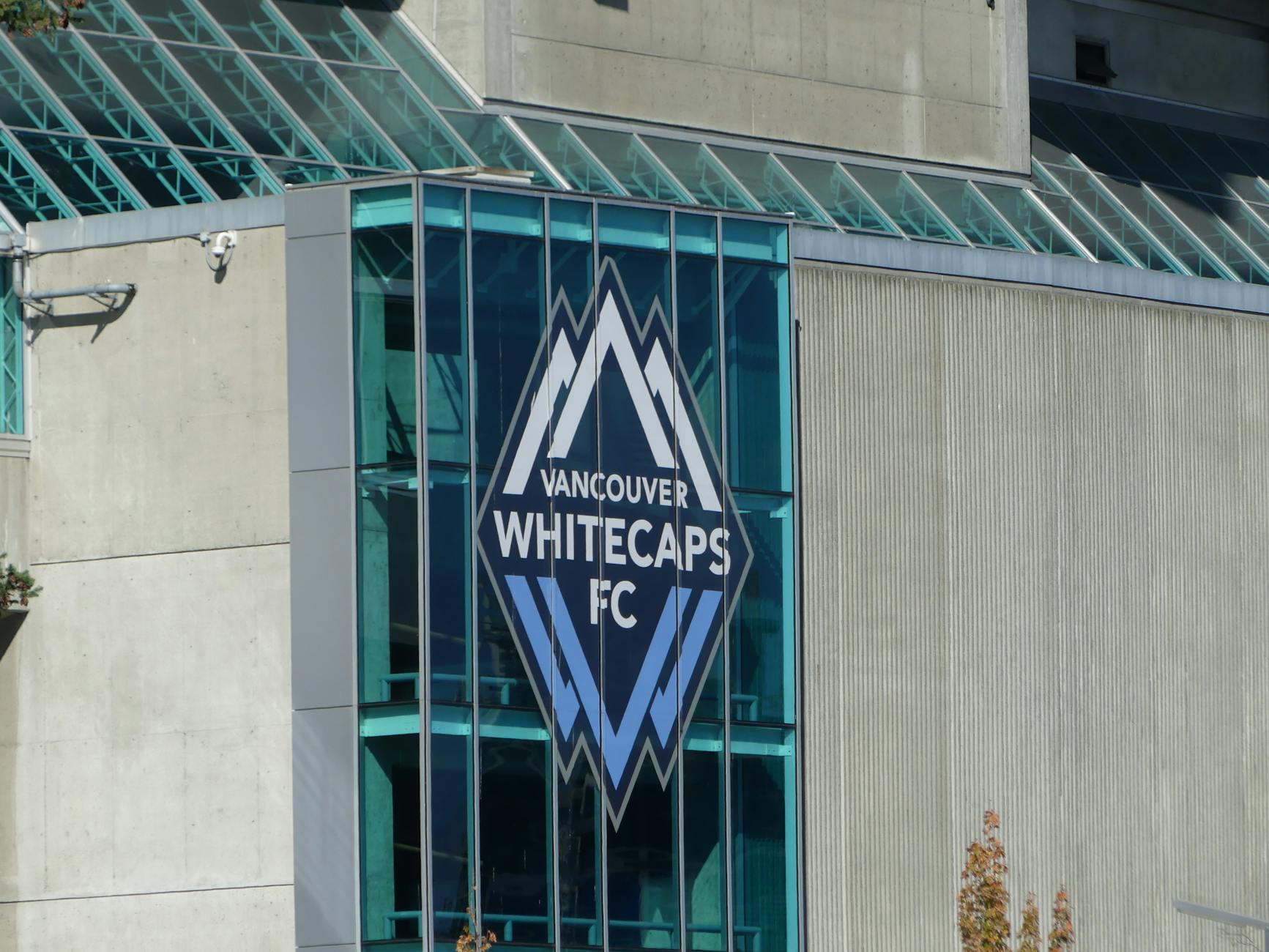
Between June 13 and July 7, 2026, BC Place will host seven FIFA World Cup matches, including Canada’s group-stage openers and both Round of 32 and Round of 16 knockout games. Vancouver is one of only two Canadian host cities (the other is Toronto), and city officials expect over one million visitors during the tournament window.
Key dates at BC Place (2026):
- June 13 — Australia vs. Turkey (Group A)
- June 18 — Canada vs. Qatar (Group B)
- June 21 — New Zealand vs. Egypt (Group E)
- June 24 — Switzerland vs. Canada (Group B)
- June 26 — New Zealand vs. Belgium (Group E)
- July 2 — Round of 32 match
- July 7 — Round of 16 match
If you’re visiting during World Cup windows, book accommodation now — downtown hotel rates are running 300–800% above normal, and walking-distance inventory near BC Place is extremely thin. Alternatives: North Vancouver (20-minute SeaBus), Burnaby (Brentwood or Metrotown SkyTrain), or New Westminster.
Fan zones are planned for Larwill Park, Jack Poole Plaza, and the PNE. Even without match tickets, downtown Vancouver during World Cup weekends is going to be extraordinary — think bagpipe-and-flag crowds crossing the Burrard Bridge to free live screenings.
Attractions by Traveler Type
Families with Kids
If you have four days, we’d hit: Stanley Park (train, playground, water park at Lumberman’s Arch), Vancouver Aquarium, Kids Market on Granville Island, Science World, Grouse Mountain (bears and lumberjacks), and Capilano Suspension Bridge. All manageable with a stroller. Free kid wins: Lumberman’s Arch water park (July–August), Stanley Park Nature House, and any of the beaches.
Couples & Romantic Getaways
A seaplane tour over the harbour at golden hour, followed by dinner at Miku (aburi sushi overlooking Canada Place). Walk the Coal Harbour seawall hand-in-hand. Spend a morning at VanDusen Garden and an afternoon at the Vancouver Art Gallery. Stay in Yaletown (elegant) or the West End (walkable, slightly quieter).
Budget Travelers
You can have a phenomenal 3-day Vancouver trip for less than $100/day in attractions. Every item on this list is free: Stanley Park Seawall, Brockton Point totem poles, Lynn Canyon, Queen Elizabeth Park, Canada Place promenade, Granville Island (entry), Kitsilano Beach, Cleveland Dam, Jericho Beach, the Vancouver Public Library central branch (architectural marvel), and the Vancouver Art Gallery on the first Friday evening of every month (by donation).
Accessibility
Stanley Park Seawall is flat, paved, and fully wheelchair accessible. The Aquabus and False Creek Ferries have accessible boats. Capilano Suspension Bridge is step-free to the main bridge (the Treetops Adventure has stairs). The Vancouver Aquarium, Science World, Museum of Anthropology, and Vancouver Art Gallery are all fully accessible. Adaptive seating is available at BC Place for World Cup matches. TransLink’s SkyTrain and SeaBus are both 100% wheelchair accessible. Access Vancouver is the official accessibility resource from Destination Vancouver.
LGBTQ+ Travelers
Vancouver is one of the most LGBTQ+-friendly cities in North America — Canada legalized same-sex marriage in 2005 and the Davie Village (between Burrard and Jervis) has been the city’s gay neighborhood since the 1970s. Davie Street has pink bus stops, rainbow crosswalks, and anchor venues like Celebrities Nightclub, The Fountainhead Pub, and Numbers. Vancouver Pride takes over downtown the first weekend in August. Year-round, the Davie Village Business Improvement Association runs an LGBTQ+ visitor concierge.
How to See Vancouver in 1 Day, 3 Days, or a Week
For in-depth itineraries, see our dedicated guides (1-day, 3-day, 5-day, and 7-day). The quick summary:
One-day Vancouver
Sunrise Stanley Park Seawall (bike rental), coffee in Gastown, lunch at Granville Island Public Market, Aquabus around False Creek, sunset at Prospect Point or English Bay. Skip the North Shore.
Three-day Vancouver (the sweet spot)
Day 1: Stanley Park, Gastown, Canada Place, Vancouver Lookout. Day 2: Capilano, Grouse Mountain, Lynn Canyon. Day 3: Granville Island, VanDusen Garden or Museum of Anthropology, Kitsilano Beach. Three days is the length most visitors should plan for.
Seven days + Whistler
Add days 4–5 for Whistler (2 hours up the Sea to Sky), day 6 for Victoria (ferry day trip), and day 7 for whale watching or a day trip to Bowen Island or Squamish.
Vancouver Attraction Passes: Worth It?
The math on the two main passes, 2026 rates:
| Pass | Cost (adult) | What’s included | Worth it if… |
|---|---|---|---|
| Vancouver Attractions Pass (City Experiences) | $139 / 3 days | FlyOver Canada, Vancouver Lookout, Hop-On/Off bus, Aquabus day pass, Prince of Whales mini-cruise | You’d do 3+ of those things anyway |
| Go City Vancouver All-Inclusive Pass | $189 / 2 days; $279 / 3 days | 40+ attractions including Capilano, Grouse, Aquarium, whale watching | You’re doing 4+ attractions/day and one is Capilano or whale watching |
Honest take: if your trip is at an attraction-heavy pace (4+ activities/day), the Go City pass almost always wins. If you’re going slower, pay à la carte.

Practical Tips Before You Visit
Getting Around
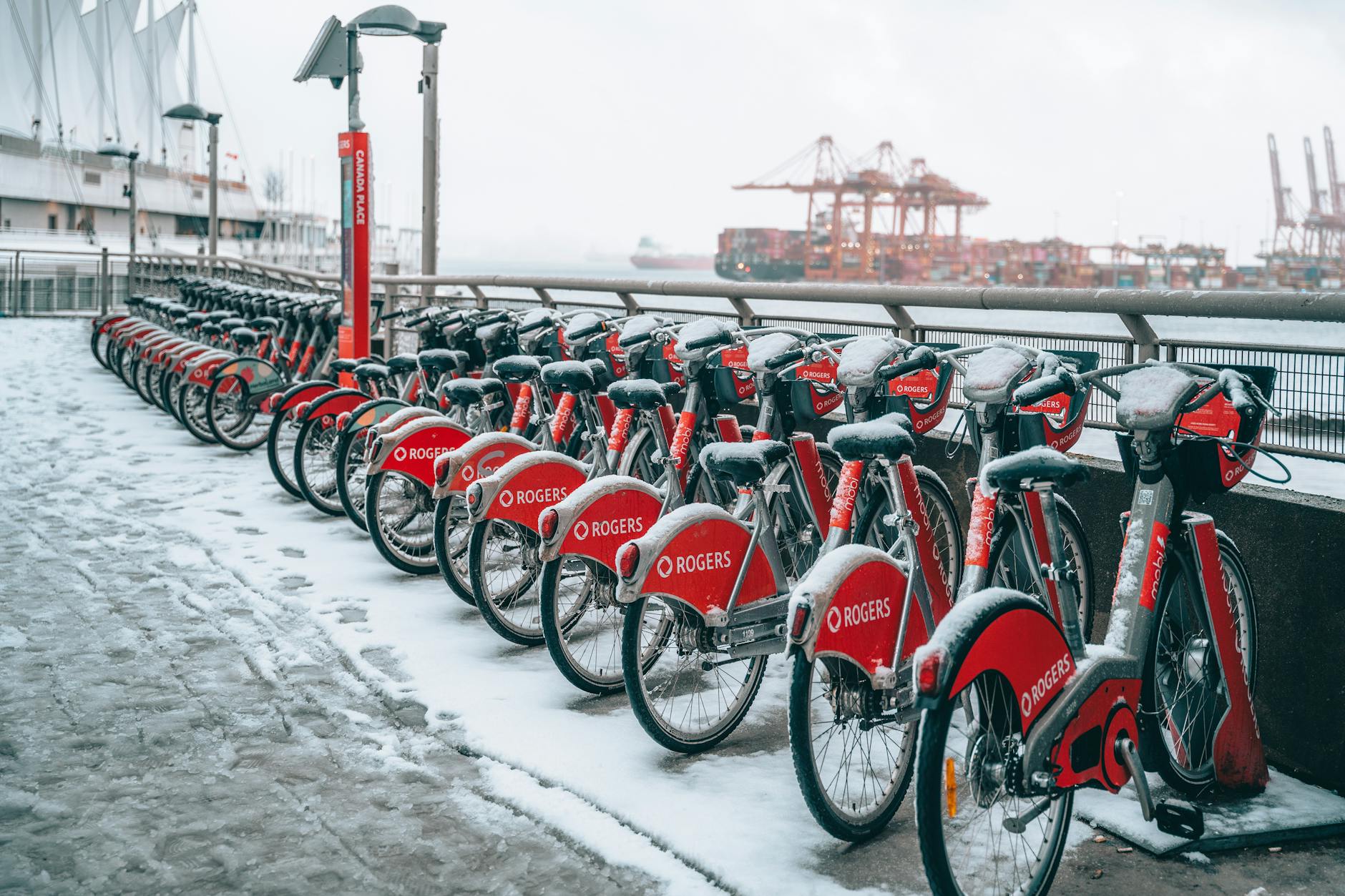
Vancouver’s downtown core is compact and very walkable. For anything further, the SkyTrain (Expo, Millennium, and Canada Lines), SeaBus (to North Vancouver), and TransLink bus system are the most efficient. A Compass Card is $6 with a refundable deposit; fares are $3.20–$6.45 by zone. See our full Vancouver transportation guide for YVR-to-downtown options, driving notes, and Mobi bike-share details.
When to Visit
June through September is peak — perfect weather, long days, festivals. April’s cherry blossoms (43,000 trees, with the official Cherry Blossom Festival running April 3–29, 2026) are arguably the most beautiful time of year and a lot cheaper than summer. November through February is cool, wet, and cheap. See our best time to visit Vancouver pillar for month-by-month detail.
Money & Tipping
Tipping is 15–20% at sit-down restaurants and 10–15% for taxis and tours. Sales tax: 5% federal GST plus 7% provincial PST is added at the till on most things, with an extra 8% on restaurant alcohol and 10% on liquor-store purchases. Debit and credit cards are universally accepted; almost nobody uses cash.
Safety
Vancouver is one of the safest cities in North America by any major metric, but the Downtown Eastside — roughly Hastings Street between Main and Gore — has visible poverty, tent encampments, and open drug use. It’s not a high-violence area for tourists, but it’s uncomfortable and easy to avoid; stick to West Hastings and north of Cordova.
Weather & What to Pack
Even in summer, pack a light rain shell — Vancouver averages 166 rainy days a year and microclimates are real (North Shore gets double the rain of downtown). A collapsible umbrella, comfortable waterproof shoes, and layers will serve you every month. In winter, add a warm insulated layer and gloves.
Every Vancouver Attraction, Covered in Depth
Each of the guides below goes deeper than this page can — opening hours, current prices, how to get there, and what we’d skip. Start here if you already know what you want to plan.
- Stanley Park Vancouver: The Complete 2026 Visitor’s Guide
- Capilano Suspension Bridge Park: Tickets, Tips & Is It Worth It? (2026)
- Granville Island Vancouver: What to See, Eat & Do (2026 Guide)
- Gastown Walking Guide: Steam Clock, Shops & Eats (2026)
- FlyOver Canada Vancouver: Is It Worth It? Tickets, Tips & 2026 Review
- Vancouver Lookout & Harbour Centre Guide (2026)
- Vancouver Aquarium: 2026 Tickets, Animals & Visitor Tips
- Science World Vancouver: 2026 Tickets, Exhibits & Visitor’s Guide
- Dr. Sun Yat-Sen Classical Chinese Garden Vancouver: 2026 Visitor Guide
- VanDusen Botanical Garden & Queen Elizabeth Park: 2026 Vancouver Guide
Frequently Asked Questions
How many days do you need in Vancouver?
Three days is the sweet spot for a first-time visitor — enough to cover Stanley Park, the North Shore (Capilano or Grouse), Granville Island, and a neighborhood of your choice. One day is enough for cruise-ship passengers to get a taste. Five-plus days lets you add Whistler or Victoria without rushing.
Is Vancouver expensive for tourists?
Yes, Vancouver is among the most expensive Canadian cities. Plan on $135–220/day for a budget traveler (hostel, transit, one paid attraction, supermarket breakfasts, one sit-down dinner), $305–435/day mid-range, and $600+ for luxury. Summer 2026 hotel rates run $300–600/night in the downtown core, and June–July World Cup dates will be significantly higher.
What is Vancouver famous for?
Mountains that meet the ocean inside the city limits; Stanley Park; the busiest cruise ship port on the West Coast; consistently top-5 global livability rankings; Hollywood North film production; and a food scene that blends Pacific seafood, Cantonese dim sum, Japanese sushi, and Indigenous Coast Salish traditions.
What is the best time to visit Vancouver?
June through September for long days, dry weather, and festivals. April for cherry blossoms and shoulder-season pricing. November–January is cheapest but cool and rainy. Avoid mid-June through early July 2026 unless you have pre-booked accommodation — the FIFA World Cup will saturate the city.
How do I get from YVR airport to downtown Vancouver?
The Canada Line SkyTrain runs from the airport to downtown in 26 minutes for $9.85 (a surcharge is added to the base fare). Trains run every 6–12 minutes, 5 a.m. to 1 a.m. A taxi is $40–45 flat-rate and an Uber or Lyft runs $35–50. See our YVR to downtown guide for the full breakdown.
What free things can you do in Vancouver?
A lot. Stanley Park Seawall, Brockton Point totem poles, Lynn Canyon Suspension Bridge, Queen Elizabeth Park, Canada Place promenade, VanDusen on Yom Kippur, Vancouver Art Gallery by-donation nights, all Mountain Equipment Co-op (MEC) outdoor film screenings, Cleveland Dam, and every public beach (Kitsilano, English Bay, Jericho, Third Beach, Spanish Banks). See our free things to do in Vancouver guide for more.
Is Vancouver safe for solo female travelers?
Very safe. Vancouver consistently ranks among the top cities globally for solo female travel. Standard urban awareness applies; the Downtown Eastside is uncomfortable but not particularly dangerous. Transit is well-lit and monitored late into the evening.
Do I need a passport and visa to visit Vancouver?
Yes, all international visitors (including Americans) need a valid passport. Citizens of most European countries, Australia, Japan, and many others need an eTA (Electronic Travel Authorization, CA$7, applied online, usually approved in minutes). US citizens don’t need an eTA by air but do need a passport or NEXUS card. Check IRCC (the Canadian government immigration site) for your country’s status.
What’s the best day trip from Vancouver?
For most first-time visitors, Whistler (2 hours north up the Sea to Sky Highway) is the obvious pick; Victoria (via ferry from Tsawwassen, 3 hours total) is the second-best if you want old-British charm and the Butchart Gardens. Our top alternative picks are Squamish & the Sea to Sky Gondola (1 hour) and Bowen Island (30 minutes by ferry). See our day trips pillar for the full ranking.
Is April a good time to visit Vancouver?
April is one of our favorite months. Cherry blossoms peak, average highs climb from 12°C to 16°C, the rainy season eases, the whale watching season kicks off, and hotel prices are 30–50% below July rates. The only catch is that some seasonal attractions (the Stanley Park miniature train, the outdoor pool at Second Beach) don’t open until May.
Plan Your Visit
Vancouver is that rare city where your longest debate won’t be whether to visit again — it’ll be which neighborhood to live in while you do. Once you’ve lined up the top attractions above, dive deeper into the stuff that matters most for your trip: how to get around Vancouver, where to stay, the best 3-day itinerary, the city’s best restaurants, and our month-by-month best time to visit breakdown. Every guide on vancouvertourism.org is written for travelers, updated for 2026, and priced in Canadian dollars.
See a price or detail that’s changed? Email us — we update this page continuously.
Official resources & further reading
Related Vancouver Guides
- Vancouver Itinerary
- Where to Stay in Vancouver
- Best Time to Visit Vancouver
- Vancouver Transportation Guide
- Vancouver Day Trips
- Vancouver Restaurants
- Vancouver Outdoor Activities
- Vancouver Cruise Port
- Vancouver with Kids
- Vancouver on a Budget
