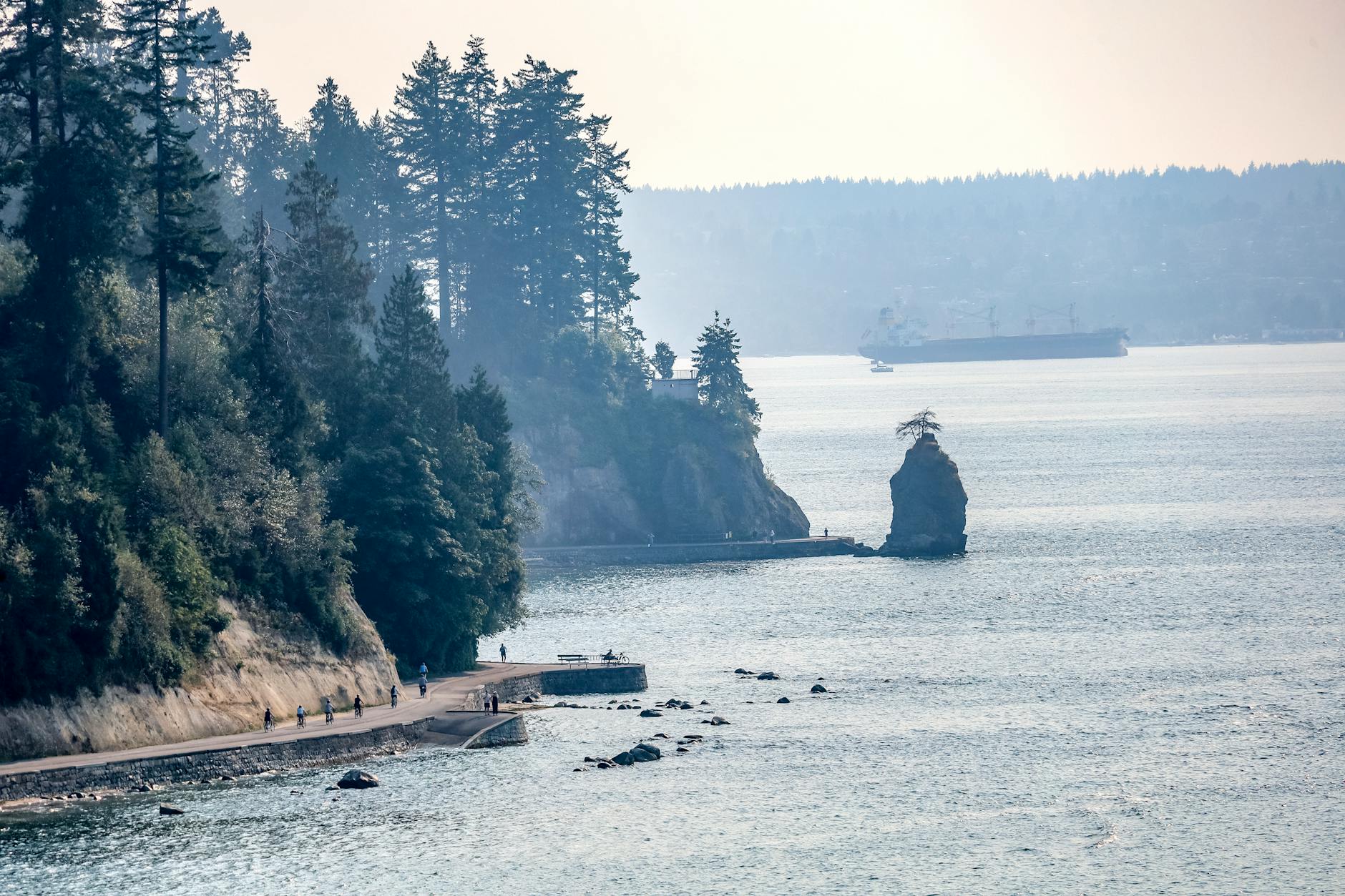
Stanley Park Vancouver is the city’s defining outdoor experience — a 405-hectare temperate rainforest peninsula that wraps around downtown’s western edge and is ringed by a 9-kilometre paved seawall. Unlike Central Park or Hyde Park, it is largely natural: Western red cedar, hemlock and Douglas fir forest, Beaver Lake and Lost Lagoon, and more than 27 km of forest trails, right at the edge of downtown’s skyscrapers.
This 2026 visitor’s guide covers everything you need to plan a half-day or full-day visit: how to get there, the seawall, the totem poles at Brockton Point, the Vancouver Aquarium, beaches, the free park shuttle, food, parking, and the etiquette and Indigenous history that turn a regular tourist visit into a genuinely meaningful one.
Table of Contents
Stanley Park Vancouver: Overview & Quick Facts
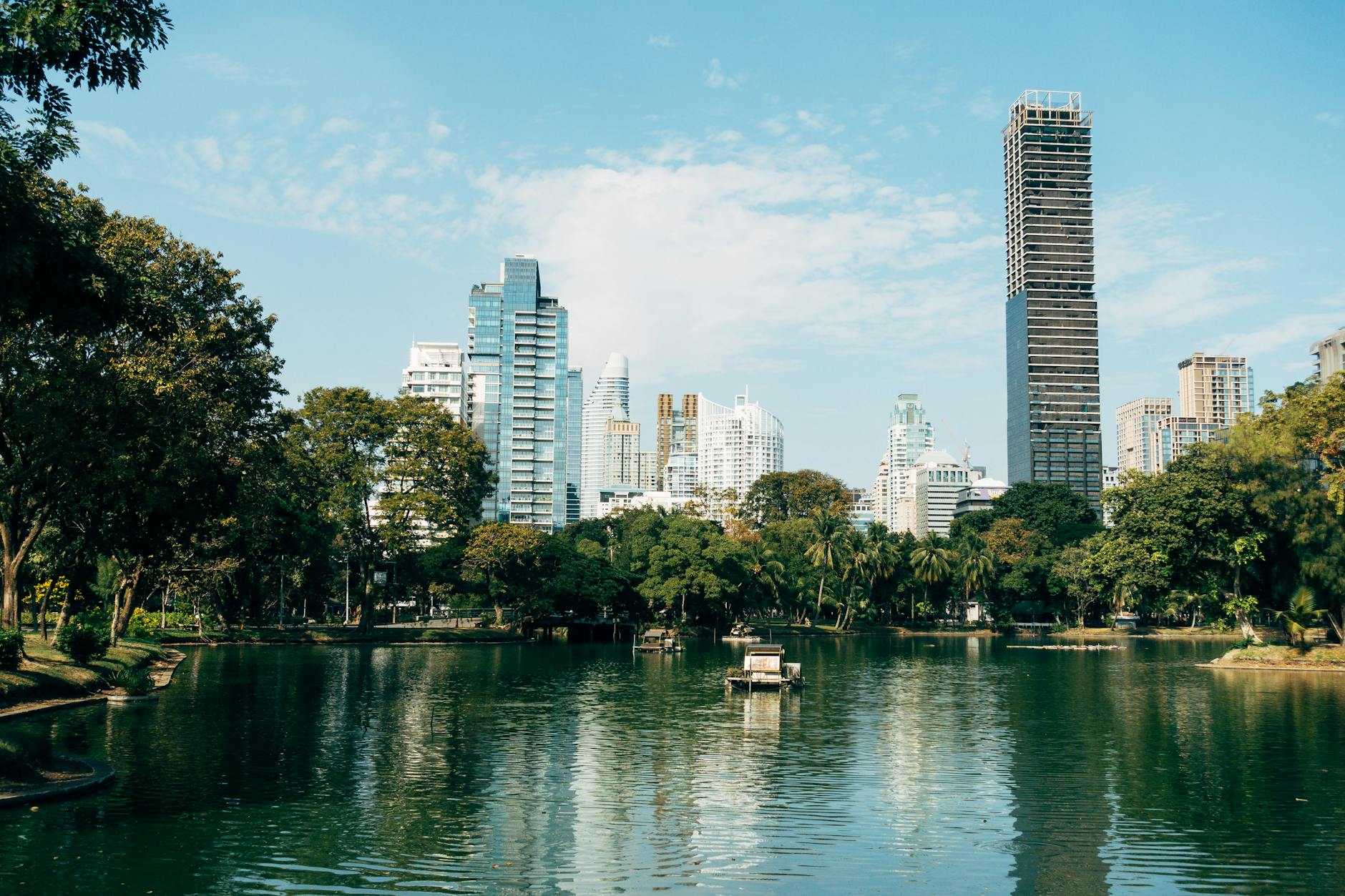
Stanley Park sits on a peninsula at the northwest tip of downtown Vancouver, bordered by Burrard Inlet to the north, English Bay to the west, and Coal Harbour to the east. The Lions Gate Bridge — the suspension bridge that links downtown to the North Shore — passes through the middle of the park. Some quick numbers for planning:
- Size: 405 hectares (1,001 acres) — about one-fifth larger than New York’s Central Park.
- Seawall: About 9 km, paved, with a walking path and a separated cycle/skate lane; the cycle/skate lane is one-way (counter-clockwise).
- Forest trails: 27 km of internal trails through old-growth and second-growth coastal rainforest.
- Lakes: Three — Lost Lagoon, Beaver Lake, and Stanley Park’s small Lost Lagoon Pond.
- Cost to enter the park: Free; the park’s posted hours are 6 a.m. to 10 p.m. Some attractions inside the park (Aquarium, Pitch & Putt, paid parking) charge fees.
- Annual visitors: Approximately 8 million.
You can do a “highlight reel” visit (totem poles + Prospect Point + a short seawall walk) in about two hours. A proper visit — seawall loop, beach stop, lunch, an attraction or two — fills four to six hours. Hardcore visitors with a rented bike can ride the entire perimeter and explore most highlights in a single day.
A Brief Indigenous & Settler History
The land that is today Stanley Park has been a permanent home and gathering place for the xʷməθkʷəy̓əm (Musqueam), Sḵwx̱wú7mesh (Squamish), and səlilwətaɬ (Tsleil-Waututh) Nations for thousands of years. Archaeological evidence points to a human presence here more than 3,000 years ago, and the village of Xwayxway stood near today’s Lumberman’s Arch. The removals came in stages: some residents were forced out in 1888, Aunt Sally Kulkalem lived at Xwayxway until her death in 1923, and the park board evicted most of those still living in the park in 1931. This is not ancient history — it happened within living memory of grandparents.
The park itself was opened in 1888 — Vancouver’s first park — and named for Lord Stanley, then Governor General of Canada, who dedicated it the following year “to the use and enjoyment of peoples of all colours, creeds, and customs, for all time.” That dedication is now read alongside an acknowledgement that the land remains the unceded territory of the three local Nations, and the park’s contemporary stewardship and signage reflect ongoing partnership and reconciliation work led by the City of Vancouver and the Vancouver Park Board.
For deeper context, our Vancouver culture and history pillar covers the longer story.
Getting to Stanley Park
The park sits at the northwest tip of downtown Vancouver, within walking distance of most downtown hotels.
On foot. From any hotel near Robson, Coal Harbour, or English Bay, walking is fastest. Aim for the West Georgia/Denman intersection at the southeast corner of the park, then either follow the seawall counter-clockwise or cut through the rose garden toward the central drive.
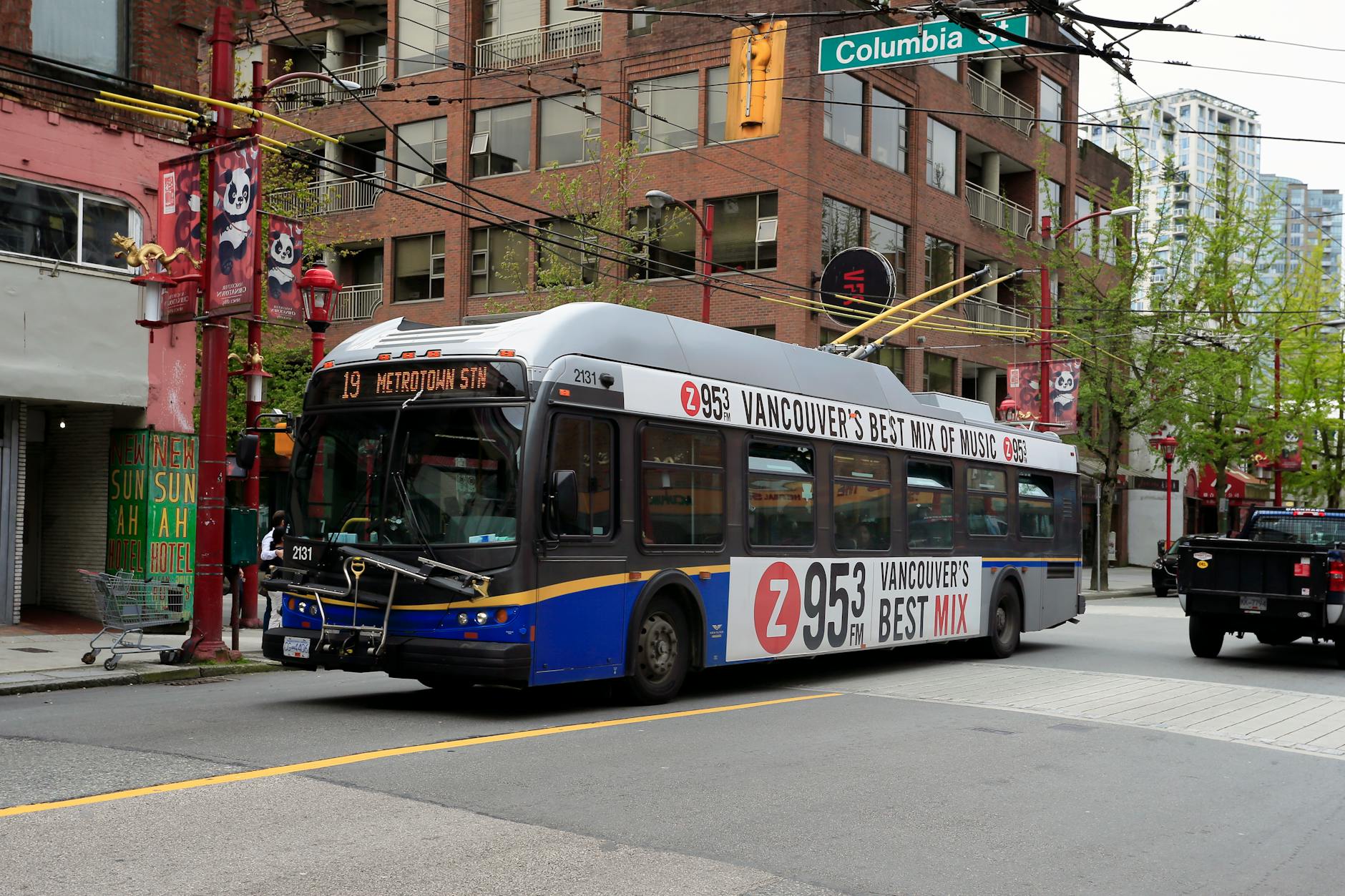
By bus. The #19 Stanley Park bus runs from downtown along West Pender Street and ends at Stanley Park. An adult fare is $3.50 cash or $2.85 with Compass stored value, and a single fare is valid for 90 minutes (see our Vancouver transportation guide for full transit details).
By bike. Vancouver’s Mobi bike-share has docks at the southeast corner (near Coal Harbour) and at Denman/Davie. The seawall is the city’s flagship bike route and gives you the most ground covered with the least walking fatigue. Spokes Bicycle Rentals, at the corner of Denman and West Georgia, rents cruisers by the hour; its site lists current rates.
By car. Parking in the park is paid; current rates are on the City’s Stanley Park parking page and at each pay station. Most visitors park near Brockton Point, Prospect Point, Second Beach, or the rose garden. Pay at the kiosks or via the PayByPhone app (zone numbers posted on signs). Free street parking is available outside the park near English Bay or West End side streets.
By taxi or rideshare. Lyft and Uber operate in Vancouver, and both apps quote the fare from downtown before you confirm the ride.

The Stanley Park Seawall
The Stanley Park Seawall is the single best Vancouver experience. Construction began in 1917 and the Stanley Park loop was finished in 1980, with master mason James “Jimmy” Cunningham overseeing much of the work. Today it forms part of a 28 km seaside greenway that continues to Spanish Banks, though most visitors walk only the 9 km Stanley Park section.
Direction: All seawall traffic is one-way counter-clockwise. There are two side-by-side paths separated by a curb: a wider one for walkers and joggers (closest to the water) and a narrower one for cyclists, in-line skaters, scooters, and skateboards (closest to the road or forest). Walkers can technically go either direction; cyclists must go counter-clockwise.
Best time of day: Mornings (7–10 a.m.) for fewest crowds and softest light on the North Shore mountains. Late afternoon (4–7 p.m. in summer, 3–5 p.m. in winter) for golden-hour photography at English Bay and Third Beach.
How long it takes: Walking the full 9 km loop at a moderate pace takes 2.5–3 hours including photo stops. Cycling it takes about an hour, depending on your pace and how often you stop.
Highlights as you go (counter-clockwise from the southeast corner):
- Coal Harbour Marina & the Vancouver Rowing Club.
- Deadman’s Island Naval Base — small island used by HMCS Discovery.
- The 9 O’Clock Gun — first fired in 1898 to help mariners synchronize chronometers.
- Brockton Point Totem Poles (see below).
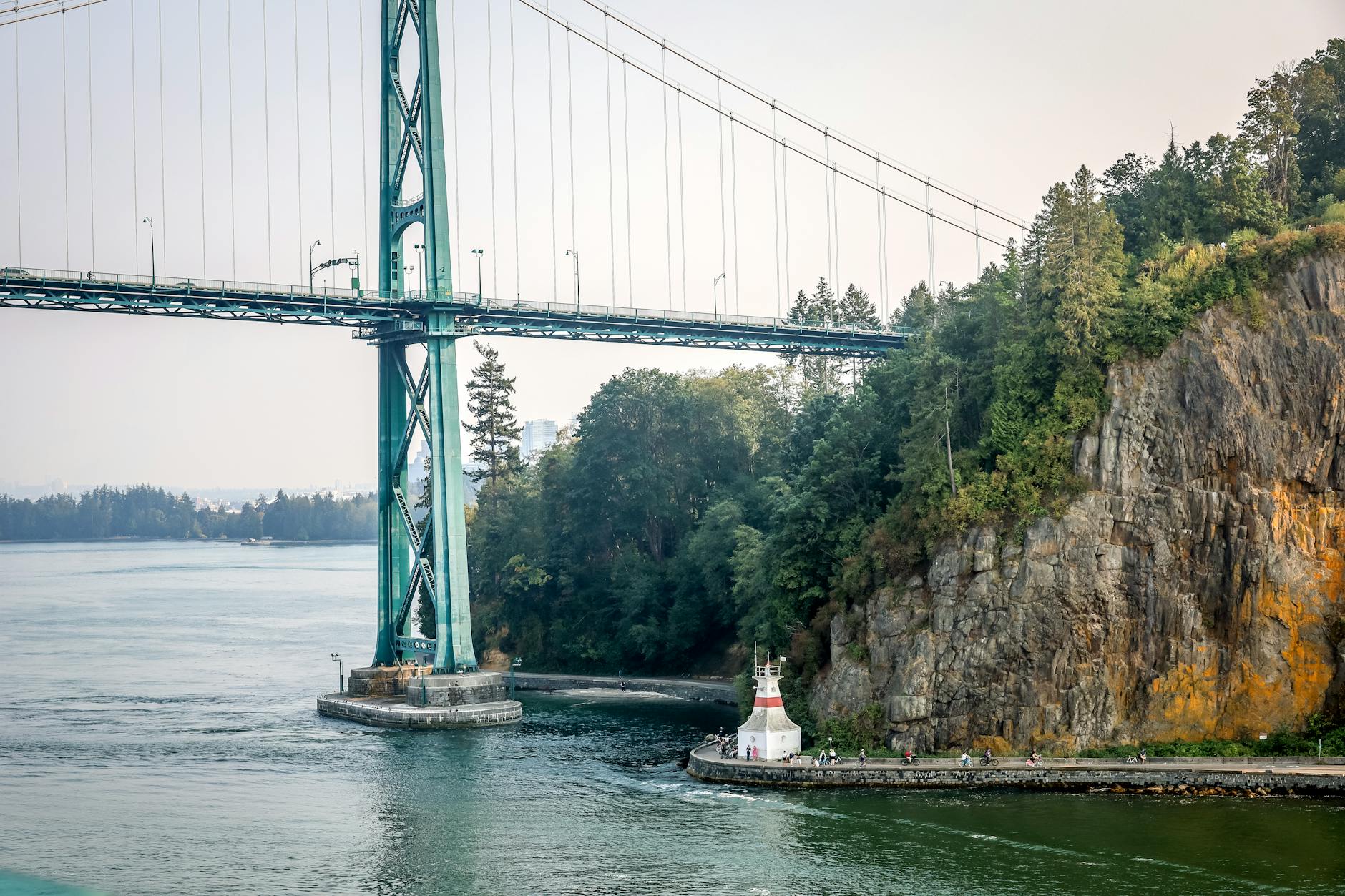
- Brockton Point Lighthouse (1914).
- Lions Gate Bridge — pass directly underneath. The bridge is 1,517 metres long and was built in 1938.
- Prospect Point — the highest point in the park, with viewing platforms and a café.
- Siwash Rock — a basalt sea stack about 15–18 metres tall, with a Squamish legend attached.
- Third Beach (best sunset spot in the city).
- Second Beach (heated 80 m pool with a 50 m lap section, and a large family playground).
- Lost Lagoon, a lake popular with birdwatchers.
Stanley Park Attractions: Top Things to Do
Beyond the seawall, the park’s interior holds a dense cluster of attractions. Here are the ones most visitors should consider, in rough order of visitor priority.
1. Totem Poles at Brockton Point — Free and open year-round whenever the park is (6 a.m. to 10 p.m. unless otherwise posted). More on the poles below.
2. Vancouver Aquarium — Canada’s largest aquarium with 65,000+ animals (more below). Adult admission (ages 13–64) runs $41.95–$57.95 plus tax, depending on the date.
3. Prospect Point — A viewpoint at the park’s highest point, looking out over Lions Gate Bridge. Prospect Point Café & Ice Cream is seasonal and closes for the off-season, so check before you count on lunch here.
4. Stanley Park Train. The miniature train has been shut since December 2024 because of safety concerns with its aging systems, so there are no Halloween, Christmas or Easter rides to book; the City posts any change on vancouver.ca. The Christmas lights moved with Bright Nights, which now runs at Cloverdale Fairgrounds in Surrey, November 27 to December 29, 2026.
5. Stanley Park Pitch & Putt. An 18-hole 1,200-yard public pitch & putt course near Lost Lagoon. $19.11 for adults 19–64; club and ball rental is $2.86. One of the best urban golf experiences in North America.
6. The Rose Garden & Stanley Park Pavilion. Free. More than 3,500 rose bushes, at their best in summer.
7. Hollow Tree. A massive Western red cedar stump with a circumference of about 17 metres. Free to see from 6 a.m. to 10 p.m., the park’s opening hours.
8. The Lost Lagoon Nature House. A small free interpretive centre run by the Stanley Park Ecology Society, with exhibits on the park’s wildlife. Open weekends and holidays.
Totem Poles at Brockton Point
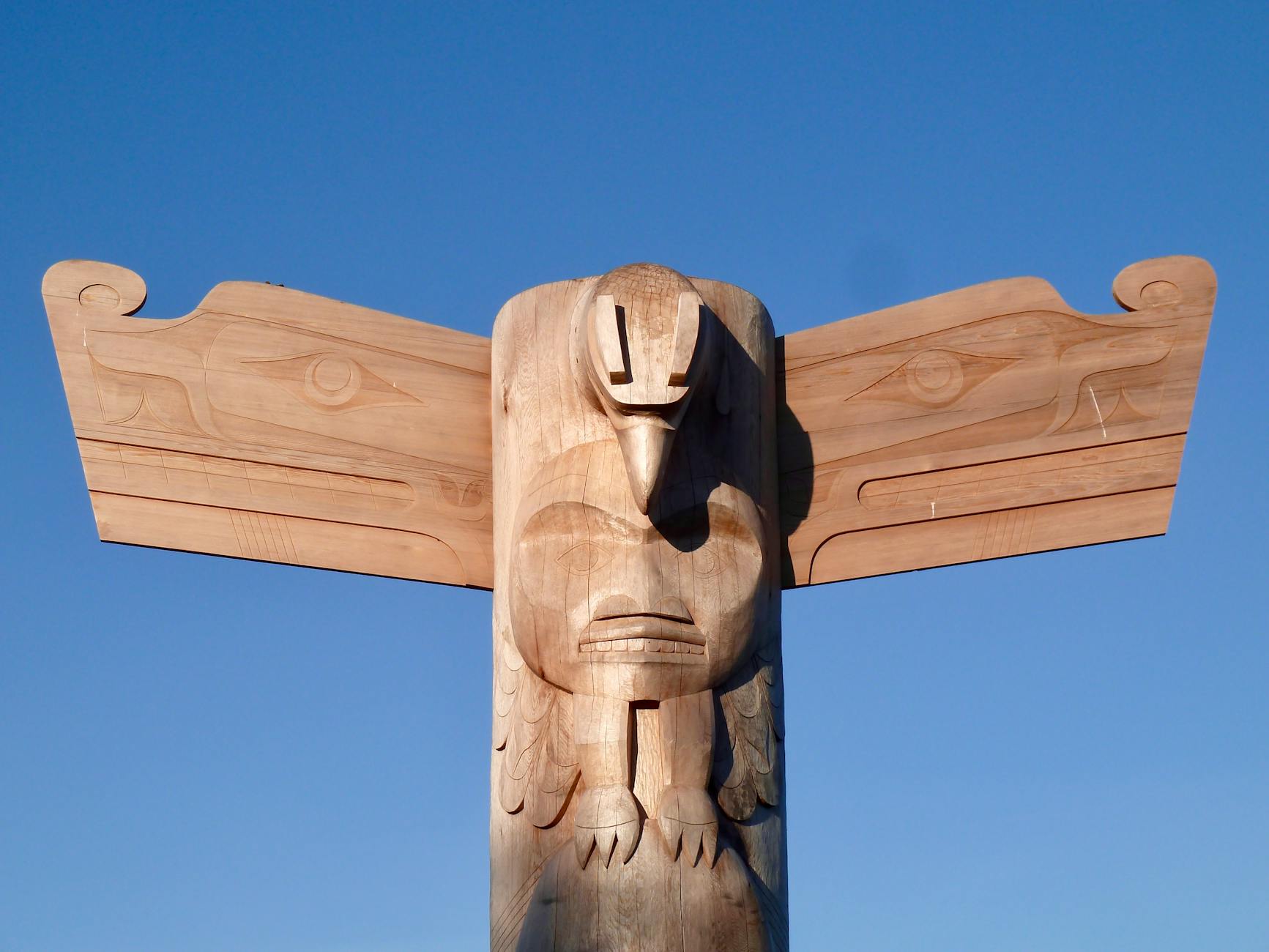
The totem poles at Brockton Point are not from the local Coast Salish carving tradition (which features welcome figures and house posts rather than totem poles); they were collected from Kwakwaka’wakw, Haida, and Nuxalk villages on Vancouver Island and the central coast, beginning in the 1920s.
Not every pole at Brockton Point is an original. One is a replica carved by Tony Hunt, while the pole it stands in for is held at the Museum of Vancouver. The Park Board now consults directly with the home Nations and with the local xʷməθkʷəy̓əm, Sḵwx̱wú7mesh, and səlilwətaɬ Nations on all signage and any future additions.
The Coast Salish Gateways. Adjacent to the totem poles, the three carved cedar arches collectively titled “People Among the People” were carved by Coast Salish artist Susan Point (xʷməθkʷəy̓əm) and installed in 2008. They were the first Coast Salish art at the Brockton Point totem-pole site and represent the three local Nations.
Visitor etiquette. Photography is welcomed. Touching the poles, climbing on them, or leaving offerings is not. Read the interpretive plaques before snapping photos — they identify each pole by Nation, artist, and meaning.
The totem poles are free to visit during park hours and stand near Brockton Oval, on the seawall counter-clockwise from the Coal Harbour entrance; the City’s parks map shows the route. Pay parking is right beside them at Brockton Oval.
Vancouver Aquarium
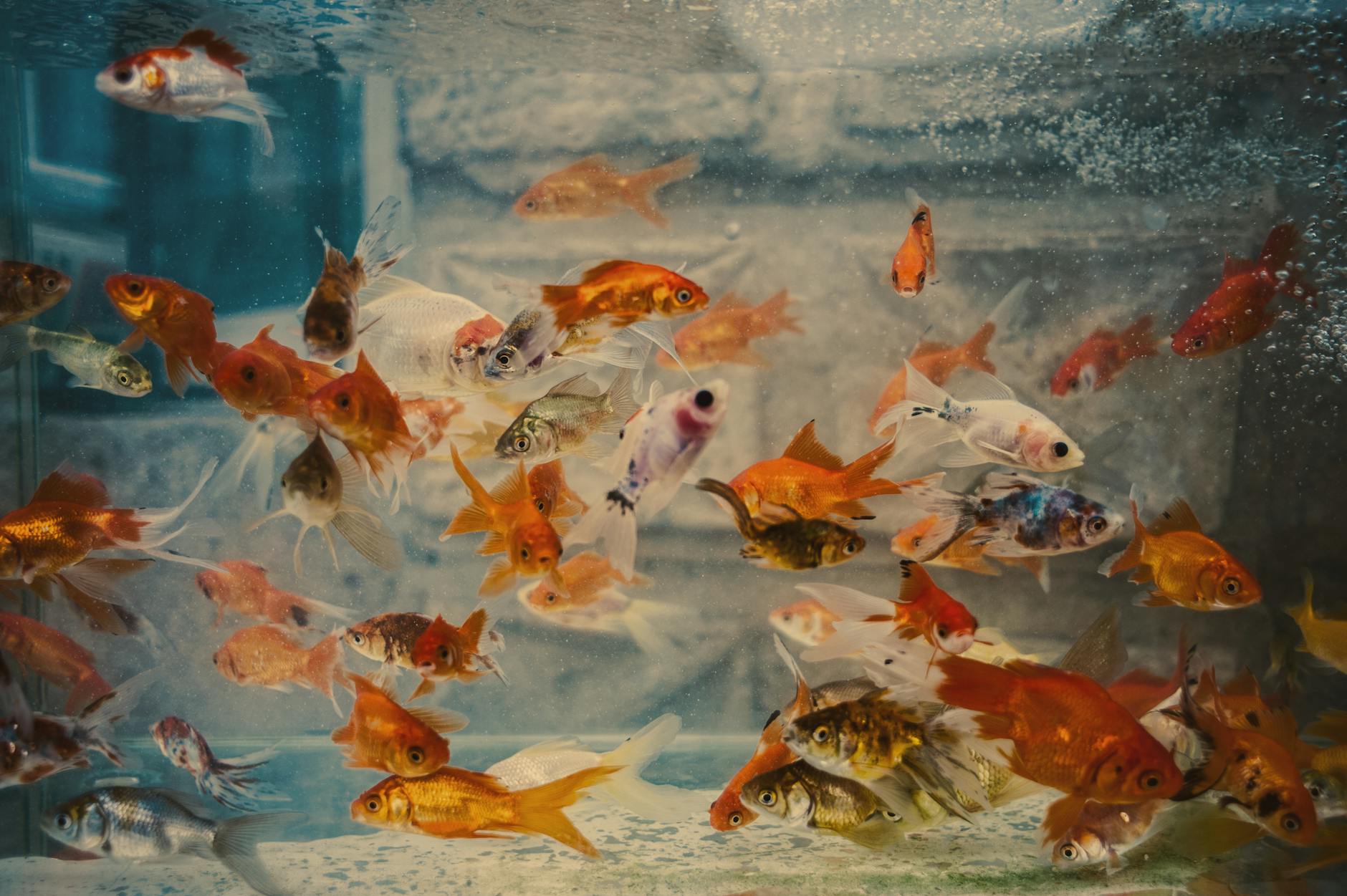
The Vancouver Aquarium is Canada’s largest, with more than 65,000 animals across 120 indoor and outdoor exhibits. It opened in 1956, sits in Stanley Park, and underwent a major leadership transition in 2021 when the non-profit Ocean Wise sold the operating rights to Herschend Family Entertainment.
2026 ticket prices: Adult (13–64) $41.95–$57.95 plus tax, with the price set by the day you visit; children 3–12 get discounted tickets, and under 3s are free. Individual adult memberships cost $80 (Silver), $95 (Gold) or $125 (Platinum) plus tax, so a Silver membership costs less than two full-price adult visits. Discounts for groups, students, and seniors.
Hours: Opening hours vary by date, so check the day you plan to go on the Aquarium’s visitor information page, which links to its calendar.
What to see: The Pacific Canada Pavilion (BC’s Salish Sea ecosystem), the Amazon Gallery, the Tropical Zone (sharks, rays, reef fish), the 4D Theatre’s immersive films, and the popular sea otter and sea lion habitats. You won’t see whales or dolphins: the orcas left in 2001, and Helen, the last dolphin, was transferred to SeaWorld San Antonio in April 2021.
How long to allow: 2.5–3 hours for a thorough visit; 90 minutes if you’re moving fast. The Aquarium is fully wheelchair accessible.
For full details and ticket bookings: vanaqua.org.
Beaches: Second Beach & Third Beach
Stanley Park has three beaches; the two named ones are at the southwest corner of the park.
Second Beach (closer to English Bay) is the family beach. It has the heated Second Beach Pool, 80 metres long with a 50-metre lap section (open May 16 to September 7 in 2026; adults $7.93 before tax, plus a fee if you reserve online), a large playground, big sand area, picnic tables, public BBQs, and the Concession Stand for casual eats. Lifeguarded in summer.
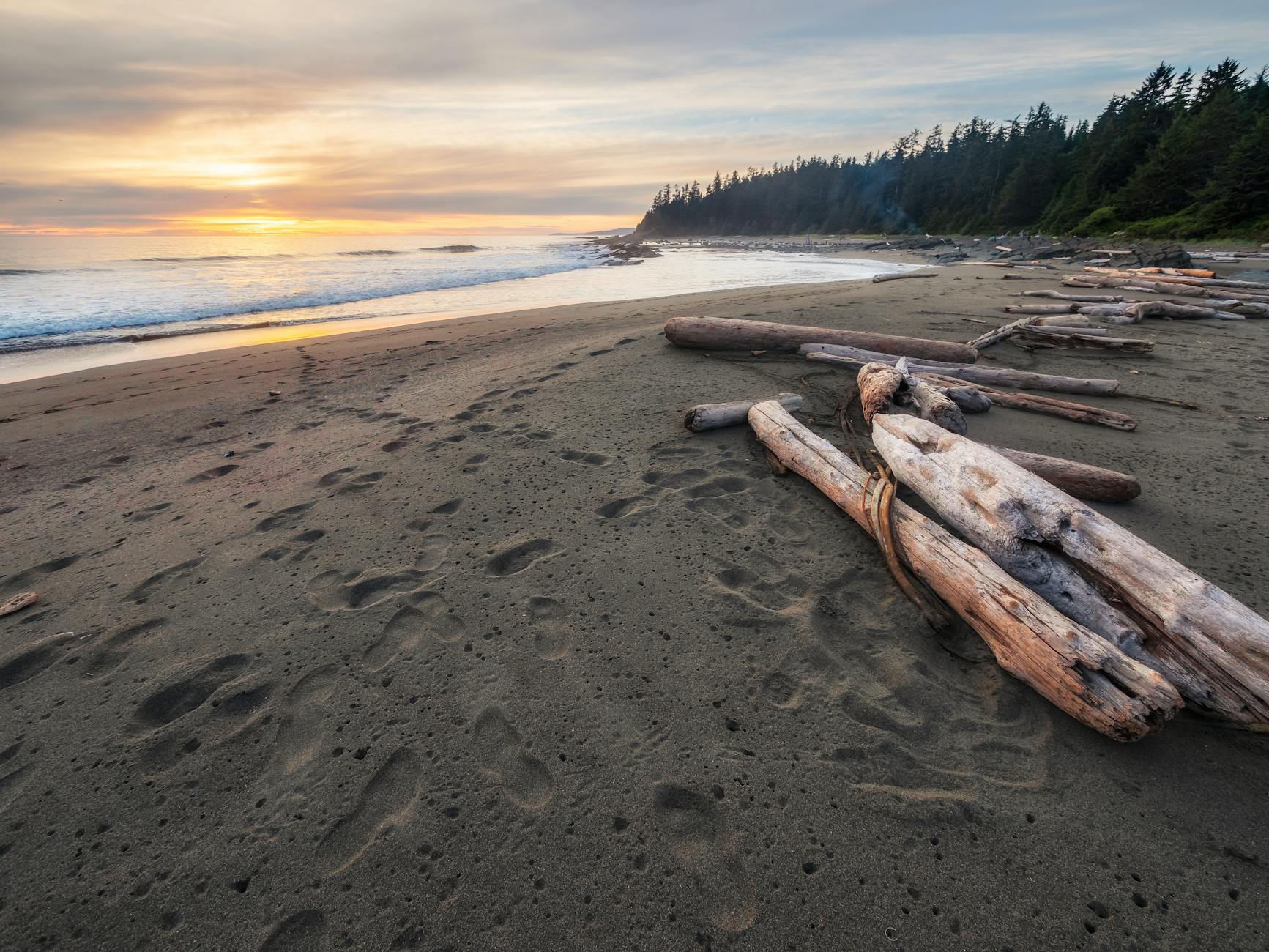
Third Beach (a kilometre further north along the seawall) is the sunset beach. It is more wooded and less manicured, with driftwood logs along the sand, a small concession in summer, and outdoor showers. The Tuesday-night sunset drum circle that runs informally from May through September is one of Vancouver’s most beloved free events.
Vancouver beach water is cold, even in August. Locals swim anyway; wading is a fine compromise.
Forest Trails & Lakes
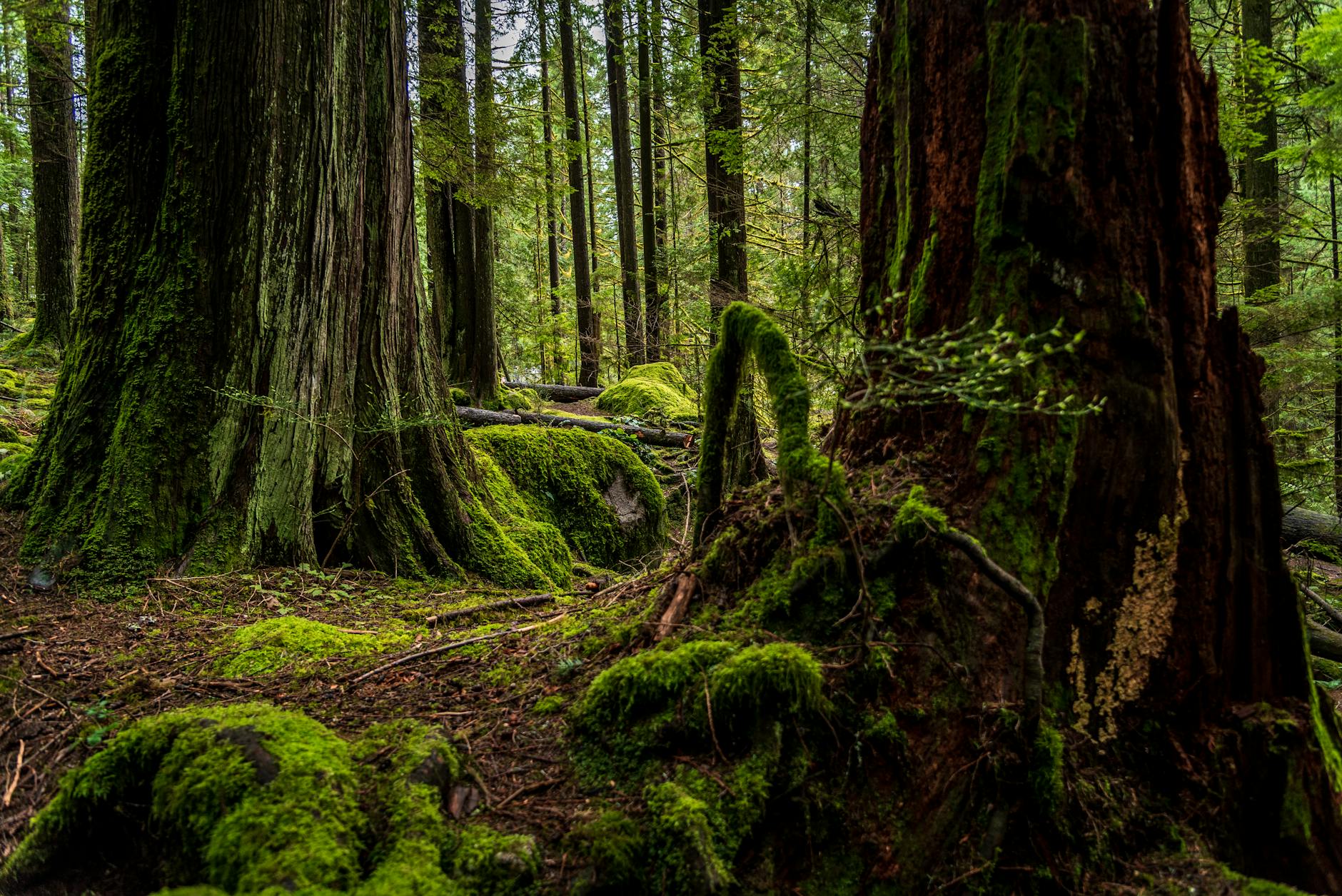
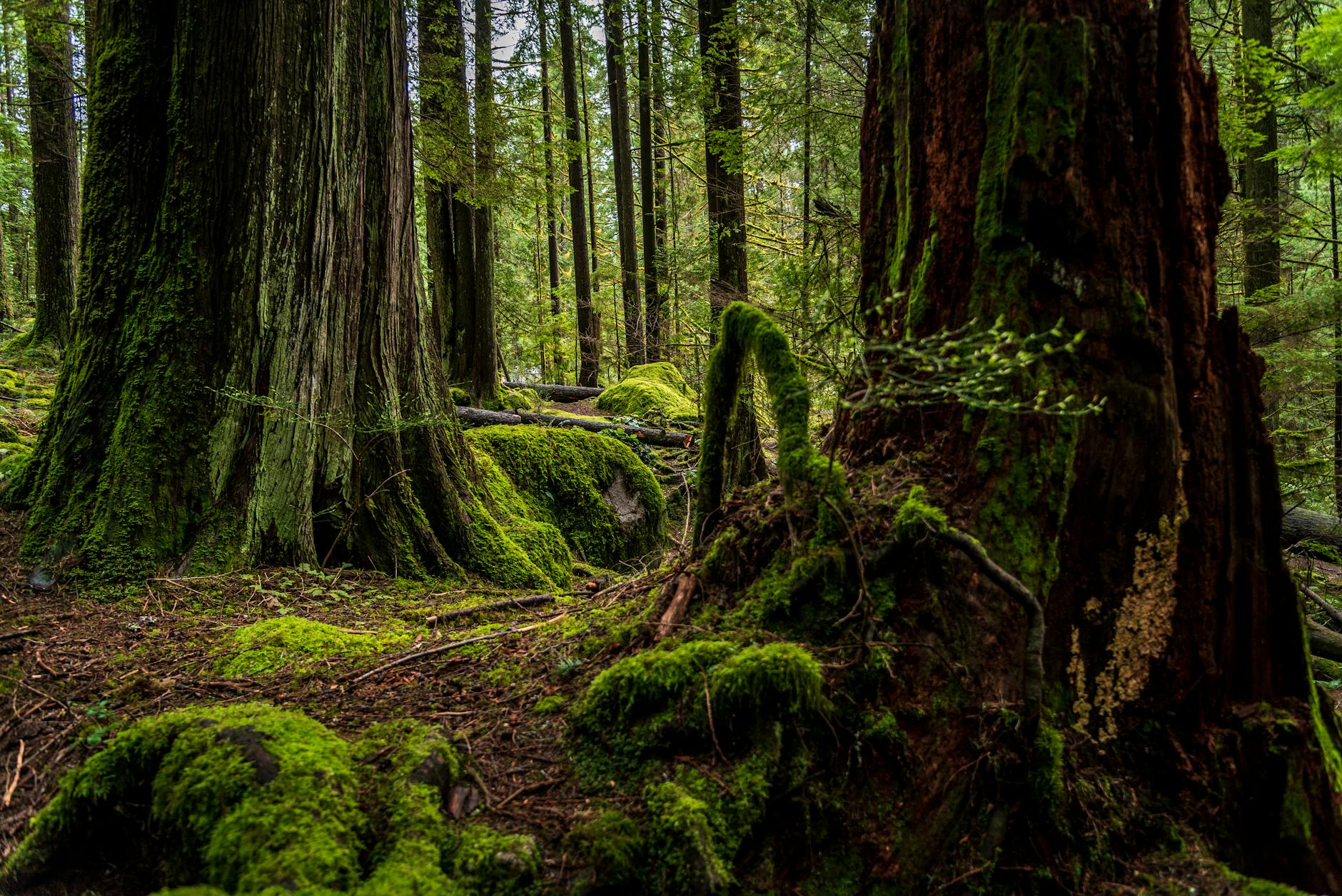
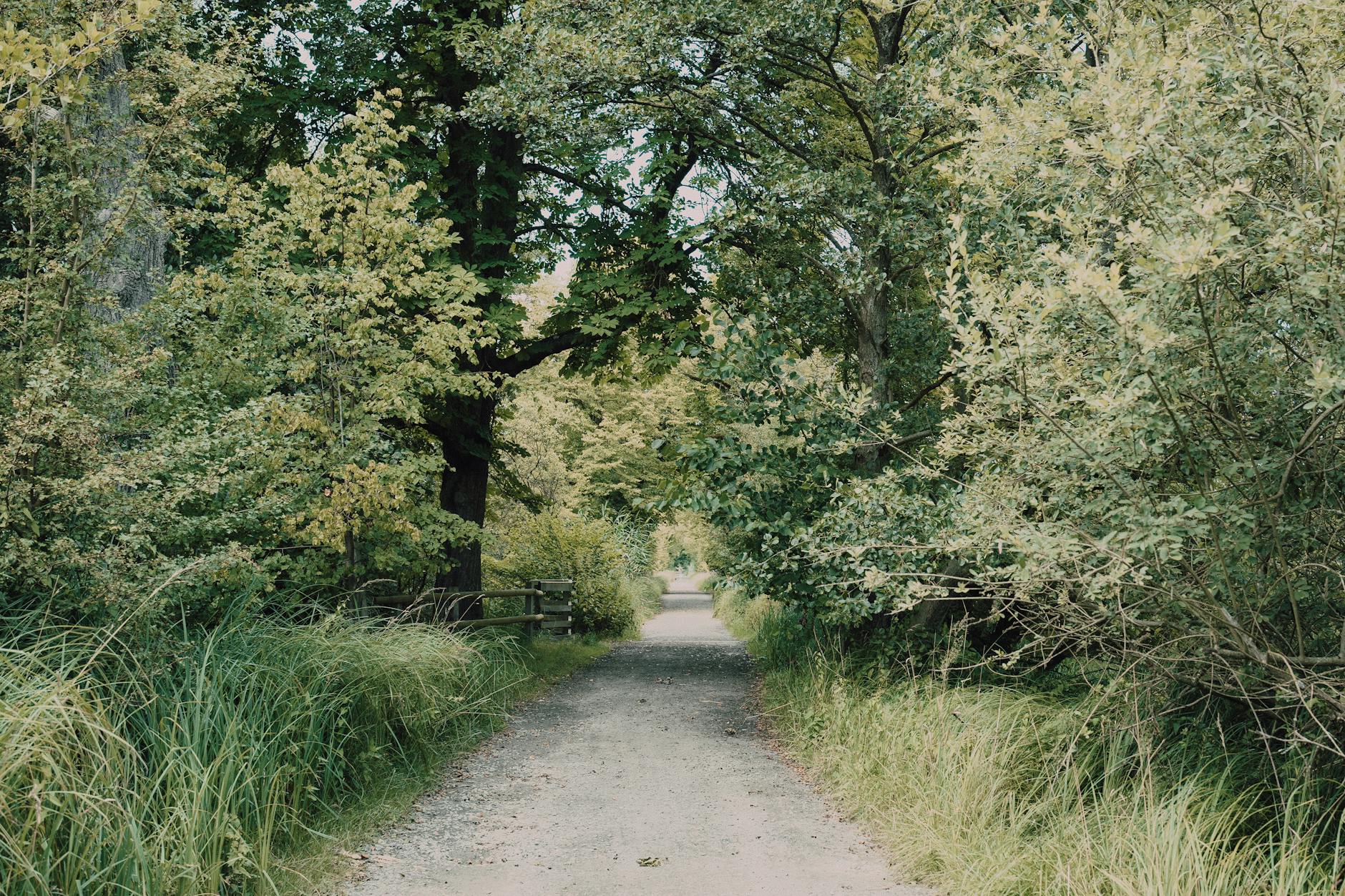
Most visitors stick to the seawall and never venture into Stanley Park’s interior. That is a mistake. The 27 km of forest trails are quiet, mossy, and shockingly wild for a park five minutes from downtown skyscrapers.
Beaver Lake Loop — a loop around Beaver Lake. Best for families and a quick green break.
Lost Lagoon Loop — the path around Lost Lagoon. Excellent for birdwatching (great blue herons, wood ducks, occasional river otters).
Tatlow Walk & Bridle Path — moderate, with the distance depending on how you string them together. Cuts through the densest old-growth-feel sections of the park, including Cathedral Trail.
Bring a printed map (free at the Lost Lagoon Nature House) or save the offline Park Board map on your phone — cell service is spotty in parts of the interior.
Where to Eat in Stanley Park
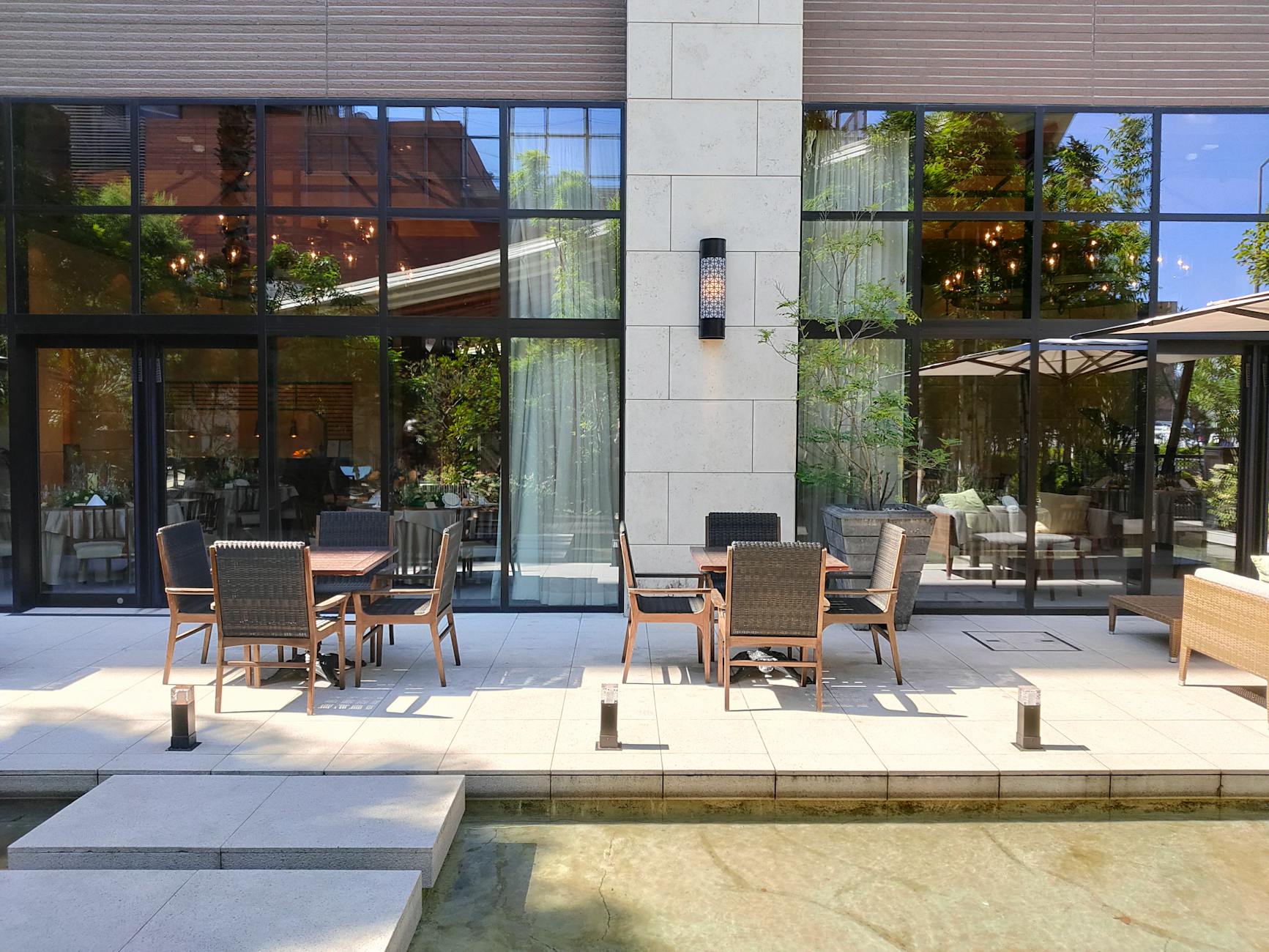
Six places to eat inside the park, ranging from casual to special-occasion.
The Stanley Park Pavilion (Fish & Chips, casual seating). Solid classic-pub menu at Stanley’s Bar & Grill, with mains from $27 to $35.
The Teahouse in Stanley Park. Special-occasion at Ferguson Point with English Bay views. Mains $25–$63. Reservations recommended for sunset.
Stanley’s Bar & Grill (at the Pavilion). Burgers and salads; the Lord Stanley’s Burger is $27.
Prospect Point Café. Casual cafeteria-style, and seasonal. The view, not the food, is the draw.
Second Beach Concession. Burger/fries/ice-cream stand. Open seasonally.
Stanley Park Brewing Brewpub & Restaurant. Near the southern park entrance. Craft beer, plus a food menu where Stan’s Burger is $25.50 and the Parkhouse Sandwich $25. The closest place inside the park for a proper sit-down dinner.
For a wider Vancouver food rundown, see our Vancouver food scene pillar.
The Free Park Shuttle & Trolley
For the free Stanley Park Shuttle, check the Park Board page close to your visit date to see whether it is running and where it stops.
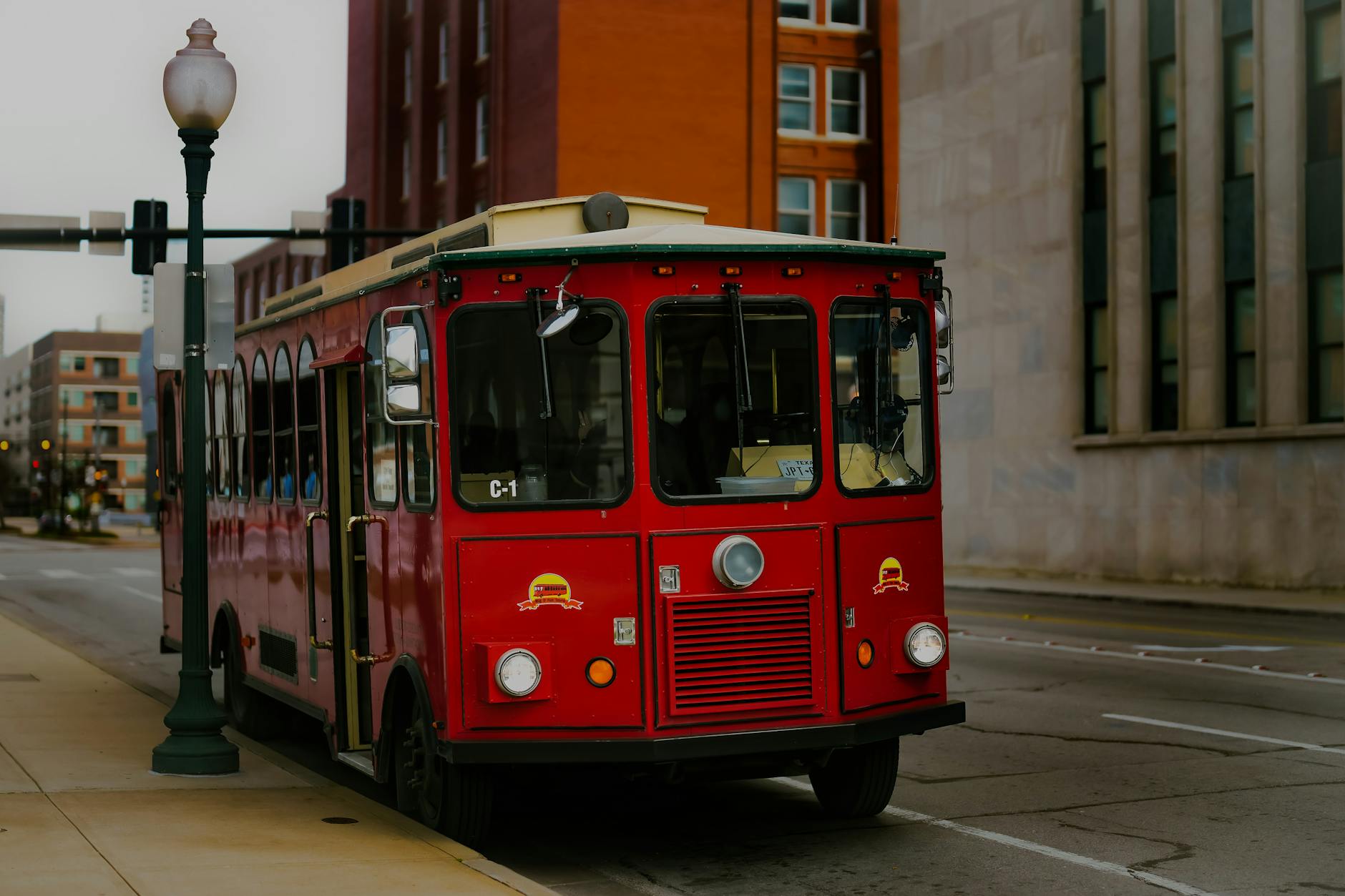
What is operating reliably is the privately run Great Canadian Trolley hop-on hop-off, which makes six stops inside Stanley Park, including the Aquarium, as part of its full city loop (adult 24-hour passes from $62 CAD). It runs daily year-round and is a good choice for visitors with limited mobility or families with young children who want to mix walking with riding.
Stanley Park Horse-Drawn Tours offer one-hour narrated tours departing from 735 Stanley Park Drive. Fares vary by age and season; the operator posts them on its schedule and rates page. Late March through October only.
Stanley Park with Kids
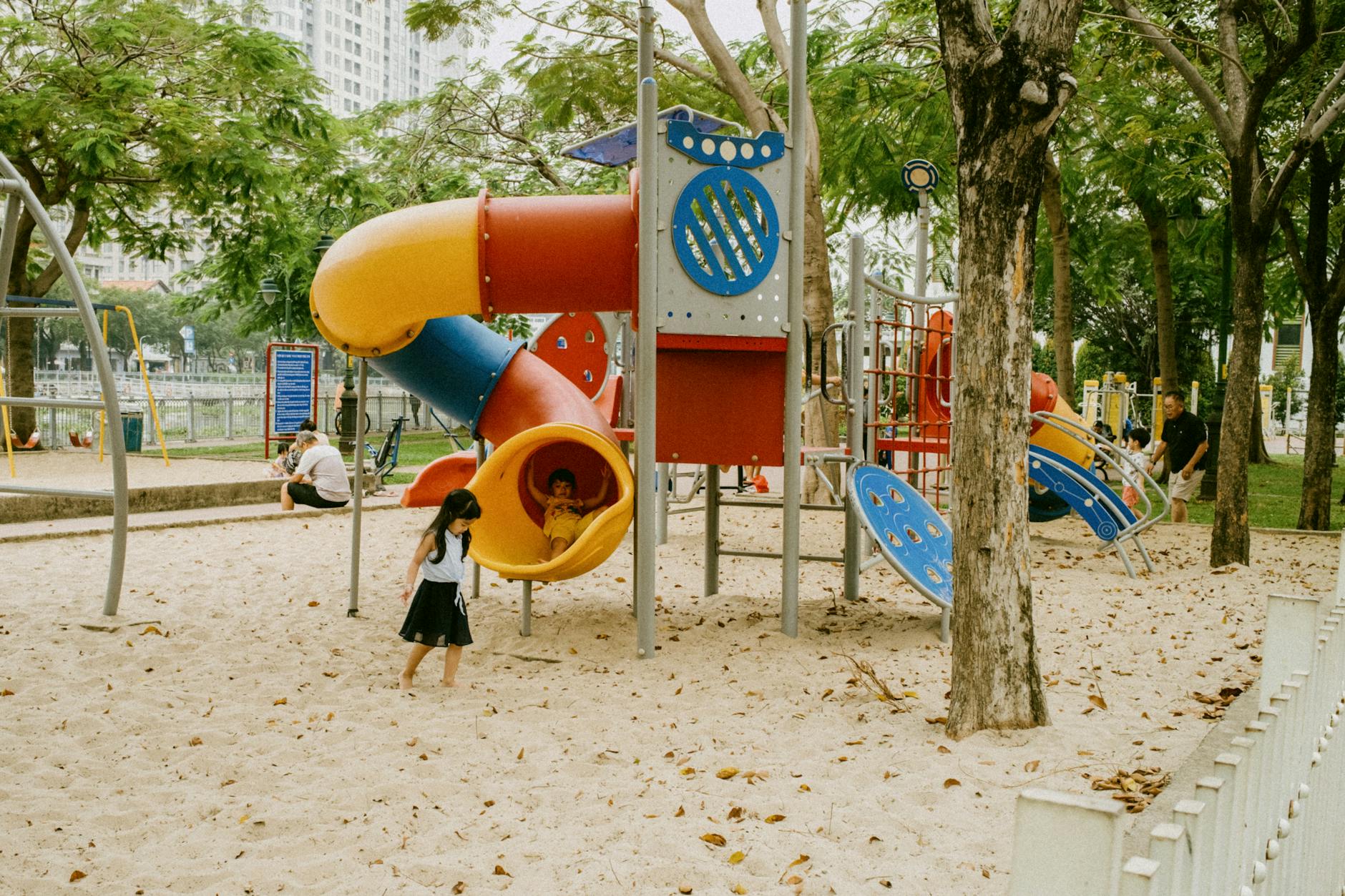
Stanley Park is a top family destination — see our Vancouver with kids pillar for a wider list, but the Stanley Park essentials are:
- Ceperley Playground at Second Beach, next to the picnic shelter, with the Second Beach Playground across the field for a second round.
- Vancouver Aquarium (kids 3 and up).
- Second Beach Pool (May–September).
- The Hollow Tree photo stop.
- Beaver Lake Loop for stroller-friendly rainforest walking.
- Park Drive cycling on the seawall — bike trailers are rentable at Spokes for kids too small to ride solo.
Half-Day & Full-Day Itineraries
Half-day, on foot (3–4 hours). Start at the southeast entrance. Walk counter-clockwise on the seawall to Brockton Point (totem poles, 25 minutes). Continue under Lions Gate Bridge to Prospect Point (30 minutes). Cut inland on Prospect Point Trail to the Hollow Tree, then continue to Third Beach for sea views. Catch a cab back to the park entrance, or walk back through the interior via the Bridle Path.
Half-day, by bike (2.5 hours). Rent a bike at Spokes (Denman & Georgia). Ride the full seawall counter-clockwise loop (about an hour), stopping at the totem poles, Prospect Point, and Third Beach.
Full day (6–8 hours). Morning: 90-minute seawall walk to Brockton Point and back. Mid-morning: Vancouver Aquarium (2.5 hours). Lunch: Stanley Park Brewing or Stanley’s at the Pavilion. Afternoon: rose garden + Lost Lagoon walk + Pitch & Putt. Late afternoon: Third Beach for sunset.
For a multi-day Vancouver plan, see our Vancouver itinerary pillar.
Related Vancouver guides
Keep planning with these guides:
- Capilano Suspension Bridge Park: Tickets, Tips & Is It Worth It? (2026)
- Granville Island Vancouver: What to See, Eat & Do (2026 Guide)
- Dr. Sun Yat-Sen Classical Chinese Garden Vancouver: 2026 Visitor Guide
- Stanley Park with Kids: The Family Playbook (2026)
- Free Things to Do in Vancouver: The Complete List (2026)
Stanley Park FAQs
Is Stanley Park free?
Yes, there is no entrance fee. The park is open from 6 a.m. to 10 p.m. unless signs say otherwise. Pay-parking applies inside. Some attractions (Aquarium, Pitch & Putt) charge admission.
How long do I need at Stanley Park?
Bare minimum: 2 hours (totem poles + Prospect Point). Comfortable: 4 hours. Full day: 8 hours including the Aquarium and a meal.
What’s the best way to see Stanley Park?
By bike around the seawall, then on foot in the interior. You can rent a bike at the Denman & Georgia entrance.
Is the Stanley Park Seawall hard?
No — it’s paved and well-marked, and the only “challenge” is distance. With a stroller or wheelchair, check the City’s seawall page for current closures before you set out.
Are there bathrooms in Stanley Park?
Yes, at Second Beach, Third Beach, the Aquarium, Brockton Point, Prospect Point, the Information Booth, and the Pavilion. Most are free; many close November–April.
Is Stanley Park safe at night?
The seawall is well-trafficked through dusk and is generally safe. The interior trails after dark are not patrolled and not recommended. Use Stanley Park Drive (the road loop) if you’re cycling at night, and use lights — the seawall is dim.
Can I bring my dog?
Yes, on-leash. Off-leash dog zones include the area near the rose garden and a small section of Second Beach (signed). Dogs are not allowed on the beaches in summer (May–September).
Is the Stanley Park Aquarium worth it?
If you have kids, yes. If you don’t, the seawall and totem poles are higher-impact uses of the same time. At $41.95 to $57.95 plus tax for an adult, depending on the day, it’s a real line in the budget.
Related reading: Things to Do in Vancouver · Vancouver Itinerary · Outdoor Activities · Vancouver with Kids · Vancouver on a Budget · Vancouver Culture & History · Transportation Guide