
The Dr. Sun Yat-Sen Classical Chinese Garden in Vancouver’s Chinatown is the first authentic full-scale Ming Dynasty-style scholar’s garden ever built outside China. Opened in 1986 in time for Expo 86, the garden was constructed by 53 master artisans flown in from Suzhou using traditional Chinese techniques — no nails, no screws, no power tools. A walk through its three small courtyards and around its koi-filled jade-green pond gives you a moment of quiet that you can’t easily find anywhere else in downtown Vancouver.
This 2026 visitor guide covers what the garden actually is, current ticket prices, the differences between the paid Classical Chinese Garden and the free Dr. Sun Yat-Sen Park next door, the daily guided tour schedule, the Saturday-Sunday tea ceremony program, and how to combine your visit with the rest of Chinatown.
Table of Contents
Dr. Sun Yat-Sen Garden: Quick Overview
The Dr. Sun Yat-Sen Classical Chinese Garden occupies a small, walled compound at 578 Carrall Street in Vancouver’s historic Chinatown. The garden was built between 1985 and 1986, with the first stone laid March 16, 1985 and the official opening on April 24, 1986 — timed for Expo 86. Construction was led by 53 master artisans from Suzhou, China, who used materials brought directly from China — including hand-fired roof tiles, latticework window screens, and pavers — and assembled them on site using traditional joinery without nails or modern power tools.
The garden is named after Dr. Sun Yat-Sen, the founder of the Republic of China, who visited Vancouver three times during his exile and stayed in this neighbourhood. It is a designated National Historic Site of Canada and one of the city’s most photographed spots.
Quick facts:
- Address: 578 Carrall Street, Vancouver, BC
- Designated National Historic Site of Canada
- Built in 1985–1986 by 53 Suzhou artisans; no nails or power tools used
- Hours: Wednesday – Sunday, 9:30 a.m. – 4:00 p.m.
- Adult admission 2026: $16 CAD; family $32 CAD
- Allow 60–90 minutes
The garden is small — about 2,500 square metres — and is best appreciated slowly. It is not an attraction to “tick off” in 20 minutes; sit on the central pavilion bench, watch the koi, and let the carefully composed views unfold.
Tickets & Hours (2026)
Tickets sold online at vancouverchinesegarden.com/visit and at the gate.
2026 ticket prices (taxes included):
- Adult: about $16 CAD (~$12 USD)
- Student / Youth (6–17): about $12 CAD
- Family (2 adults + up to 3 children under 17): about $32 CAD
- Children under 6: free
- Members and BC Indigenous Status holders: free
Hours (2026):
- Wednesday – Sunday: 9:30 a.m. – 4:00 p.m. (last entry 3:30 p.m.)
- Closed Monday and Tuesday year-round
- Closed: Christmas Day, Boxing Day, New Year’s Day; reduced hours December 24
- Special evening hours during Lunar New Year, Mid-Autumn Festival, and the annual Winter Solstice Festival
Annual passes are around $50 CAD individual, $80 CAD household — well worth it if you live in Greater Vancouver and want to come back for tea ceremonies, the Mid-Autumn Festival, or just for the meditative experience of the garden in different seasons.
A Ming Dynasty Scholar’s Garden, Built in Vancouver
The garden’s design follows the principles of Ming Dynasty (1368–1644) scholar’s gardens, particularly those of Suzhou — the city in eastern China widely regarded as having produced the finest classical gardens in Chinese history. Suzhou’s classical gardens are themselves a UNESCO World Heritage site.
Four design principles shape every element of the garden:
- The interplay of yin and yang. Light and shadow, water and stone, smooth and rough surfaces — every pairing in the garden expresses this complementary balance. Look for the placement of the smooth jade-coloured pond against the rough Taihu limestone (imported from Lake Tai in eastern China).
- Borrowed scenery (jiè jǐng). A garden never has to contain everything; it can frame views of the world beyond its walls. From certain angles, the modern Vancouver skyline visible above the garden walls is intentional, not accidental.
- Suggestive miniaturization. A small garden suggests vast landscapes. The koi-filled pond stands in for the great rivers; the Taihu rocks stand for mountains; a single bonsai-like pine stands for an entire forest.
- Movement and concealment. A garden never reveals itself all at once. Walking through, every few steps a new view is “discovered” through a circular moon gate, latticed window, or framed pavilion. You walk in circles, and each lap shows you something different.
The materials used in construction are unusual — every roof tile, every floor paver, every wooden beam, and the limestone Taihu rocks were brought directly from China. The plants — Chinese pines, peonies, bamboo, plum, magnolia, and lotus — are species that would appear in a Suzhou garden.
Walking Through the Garden
A typical visit takes 60 to 90 minutes. The garden is laid out as four interconnected courtyards organized around the central pond.
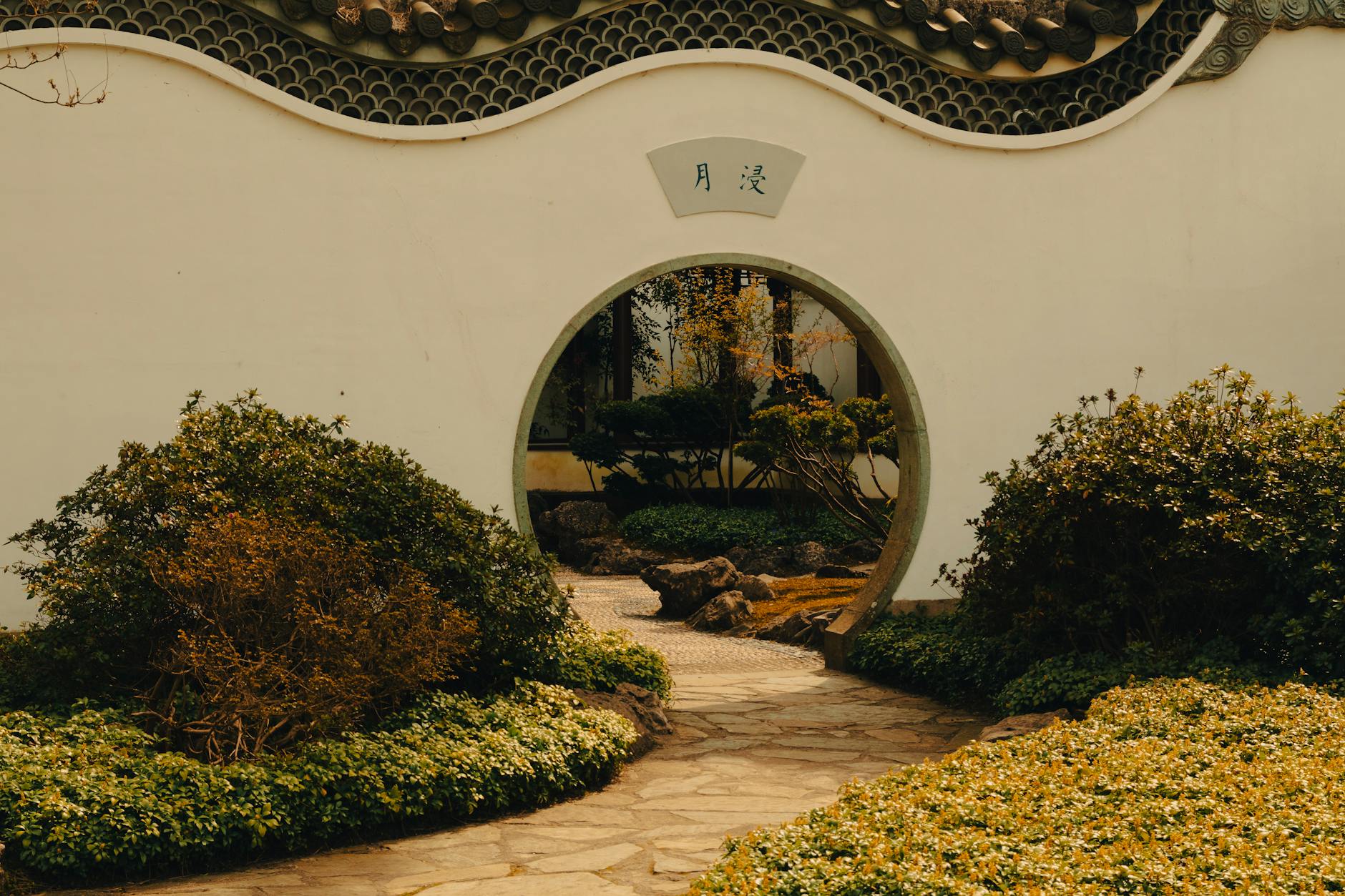
The Entrance Courtyard. Pass through the entrance hall, where the garden’s history is presented in panels. The first courtyard reveals the central pond through a moon gate — a classic Suzhou design moment.
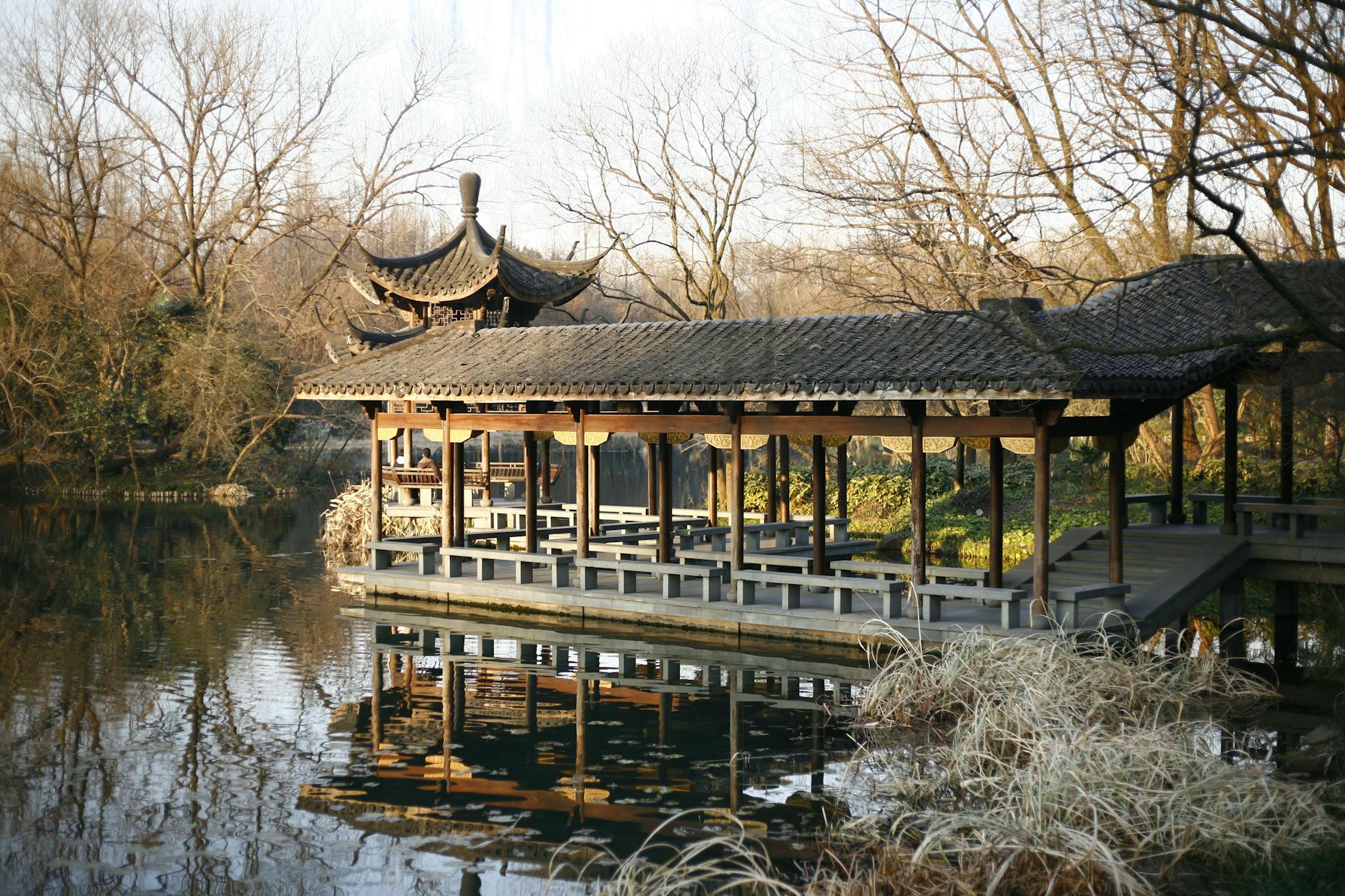
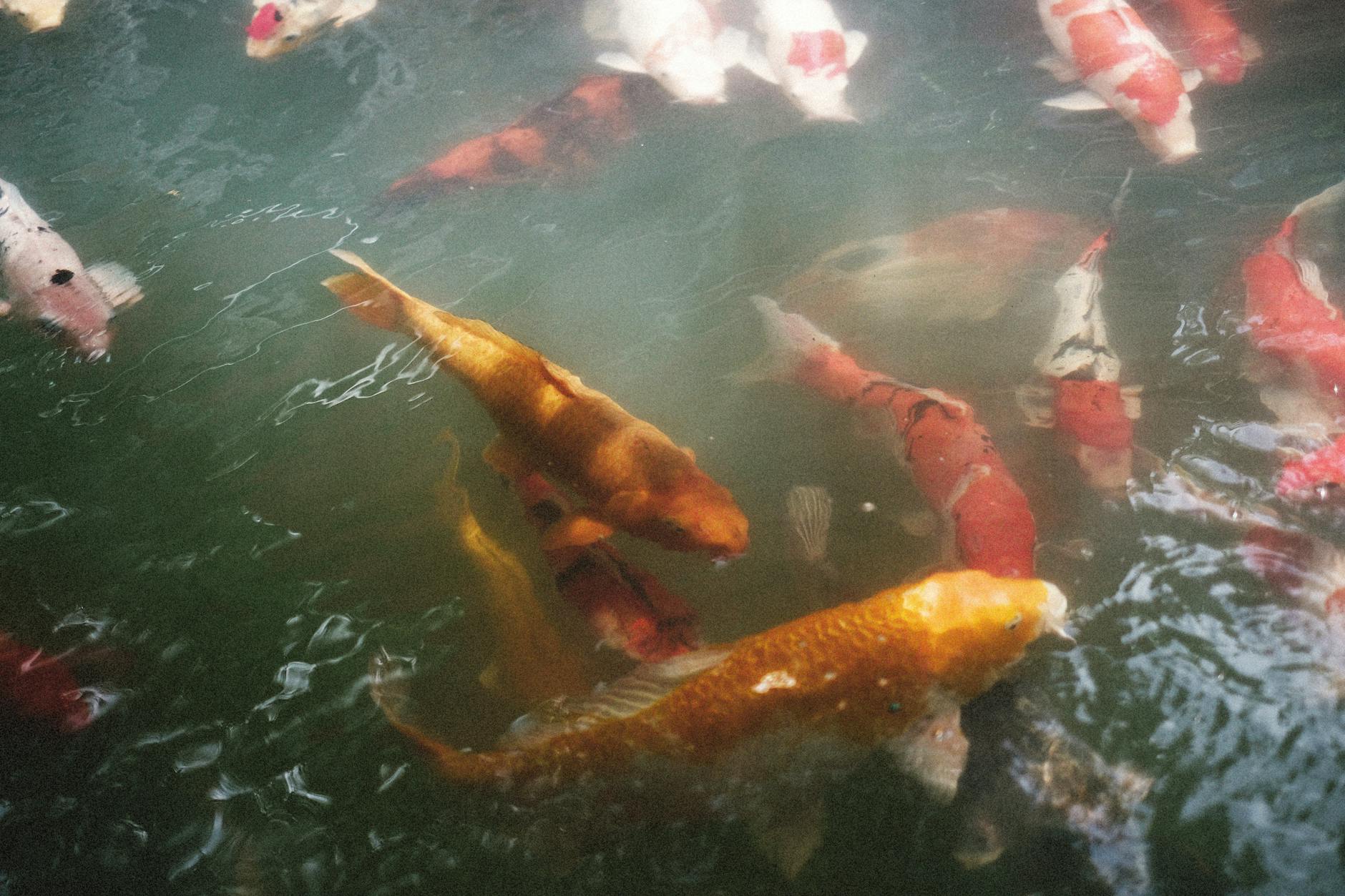
The Central Pond. The garden’s literal and visual centre. Jade-green water (the colour comes from a clay base), Taihu limestone islands, koi fish, water lilies in summer, the central pavilion bench. Sit here for 15 minutes; this is the experience.
The Hall of One Hundred Rivers. The largest indoor space in the garden — a Ming-style scholar’s reception room with original lattice windows, calligraphy scrolls, and a small altar. Often used for tea ceremonies.
The Scholar’s Study. A small private courtyard meant to evoke the contemplative space where a Ming scholar would write poetry, paint, or play the guqin (a seven-string Chinese zither). Quiet and inward-looking.
The Bamboo Courtyard. The smallest space, dominated by a tall stand of black bamboo that filters the light. Often where a visiting calligrapher demonstrates work.
The garden is fully accessible by wheelchair via a discreet ramp at the side entrance — ask staff at the front desk.
Guided Tours, Tea Ceremonies & Programming
The single best thing you can do at this garden is take a guided tour. The garden’s design is dense with symbolism that you will miss without a guide.
Daily guided tours. Free with admission. Tours run multiple times per day (typically 11:00 a.m., 12:30 p.m., 2:00 p.m., 3:00 p.m. — confirm at the front desk). Tours last 45 minutes and cover history, design principles, and Suzhou construction techniques.
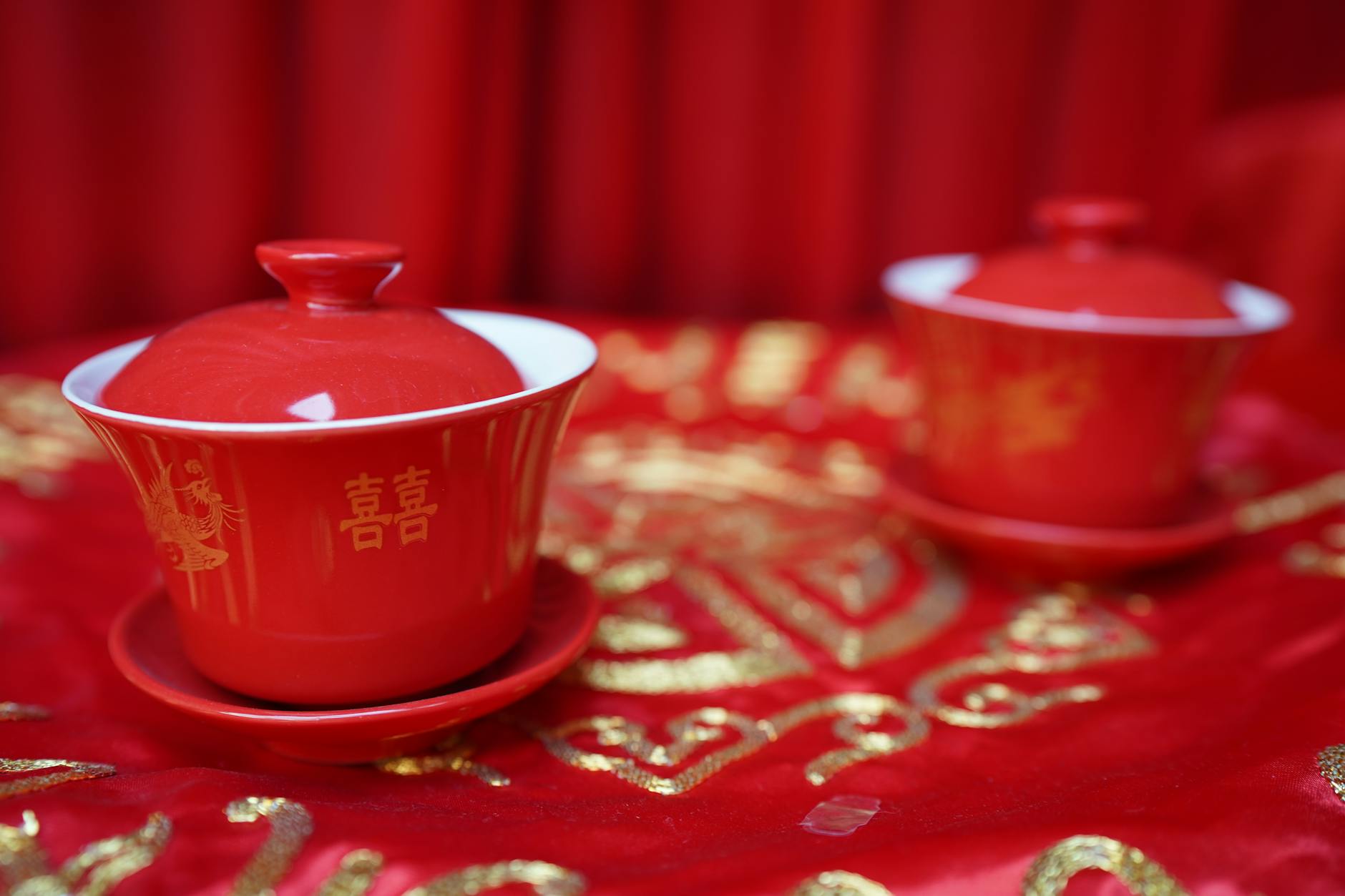
Tea ceremonies (Saturdays and Sundays). Bookable in advance for $25–$35 per person on top of admission, the formal Chinese tea ceremony runs three times each weekend day:
- 10:30 a.m. session
- 11:45 a.m. session
- 1:00 p.m. session
Each session lasts about 60 minutes, accommodates up to 8 guests, and includes traditional Chinese tea preparation (gong fu cha), explanation of the four cardinal teas (green, white, oolong, pu-erh), and sweet treats. A wonderful experience; book at least 48 hours ahead.
Mooncake making, calligraphy classes, qigong sessions, and Tai Chi mornings are scheduled monthly throughout the year. Check the events calendar at vancouverchinesegarden.com.
Concerts in the Garden. Friday evening summer concerts (June – August) — typically Chinese classical music or world fusion — are bookable separately at $20–$35 per person.
The Free Dr. Sun Yat-Sen Park Next Door
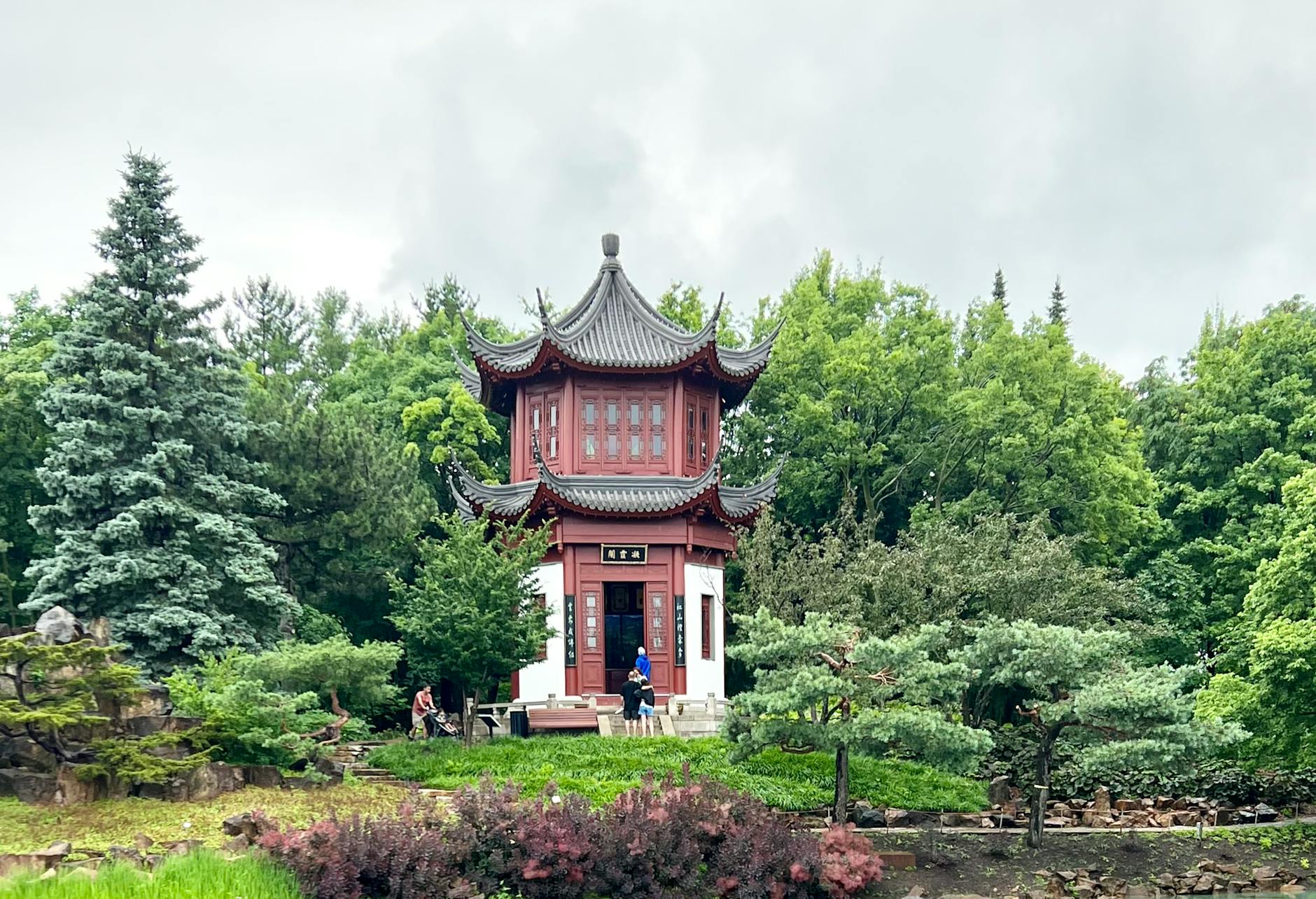
Immediately next to the paid garden is the Dr. Sun Yat-Sen Park — a smaller, public, free park designed in a complementary classical Chinese style. The free park has its own koi pond, a few Taihu rocks, traditional Chinese pavilions, and a quieter atmosphere.
The free park is genuinely beautiful, and many casual visitors find it sufficient — particularly families with young children who would not get full value from the paid garden. The two are separated by a stone wall; from inside the paid garden you can see into the free park (and vice versa), and the design intentionally connects the two.
Should you pay for the classical garden, then? Yes if you want the design depth, the guided tour, the tea ceremony, or quiet without crowds. The paid garden caps visitor numbers and is significantly quieter. The free park gets more foot traffic and is sometimes used by neighbourhood residents for tai chi or birdwatching.
The free park is open 24/7. The paid garden is Wed–Sun, 9:30 a.m. – 4:00 p.m.
Who Was Dr. Sun Yat-Sen?
Dr. Sun Yat-Sen (1866–1925) was a Chinese revolutionary politician and physician who served as the first provisional president of the Republic of China after the 1911 Xinhai Revolution that overthrew the Qing Dynasty. He is regarded in both mainland China and Taiwan as the founding father of modern China.
Sun Yat-Sen visited Vancouver three times during his political exile (1897, 1910, 1911), travelling between San Francisco, Vancouver, Honolulu, and Yokohama as he organized the revolutionary movement among overseas Chinese communities. During his Vancouver stays he stayed in Chinatown’s Pender Street area, just blocks from the present-day garden. He raised funds, gave speeches at the Chinese Empire Reform Association building (now the Chinese Cultural Centre), and corresponded with revolutionary networks in Hong Kong and Tokyo.
The Vancouver garden is one of several Sun Yat-Sen-named institutions worldwide, including memorials and gardens in San Francisco, Honolulu, Hong Kong, and his hometown of Zhongshan, China.

Visiting with Kids
The garden is best for kids who can be quiet for an hour. Honest age guidance:
Ages 0–5. Free admission, but the garden’s appeal is contemplative rather than active. Many young children get bored within 15 minutes. The free Dr. Sun Yat-Sen Park next door is often a better choice for this age group.
Ages 6–12. Take the guided tour — kids respond well to the “no nails” construction story, the koi feeding, and the moon-gate “secret passage” framing. Allow 60 minutes total, max.
Ages 13+. Older kids interested in design, calligraphy, or Chinese culture get a lot from the garden. Pair with the Chinese Canadian Museum two blocks away (covered in our Vancouver culture pillar) for a thoughtful 3-hour Chinatown morning.
For more family ideas, see our Vancouver with kids pillar.
Festivals & Seasonal Events
Annual festivals at the garden are the highest-impact reasons to plan a visit:
Lunar New Year (February). The garden’s biggest single event. Lion dances, calligraphy demonstrations, fortune telling, traditional Chinese instrumental music, and a fortune-tree wishing wall. Special evening hours; tickets often include festival programming.
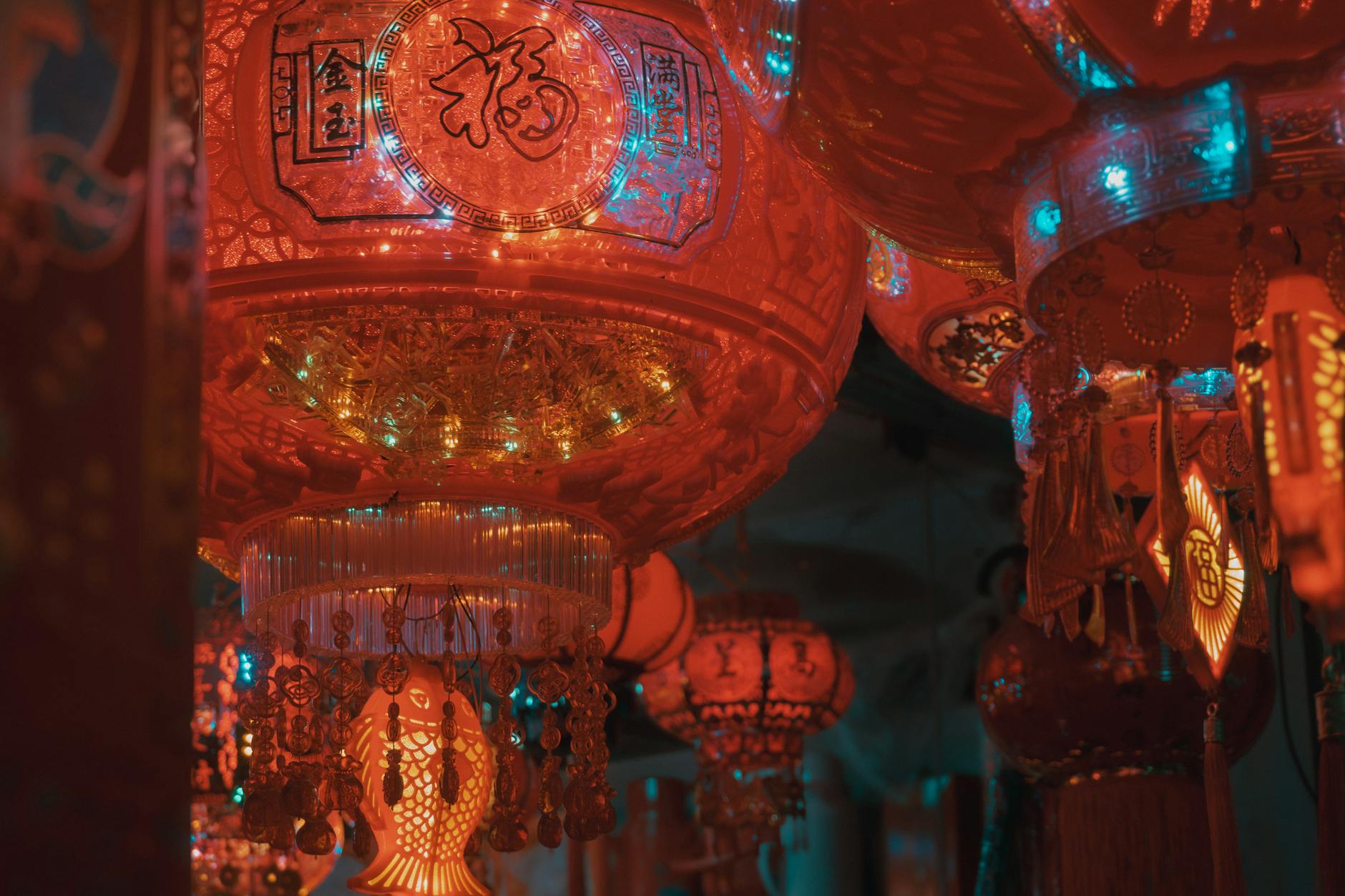
Mid-Autumn Festival (September or October). Mooncakes, lanterns, classical Chinese poetry readings, and a moon-viewing pavilion gathering. One of the most beautiful evenings the garden hosts.
Winter Solstice Festival (December). Lantern lighting, hot Chinese tea, and traditional storytelling. Evening hours; popular with families.
Cherry Blossoms (late March – April). The garden’s plum trees flower in early spring; not strictly cherry blossoms, but a beautiful peak-bloom moment that pairs with Vancouver’s wider cherry-blossom festival across the city.
For Vancouver’s full annual festival calendar, see our events and festivals pillar.
Getting There & Combining with Chinatown
Address: 578 Carrall Street, Vancouver, BC.
By SkyTrain. Stadium-Chinatown station (Expo Line) is two blocks away; 5-minute walk down Pender Street.
By bus. Many downtown buses including the #3 Main Street bus stop within two blocks.
On foot: 10–15 minutes from most downtown hotels.
By car: Street parking (metered) and a few small parkades on Pender. Limited; use transit if possible.
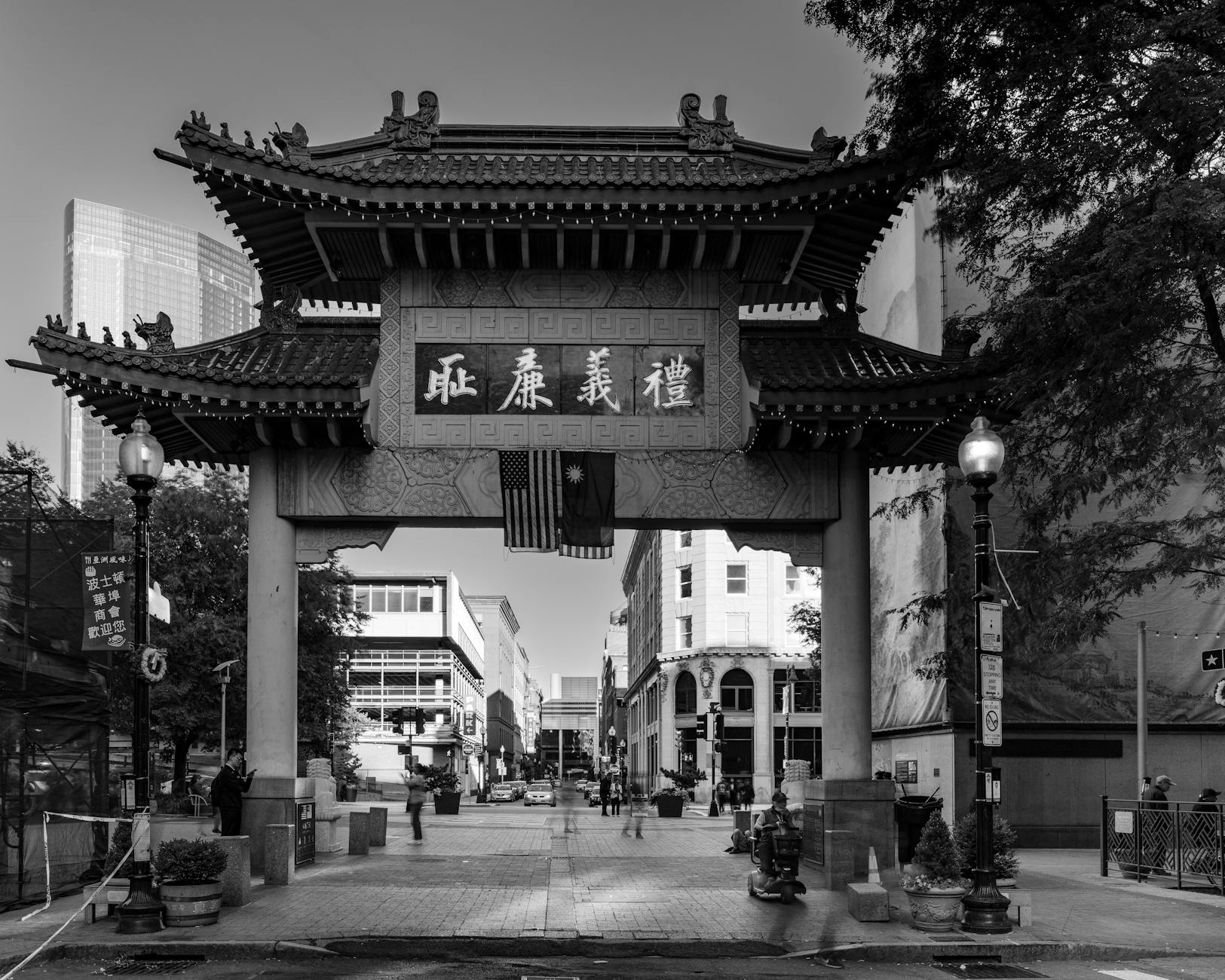
Combine with Chinatown. The garden is two blocks from the Millennium Gate at Pender and Taylor (Vancouver’s Chinatown gateway), three blocks from the Chinese Canadian Museum, and four blocks from Gastown’s Maple Tree Square. A natural three-stop morning: Gastown Steam Clock → Chinatown Garden → Chinese Canadian Museum, with lunch at Bao Bei or Phnom Penh in between. See our Gastown walking guide and Vancouver culture pillar.
Related Vancouver guides
Keep planning with these guides:
Sun Yat-Sen Garden FAQs
How much is the Dr. Sun Yat-Sen Garden in 2026?
Adult admission is about $16 CAD; student/youth (6–17) about $12; family (2 adults + 3 kids) $32; children under 6 free. Members and BC Status Indigenous visitors free.
Is the garden free?
The Dr. Sun Yat-Sen Classical Chinese Garden charges admission. The smaller Dr. Sun Yat-Sen Park immediately next door is free 24/7 and is a very respectable substitute if you don’t want to pay.
How long do you spend at the Sun Yat-Sen Garden?
60 to 90 minutes is typical. Add 60 minutes if you book a tea ceremony.
What’s the difference between the paid garden and the free park?
The paid garden is the authentic Ming Dynasty-style classical scholar’s garden built by Suzhou artisans, with smaller crowds and full design depth. The free park is a smaller, contemporary classical Chinese-style public park immediately adjacent — beautiful but less elaborate.
Are guided tours included?
Yes — multiple free guided tours run daily (typically 11 a.m., 12:30 p.m., 2 p.m., 3 p.m.) and are included with admission. Tea ceremonies on weekends are a separate ticketed program ($25–$35 add-on).
Is the garden open Mondays?
No — closed Monday and Tuesday year-round. Open Wednesday through Sunday, 9:30 a.m. – 4:00 p.m.
Can you take photos?
Yes, personal photography is welcomed. Tripods, drones, and commercial photography require advance permission.
Is the garden good for kids?
Best for kids 6 and up who can stay quiet. Younger children may be happier next door at the free park. Family tickets ($32) are the best value when bringing young children for a short visit.
Reading the Garden: Design Symbolism
Every element of a Ming Dynasty scholar’s garden carries layered meaning. A guided tour will walk you through some of these, but knowing the symbolism in advance turns a 60-minute visit into a much richer experience. The major design symbols at Vancouver’s garden:
Yin and yang. The garden is consciously composed around opposing pairs — water (yin, soft, feminine) and stone (yang, hard, masculine); smooth (yin) and rough (yang); reflective (yin) and absorbing (yang). The pond is jade-green (yin); the limestone Taihu rocks (yang). The pavilion benches (yin) sit on stone foundations (yang). Every paired element expresses the Taoist principle that opposites complement rather than contradict.
The four seasons. Specific plants represent each season: plum blossoms (winter — the season of perseverance), bamboo (spring — youthful growth), pine (summer — strength and longevity), chrysanthemum (autumn — quiet contemplation). Walk through the garden and identify each; finding the four-seasons sequence is a Ming-era visitor’s traditional exercise.
The “Three Friends of Winter” (Sui Han San You). Pine, bamboo, and plum are the three plants that thrive through winter — symbols of friendship that endure hardship and the qualities of an idealised Ming scholar (steady, flexible, fragrant in adversity). All three are present in the garden, often grouped together near the pavilion.
The Taihu rocks. The unusual, weathered limestone rocks throughout the garden come from Lake Tai (Taihu) in eastern China — the same source as the rocks in Suzhou’s most famous historical gardens. The rocks were chosen for the holes that water has eroded through them over millennia. Each rock has its own “personality” and the placement is deliberate; from certain angles a single rock evokes a mountain landscape.
Borrowed scenery (jiè jǐng). The garden walls are deliberately sized to frame views of the modern Vancouver skyline above them. The framing is intentional — a Ming scholar’s garden was always conceived in relationship to the surrounding world, not as an isolated retreat. The visible Vancouver skyscrapers are part of the design, not an intrusion on it.
The moon gate. The circular passages between courtyards represent perfection and infinity. Pass through one with the deliberateness of crossing a threshold; many Chinese visitors pause briefly before walking through.
Volunteer Programs & Memberships
For visitors who fall in love with the garden — many do — there are several ways to engage beyond a single ticket.
Annual membership (about $50 individual; $80 household). Includes unlimited entry, free guided tours, member-only events, and 10 percent off all classes and programs. Pays for itself on a third visit and is the go-to purchase for Greater Vancouver residents who appreciate the garden as a meditative regular escape.
Volunteer programs. The garden runs an active volunteer program with three core streams:
- Garden interpretive volunteers — train as docents leading guided tours; commitment of 4 hours/week minimum. Includes free admission and 25 percent gift-shop discount.
- Garden maintenance volunteers — work alongside the head gardener on planting, pruning, weeding, and the seasonal soil amendments that keep the garden authentic. Saturday morning shifts; learn classical Chinese horticulture techniques.
- Special events volunteers — help run Lunar New Year, Mid-Autumn Festival, and the Winter Solstice events. Variable hours; meaningful for visitors interested in Chinese cultural events.
Cultural classes. The garden runs weekly classes in calligraphy, traditional Chinese painting, qigong, and tai chi. Single classes from $25; multi-week courses from $200. The qigong class on Saturday mornings is particularly recommended — it’s held outdoors in the garden when weather permits.
Tea ceremony intensive. A 4-week formal tea-ceremony course runs three times annually (typically March, June, September). About $300 for the course; you learn the gong fu cha tradition with a senior practitioner. Limited to 8 students per cohort.
Garden monthly newsletter. Free; covers the garden’s seasonal changes, upcoming events, volunteer opportunities, and short essays on Chinese garden history. Sign up at vancouverchinesegarden.com.
Sister Garden Comparison: Suzhou’s Gardens
Vancouver’s Dr. Sun Yat-Sen Garden was modeled on the classical scholar’s gardens of Suzhou — a city in eastern China that’s been called “the Venice of the East” for its canal network and home to roughly 60 historically significant Ming Dynasty gardens. Suzhou’s most famous gardens (the Humble Administrator’s Garden, the Lingering Garden, the Master of the Nets Garden) are a UNESCO World Heritage site.
Vancouver’s garden is the same school of design but at much smaller scale. Comparison:
- Humble Administrator’s Garden (Suzhou) — 5 hectares; built 1509–1517. About 20× larger than Vancouver’s garden.
- Lingering Garden (Suzhou) — 2.3 hectares; rebuilt in the 16th century. About 9× larger.
- Master of the Nets Garden (Suzhou) — 0.5 hectares; one of the smallest Suzhou classical gardens. Closest in scale to Vancouver’s; arguably the design template most directly visible at Vancouver’s garden.
- Vancouver’s Dr. Sun Yat-Sen Garden — 0.25 hectares (2,500 m²). Roughly half the size of the smallest Suzhou classical garden.
Despite the size difference, Vancouver’s garden was built using the same techniques, materials, and design principles as the Suzhou originals. The 53 artisans who came to Vancouver in 1985–86 were trained in the Suzhou tradition; the materials (stones, tiles, beams, latticework) were brought directly from China; the joinery uses no nails or modern fasteners.
For visitors who fall in love with Vancouver’s garden and want to see the originals, Suzhou is a 25-minute fast-train ride from Shanghai. The Master of the Nets Garden is the closest comparator and runs an evening illuminated programme that’s particularly memorable. Suzhou is well worth a 2-day visit on any China trip.
Other classical Chinese gardens in North America: the Lan Su Chinese Garden in Portland (also Suzhou-style, opened 2000), the Astor Court Chinese Garden inside the Metropolitan Museum of Art in New York (a single courtyard reproduced from Suzhou), and the Liu Fang Yuan in Pasadena’s Huntington Library (the largest Chinese garden in North America, 6 hectares). Vancouver’s was the first authentic full-scale Suzhou-style garden built in North America and remains one of the most-loved.
Related reading: Things to Do in Vancouver · Vancouver Culture & History · Gastown Walking Guide · Vancouver Events & Festivals · Vancouver with Kids · Vancouver Itinerary