
VanDusen Botanical Garden and Queen Elizabeth Park are Vancouver’s two great horticultural destinations — neighbouring, complementary, and ideally visited as a half-day pair. VanDusen is a 22-hectare collection of 7,500 plant species arranged across 60+ themed gardens; Queen Elizabeth Park is a former rock quarry transformed into the city’s most-visited free park, with the only domed Bloedel Conservatory tropical greenhouse in Canada west of Toronto.
This 2026 guide covers everything you need to plan a visit: VanDusen ticket prices and the new ShowPass online system, Queen Elizabeth Park’s free attractions, the Bloedel Conservatory paid extension, the famous Elizabethan hedge maze, when each garden peaks seasonally, and how to combine the two for a top-value Vancouver botanical day.
Table of Contents
VanDusen & Queen Elizabeth Park: An Overview
Both gardens sit on Vancouver’s south slope, about 5 km south of downtown, less than 1 km apart. They share an Indigenous geographic origin — the entire ridge they sit on is the unceded traditional territory of the xʷməθkʷəy̓əm, Sḵwx̱wú7mesh, and səlilwətaɬ Nations — and they share a settler-era history of being stripped industrial land that the city later transformed into green space.
VanDusen Botanical Garden opened in 1975 on the former Shaughnessy Golf Course site. It is named for benefactor Whitford Julian VanDusen, a Vancouver lumber executive who chaired the founding committee. Today VanDusen holds 7,500+ plant species across 60+ themed gardens — Japanese, Mediterranean, Korean, Sino-Himalayan, BC native, alpine, and many more. It is a serious botanical garden in the international research and conservation sense, not just a public park.
Queen Elizabeth Park is a free 130-acre civic park that was Vancouver’s first quarry — basalt blocks for the city’s heavy infrastructure were cut here from 1911. The quarry was rehabilitated into gardens in the 1940s and is now home to the Bloedel Floral Conservatory (paid), the city’s most popular pitch & putt course, the Quarry Gardens (the city’s most-photographed wedding spot), and the highest viewpoint in central Vancouver at 152 metres elevation. About 6 million annual visits make it Vancouver’s most-visited park after Stanley Park.
Quick combined facts:
- VanDusen Botanical Garden: 22 hectares, paid admission, 7,500+ species, 60+ themed gardens
- Queen Elizabeth Park: 130 acres, free entry, panoramic city views, Bloedel Conservatory paid
- Distance between the two: 1 km / 12-minute walk along Cambie Street
- Combined visit time: half day (4 hours) is enough; full day for a thorough exploration
VanDusen Botanical Garden Tickets & Hours (2026)
Tickets are now sold via ShowPass at vandusengarden.org/plan-your-visit/hours-admission.
2026 ticket prices (taxes included):
- Adult (19+): about $13.85 online ($14.85 at the gate)
- Senior (65+) / Student / Youth (13–18): about $11
- Child (5–12): about $8
- Under 5: free
- Family (2 adults + 3 kids): about $32
- Group rate (10+): 10 percent off
Annual passes: About $80 individual, $130 household. Includes free entry to Bloedel Conservatory at Queen Elizabeth Park.
Hours (2026):
- Daily 10:00 a.m. – 5:00 p.m. (extended to 7:00 p.m. summer evenings)
- Last entry: 1 hour before closing
- Closed Christmas Day; reduced hours December 24 and 26
- Special evening hours during Festival of Lights (December)
Indigenous educational visits: VanDusen and Bloedel offer free educational programs to members of the xʷməθkʷəy̓əm, Sḵwx̱wú7mesh, and səlilwətaɬ Nations.
VanDusen Highlights & Themed Gardens
VanDusen is too large to see comprehensively in one visit. The 60+ themed gardens are organized roughly by geography. Highlights for first-time visitors:
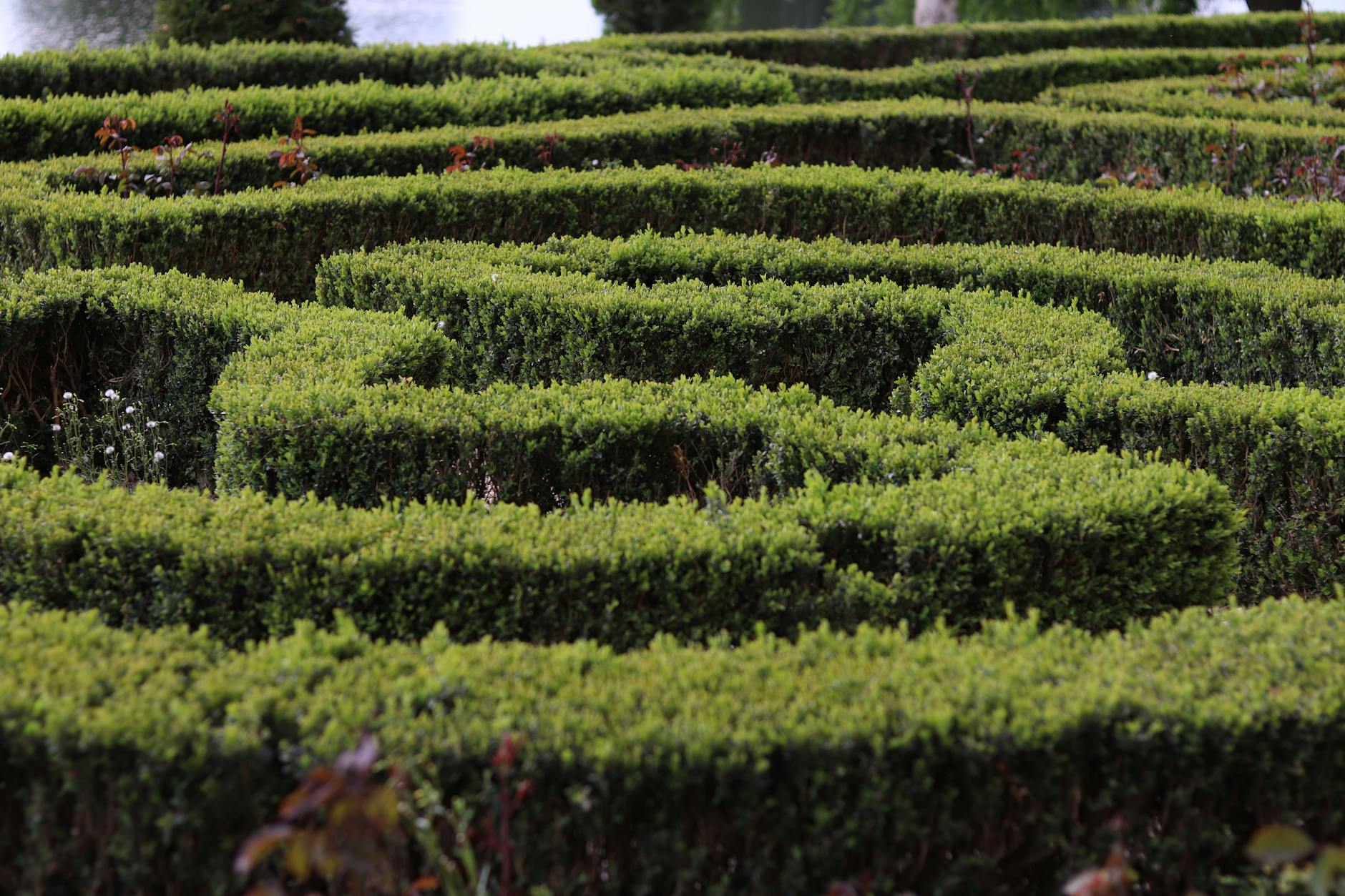
The Elizabethan Hedge Maze. A 2,500-bush English yew hedge maze planted in 1981 — one of the few publicly accessible hedge mazes in Canada. About 15 minutes to solve. Located in the southwestern corner; well-loved by families and photographers.
The Korean Pavilion & Garden. Constructed in 1984 with materials and craftsmanship from Korea — a contemplative space with traditional pavilion architecture, stone lanterns, and a small reflecting pool.
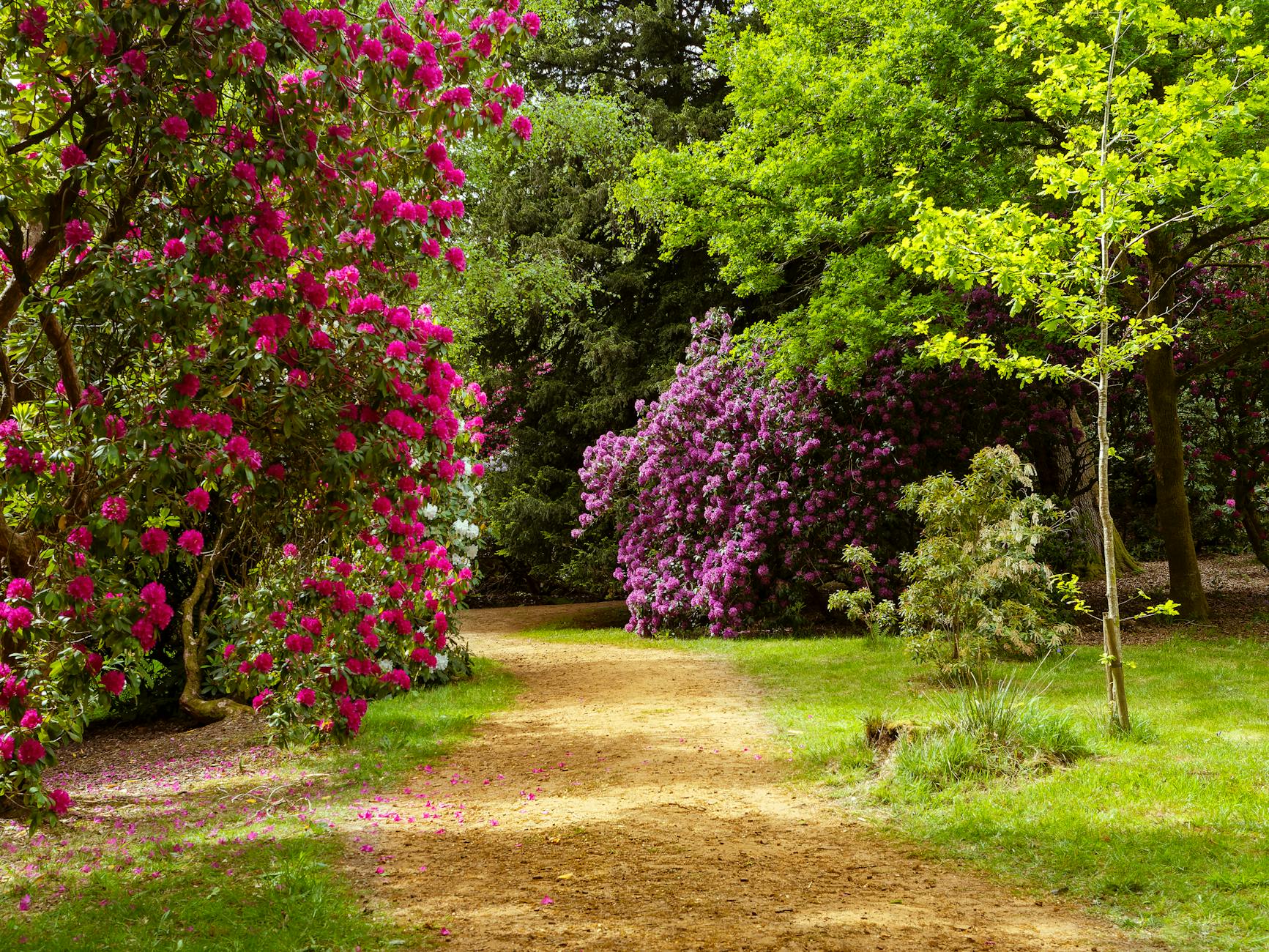
The Sino-Himalayan Garden. Plant species from the high mountains of southwestern China and the Himalayas, including rhododendrons, magnolias, and unusual ferns. The peak is mid-spring (April–May).
The Japanese Garden. A traditional stroll garden with stone lanterns, Japanese maples, irises, and a wisteria pergola. Spring and fall peaks.
The Mediterranean Garden. Drought-tolerant plantings — olive trees, lavender, rosemary, and aromatic herbs.
The Heather Garden. 200+ varieties of heather; peak blooms in winter and early spring (one of the few gardens that peaks in winter).
The BC Habitat Gardens. Native west-coast forest and meadow plantings, including a small old-growth-style stand of Western red cedars.
The Visitor Centre Building. The 2011 LEED Platinum-certified visitor centre is itself an attraction — a flower-petal-shaped building made of cross-laminated timber, with an undulating “living roof” of native sedums.
The garden also hosts the Stone Garden (replica of a Suzhou-style scholar’s garden, smaller and free with admission), the Sundial Walk, the formal Rose Garden, and a comprehensive Children’s Garden.

Festival of Lights & Seasonal Events
VanDusen’s Festival of Lights is the garden’s signature event and one of Vancouver’s most beloved December traditions. Running annually from late November through early January, the festival illuminates the garden with over one million LED lights, themed light installations, and a lantern-festival walking route. Admission about $20–$28 adult separately ticketed (members free).
Sakura Days Japan Fair (mid-April 2026, two days). The biggest event of spring — Japanese tea ceremonies, taiko drumming, ikebana floral arrangement, sushi-making demonstrations. Special event ticket required for garden access during the fair.
Spring Plant Sale (early May). 20,000+ plants for sale; one of Vancouver’s biggest annual plant events for home gardeners.
Summer concerts. Friday evening summer concerts in July and August feature small ensembles in the garden’s grassy amphitheatre — typically classical, jazz, or world music.
VanDusen Annual Photography Contest. Submissions open year-round; the winning photographs feature on the garden’s annual calendar.

Queen Elizabeth Park (Free)
Queen Elizabeth Park is one of Vancouver’s most-loved free attractions. The park sits on Little Mountain, the highest point in the City of Vancouver at 152 metres elevation. From the ridge at the top of the park, you get a panoramic skyline view of the downtown core, framed by the rose garden and the formal gardens — easily the best free city skyline view in Vancouver.
The Quarry Gardens. Two former basalt quarries that were filled and replanted in the 1940s and 1950s with formal flower beds, ornamental water features, and footpaths. Vancouver’s most-photographed wedding spot — on a typical Saturday in May, you’ll see 8 to 12 wedding parties in the gardens.
The Rose Garden. The formal rose garden contains 80+ varieties of roses with peak blooms June through September.
The Lookout Plaza. The flat plaza at the north end of the park gives you the panoramic city view. Henry Moore’s bronze sculpture Knife Edge — Two Piece (1962, on long-term loan to the city) sits on this plaza.
The Dancing Waters Fountain. Choreographed water displays from the central fountain, on the hour, May through September.
Hours: Open 24/7 year-round. Free.
For free things to do in Vancouver, see our Vancouver on a budget pillar.
Bloedel Floral Conservatory
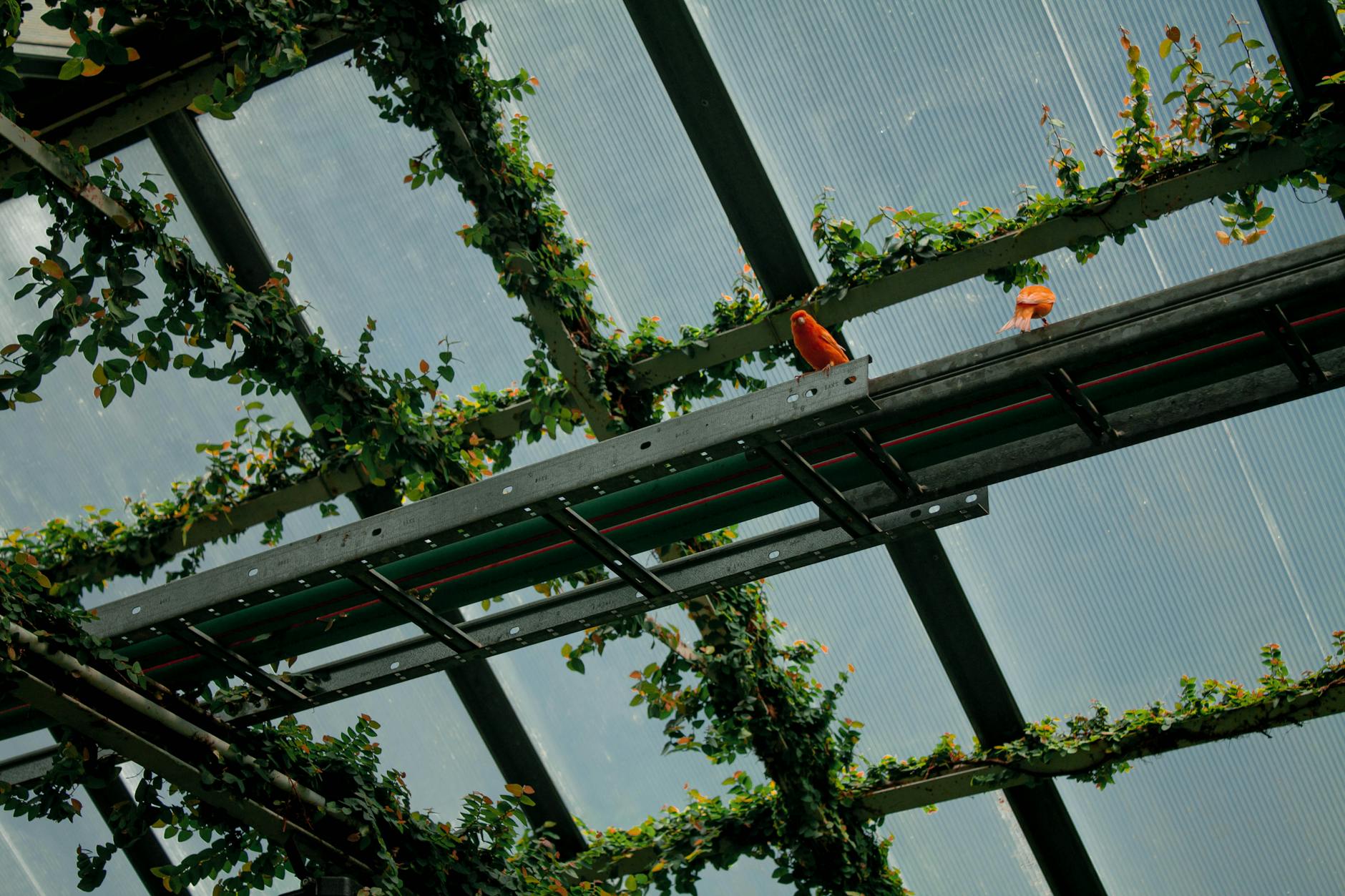
The Bloedel Floral Conservatory sits on the highest point of Queen Elizabeth Park, inside a 43-metre-diameter triodetic geodesic dome opened in 1969. Inside the dome’s controlled tropical climate (about 18 °C and 70 percent humidity year-round), 500+ exotic plants share space with about 200 free-flying tropical birds — including macaws, cockatoos, parrotlets, and the dome’s most photographed resident, Charlie the Mealy Parrot.
2026 ticket prices:
- Adult: about $7.85
- Senior / Youth (13–18): about $5.50
- Child (5–12): about $4
- Under 5: free
- Free with VanDusen annual pass
Hours: Daily 10 a.m. – 5 p.m. year-round; reduced winter hours possible.
Allow 45–60 minutes. The dome is fully indoors and climate-controlled, making it an excellent rainy-day stop. The free-flying birds are the highlight; staff regularly feed them in front of visitors and bring out birds for closer looks during scheduled “bird talks.”
Pitch & Putt, Tennis & Pavilion Restaurants
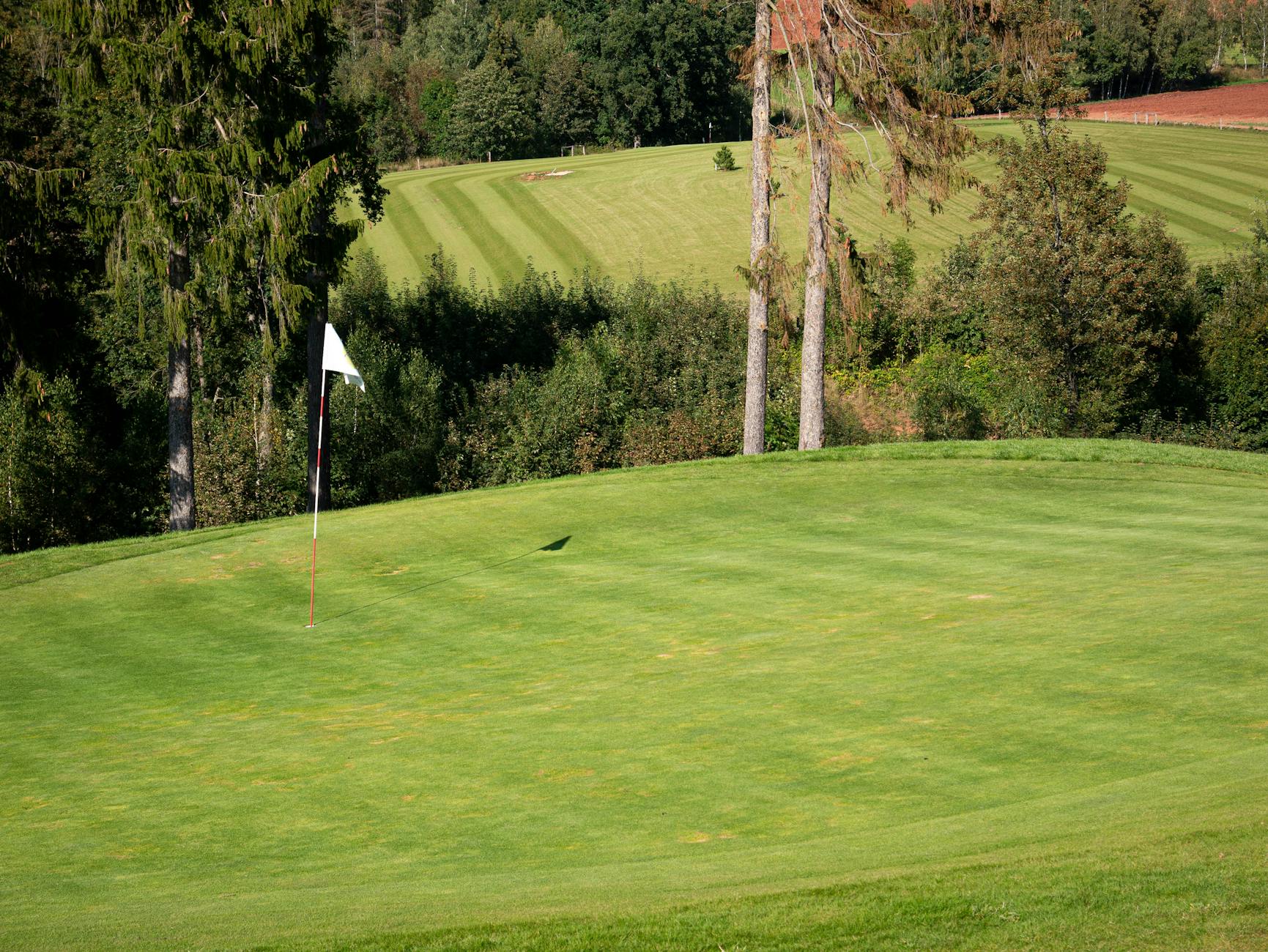
Queen Elizabeth Park Pitch & Putt. An 18-hole, 1,200-yard public golf course inside the park. Adult about $20 in 2026; clubs and balls rentable. One of the most-loved urban pitch & putt courses in Western Canada. Open March through October.
Tennis courts. 18 free public hard courts (no booking required, first-come first-served).
Disc golf course. A 9-hole, free disc-golf course winds through the wooded southern portion of the park.
Seasons in the Park (restaurant). A glass-fronted full-service restaurant with city-skyline views, sitting at the highest point of the park near the Bloedel dome. Lunch and dinner; mains $34–$58. Reservations recommended; the patio is one of Vancouver’s most romantic.
Truffles Café (Bloedel Conservatory). Casual cafeteria-style café next to the Bloedel dome. Sandwiches, soups, salads, kids’ menus.
Best Times to Visit (Month by Month)
Each garden has its own peak moments. Combining the two gives you year-round value:
January – February. VanDusen’s heather garden, witch hazel, and winter-flowering camellias peak. Bloedel Conservatory is a warm, tropical refuge.
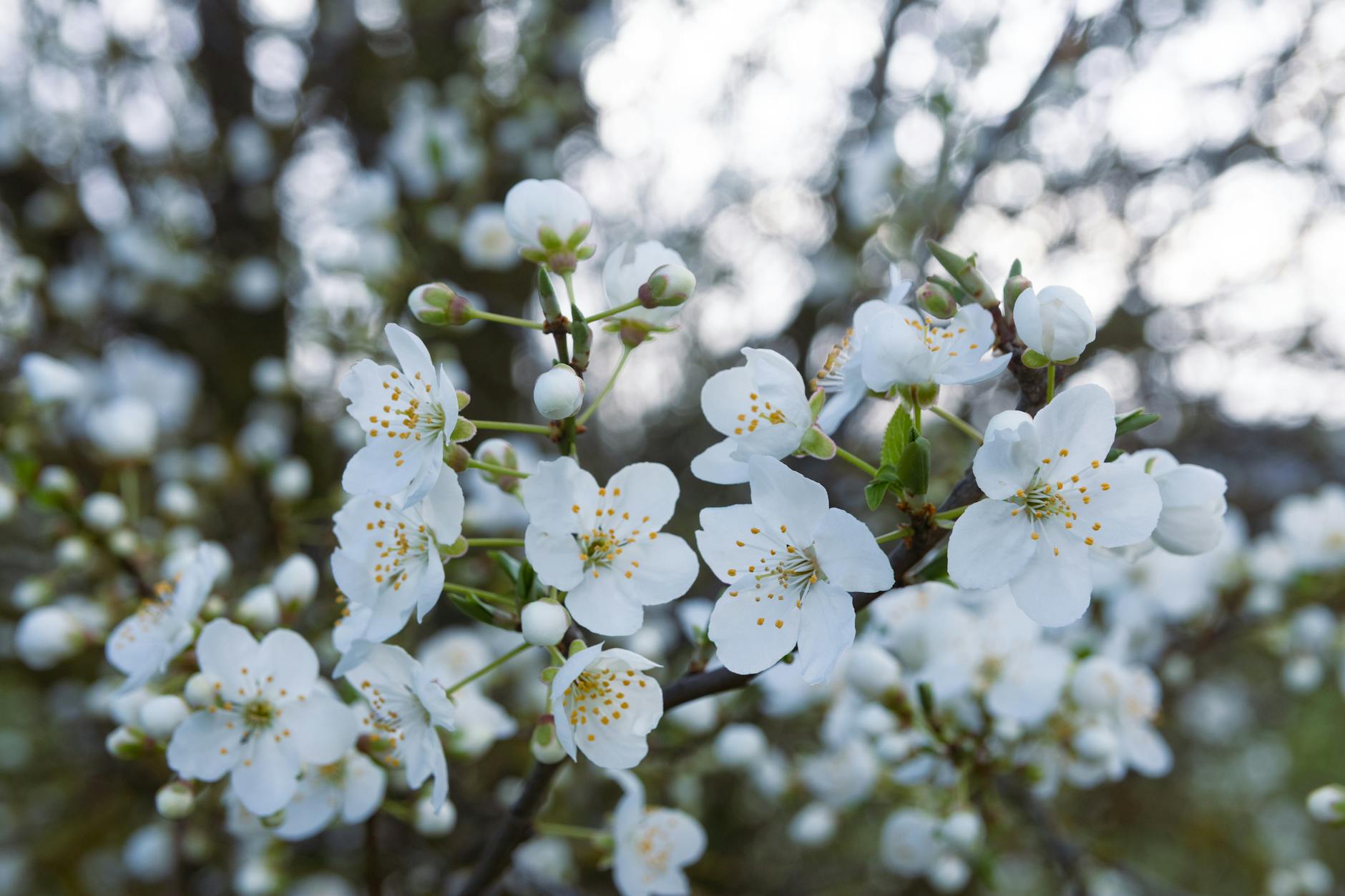
March – April. Cherry blossoms across the city; both gardens have plum, magnolia, and tulip displays. Sakura Days at VanDusen (mid-April).
May – June. Rhododendrons, peonies, and the rose gardens hit peak. Both gardens are at their fullest.
July – August. Roses, summer perennials, the Mediterranean garden at peak. Highest visitor traffic; aim for early mornings.
September – October. Japanese maples turn; the Korean and Japanese gardens are at their photographic best. Crisp mornings, fewer crowds.
November – December. Festival of Lights at VanDusen; the Bloedel Conservatory is a warm tropical break from Vancouver’s wettest months.
For Vancouver weather year-round, see our best time to visit Vancouver pillar.

Visiting with Kids
Queen Elizabeth Park is excellent for kids. Free, lots of space, the Henry Moore sculpture to climb on, the dancing fountains, the disc golf course, and the friendly bird-feeding at Bloedel.
VanDusen is moderate for kids. The Elizabethan hedge maze is the highlight (kids 6+ love it); the Children’s Garden is a small dedicated section with play features. Younger kids may find the rest of the garden too much walking. Strollers welcome on all paved paths.
Stroller advice. All paths are paved or hard-packed gravel. Both gardens are stroller-friendly.
For more family ideas, see our Vancouver with kids pillar.
Getting There
Both gardens are 5 km south of downtown Vancouver and easily reached by transit.
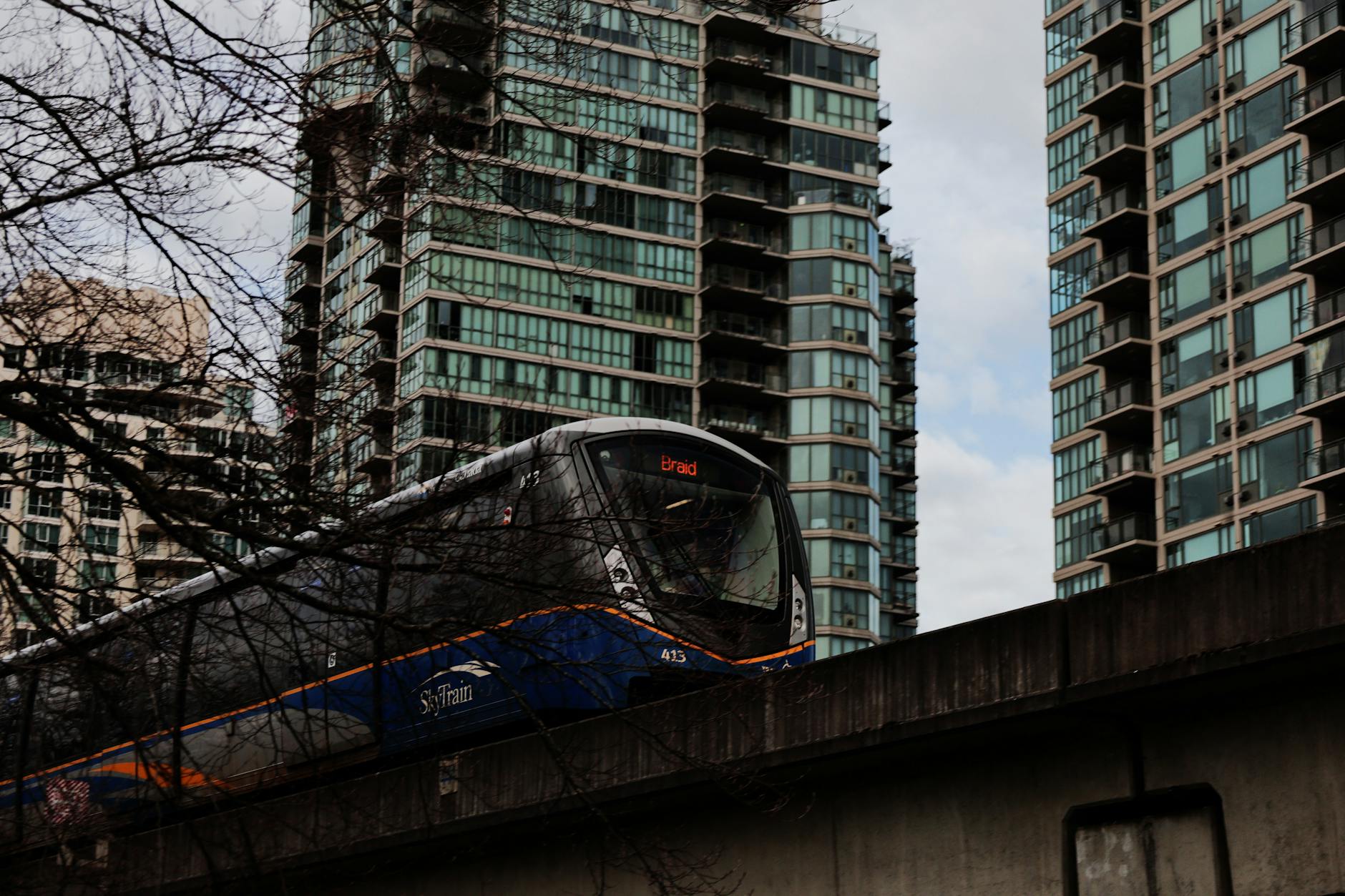
By SkyTrain. Oakridge-41st Avenue station (Canada Line) is a 15-minute walk to VanDusen. King Edward station (Canada Line) is closer to Queen Elizabeth Park (10-minute walk).
By bus. Many Cambie Street and Oak Street routes serve the area, including the #15 Cambie and the #17 Oak.
By car. Free parking at both gardens (VanDusen has a small lot; Queen Elizabeth Park has multiple lots and street parking). About 15 minutes from downtown.
Walk between them. 12-minute walk along Cambie Street between the two main entrances.
By bike. Both have bike racks at entrances. The Off-Broadway bike route runs a few blocks north of both gardens.
For a wider transit overview, see our Vancouver transportation guide.
Related Vancouver guides
Keep planning with these guides:
- Dr. Sun Yat-Sen Classical Chinese Garden Vancouver: 2026 Visitor Guide
- Best Beaches in Vancouver (2026)
VanDusen & Queen Elizabeth Park FAQs
How much is VanDusen Botanical Garden in 2026?
Adult about $13.85 online ($14.85 at the gate). Senior/student/youth $11; child (5–12) $8; under 5 free. Family $32. Annual passes about $80 individual, $130 household.
Is Queen Elizabeth Park free?
Yes — Queen Elizabeth Park itself is free 24/7 year-round. The Bloedel Floral Conservatory inside the park charges admission ($7.85 adult). Pitch & putt and Seasons in the Park restaurant are also paid.
What is the Bloedel Conservatory?
A 43-metre triodetic geodesic dome at the top of Queen Elizabeth Park, holding 500+ tropical plants and 200+ free-flying tropical birds in a controlled tropical climate. About 45–60 minutes; $7.85 adult admission.
Is VanDusen worth visiting?
Yes — for plant lovers and serious gardeners, it is one of Western Canada’s premier botanical gardens. For casual visitors, Queen Elizabeth Park (free) plus Bloedel Conservatory ($7.85) is often a better value combination.
How long do you spend at VanDusen?
2 to 3 hours minimum; serious botanical garden visitors easily spend 4 to 5 hours.
Can you visit both gardens in one day?
Yes — they are 1 km apart on Cambie Street. A typical half-day plan covers both with a lunch at Seasons in the Park between them.
When is VanDusen Festival of Lights?
Annually from late November through early January. Separately ticketed; about $20–$28 adult.
Is the Quarry Garden the same as VanDusen?
No. The Quarry Garden is the formal flower garden inside Queen Elizabeth Park, in the rehabilitated former basalt quarry. VanDusen is a separate paid botanical garden 1 km away.
VanDusen Membership & Reciprocal Garden Access
VanDusen Botanical Garden is one of the best-value membership purchases in Vancouver — the cost amortizes quickly and the reciprocal benefits unlock more than 200 other gardens worldwide.
2026 membership prices:
- Individual membership: about $80/year
- Household membership (2 adults + kids under 18): about $130/year
- Senior individual: about $65/year
- Premium “Patron” membership: $250/year (adds member-only events, named recognition)
What’s included:
- Unlimited entry to VanDusen Botanical Garden
- Free entry to Bloedel Floral Conservatory at Queen Elizabeth Park
- Free entry to the Festival of Lights (late November–early January) — about $20–$28 saved per person per visit
- Member-only previews of new exhibits
- 10 percent gift shop and Truffles Café discount
- Quarterly print magazine
- Reciprocal admission to 200+ AHS-affiliated gardens worldwide (American Horticultural Society Reciprocal Admissions Program)
The reciprocal benefit. The American Horticultural Society’s Reciprocal Admissions Program (RAP) gives VanDusen members free or discounted entry to 200+ partner gardens including the Brooklyn Botanic Garden, the Chicago Botanic Garden, the Missouri Botanical Garden, Longwood Gardens (Pennsylvania), the Lan Su Chinese Garden in Portland, and dozens more. For traveling garden enthusiasts, this is the best Canadian membership purchase available.
The math. A household paying separate admission with two annual visits to VanDusen, one Festival of Lights visit, and three Bloedel visits pays roughly: ($14.85 × 2) + ($14.85 × 2) + ($28 × 2) + ($7.85 × 6) = $138. The household membership at $130 breaks even on this exact pattern. Add reciprocal use at one out-of-province garden during another trip, and you’re saving meaningful dollars.
Gift memberships. Available year-round; popular for wedding/anniversary gifts among gardening enthusiasts. The receiving member gets a welcome packet with garden information and a year of unlimited access.
Volunteer Programs, Tours & Education
VanDusen runs a remarkable depth of educational and volunteer programs that visitors often don’t realise exist.
Daily public tours are free with admission — typically two tours daily (11 a.m. and 2 p.m.) led by trained Garden Guides. Tours focus on a different theme each month (rhododendrons in May; Japanese Garden in autumn; medicinal plants in summer). 60–90 minutes; meet at the Visitor Centre desk.
Weekly classes and lectures. The garden runs 100+ classes annually — pruning, plant identification, garden photography, ikebana, bonsai, watercolour painting in the garden, and more. Single classes from $35; multi-session courses from $150. The summer photography class held in the rose garden at peak bloom is particularly recommended.
Volunteer programs. Three main streams:
- Garden Guides (interpretive volunteers leading public tours) — trained over 3 months; commitment of 4 hours/week. Free entry plus access to behind-the-scenes plant collections.
- Plant Care Volunteers — work alongside professional horticulturists on planting, weeding, dead-heading, and the seasonal task list that keeps 7,500+ species healthy. Saturday mornings; year-round.
- Festival of Lights volunteers — help install lights in October and run the visitor experience during the November–January event. Free Festival of Lights admission and special recognition.
Children’s programs. The Children’s Garden is a year-round dedicated space; in summer a 5-day “Junior Naturalists” camp runs for kids 6–12 (about $375 per week). Teen volunteers (ages 14+) help in the children’s programs and earn community-service hours.
Plant sales. The garden’s flagship Spring Plant Sale (early May) sells 20,000+ plants over a weekend — propagated by garden volunteers and donated by local nurseries. Prices typically 50 percent below retail. The Fall Plant Sale (October) is smaller but follows the same model.
School programs. Curriculum-tied programs for grades K–12 covering pollinator ecology, climate change, seed dispersal, and the BC native habitat gardens. Teacher rates from $5 per student. Booked 4+ weeks in advance.
Wedding Photography & Private Events
VanDusen Botanical Garden hosts roughly 200 weddings per year and is one of Vancouver’s most-photographed wedding venues. Several elements make it work:
Wedding ceremony venues. Three options:
- Stone Garden Lawn (capacity 130 seated). Rolling green lawn surrounded by mature trees; the most flexible space.
- Cypress Pond Lawn (capacity 100 seated). Adjacent to one of the garden’s photogenic pond settings.
- R. Roy Forster Cypress Pond Tent (capacity 200 seated). The covered tent option for rain backup.
Reception venue. The Visitor Centre Pavilion (the 2011 LEED Platinum cross-laminated timber building with a living roof) accommodates 250 standing or 130 seated. The Pavilion features floor-to-ceiling glass on three sides looking out onto the garden — one of Vancouver’s most distinctive event spaces.
Wedding rates 2026: Ceremony venue rentals from $1,500. Reception venue rental + ceremony combo from $4,500. Catering through approved vendors; full-service weddings typically $250–$450 per guest. Booking opens 18 months ahead; popular Saturday dates fill 12+ months in advance.
Photography permits. Wedding photography in the garden (not staying for ceremony or reception) is allowed by photography permit ($175 for 2 hours; $300 for half-day). The photographer must hold a current permit and respect garden visitors. Highly photographed spots: the Korean Pavilion, the Sino-Himalayan rhododendrons (peak May), the Stone Garden, the Elizabethan hedge maze, and the rose garden (peak June–September).
Other private events. Corporate buyouts of individual gardens (about $3,500/half-day), private dinners in the Truffles Café space ($85+/person catered), and educational group programs are all available. The garden’s events team responds to enquiries via [email protected].
Photographer tips. Best wedding-photo windows are the hour before sunset (the pavilion’s living roof catches the warm light beautifully) and the hour just after dawn (quietest time; almost no public visitors). Booking the venue gives you 2 hours before official opening for setup; a smart photographer uses some of that time for first-look shots.
Related reading: Things to Do in Vancouver · Vancouver Outdoor Activities · Vancouver on a Budget · Best Time to Visit Vancouver · Vancouver with Kids · Vancouver Events & Festivals