Blog

  • Vancouver Restaurants & Food Scene: The 2026 Definitive Guide

    Vancouver Restaurants & Food Scene: The 2026 Definitive Guide

    Chef plating dish in modern restaurant kitchen
    Photo by Denys Gromov via Pexels. Vancouver’s food scene spans Michelin fine dining, dim sum, and coffee.

    Hunting down the best restaurants in Vancouver? This 2026 guide covers Michelin-star tasting menus, neighbourhood Cantonese gems, aburi sushi pioneers, Indigenous dining, and the cheap-eats heroes that locals actually rate — the best restaurants in Vancouver, filtered.

    Dining tip: OpenTable is the safest bet for reservations at the best restaurants in Vancouver; book two to three weeks out for Saturday dinner.

    Looking for the essentials? This guide covers everything about best restaurants in Vancouver for 2026 — prices, hours, bookings, local tips, and the quirks only locals know.

    Updated April 2026. Vancouver earned Michelin Guide recognition in 2022, and the stars have only hardened its reputation: North America’s best dim sum outside Hong Kong, the city where flame-seared aburi nigiri became a global technique, a Pacific seafood scene built on the shortest supply chain in the English-speaking world, and a plant-forward movement that genuinely rivals Portland and LA. This guide is organised by cuisine and occasion so you can find the right meal for the right night — with 2026 price points, reservation platforms, and chef-specific notes.

    Vancouver’s food identity rests on four pillars: Cantonese and Chinese diaspora cuisine (the city and especially Richmond), Japanese sushi and izakaya (the largest Japanese-Canadian population after Toronto), Pacific seafood (BC spot prawns, Dungeness crab, Ocean Wise sablefish), and a plant-forward scene anchored by world-class vegetarian fine dining. Layered on top: Punjabi, Filipino, Korean, Vietnamese, Indigenous, Italian, Persian, and a coffee culture that genuinely competes with Melbourne.

    Vancouver’s Food Scene in 2026: What’s Unique

    Michelin Guide: Vancouver was added to the Michelin Guide in October 2022, one of just a handful of North American cities with a dedicated guide. The 2025–2026 edition recognises multiple one-star restaurants including Published on Main, Masayoshi, St. Lawrence, AnnaLena, Burdock & Co., Kissa Tanto, Sushi Masuda, Barbara, and iDen & QuanJuDe Beijing Duck House. The Bib Gourmand list (great food, under $60 pp) rotates yearly — as of 2025, it included Anh & Chi, Bao Bei, Maenam, The Acorn, Phnom Penh, Savio Volpe, Say Mercy!, Autostrada Osteria, Bells and Whistles, and Caffè La Tana.

    The “dim sum capital” claim: Calvin Trillin’s 2014 New Yorker piece on Richmond first framed the greater Vancouver region as North America’s dim sum capital outside of Hong Kong. The description has stuck because it’s true — Richmond alone has 400+ Asian restaurants, and the concentration of Cantonese dim sum masters here is unmatched on this continent.

    Aburi technique’s Vancouver roots: Flame-seared nigiri went mainstream in North America because of chef Seigo Nakamura, who opened Miku in Vancouver in 2008 and Minami in 2012. The Aburi group’s techniques shaped a generation of Pacific-rim sushi chefs.
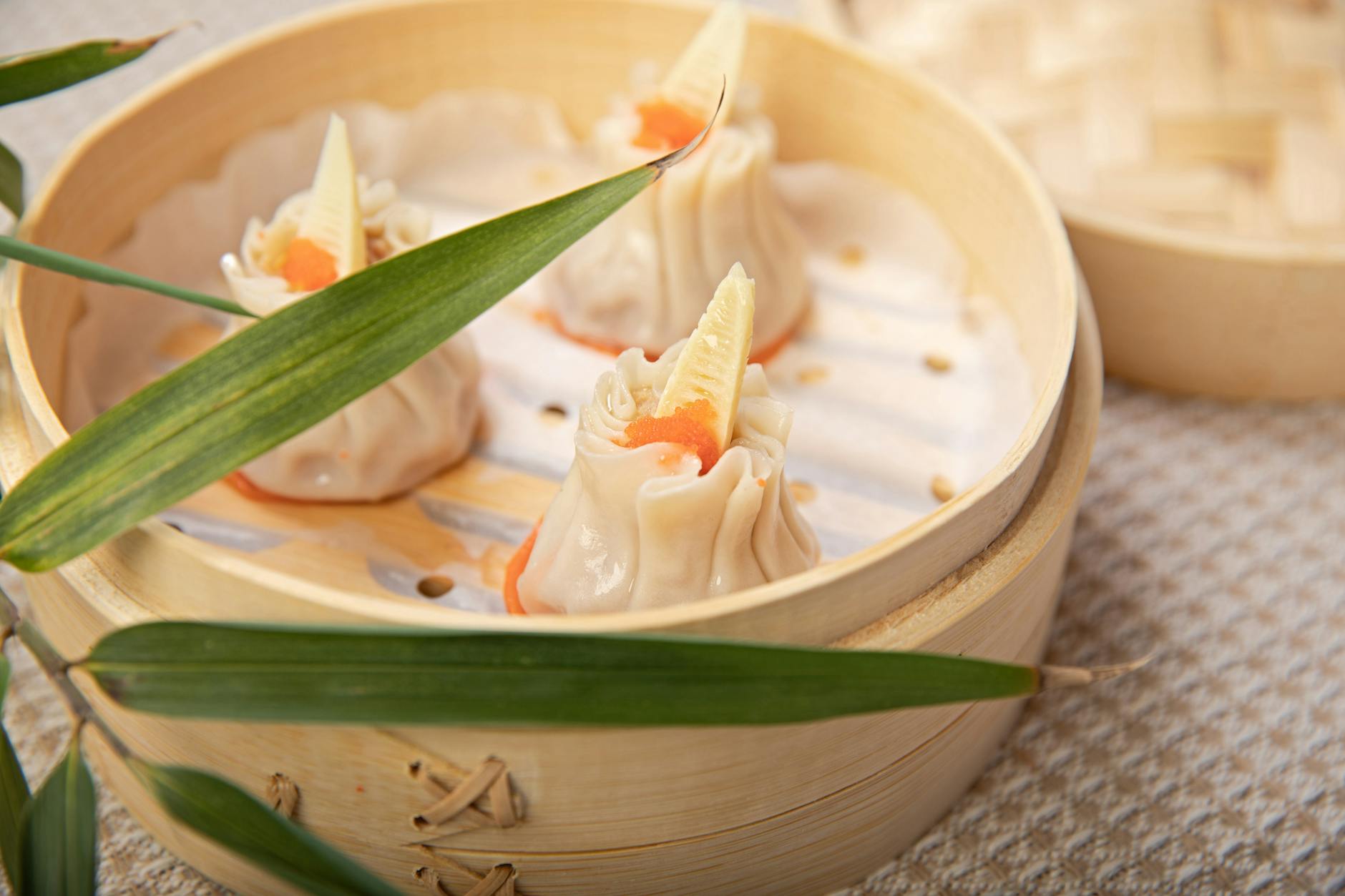
    Dim sum dumplings in bamboo steamer baskets
    Photo by Change C.C via Pexels. Dim sum culture reaches deep from Richmond to Vancouver Chinatown.

    Dim Sum: North America’s Capital

    The Cantonese pastry-and-dumpling tradition has more masters per square kilometre in metro Vancouver than anywhere outside Hong Kong or Guangzhou. Two geographies: downtown-core standouts with faster transit access, and the Richmond heavyweights where prices are 10–20% lower and portions larger.

    Downtown-core dim sum

    • Kirin Seafood (Cambie/City Square and West Georgia downtown): white-tablecloth, trolley service, strong shrimp har gow, the benchmark downtown experience. Reservations via OpenTable essential on weekends.
    • Dynasty Seafood Restaurant (ICBC building, Cambie & Broadway): reliably excellent all-day dim sum, easier reservation windows than Kirin.

    Richmond heavyweights

    • Jade Seafood (Granville Avenue): widely considered the best dim sum in Canada by local critics; Sunday waits 60–90 minutes without a reservation.
    • Kirin Signatures (Alderbridge): the high-end Richmond sister to the Kirin chain.
    • Fisherman’s Terrace (Aberdeen Centre): deep cart-trolley service, mall-basement setting, serious food.
    • Empire Seafood (Aberdeen Centre): less tourist-oriented, strong for adventurous eaters (steamed pork with salted egg yolk, chicken feet).
    • Chef Tony Seafood (Alexandra Road, Richmond’s “Food Street”): chef-forward dim sum with modern presentation.
    • Sun Sui Wah (two locations, Main Street Vancouver and Richmond No. 3 Road): Cantonese old-guard with a signature roast squab.
    • Western Lake (Victoria Drive, Vancouver): the anti-glamour classic — fluorescent lights, paper menus, outstanding food.
    • HK BBQ Master (Richmond, under a Super 8 motel): roast duck and char siu takeout only. Lines by 11 a.m. Cash-friendly. Not dim sum per se but every dim sum itinerary includes it.

    Peak timing & reservations

    Weekends 11 a.m.–1:30 p.m. are the worst for waits. Book the 10:30 a.m. or 1:45 p.m. slots. Weekdays are materially easier. OpenTable covers most downtown spots; Richmond’s heavyweights often require direct phone calls for groups of 5+.
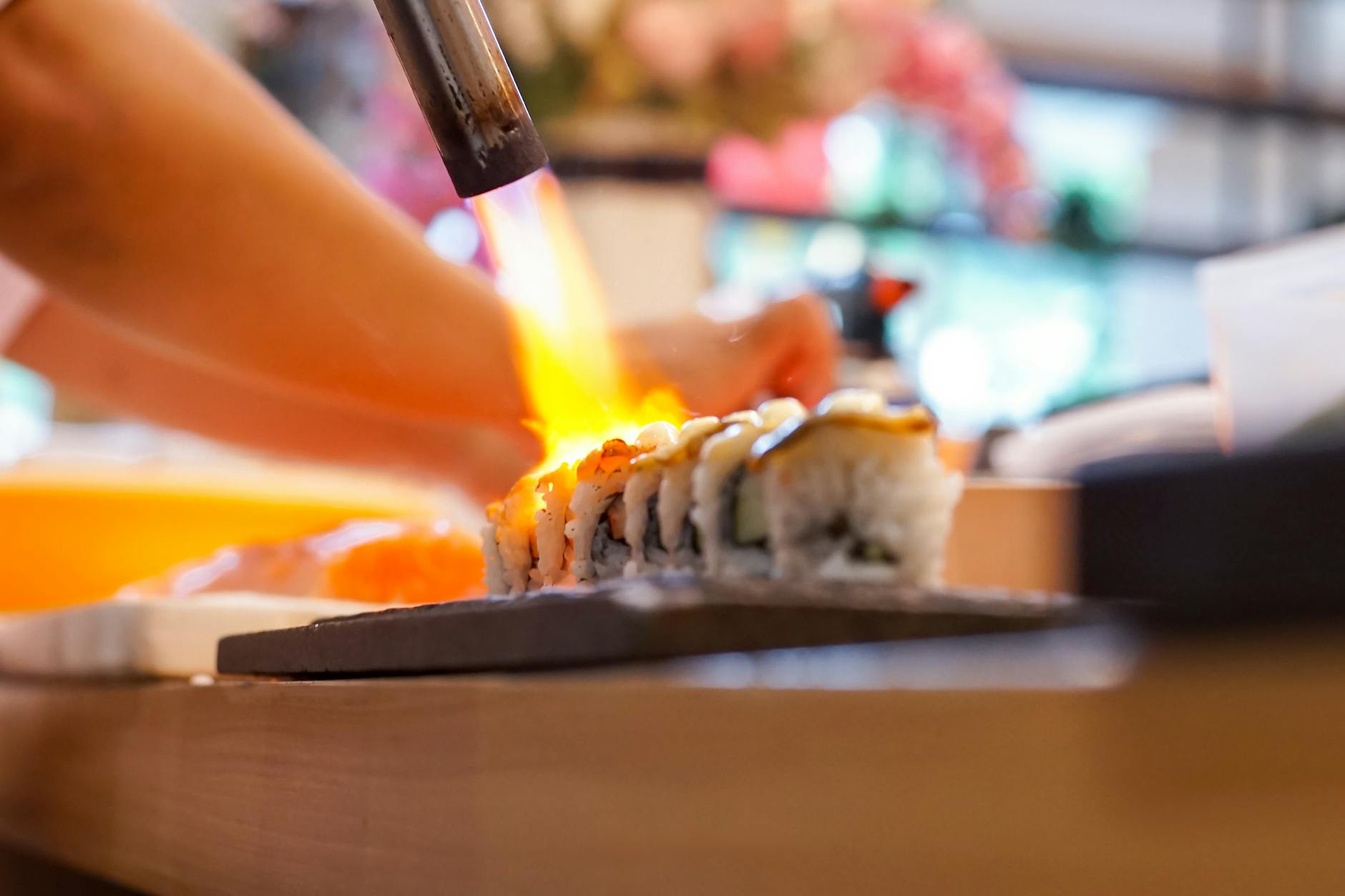
    Torched aburi salmon nigiri sushi
    Photo by Miff Ibra via Pexels. Aburi — flame-seared sushi — was popularized at Miku in 2008.

    Sushi, Aburi & Japanese Fine Dining

    Vancouver’s sushi scene is the strongest in Canada by any measure — deepest bench of omakase chefs, most experimental aburi flights, and a high-end counter culture (Masayoshi, Sushi Masuda, Sushi Bar Maumi) that genuinely rivals LA and New York.

    The Aburi group — Miku and Minami

    Miku (200 Granville, Waterfront / Coal Harbour): Seigo Nakamura’s flagship, opened 2008 at the foot of Howe Street, moved in 2014. The Aburi Oshi Sushi press — torch-seared, pressed salmon nigiri — is the calling card. Ocean Wise tasting menu ~CAD $145 pp; aburi flights CAD $28–$38.

    Minami (Yaletown, Mainland St): Miku’s Yaletown sister, opened 2012. Same aburi lineage, slightly more casual room, better for groups.

    Omakase counters

    • Tojo’s (Cambie Village, W Broadway): chef Hidekazu Tojo, credited with the inside-out Tojo roll and considered a founding figure in North American sushi. Omakase CAD $200–$350 pp in 2026.
    • Masayoshi (Fraser Street): chef Masayoshi Baba. Formal Edomae omakase only. Phone reservations. CAD $250 pp.
    • Sushi Masuda (Cambie): Michelin-starred omakase CAD $300+.
    • Sushi Bar Maumi (1226 Bute, West End): 8-seat counter, walk-in queues, chirashi and omakase-lite CAD $40–$70. The people’s omakase.
    • Octopus Garden (Kitsilano): Sada Satoru’s omakase CAD $180–$220. Relocated from the original Cornwall Avenue location after a condo redevelopment.
    • Toshi Sushi (181 E 16th, Main/Cambie edge): cash-only, no reservations, 2-hour Friday waits. Rolls CAD $15–$30.
    • Raisu (4125 Main): izakaya-kaiseki hybrid, seasonal donburi, chawanmushi. Reservations via OpenTable.
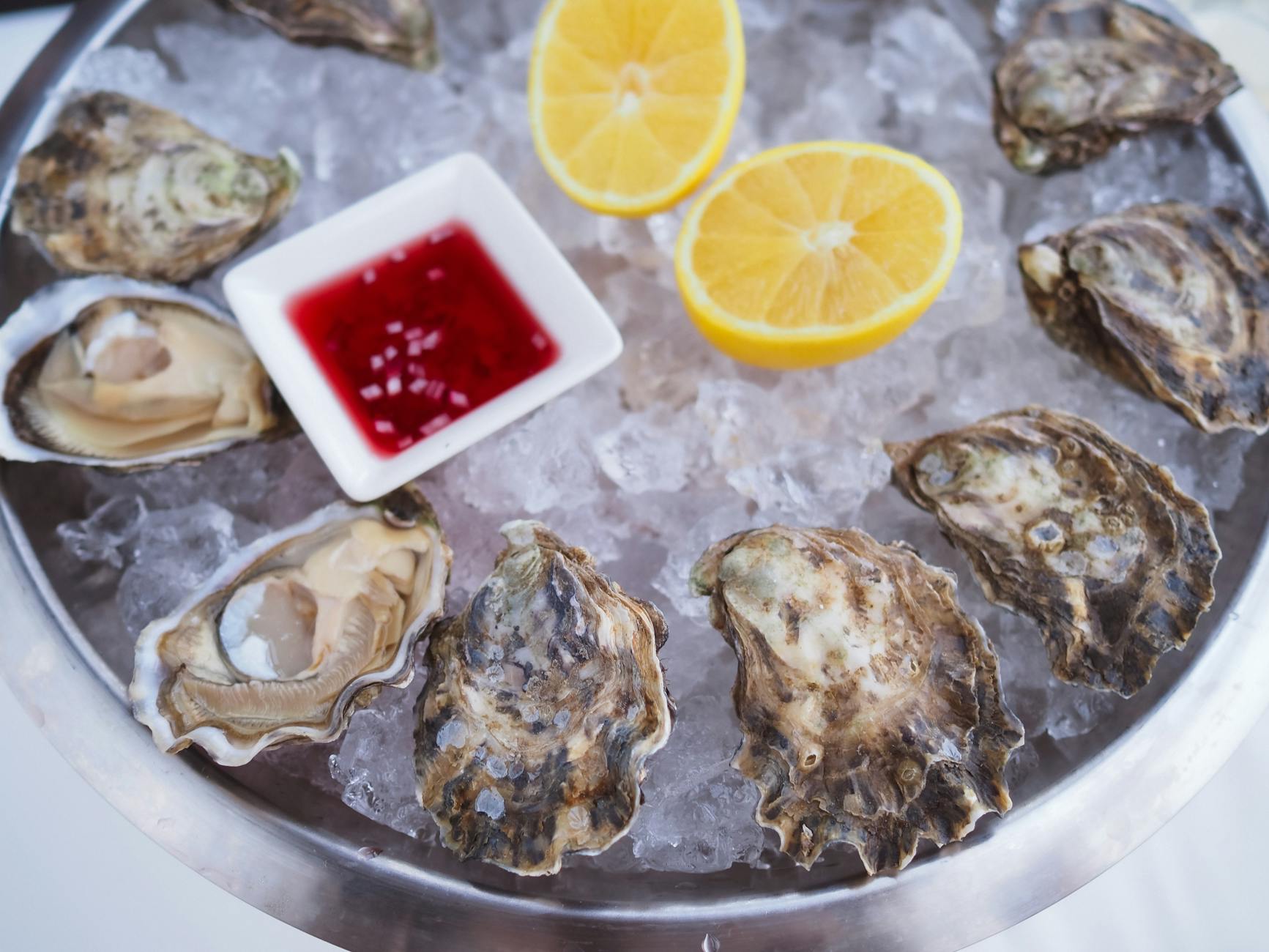
    Pacific seafood platter with oysters and crab
    Photo by Nadin Sh via Pexels. Pacific seafood: BC spot prawns, Dungeness crab, oysters, spot prawns.

    Pacific Seafood

    The BC coast offers the shortest supply chain from dock to plate of any North American food scene with global reach. Three ingredients anchor the seasonal calendar: BC spot prawns (early May to late June, a narrow 6–8 week window), Dungeness crab (year-round with summer peak), and Ocean Wise sablefish (also called black cod, typically miso-glazed).

    The must-book seafood rooms

    • Blue Water Cafe (Yaletown, Hamilton St): the city’s most celebrated raw bar plus an annual February Unsustainable Seafood Symposium dedicated to education. Sablefish CAD $52. Sockeye May–September.
    • Coast Restaurant (Alberni St, downtown): oyster-forward, central, loud in the best way.
    • Joe Fortes Seafood & Chop House (Thurlow & Robson): old-school power-lunch energy, strong happy hour (see below).
    • Rodney’s Oyster House (Hamilton, Yaletown): 20+ varieties on any given day, cash-register dispatch of fresh half-shells.
    • The Boathouse (Kits Beach, English Bay): sunset patio with reliable seafood.
    • Ancora Waterfront Dining (Thurlow Point on False Creek): Peruvian-Japanese, waterfront, tasting menu ~CAD $135.
    • Boulevard Kitchen & Oyster Bar (Sutton Hotel, Burrard): chef Roger Ma, polished ambience, elevated Pacific seafood.

    BC spot prawn season (if your trip lands in May–June)

    The Spot Prawn Festival runs the first weekend of May at False Creek Fishermen’s Wharf — chef demos, live prawns sold off the dock. Dockside prices CAD $25–$35/lb live. Every serious seafood restaurant in town runs a two-month menu feature on spot prawns during the window. If your trip overlaps, build a dinner around them.
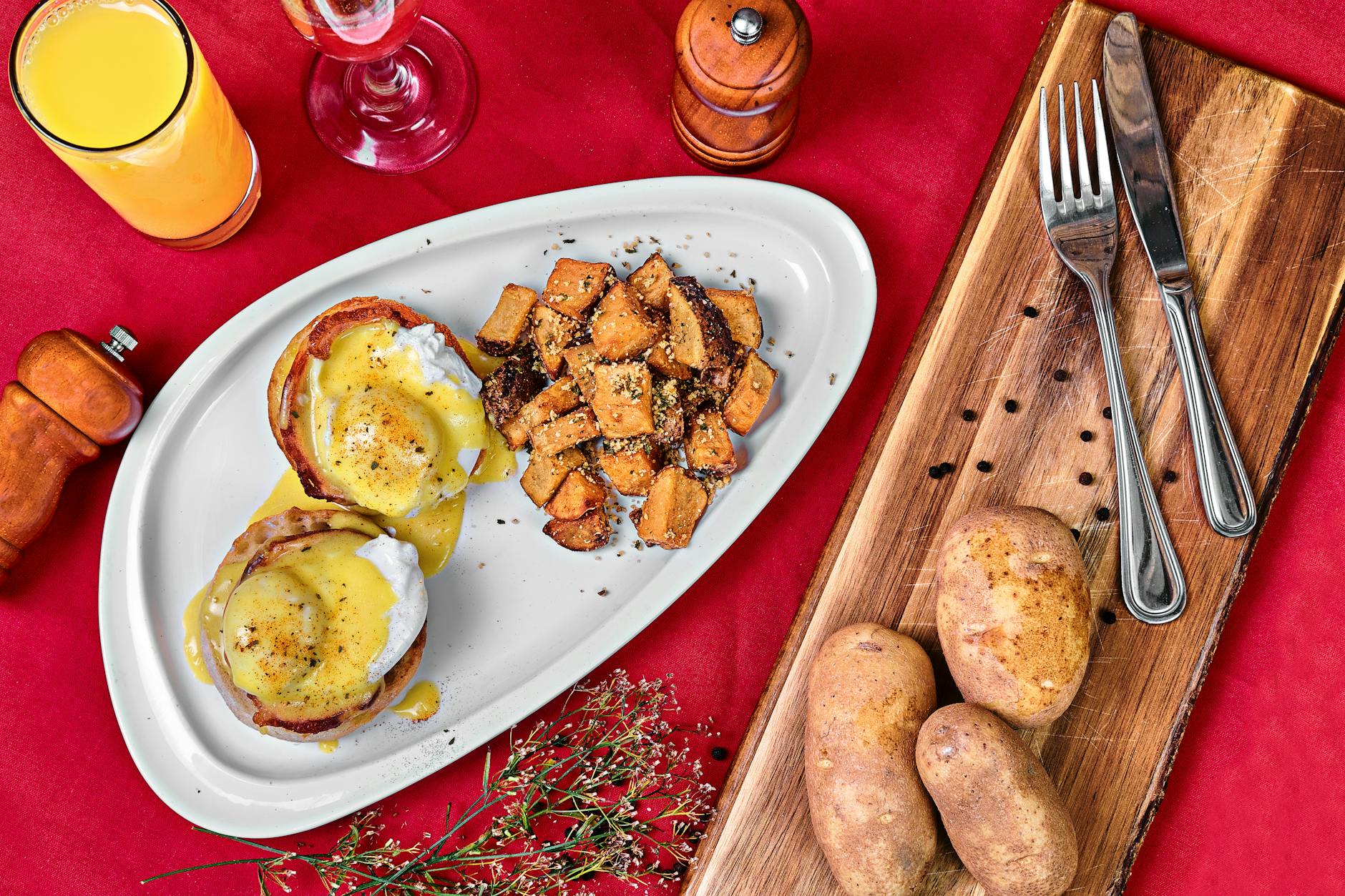
    Eggs benedict brunch plate with coffee
    Photo by Malcolm Garret via Pexels. Brunch culture thrives across Kitsilano, Main Street, and Commercial Drive.

    Brunch

    Vancouver brunches hard. The West Coast schedule (slower Saturdays, family-forward Sundays) favours the 10 a.m.–12:30 p.m. window, with 45–120 minute waits at the popular spots. Reservations or pre-10 a.m. arrivals are the two survival strategies.

    • Medina Cafe (780 Richards, downtown): Belgian waffles, lavender lattes, Moroccan-leaning fricassees. 45–90 minute weekend waits; use Yelp Waitlist.
    • Jam Cafe (Beatty St downtown + Cambie Village): retro diner, 60–120 minute weekend waits. No reservations. The pulled pork pancakes are the signature.
    • OEB Breakfast Co. (Olympic Village + Gastown): duck-confit benedict is the house-made signature.
    • Twisted Fork Bistro (Granville St): French-leaning, quietly excellent, rarely mentioned in tourist listicles.
    • Cafe Régalade (4th Ave, Kitsilano): French bistro brunch with an unbeatable galette section.
    • Chambar (Beatty St): Belgian-leaning; moules frites available at brunch; reservable via OpenTable.
    • Forage (Listel Hotel, Robson): the market-to-plate brunch if you’re staying downtown.
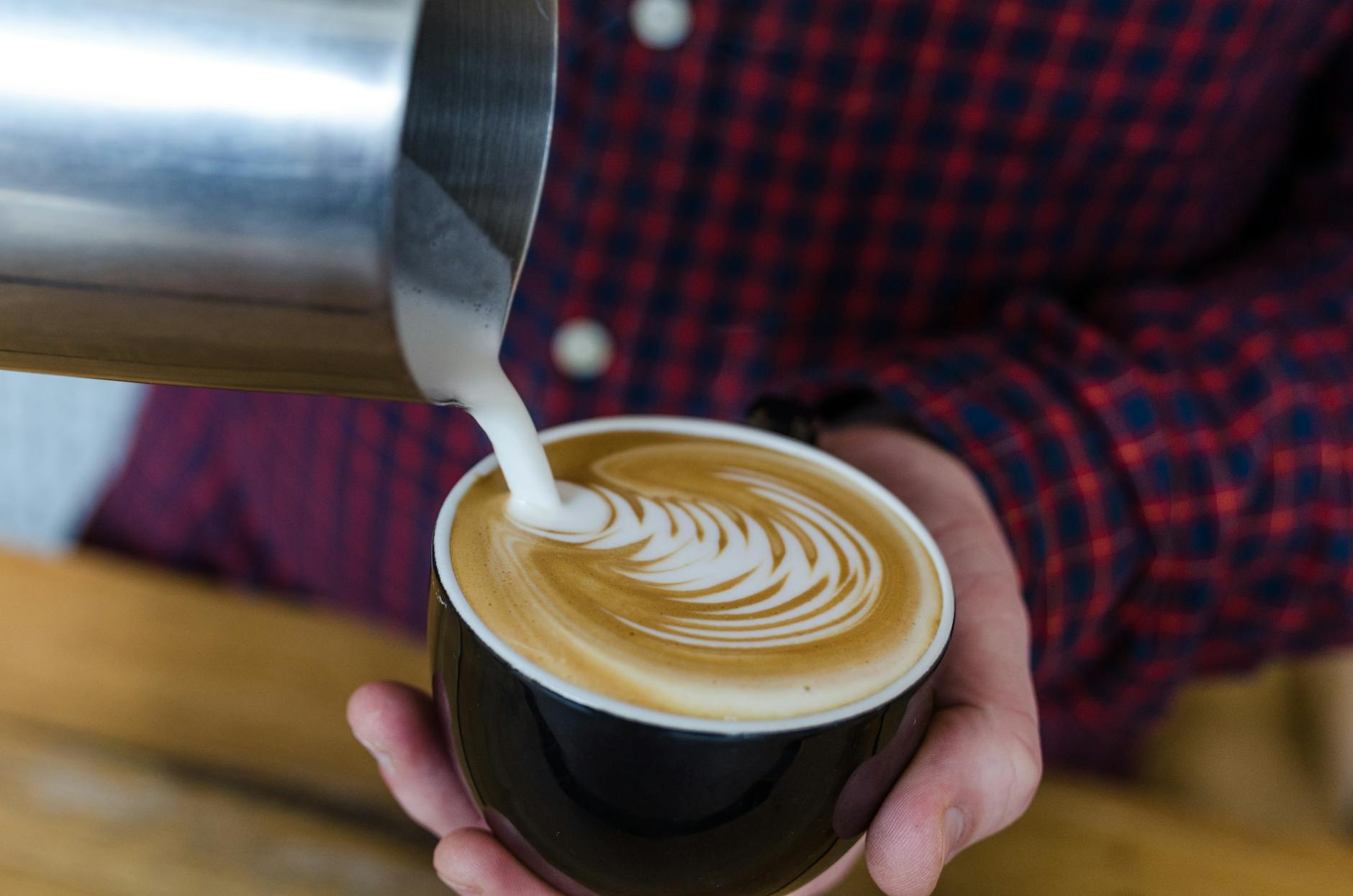
    Barista pouring latte art in specialty coffee shop
    Photo by Amelia Hallsworth via Pexels. Vancouver’s third-wave coffee scene rivals Portland and Melbourne.

    Coffee & Cafés

    Vancouver’s third-wave coffee scene genuinely competes with Portland and Melbourne. Specialty roasters have anchored retail outlets across the city, with an emphasis on single-origin filter and precision espresso.

    • 49th Parallel (Main Street, Kits, W 4th): roaster with three retail locations and Lucky’s Doughnuts under the same roof — the classic Vancouver coffee-and-doughnut pair.
    • Revolver (Cambie St Gastown): multi-roaster pour-over specialist, tight room, one of the city’s coffee benchmarks.
    • Pallet Coffee Roasters (multiple locations): bright, approachable, solid filter program.
    • Small Victory (Yaletown & South Granville): bakery-café hybrid with some of the city’s best laminated pastries.
    • Matchstick Coffee Roasters (Chinatown, Main, Kits): roaster with strong hospitality DNA.
    • Elysian Coffee (Broadway, Burrard): roaster with a loyal following; good for laptop-worker mornings.
    • Timbertrain Coffee Roasters (Gastown, Cambie): rail-car themed, classic Gastown stop.
    • Nemesis Coffee (Gastown + West Georgia): design-led, pastries that deserve the Instagram.
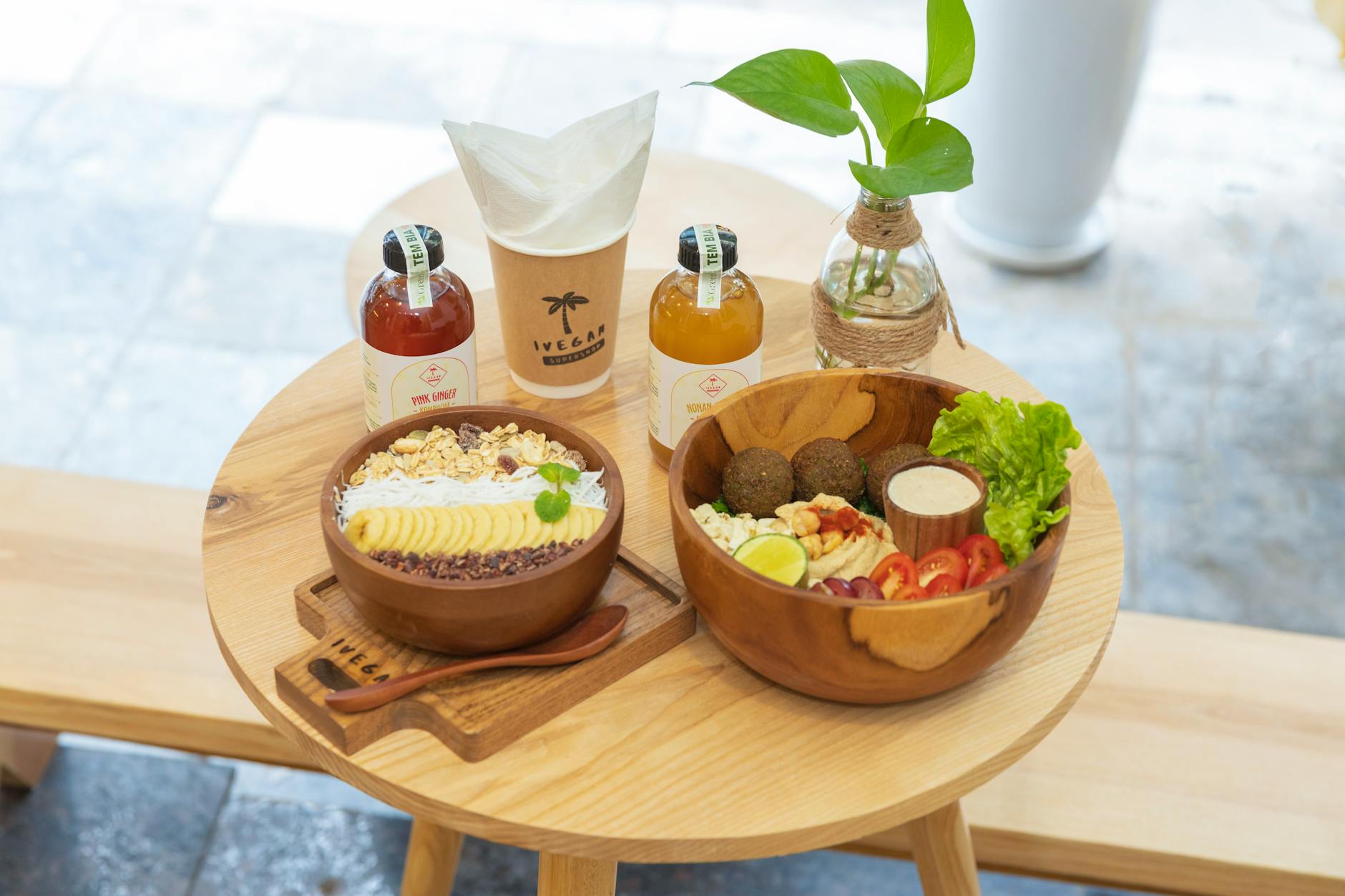
    Plant-based vegan bowl with vegetables
    Photo by HONG SON via Pexels. Vancouver’s plant-based scene is one of the strongest in North America.

    Vegan & Plant-Forward

    Vancouver’s plant-based scene is among the best in North America — a legitimate tier-one destination for vegetarians and vegans.

    • The Acorn (Main Street): destination plant-based tasting menu ~CAD $85, Michelin Bib Gourmand. Reservations essential.
    • Virtuous Pie (Main + Kits): vegan pizza + ice cream, casual, family-friendly.
    • MeeT on Main / MeeT in Gastown / MeeT in Yaletown: three locations of the city’s most accessible vegan comfort food — mac & “cheese”, poutine, burgers.
    • Chickpea (Main): Israeli-vegan menu with hummus, shakshuka, pita.
    • Chau VeggiExpress (Victoria Drive): Vietnamese vegan, affordable, excellent pho.
    • Heirloom Vegetarian (South Granville): vegetarian fine dining, polished room.
    Bannock fry bread indigenous cuisine
    Photo by Eddie O. via Pexels. Bannock and Indigenous cuisine at Salmon n’ Bannock and Mr. Bannock.

    Indigenous Cuisine

    Vancouver’s Indigenous food scene is small but meaningful — and more credible than most Canadian cities.

    • Salmon n’ Bannock (1128 W Broadway): the city’s anchor Indigenous-owned restaurant, led by Inez Cook. Menu built around bannock, wild salmon, bison, and fiddleheads. The airport outpost Salmon n’ Bannock On The Fly has operated at YVR since 2021.
    • Mr. Bannock: chef Paul Natrall’s (Squamish Nation) Indigenous fusion concept, long operating as a food truck and catering business. Fixed-location status has shifted through 2025; verify current stall or pop-up before visiting.
    • Squamish Lil’wat Cultural Centre café (Whistler, CAD $20 admission to centre): Indigenous-led menu items alongside the cultural exhibits. A day-trip inclusion rather than a standalone Vancouver dining stop.
    • Sen̓áḵw developments: the Squamish Nation’s massive False Creek Sen̓áḵw district (ten towers under construction on reserve land) is expected to host Indigenous-led restaurants as occupancy rises through 2026–2028. Watch for new openings.
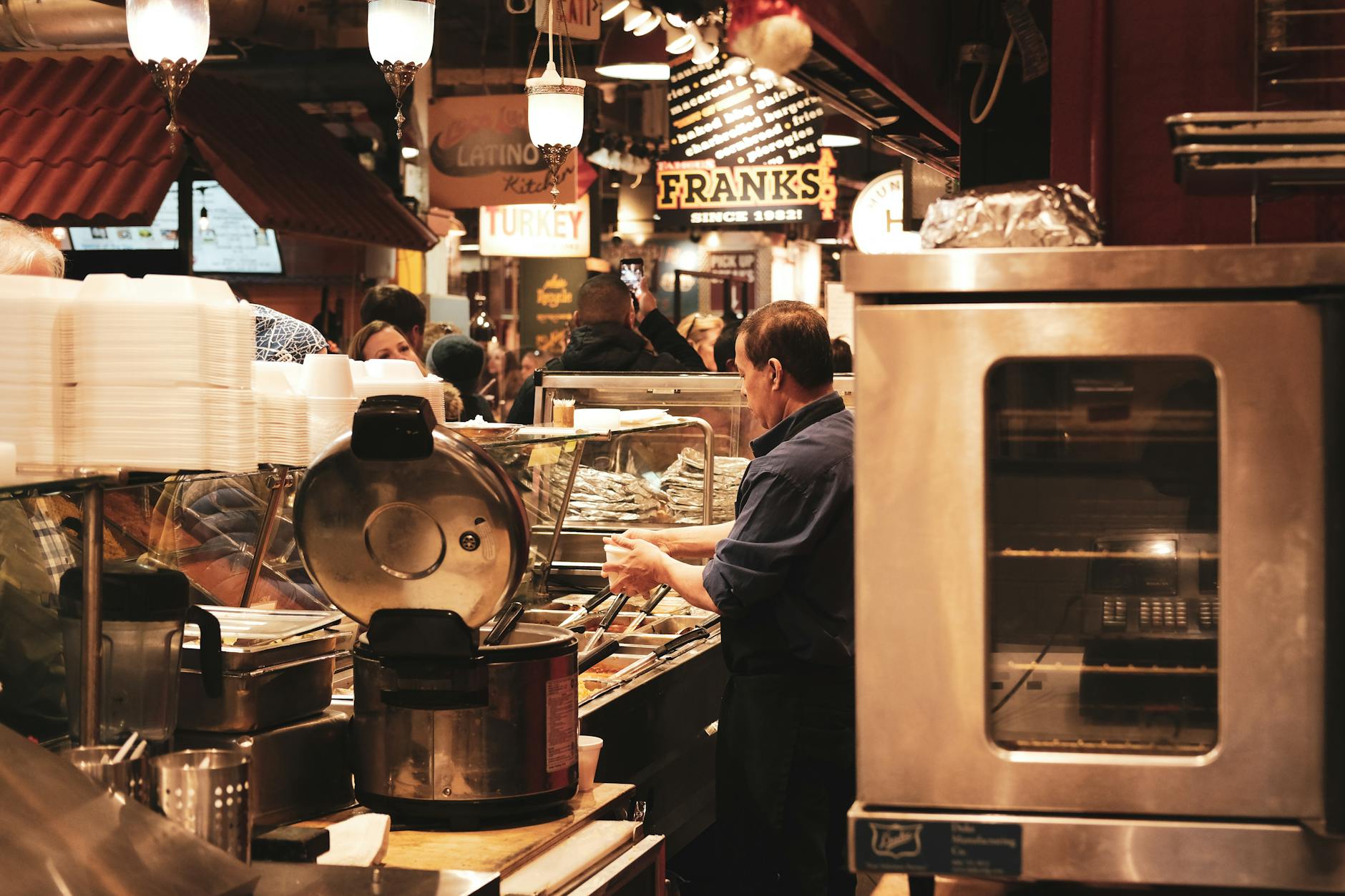
    Food hall vendors with diverse cuisine options
    Photo by Garrison Gao via Pexels. Food halls like Le Marché St. George extend Vancouver’s food culture.

    Food Halls, Public Markets & Food Courts

    • Granville Island Public Market: 50+ food vendors in the original 1979-converted industrial market. Open 9 a.m.–6 p.m. daily. Go weekday mornings to avoid cruise-ship crowds; evenings only open patios and restaurants around the market.
    • Richmond Public Market (8260 Westminster Hwy): the upstairs Asian food court is the authentic Hong Kong-style eating destination — bubble tea, Chinese barbecue, HK-style milk tea, casual noodle counters. Cash-preferred.
    • Lonsdale Quay Market (North Van, at the SeaBus terminal): fish & chips, Tacofino, Polygon Gallery above, waterfront picnic tables.
    • The Post (Georgia & Homer, Canada Post HQ redevelopment): food retail floor with specialty grocery and counter-service.
    • Parq Vancouver (Smithe St): the casino’s mezzanine has multiple restaurants; not a food hall in the traditional sense.
    Craft cocktails on bar at happy hour
    Photo by Julia Filirovska via Pexels. BC happy hour rules keep Vancouver’s $5-8 deals worth chasing.

    Happy Hours: The BC Rule

    British Columbia’s Liquor Control and Licensing Act enforces a minimum drink price at all times, which means a Vancouver “happy hour” is never going to feel like a Texas or Florida happy hour. The real value comes from food discounts and narrow drink promos. The best executions:

    • Joe Fortes (Thurlow & Robson): 3–6 p.m. oyster and seafood-tower discounts; loud, patio-forward.
    • Forage (Listel Hotel, Robson): “Wild Hour” 3–6 p.m. with small-plate regional focus.
    • Yew Seafood + Bar (Four Seasons Hotel): 3–6 p.m. $2–$3 oysters.
    • Hawksworth Restaurant Bar (Rosewood Hotel Georgia): mid-afternoon bar menu with bar snacks and well-priced cocktails.
    • Coast Restaurant: late-afternoon oyster and small-plate promos.
    • Ancora Lounge: 3–6 p.m. with bar snacks.
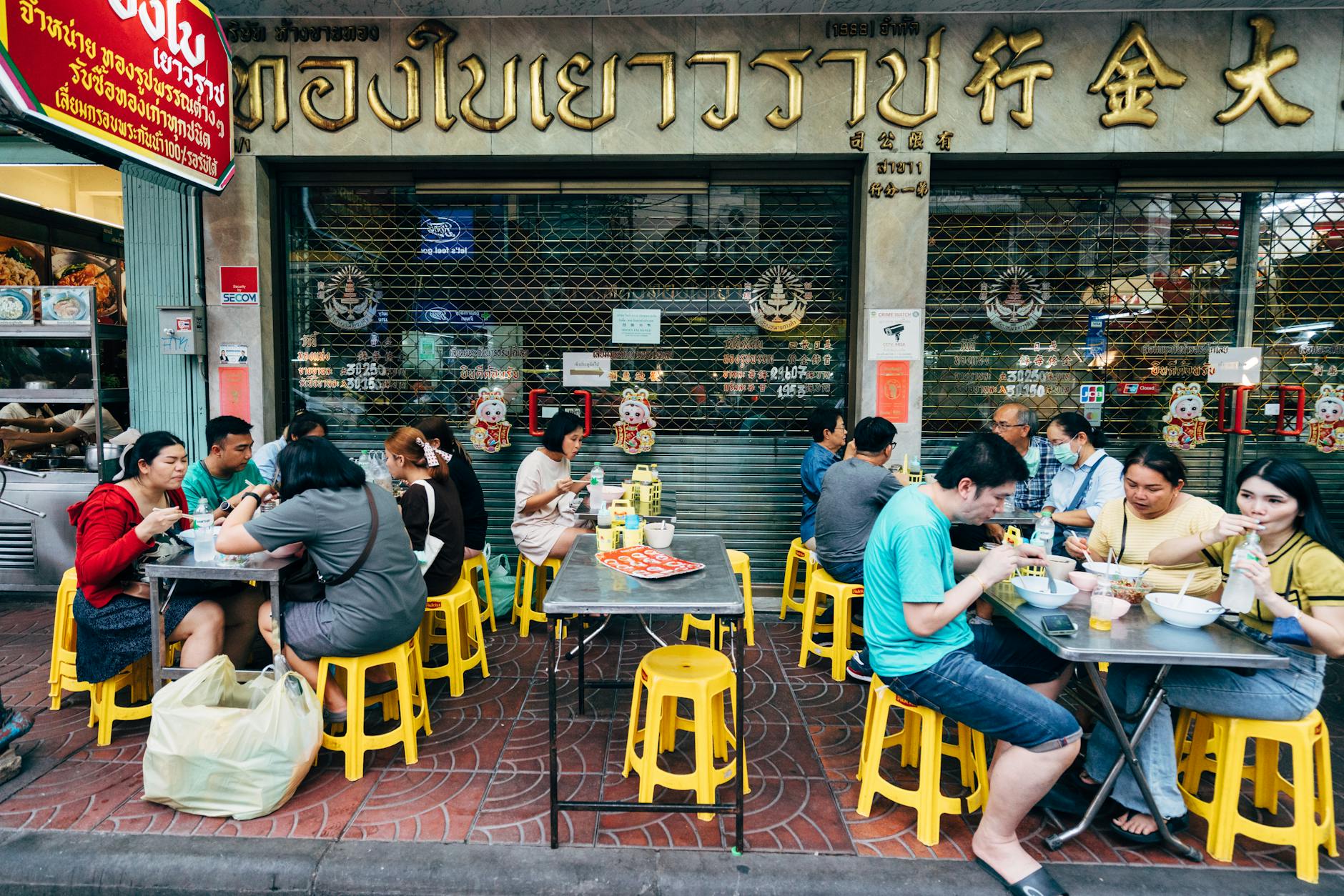
    Food tour group on city street sampling dishes
    Photo by Markus Winkler via Pexels. A Wok Around Chinatown and other food tours unlock the best of local eats.

    Food Tours

    If your trip is short and you want density, a food tour beats building an itinerary yourself.

    • A Wok Around Chinatown (Robert Sung): ~3 hours, CAD $125–$150 pp. Hands-down the deepest-learning tour — Chinese-Canadian history plus six tastings.
    • Vancouver Foodie Tours (Gastown, Granville Island, Craft Beer & Bites): CAD $95–$130 pp. The tourist-friendly default.
    • West End Food Tour: neighbourhood walking, CAD $85–$110 pp.
    • Granville Island Market Tours: CAD $80–$100 pp. Heavy on vendor stops; useful on a rainy day.
    • Tasting Plates: rotating neighbourhood pub-crawl style events, CAD $55–$75. Buy tickets online, show up.
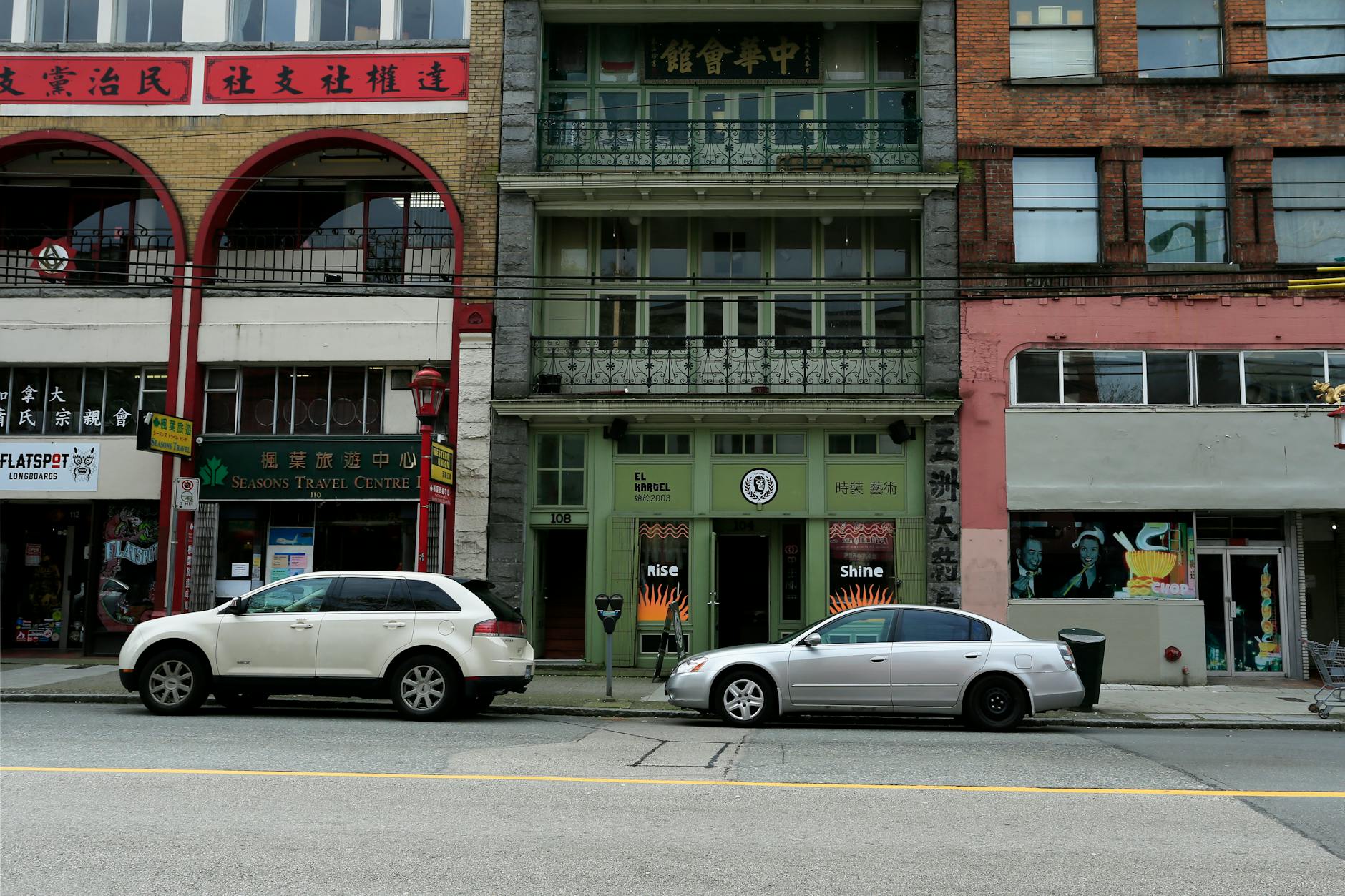
    Vancouver Chinatown historic street lanterns
    Photo by Jeffry Surianto via Pexels. Vancouver’s Chinatown is the third-largest in North America.

    Cuisine by Neighbourhood

    Chinatown (Main Street between Keefer & Pender)

    Phnom Penh: Cambodian-Vietnamese, walk-in only, cash-preferred, 60-minute weekend waits. The chicken wings and butter beef are non-negotiable. Michelin Bib Gourmand. Kissa Tanto: Italian-Japanese fusion, Michelin-starred, Tock reservations essential. Bao Bei Chinese Brasserie: modern Chinese, Bib Gourmand. Sai Woo: Cantonese-inflected small plates. Juke Fried Chicken: Korean-leaning fried chicken next door to Kissa Tanto.

    Commercial Drive (Italian + Latin + Ethiopian)

    The Drive is East Van’s Little Italy plus a scattering of Ethiopian, Latin American, and Eastern European spots. Lombardo’s Pizzeria (Commercial & 6th): wood-fired, since 1979. Nick’s Spaghetti House: checkered-tablecloth classic. Federico’s Supper Club: live opera on weekends. Harambe Ethiopian: injera-and-tibs neighbourhood anchor.

    Main Street / Mount Pleasant (Asian fusion + plant-forward)

    Anh & Chi (modern Vietnamese, Bib Gourmand), The Acorn (plant-based, Bib Gourmand), Sushi Hil, Published on Main (Michelin star, Gus Stieffenhofer-Brandson, Tock reservations), Autostrada Osteria (handmade pasta, Bib Gourmand), Savio Volpe (Italian-leaning osteria, Bib Gourmand).

    Fraser Street (Punjabi + South Asian)

    Fraser between 41st and 51st is the commercial heart of Vancouver’s South Asian diaspora — sometimes called Punjabi Market. Himalaya, Gian’s, All India Sweets, and dozens of sweet shops. Thali lunches CAD $12–$18.

    Broadway East / Kingsway (Filipino + Korean)

    Kulinarya (Filipino), Goldilocks (Filipino bakery), Bukchang Dong Soondubu (Korean tofu stew), Sura Korean Cuisine (Yaletown + Robson, Korean royal cuisine).

    West End / Denman Street (Asian + patio)

    Guu Original on Denman (the first North American Guu izakaya location), Motomachi Shokudo (ramen), Banana Leaf (Malaysian), and a cluster of Persian and Greek spots.

    Yaletown (upscale, destination)

    Minami (aburi), Blue Water Cafe (seafood), Homer Street Café & Bar (rotisserie chicken), Provence Marinaside, Cioppino’s (Pino Posteraro, refined Italian), Rodney’s Oyster House.

    Gastown (bistros + cocktails)

    L’Abattoir (French-Pacific), Wildebeest (nose-to-tail), Ask for Luigi (Italian, no reservations for tables, worth the wait), Di Beppe (casual Italian), Nuba (Lebanese). St. Lawrence (Michelin-starred Quebec-French, chef JC Poirier, Tock).

    Kits 4th Ave (health-forward)

    Fable Kitchen, Maenam (Angus An, Bib Gourmand), AnnaLena (Beverley Lin, Michelin star), Cafe Régalade. Plus a dense cluster of brunch spots and juice bars.

    Reservations: Which Platform for Which Restaurant

    • OpenTable: dominant across downtown, Yaletown, and most mid-to-upper mainstream venues. First stop for any reservation.
    • Tock: required (prepaid) for the city’s tasting-menu set — Published on Main, St. Lawrence, Masayoshi, Sushi Masuda, and others that operate on fixed seatings.
    • Resy: smaller footprint; some Gastown/Chinatown spots.
    • Direct phone: most Richmond dim sum heavyweights, Masayoshi, Tojo’s, some Chinese-only-operated kitchens.
    • Walk-in only: Phnom Penh, Toshi Sushi, HK BBQ Master (takeout only), Sushi Bar Maumi (some seatings), Jam Cafe.

    How far in advance?

    OpenTable spots release at midnight 30 days out — for weekend dinner, book exactly 30 days ahead. Tock opens bookings 60 days out for the tasting-menu spots; Published on Main and Masayoshi sell out within the hour. Sunday brunch at Medina or OEB: book 7 days ahead or accept the walk-in wait.

    Dietary Restrictions (Halal, Kosher, Gluten-Free)

    • Halal: densest in Surrey (Scott Rd / 120 St corridor) and on Fraser St in Vancouver proper. In the tourist core: Afghan Horsemen (Granville Island), Jamjar Canteen (Lebanese with halal meats, multiple locations), Zeitoon (Persian), Chahaya Malaysia (halal-friendly).
    • Kosher: Omnitsky Kosher (5775 Oak Street): the city’s primary kosher butcher and deli, with prepared meals. Supervised by Kashruth Council.
    • Gluten-free certified: Nectar Juicery, Panne Rizo (Kitsilano), Virtuous Pie (naturally GF crusts on request), most sushi omakases on request, Heirloom Vegetarian. Dedicated fryers for celiac-safe are rare — call ahead.
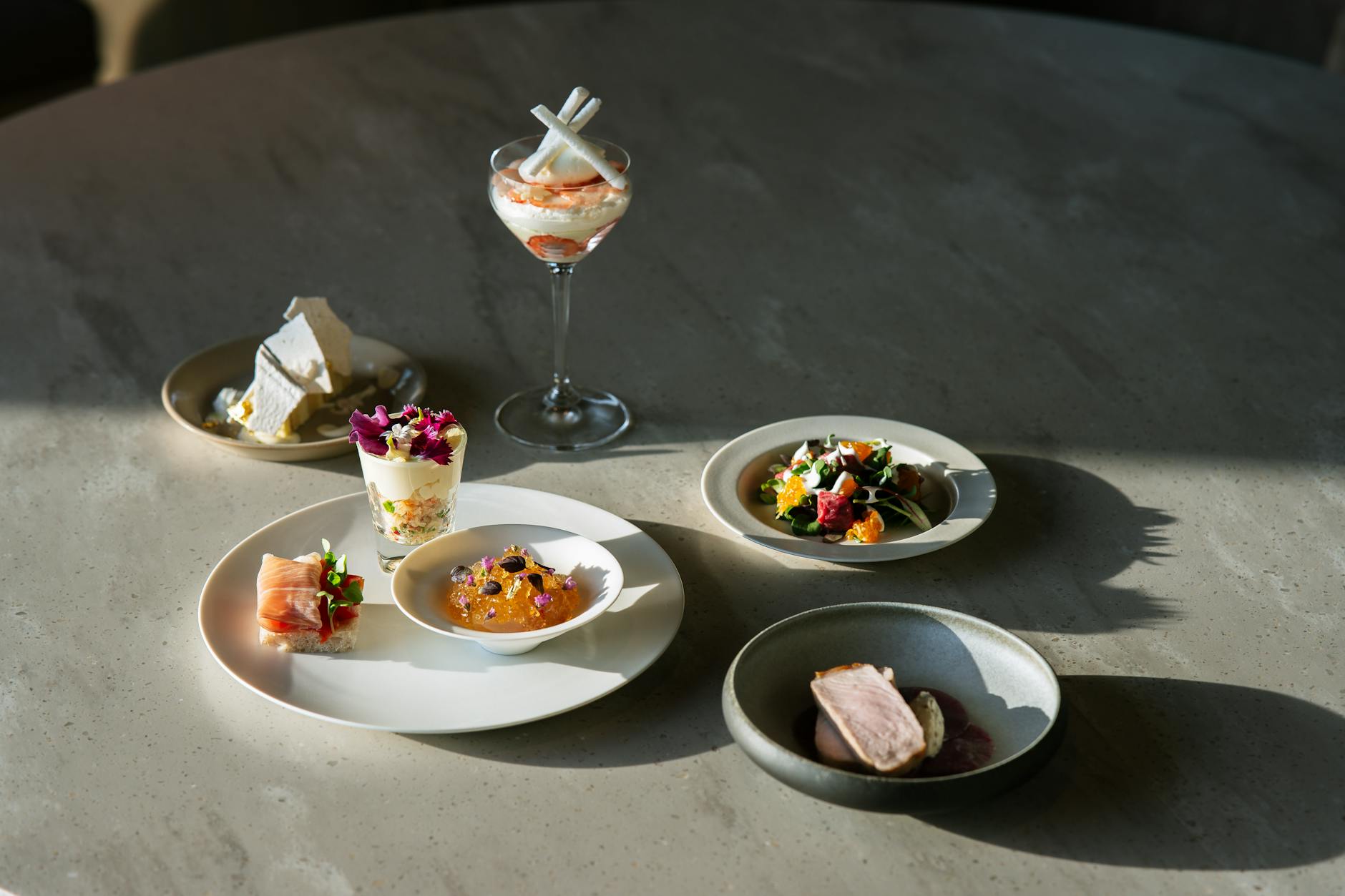
    Fine dining tasting menu plate Michelin
    Photo by Szymon Shields via Pexels. Michelin Guide Vancouver awards nine one-stars in 2025-2026.

    The Vancouver Michelin List (2025–2026)

    Vancouver has been in the guide since October 2022. Expect incremental changes annually — stars move, Bib Gourmands rotate. Confirm the current list at guide.michelin.com before booking if a star is critical to your trip.

    One-star restaurants (2025 edition, indicative): Published on Main, Masayoshi, St. Lawrence, AnnaLena, Burdock & Co., Kissa Tanto, Sushi Masuda, Barbara, iDen & QuanJuDe Beijing Duck House.

    Bib Gourmand (under CAD $60 pp, indicative): Anh & Chi, Bao Bei, Maenam, The Acorn, Phnom Penh, Savio Volpe, Say Mercy!, Autostrada Osteria, Bells and Whistles, Caffè La Tana.

    If You Only Have One Meal in Vancouver, Eat…

    Occasion Our pick Why
    One dim sum Jade Seafood (Richmond) Consistently the best in the country; worth the Canada Line trip
    One sushi Sushi Bar Maumi (West End) Omakase-level quality at walk-in-counter price; quintessentially Vancouver
    One aburi Miku (Waterfront) The original in North America; aburi flight + sake pairing
    One seafood Blue Water Cafe (Yaletown) Deepest raw bar; best showcase of BC spot prawns in season
    One brunch Medina Cafe (downtown) The breakfast that set the Vancouver bar; go before 9:30 a.m.
    One Indigenous Salmon n’ Bannock (Fairview) Only Indigenous-owned full-service restaurant in the city core
    One plant-based The Acorn (Main) Plant-based fine dining that could compete in any city
    One Italian Savio Volpe (Fraser) Osteria feel, wood-grill Italian, consistently excellent
    One under $25 pp Phnom Penh (Chinatown) Butter beef + chicken wings + bun = under $25, perfection
    One fancy splurge Published on Main Michelin star, the tasting menu to book on a special trip
    Opinions. They’re defensible.

    Frequently Asked Questions

    What food is Vancouver known for?

    Cantonese dim sum (especially in Richmond), Japanese sushi (particularly aburi, which went mainstream in North America here), Pacific seafood (BC spot prawns in May–June, sablefish, Dungeness crab), and a strong plant-forward scene. Japadog is a hotdog novelty worth one visit. Nanaimo bars are a dessert tradition but not claimed by Vancouver the way they are by Victoria.

    What is Vancouver’s signature dish?

    Aburi Oshi Sushi (torch-seared pressed sushi) is the most defensible answer — it’s the technique that made Vancouver a Japanese-cuisine destination globally. Others argue for BC spot prawns or Hidekazu Tojo’s Tojo roll.

    Is Vancouver a foodie city?

    Yes — added to the Michelin Guide in October 2022, one of just a handful of North American cities with a dedicated guide. The city has nine one-star restaurants as of 2025.

    Where do locals eat in Vancouver?

    Not where tour buses go. Locals eat in Richmond for dim sum, on Main Street for modern fine dining (Published on Main, Anh & Chi, The Acorn), on Fraser for South Asian, on Victoria Drive for Vietnamese and Cantonese cheap eats, and in East Van for pizza and natural-wine bars.

    Is Vancouver really the dim sum capital of North America?

    Widely considered so. Calvin Trillin’s 2014 New Yorker essay on Richmond made the framing stick. Richmond alone has 400+ Asian restaurants, and the concentration of Cantonese pastry masters is unmatched outside Hong Kong and Guangzhou.

    Where is the best dim sum in Vancouver?

    Downtown: Kirin or Dynasty Seafood. Richmond: Jade Seafood (the country’s best by most local critics), Kirin Signatures, or Fisherman’s Terrace. HK BBQ Master for takeaway roast meats.

    What is aburi sushi?

    Flame-seared nigiri or oshi-pressed sushi with the top lightly torched. Chef Seigo Nakamura popularized the technique in North America at Miku (Vancouver, opened 2008).

    How early do I need to book a Vancouver restaurant?

    Tasting menus (Published on Main, Masayoshi, St. Lawrence): book 30–60 days ahead via Tock. OpenTable dinner reservations: 7–30 days. Brunch at Medina or OEB: arrive before 9:30 a.m. or expect a 60–120 minute wait.

    Does Vancouver have happy hours?

    Yes, but they’re food-focused because BC law enforces minimum liquor pricing. Best executions: Joe Fortes, Forage, Yew Seafood + Bar (Four Seasons), Hawksworth bar, Coast, Ancora lounge — all 3–6 p.m.

    Where can I find Indigenous food in Vancouver?

    Salmon n’ Bannock (1128 W Broadway) is the only Indigenous-owned, full-service restaurant in the city core. Salmon n’ Bannock On The Fly is at YVR. Mr. Bannock (chef Paul Natrall) operates as a food truck and catering — verify current location.

    Where can I eat halal in Vancouver?

    In the tourist core: Jamjar Canteen (Lebanese), Zeitoon (Persian), Afghan Horsemen. For broader halal options, head south to Surrey’s Scott Road / 120 Street corridor.

    Are there Michelin-starred restaurants in Vancouver?

    Yes. The 2025–2026 guide recognises multiple one-star restaurants including Published on Main, Masayoshi, St. Lawrence, AnnaLena, Burdock & Co., Kissa Tanto, Sushi Masuda, Barbara, and iDen & QuanJuDe Beijing Duck House.

    What is the best food tour in Vancouver?

    A Wok Around Chinatown (Robert Sung) is the deepest-learning tour — 3 hours, six tastings, CAD $125–$150 pp. Vancouver Foodie Tours is the tourist-friendly default.

    Official resources & further reading

  • Vancouver Day Trips: 13 Best Escapes from the City (2026 Guide)

    Vancouver Day Trips: 13 Best Escapes from the City (2026 Guide)

    Sea to Sky Highway coastal road British Columbia
    Photo by apertur 2.8 via Pexels. Sea to Sky Highway toward Whistler — the coastal corridor north of Vancouver.

    The best day trips from Vancouver combine mountains, ocean, and small-town charm — usually within 90 minutes. This 2026 guide ranks the top day trips from Vancouver by travel time, cost, and what to do when you arrive.

    Most-asked: the three most popular day trips from Vancouver are Whistler (via the Sea-to-Sky), Victoria (via BC Ferries), and Squamish.

    Looking for the essentials? This guide covers everything about day trips from Vancouver for 2026 — prices, hours, bookings, local tips, and the quirks only locals know.

    Updated April 2026. This guide ranks every major day trip from Vancouver by travel mode, time-to-reward ratio, and whether you genuinely need a car. We’ve priced every ferry, tour and admission in 2026 CAD, flagged closures that out-of-date articles still miss (Minter Gardens, V2V fast ferry, Quarry Rock), and built a car-free column most competitors skip entirely. If you have one spare day, use the at-a-glance table below to pick a destination that actually fits your trip.

    Vancouver is one of North America’s great day-trip launchpads. A 2-hour highway drive delivers you to Whistler’s alpine village, a 1h35m ferry crossing gets you to Victoria’s Inner Harbour, a 20-minute ferry reaches the artist colony on Bowen Island, and 30 km of transit lands you at a free suspension bridge that genuinely rivals the paid Capilano one. The challenge isn’t finding a trip — it’s picking the right one for your travel day, weather, and transportation situation.

    Vancouver Day Trips at a Glance (ranked by time-to-reward)

    Destination Distance / Time Car required? Best months Ideal for Day-trip cost pp (CAD)
    Whistler 121 km / 2h drive No (shuttle $32–$55) Jun–Sep + Dec–Mar Mountain iconography $140–$320
    Victoria Ferry 1h35m No Apr–Oct History, gardens, pub culture $85–$180
    Squamish 58 km / 45 min drive Yes (recommended) Apr–Oct + Jan eagle viewing Gondola views, eagle watching $95–$155
    Bowen Island Ferry 20 min No Apr–Oct Artist colony, gentle hiking $35–$85
    Deep Cove 25 km / 35 min No (Route 212) Year-round Half-day kayak + doughnuts $20–$90
    Lynn Canyon 15 km / 30 min No (Route 228) Year-round Free Capilano alternative $10–$25
    Steveston Village Canada Line + bus No Year-round Historic cannery + fish market $25–$55
    Fraser Valley 60–100 km / 1–1.5h Yes Apr–Oct (tulips + berries) Wineries, farms, flowers $75–$165
    Seattle 230 km / 2h30m + border Yes or Amtrak/bus Year-round City-break cross-border USD $95–$185
    Tofino Ferry + 3h15m drive Yes (overnight stay required) Mar–Oct Pacific surf & storm-watching 2-3 day trip
    All costs include transport, one paid attraction, and one meal unless noted. Tofino is listed so you see at a glance it’s not a day trip — read the section to see why.

    The honest ranking: If you’re a first-time visitor with one spare day, the ranked order is Whistler > Victoria > Lynn Canyon > Squamish > Deep Cove > Bowen Island > Steveston > Fraser Valley > Seattle. Tofino is not on this list because it genuinely isn’t a day trip.

    Whistler Village with ski mountain
    Photo by Ali Kazal via Pexels. Whistler Village 121 km north of Vancouver — the marquee day trip.

    Whistler: The Iconic Mountain Day

    Distance: 121 km north on Hwy 99 (the Sea-to-Sky Highway). Drive time: 1h45m–2h without traffic. Best in: winter ski or summer village + alpine.

    Whistler is the marquee day trip from Vancouver — arguably North America’s most recognisable mountain village. The drive itself earns half the reward: Hwy 99 is a designated scenic highway hugging the edge of Howe Sound, with four worthwhile pull-offs between Horseshoe Bay and Whistler.

    Sea-to-Sky stops (south to north)

    • Porteau Cove Provincial Park (~40 min from Vancouver): waterfront pull-off, good for a 15-minute stretch and photos of Howe Sound.
    • Britannia Mine Museum (Britannia Beach): CAD $42.50 adult, 2.5 hrs if you do the underground tour. Worth skipping on a pure day trip.
    • Shannon Falls Provincial Park: 335-metre waterfall, BC’s third tallest, 5-minute trail to the viewing platform. Free. Adjacent to the Sea to Sky Gondola base.
    • Brandywine Falls Provincial Park (20 min south of Whistler): 70 m drop, 10-minute walk to the viewing platform. Free.

    What to do in Whistler Village in one day

    Peak 2 Peak 360 Experience (summer): CAD $85 adult / $43 child, includes Whistler and Blackcomb gondolas plus the Peak 2 Peak between them. This is the signature Whistler summer activity — 11-minute gondola ride between Whistler Peak and Blackcomb Peak, some cars with glass floors, views over the Tantalus Range. Operates roughly late May to early October weather permitting.

    Winter lift ticket: CAD $189–$289 depending on date and window-rate vs advance purchase. Multi-day Epic Pass holders bypass the single-day pricing entirely.

    Village walk: the pedestrian-only village stroll from the gondola base through Village Square to the Upper Village is the free part. Breweries (High Mountain Brewing, Coast Mountain Brewing), restaurants (Bearfoot Bistro, Araxi for Pacific Northwest; Sushi Village for Japanese), and the Squamish Lil’wat Cultural Centre ($20 adult, Indigenous-led).

    Getting there car-free

    Epic Rides: CAD $48–$65 one-way from downtown, 2h10m, 5–8 departures daily, scenic Sea-to-Sky photo stops included. YVR Skylynx (Pacific Coach): CAD $32–$55 depending on origin (downtown cheaper than YVR). Rider Express: CAD $35 one-way, fewer departures.

    Winter tire law: Hwy 99 has legally required winter tires or chains from October 1 to April 30. Rental cars from YVR are equipped in season, but verify at the counter.

    Victoria BC Inner Harbour Parliament Buildings
    Photo by Uzay Yildirim via Pexels. Victoria’s Inner Harbour is a 90-minute ferry ride from Vancouver.

    Victoria: The Capital-City Ferry Day

    Ferry: Tsawwassen → Swartz Bay, 1h35m crossing. Walk-on fare 2026: CAD $20.20 adult. Schedule: 8–10 sailings/day peak season (hourly 7 a.m.–9 p.m. summer), 8/day off-season.

    Victoria is a legitimate day trip without a car. The move: Canada Line SkyTrain to Bridgeport Station (26 min from downtown Vancouver), bus Route 620 to Tsawwassen Ferry Terminal (~40 min), 1h35m ferry to Swartz Bay, BC Transit Route 70/72 to downtown Victoria (~55 min). Total one-way: 4–4.5 hours door to door. Tight but doable.

    What to do in 5–6 downtown Victoria hours

    Inner Harbour walk: Fairmont Empress Hotel (free to walk through the lobby), BC Legislature Buildings (free tours at the top of each hour), Parliament Buildings gardens. Allow 90 minutes.

    Royal BC Museum (CAD $29.95 adult; IMAX combo $39): Canada’s best-curated natural and human history museum for the province. The First Peoples Gallery is essential. Allow 2 hours.

    Butchart Gardens (CAD $42 adult peak summer, $32 shoulder, $26 winter): the 22-hectare flower-garden landmark, built into a former limestone quarry. 25-minute bus ride from downtown on Route 75; day-trippers often skip it because of the time trade-off with the museum and Inner Harbour. If you go, budget 3+ hours round-trip.

    Bastion Square and Chinatown: Canada’s oldest Chinatown (older than Vancouver’s), Fan Tan Alley (Canada’s narrowest street at 0.9 m wide), bookshops and pubs around Bastion Square.

    Don’t waste a second on…

    The V2V Empress fast-ferry service between downtown Vancouver and downtown Victoria ceased operations in 2019 and has not resumed. Articles still listing it are pre-pandemic. The Victoria Clipper runs Seattle–Victoria only, not from Vancouver. The only direct downtown-to-downtown options are Helijet (CAD $250–$300 one-way, 35 min) and Harbour Air Seaplanes (CAD $205–$245 one-way, 35 min, year-round). Both are splurges but save 4 hours round-trip.

    Sea to Sky Gondola summit station Squamish
    Photo by Jay Johnson via Pexels. The Sea to Sky Gondola summit in Squamish with Howe Sound below.

    Squamish & the Sea to Sky Gondola

    Distance: 58 km from Vancouver, ~45 min drive. Car recommended because transit options are limited. Best in: April–October for hiking; November–February for eagle viewing at Brackendale.

    Sea to Sky Gondola: CAD $68.95 adult, $39.95 youth, $24.95 child (6–12), under 6 free. 10-minute gondola climb from the base beside Shannon Falls to the Summit Lodge, where a 100 m / 62 m high Sky Pilot Suspension Bridge leads to viewpoints over Howe Sound. Three easy summit trails (Spirit Viewing Platform, Panorama Trail, Chief Overlook). Restaurant at the top serves solid mid-range food.

    Shannon Falls: 335 m, BC’s third-tallest waterfall, 5-minute walk from the parking lot to the viewing platform. Free. Perfect pair with the gondola since the parking is shared.

    Stawamus Chief: the 700-metre granite monolith south of downtown Squamish. Three summit hikes via the First, Second, and Third Peaks. First Peak: 6 km round-trip, 600 m elevation gain, 3–4 hours, difficult — features actual ladders and chain sections near the summit. This is not a beginner hike despite what some travel articles claim. All three peaks: 15 km, 6–8 hours.

    Brackendale Eagles Provincial Park: peak bald-eagle viewing late November through mid-January. The annual count is held the first Sunday of January; the 1994 record was 3,769 eagles. The Eagle Run dike is the main viewing area.

    BC Ferries vessel arriving at Snug Cove Bowen Island
    Photo by Oliver LOK via Pexels. Bowen Island is a 20-minute ferry ride from Horseshoe Bay.

    Bowen Island: The 20-Minute Artist-Colony Escape

    Ferry: Horseshoe Bay → Snug Cove, 20 min crossing, hourly sailings 5:30 a.m.–10 p.m. Walk-on fare 2026: CAD $14.30 adult round-trip. Getting to Horseshoe Bay: TransLink Route 257 or 250 from downtown (~45 min).

    Bowen Island is the lowest-stress day trip from Vancouver. Twenty minutes on a ferry deposits you in Snug Cove, a village of 3,500 permanent residents, artist studios, bakeries (Artisan Eats) and the patio of Doc Morgan’s Pub. It is the opposite of Whistler.

    What to do

    • Killarney Lake loop: 8 km flat circuit, 2 hours, accessible from Snug Cove via the Killarney trailhead. Good for families.
    • Mt. Gardner: 15 km, 719 m gain — the island’s hardest hike, full-day commitment.
    • Artisan Square: cluster of galleries, the Snug Cafe, a sake distillery (Artisan Sake Maker is actually on Granville Island; on Bowen look for Bowen Island Brewing instead).
    • Tunstall Bay and Pebble Beach: swimmable summer beaches.
    • Doc Morgan’s Pub: the ferry-terminal patio anchor. Mandatory late afternoon.
    Sea kayaker on calm inlet Indian Arm
    Photo by Simon Hurry via Pexels. Deep Cove Kayak rentals on Indian Arm — a 40-minute drive from downtown.

    Deep Cove: Kayaks + Doughnuts in One Afternoon

    Distance: 25 km from downtown. Car-free: SeaBus to Lonsdale Quay + TransLink Route 212 to Deep Cove (35 min total).

    Deep Cove is the North Shore’s most charming village — a Dutch-roofed downtown on the eastern end of Indian Arm. The core day-trip move pairs kayaking with doughnuts.

    Deep Cove Kayak: single kayak CAD $48 for 2 hours, double $68, SUP $48. Reserve online. Guided Indian Arm tours from CAD $115 (3 hours, includes lunch stop at Silver Falls).

    Honey Doughnuts: 4373 Gallant Ave. CAD $2.50 each. Queues start forming by 10 a.m. on weekends. The move is to grab half a dozen on the way back from kayaking.

    Quarry Rock trail: the iconic short hike that rewards with a viewpoint over the cove. Closure note: the trail was closed November 2020 after bridge and landslide damage. As of early 2026 the District of North Vancouver has reopened reinforced sections, but verify current status at dnv.org before your trip — access has been intermittent. If open: 3.8 km round-trip, 100 m gain, 90 minutes.

    Parking: Panorama Drive lot, pay-by-plate ~CAD $3.50/hr, fills by 9 a.m. on sunny weekends. Take transit instead.

    Lynn Canyon suspension bridge old growth forest
    Photo by Boys in Bristol Photography via Pexels. Lynn Canyon’s free suspension bridge in North Vancouver.

    Lynn Canyon: The Free Capilano Alternative

    Distance: 15 km from downtown. Car-free: SeaBus to Lonsdale Quay + Route 228 (30 min total). Admission: free.

    Lynn Canyon Park is the North Shore’s best free attraction — a 250-hectare rainforest reserve with a 50 m high suspension bridge over Lynn Creek, free to walk. That’s the key contrast: Capilano Suspension Bridge costs CAD $69.95 adult and draws tour buses; Lynn Canyon’s bridge is free and draws locals.

    Lynn Canyon vs Capilano: head-to-head

    Lynn Canyon Capilano
    Bridge height 50 m 70 m
    Bridge length 48 m 140 m
    Adult admission Free $69.95
    Extras Ecology Centre, 30-Foot Pool, Twin Falls Cliffwalk, Treetops, Totem Park, free shuttle
    Crowds Busy but navigable Very busy, often line-ups
    Transit access Route 228 (easy) Free shuttle from Canada Place
    If you want the production-quality tourist experience, go Capilano. If you want the bridge without the price tag, Lynn Canyon delivers.

    Beyond the bridge: the 30-Foot Pool (a short walk downstream, swimmable in summer though cold), Twin Falls Loop (1.7 km), and the Rice Lake Loop (3 km, flat, stroller-friendly, great for families).

    Fishing boats in historic harbour village
    Photo by YUKSEL OZDEMIR via Pexels. Steveston is Canada’s largest commercial fishing harbour.

    Steveston Village: Historic Cannery & Fish Market

    Car-free: Canada Line to Brighouse Station (Richmond), then Route 401, 402, or 407 to Steveston. Total 55 min from downtown.

    Steveston is Richmond’s heritage fishing village at the mouth of the Fraser River. Once Canada’s salmon-canning capital, it now functions as a weekend destination for its fresh fish market, two national historic sites, and a surprisingly good casual dining strip.

    • Fisherman’s Wharf fresh market: fishermen sell their catch directly off the dock, ~9 a.m.–4 p.m. summer daily (weather/catch dependent). Spot prawns in May–June, salmon in summer, crab year-round.
    • Gulf of Georgia Cannery National Historic Site: CAD $12.50 adult, free with Parks Canada Discovery Pass. Preserved 1894 cannery building with interpretation of the salmon industry. Allow 90 minutes.
    • Britannia Shipyards National Historic Site: free, open May–October daily, reduced hours in winter. Seven heritage buildings on the waterfront.
    • Fish & chips: Pajo’s (on the wharf, cash-preferred) is the tourist pick; Dave’s Fish & Chips (behind the wharf) is the local one.
    Fraser Valley farm fields with mountains
    Photo by Nastaran Niknafs via Pexels. The Fraser Valley — BC’s farm country, an hour east of Vancouver.

    Fraser Valley Wineries, Farms & Tulips

    Distance: Langley 40 km / 45 min; Abbotsford 70 km / 1h; Chilliwack 100 km / 1h15m. Car required.

    The Fraser Valley is Vancouver’s agricultural hinterland — a patchwork of dairy farms, berry farms, wineries, and cut-flower fields along Highway 1 east to Chilliwack. It is the most rewarding day trip in April–September and the least rewarding November–March.

    The signature stops

    • Abbotsford Tulip Festival (approx. April 10–May 10, 2026): 40 acres of tulip fields with walking trails. CAD $20–$28 adult depending on day. Don’t confuse with the Abbotsford Berry Festival (mid-July, completely different event).
    • Krause Berry Farms & Estate Winery (Langley): u-pick strawberries late June–early July, raspberries July, blueberries July–August. On-site waffle bar and winery. Free admission; pay for what you pick.
    • Domaine de Chaberton Estate Winery (Langley): Fraser Valley’s oldest estate winery, founded 1991. Tasting flights CAD $12–$18.
    • Township 7 Vineyards (Langley): sparkling-wine focus, open tasting room.
    • Backyard Vineyards, Vista D’oro, Singletree: three other worthwhile Langley stops to chain with Domaine de Chaberton and Township 7.
    • Minter Country Garden (Chilliwack): NOT to be confused with Minter Gardens (permanently closed 2013). The garden centre is still open with small display gardens; not a day-trip-worthy destination on its own.
    Seattle skyline Space Needle
    Photo by JL Howarth via Pexels. Seattle is a 3-hour drive or Amtrak Cascades train ride south.

    Seattle: The Cross-Border Run

    Distance: 230 km. Driving time: 2h30m without border wait; add 30 min–2 hrs at Peace Arch in summer or on holidays. Passport required.

    Seattle is 230 km south on I-5. A day trip works if you plan on a 12–14 hour round-trip day and accept that border waits are the wild card.

    How to get there

    • Amtrak Cascades: 2 daily round-trips Vancouver–Seattle (morning + afternoon), 4h travel time. USD $45–$75 one-way coach, $75–$120 business class. The train runs along Puget Sound — the prettiest way to cross.
    • FlixBus: USD $20–$40 one-way, 4 hours, multiple daily departures. (BoltBus ceased in 2021; ignore articles still recommending it.)
    • Driving: fastest in light traffic but the border is the variable. Use the Peace Arch Crossing (I-5 alignment) for car traffic; Pacific Highway Crossing runs parallel and is often faster for cars plus all commercial. NEXUS lane 5–15 min versus general lanes 30 min–2+ hrs. Check wait times at apps.cbp.gov/bwt before leaving.

    What to do in 6 Seattle hours

    Pike Place Market (the fish-throwers, the original Starbucks, The Pink Door for lunch), Space Needle (USD $40+), Chihuly Garden & Glass (combo ticket with Space Needle saves ~$15), Seattle Art Museum (USD $32), ferry to Bainbridge Island (35 min each way, free for pedestrians one way, $9.85 round-trip car-free, the views back on Seattle are the point).

    Surfers on wild Pacific beach Tofino
    Photo by Jazmine Film via Pexels. Tofino’s surf beaches on Vancouver Island’s west coast.

    Tofino: Why It’s NOT a Day Trip

    One-way total: 5–6 hours. Horseshoe Bay → Departure Bay ferry (1h40m), Nanaimo → Tofino drive (3h15m via Hwy 4). Round-trip 10–12 hours leaves zero time for the beach or whales you came for. Budget two nights minimum.

    Tofino is Vancouver Island’s west-coast surf-and-storm-watching town. Pacific Rim Highway (Hwy 4) runs through old-growth Cathedral Grove (MacMillan Provincial Park), past Kennedy Lake, and arrives at the 16 km arc of Long Beach in Pacific Rim National Park Reserve (CAD $11.50/day adult park pass).

    Whale watching from Tofino: Jamie’s Whaling Station, Ocean Outfitters, Remote Passages. CAD $139–$159 adult, 2.5–3 hour tours, March–October (grey whale migration peaks March–May).

    Closure note: Hwy 4 was closed March–June 2024 after the Cameron Bluffs wildfire cracked the highway. As of 2026 it is fully reopened with continued slide-risk monitoring. Check drivebc.ca before departure.

    Day Tours vs. Self-Drive

    Whether to book a guided day tour or self-drive depends on three factors: which destination, whether you have a rental car already, and how much research you want to offload.

    Self-drive wins for: Fraser Valley (you need to chain 3–4 wineries), Squamish (gondola + Chief + Brackendale are spread out), Deep Cove (transit is almost as easy but a car gives you Cates Park flexibility).

    Tours win for: Whistler (if you don’t have winter tires and want someone else to navigate Hwy 99 in snow), Victoria (with Butchart Gardens bundled, tours save 2 hours of logistics), Seattle (border handled by the operator’s NEXUS-certified driver).

    Operators to know: Landsea Tours & Adventures (Whistler, Victoria, Capilano day trips; family-run, CAD $165–$280), Vancouver Trolley Hop-On Hop-Off (city-only, not day trips), Get Your Guide/Viator marketplace (aggregators for Whistler and Victoria small-group tours, CAD $140–$275), Eco Tours West Coast (Indigenous-led options), Takaya Tours (Tsleil-Waututh Indian Arm canoe, not a Whistler-scale tour but worth knowing).

    Traditional Indigenous canoe on coastal waters
    Photo by Denys Gromov via Pexels. Indigenous-led canoe tours offer cultural and historical perspectives.

    Indigenous-Led Day Trip Options

    Under-recommended in most travel articles. Vancouver sits on unceded Musqueam, Squamish, and Tsleil-Waututh territory; Indigenous-led tours put the landscape in context.

    • Takaya Tours (Tsleil-Waututh): Indian Arm canoe tours from Whey-ah-Wichen (Cates Park) in North Vancouver. CAD $95–$125. 2–3 hours.
    • Talaysay Tours (Shí shálh / Squamish): “Talking Trees” Stanley Park walks; wilderness tours in Sechelt. CAD $75 adult.
    • Squamish Lil’wat Cultural Centre (Whistler): CAD $20 adult. Build it into any Whistler day.
    • Indigenous Tourism BC (indigenousbc.com): directory of 100+ Indigenous tourism operators.

    Day Trip Budgets by Destination (2026 CAD, per person)

    Destination Budget Mid-range Splurge
    Whistler $140 (shuttle + village + lunch) $225 (shuttle + Peak 2 Peak + dinner) $320 (tour + winter lift + dinner)
    Victoria $85 (ferry + Inner Harbour + lunch) $135 (ferry + museum + Butchart + dinner) $495 (Helijet + museum + Butchart + dinner)
    Squamish $95 (gas + Shannon Falls + coffee) $155 (gas + gondola + lunch) $220 (gondola + Chief guided + dinner)
    Bowen Island $35 (ferry + Killarney hike + coffee) $60 (ferry + village + pub lunch) $150 (ferry + kayak rental + dinner)
    Deep Cove $20 (transit + doughnut walk) $75 (transit + 2hr kayak + doughnuts + lunch) $180 (guided Indian Arm + dinner in North Van)
    Lynn Canyon $10 (transit only) $25 (transit + food truck) $60 (private shuttle + pub lunch)
    Steveston $25 (transit + Pajo’s) $55 (transit + cannery + lunch) $115 (private car + seafood splurge)
    Fraser Valley (with car) $75 (gas + tulips) $130 (gas + 3 wineries + lunch) $220 (gas + 4 wineries + Fraser Valley Farm Direct + dinner)
    Seattle USD $95 (Amtrak + Pike Place + SAM) USD $145 (drive + Space Needle + lunch + SAM) USD $320 (drive + Chihuly + Needle + dinner + Bainbridge)
    Budget figures assume 2 people splitting car/fuel costs where a car is used; solo travellers add 30–50%.

    Car-Free Ranking of Every Day Trip

    Not every day trip works without a car. Here’s the honest ranking:

    1. Victoria — excellent (bus+ferry+bus, all scheduled).
    2. Bowen Island — excellent (bus+ferry, hourly).
    3. Lynn Canyon — excellent (SeaBus+bus, 30 min total).
    4. Deep Cove — excellent (SeaBus+bus, 35 min total).
    5. Steveston — good (Canada Line + bus, 55 min).
    6. Whistler — good with a pre-booked shuttle (Epic Rides, Skylynx).
    7. Seattle — good via Amtrak Cascades or FlixBus (border handled).
    8. Squamish — poor (Skylynx drops you at Squamish but gondola/Chief require a shuttle).
    9. Fraser Valley — poor (wineries and farms are spread; transit impractical).
    10. Tofino — not a day trip regardless of mode.

    Frequently Asked Questions

    What is the best day trip from Vancouver?

    For first-time visitors: Whistler in summer (village + Peak 2 Peak) or winter (ski), Victoria if you want history and gardens, Lynn Canyon for a free half-day. Rankings change if you’re car-free — in that case Victoria, Bowen and Lynn Canyon rise to the top.

    Can you do Victoria as a day trip from Vancouver?

    Yes, but it’s tight. Door-to-door travel is 4–4.5 hours each way via ferry. You’ll get 5–6 hours in Victoria. If you want to include Butchart Gardens plus the Royal BC Museum, budget an overnight instead.

    How much is the ferry from Vancouver to Victoria?

    BC Ferries Tsawwassen to Swartz Bay 2026 adult walk-on fare is CAD $20.20 one-way. Vehicle fares $66.10 plus passenger fares. Reservations optional for walk-ons, recommended for vehicles.

    Is the Sea to Sky Gondola worth it?

    Yes, especially if you’re not continuing to Whistler. CAD $68.95 adult, 10-minute ride to panoramic views over Howe Sound, a 100 m suspension bridge, easy summit trails. The drive to the base is only 45 minutes from Vancouver.

    Is Quarry Rock trail open in 2026?

    Status varies. The trail was closed November 2020 after bridge damage. Sections have reopened intermittently since 2023. Verify at dnv.org (District of North Vancouver) before making the trip. Honey Doughnuts and Deep Cove Kayak are fine regardless.

    Is Lynn Canyon better than Capilano?

    For budget travellers, yes. Lynn Canyon is free, easily transit-accessible, and has a comparable suspension bridge (50 m vs 70 m). Capilano’s production values (Cliffwalk, Treetops Adventure, free downtown shuttle) justify its $69.95 admission for many visitors, but budget-conscious travellers will not feel shortchanged at Lynn Canyon.

    Can you do Tofino as a day trip from Vancouver?

    No. Total one-way travel is 5–6 hours involving a ferry and a 3h15m drive. A round-trip leaves no time for beach, surf, whale-watching, or storm-watching — the reasons you go. Budget two nights minimum.

    Where can you see bald eagles near Vancouver?

    Brackendale Eagles Provincial Park in Squamish, late November to mid-January. The annual eagle count is the first Sunday of January. Historic record: 3,769 eagles in 1994.

    Do I need a passport to go to Seattle from Vancouver?

    Yes — a valid passport is required for all land, rail, and sea crossings into the US. NEXUS and Enhanced Driver’s Licences are alternatives for Canadian and US citizens. No passport, no crossing.

    How long is the drive from Vancouver to Whistler?

    1 hour 45 minutes to 2 hours without traffic, 121 km, along the Sea-to-Sky Highway. Winter tires or chains legally required October 1 through April 30. Plan extra time for Porteau Cove, Shannon Falls and Brandywine Falls stops.

    Is there a direct fast ferry from Vancouver to Victoria?

    Not anymore. The V2V Empress fast ferry from downtown Vancouver to downtown Victoria ceased operations in 2019. The only direct downtown-to-downtown options are Helijet (CAD $250–$300, 35 min) and Harbour Air Seaplanes (CAD $205–$245, 35 min).

    Are there Indigenous-led day trips from Vancouver?

    Yes. Takaya Tours (Tsleil-Waututh) runs Indian Arm canoe tours from Deep Cove. Talaysay Tours (Squamish) offers “Talking Trees” walks in Stanley Park and wilderness tours in Sechelt. Indigenous Tourism BC’s directory lists 100+ operators.

    What’s the best day trip from Vancouver in winter?

    Whistler for skiing or snowshoeing (shuttle avoids the winter-tire law). Brackendale eagle viewing runs November to January. Lynn Canyon stays beautiful in the rain. Skip Bowen, Fraser Valley and Seattle unless you have a specific winter reason.

    Official resources & further reading

  • Vancouver Transportation Guide: SkyTrain, YVR, Uber, Transit & More (2026)

    Vancouver Transportation Guide: SkyTrain, YVR, Uber, Transit & More (2026)

    Updated April 2026. Vancouver is one of the easiest North American cities to visit without a car. A single tap of a Compass Card or contactless credit card unlocks a SkyTrain from YVR to downtown in 26 minutes, a SeaBus to the North Shore in 12 minutes, and buses to every neighbourhood for CAD $2.60 a ride. This guide walks you through every mode — what it costs in 2026, when to use it, and the small tricks locals rely on (peak-fare windows, the Compass Card deposit refund, the Canada Line AddFare, Mobi bike zones). Read once, move like a Vancouverite.
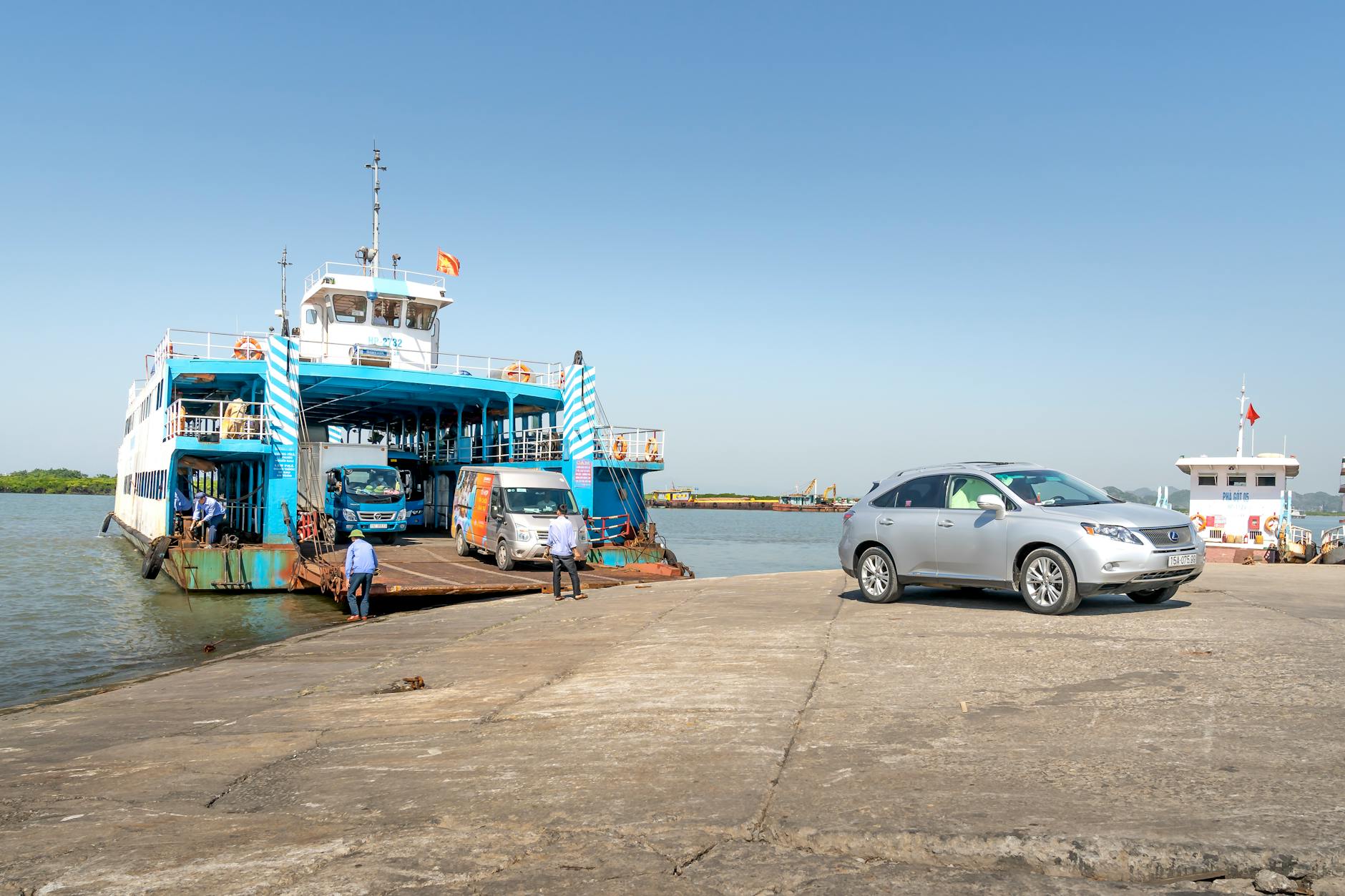
    Vancouver’s transit agency, TransLink, runs SkyTrain (3 rapid-transit lines), buses (200+ routes), the SeaBus ferry to North Vancouver, and the West Coast Express commuter train. Layered on top: False Creek Ferries / Aquabus (private mini-ferries), BC Ferries (to Victoria and the Gulf Islands), rideshare (Uber, Lyft), taxis, rental cars, and the Mobi by Rogers bike-share system. Plus: Vancouver is genuinely walkable — the downtown peninsula is under 5 km end-to-end and flat along the seawall.

    Vancouver Transportation at a Glance (cost & time table)

    Mode Typical trip 2026 fare (CAD) Frequency / hours Best for
    SkyTrain (Canada Line) YVR → downtown $10.50 (incl. $5.50 AddFare) Every 6–10 min; 4:48 a.m.–1:16 a.m. Airport arrivals / departures
    SkyTrain (Expo & Millennium) Downtown → Metrotown $3.20 cash / $2.60 Compass Every 2–5 min peak Day-to-day moves across Vancouver & Burnaby
    Bus Downtown → Kitsilano Beach $3.20 / $2.60 Every 5–15 min; NightBuses run ~1 a.m.–5 a.m. Kits, UBC, Stanley Park loop, crosstown routes
    SeaBus Waterfront → Lonsdale Quay $3.20 / $2.60 (2-zone) Every 15–30 min North Shore visits, Capilano Bridge shuttle
    DayPass Unlimited TransLink (all zones) $11.50 Valid any single day 3+ trips, North Shore + Richmond combos
    Aquabus / False Creek Ferries Granville Island → Yaletown $4.50–$7.50 one-way Every 5–15 min; ~7 a.m.–10 p.m. Granville Island, Olympic Village, Science World hops
    BC Ferries (walk-on) Tsawwassen → Swartz Bay (Victoria) $19.85 adult foot passenger ~8 sailings/day; 1h35m crossing Vancouver Island day / overnight trips
    Uber / Lyft Downtown → YVR (no traffic) $40–$55 24/7 Early-morning flights, groups of 3–4, luggage-heavy
    Taxi Downtown → YVR Flat rate $36 (Zone 2) 24/7 Flat-rate certainty, no surge pricing
    Mobi bike-share Seawall / downtown $1/min pay-as-you-go, $15 day pass, $25/mo 24/7; 250+ stations downtown Stanley Park seawall, False Creek loop
    Rental car 3-day economy $260–$380 + insurance + ~$35/day parking 24/7 Whistler, Squamish, Fraser Valley wineries
    Whistler shuttle Downtown or YVR → Whistler $32–$55 one-way 5–10 departures/day; 2h10m Ski trips, Whistler extensions
    Walking Waterfront → Gastown → Chinatown Free 24/7 Under 2 km; often faster than transit
    All fares accurate as of April 2026 from TransLink and the providers’ official pages. SkyTrain and bus fares are identical and interchangeable within a 90-minute transfer window using a Compass Card.

    Looking for the essentials? This guide covers everything about Vancouver transportation for 2026 — prices, hours, bookings, local tips, and the quirks only locals know.

    The one-sentence rule of thumb: if your trip starts or ends downtown and you’re not going to Whistler, use TransLink. Everything else is an exception.

    Modern airport train station platform with automated doors and waiting passengers
    The Canada Line SkyTrain links YVR to downtown Vancouver in 26 minutes. Photo by Leonard Richards on Pexels.

    YVR Airport to Downtown: Every Option Compared

    Vancouver International Airport (YVR) sits on Sea Island in Richmond, 13 km south of downtown Vancouver. It is Canada’s second-busiest airport (over 26 million passengers in 2025) and the gateway for 71 % of international tourist arrivals to British Columbia. Four options cover every traveller.

    1. Canada Line SkyTrain (the winner for most)

    Cost: $10.50 one-way (regular fare $5.00 + YVR AddFare $5.50). Kids 12 and under ride free. Time: 26 minutes to Waterfront Station in downtown. Frequency: every 6–7 minutes at peak, every 10 minutes off-peak. Hours: first train out of YVR approx 4:48 a.m., last arriving train approx 1:16 a.m. (Fri & Sat extended to 1:45 a.m.).

    The Canada Line station is inside the YVR terminal — follow "Canada Line" signs from the arrivals hall, take the elevator or escalator two floors up, and you’re on the platform. Tap a contactless credit card, Google Pay, or Apple Pay at the fare gate (no Compass Card needed for one-offs). The AddFare is charged automatically on trips from YVR; trips to YVR do not incur the AddFare.

    The Canada Line stops at Bridgeport (connects to Richmond), Marine Drive, Langara-49th, Oakridge–41st, King Edward, Broadway–City Hall, Olympic Village, Yaletown–Roundhouse, Vancouver City Centre, and ends at Waterfront. If your hotel is in downtown, Yaletown, or Olympic Village, walk from the closest station (usually under 10 minutes).

    When to skip it: four or more adults with luggage (Uber math wins), flight arrivals between 1:30 a.m. and 4:30 a.m. (the line is closed), or hotels beyond walking range of a Canada Line station (e.g., Kitsilano, North Shore).

    2. Uber or Lyft

    Cost: $40–$55 depending on surge. Time: 25–35 minutes with light traffic; 45–60 during rush. Pickups are from the airport rideshare zone — follow the "Rideshare" signs from domestic arrivals (Level 2) or international arrivals (Level 2 via the walkway). The rideshare zone is shared with taxis; a dispatch attendant checks your app pickup code.

    Surge windows to watch: Sunday evenings 6–9 p.m., cruise embarkation days (Tuesdays and Wednesdays April–October), and during the 2026 FIFA match days. In surge, prices can hit $80–$100. If surge is above 1.6x, the Canada Line is the better call.

    3. Taxi (flat-rate to Vancouver zones)

    Cost: YVR operates a zone flat-rate system for outbound taxis. Key 2026 zones: Zone 1 (Richmond, immediate area) $13–$17 meter; Zone 2 (downtown Vancouver, West End, Gastown, Yaletown, Olympic Village) flat $36; Zone 3 (Kitsilano, Point Grey, UBC, Mount Pleasant, most of East Van) flat $38; Zone 4 (North Vancouver, Burnaby, New West) meter ~$55–$75. Add taxes, tolls, and a tip (15–20 % customary).

    The queue is at the front of the terminal; a dispatcher assigns the next taxi. Flat rate is per trip, not per passenger. This is the most predictable cost because no surge ever applies.

    4. Hotel Shuttle / Private Car

    Several downtown hotels (Fairmont Vancouver Airport, Pan Pacific, Marriott Pinnacle) offer private pickup on arrival for $95–$150. Book in advance through the hotel concierge. For groups of 5+ travelling together, consider YVR Limojet or Vancouver Luxury Sedans: $145–$180 for a black-car sedan that fits 4 + luggage, $220–$260 for a Sprinter van for 8. This is the only remotely price-competitive option versus two Ubers for six adults.

    5. What about the YVR Skylynx bus?

    The YVR Skylynx to downtown (formerly operated by Pacific Coach Lines) ended scheduled service in 2023. Its primary successor, the YVR–Whistler Skylynx, does make select downtown stops (Hyatt Regency, Fairmont Hotel Vancouver) but is priced for Whistler travellers ($32–$48 one-way) — not a useful downtown transfer unless you are continuing to Whistler the same day.

    6. Driving yourself to YVR (for departures)

    On departure day, the cheapest park-and-fly options are YVR EasyPark Long-Term ($27/day) and off-site Park2Go or Jetset Parking on Sea Island ($22–$25/day with shuttle). Use these for trips of 3+ days; for anything shorter, Uber + Canada Line wins on total cost.

    Elevated SkyTrain rapid-transit passing urban buildings at dusk
    TransLink’s SkyTrain moves 500,000 passengers a day across three lines. Photo by Glen Zi on Pexels.

    SkyTrain: Lines, Hours & How to Pay

    SkyTrain is the backbone of Vancouver transit — three lines, fully automated (no driver), running largely elevated with some underground downtown segments. The system moves 500,000+ passengers a day.

    The three lines

    Expo Line (blue): Waterfront → Production Way–University (with a Surrey branch to King George). The original line, opened 1986. Hits downtown, Stadium–Chinatown (BC Place), Main Street–Science World, and Commercial–Broadway (transfer for the Millennium Line).

    Millennium Line (yellow): VCC–Clark → Lafarge Lake–Douglas. Serves East Vancouver, Burnaby’s SFU hillside, and the Tri-Cities. Note: the Millennium Line does not currently reach downtown — you transfer to Expo at Commercial–Broadway.

    Canada Line (teal): Waterfront → Richmond–Brighouse, with a branch to YVR airport (splits at Bridgeport). Opened 2009 for the Olympics. Underground downtown, elevated in Richmond.

    Broadway Subway (new): An extension of the Millennium Line under Broadway Avenue from VCC–Clark to Arbutus, opening fall 2026. Six new stations (Great Northern Way, Mount Pleasant, Broadway–City Hall, Oak–VGH, South Granville, Arbutus). After it opens, the Kitsilano and Granville transfer walk gets shorter; watch for opening-day service disruptions on the 99 B-Line bus.

    Hours of operation

    The SkyTrain runs roughly 5:00 a.m. to 1:16 a.m. Monday–Thursday and Sunday, and 5:00 a.m. to 1:45 a.m. Friday and Saturday. The Canada Line first train out of YVR is 4:48 a.m. (important if you have a ~6 a.m. flight — you’ll still be early for check-in). Last train arrivals into downtown are between 1:10 and 1:20 a.m.

    How to pay

    Three ways, all working equally well in 2026:

    1. Tap a contactless credit card or phone (Apple Pay, Google Pay) at the gate. You pay the adult cash fare ($3.20 one-zone, $4.60 two-zone, $6.35 three-zone). No card required. Taps are capped at the day-pass equivalent ($11.50).
    2. Compass Card — reloadable smart card, $6 refundable deposit. Stored-value fares are cheaper: $2.60 one-zone, $3.95 two-zone, $5.40 three-zone. Buy at any SkyTrain station vending machine or at the YVR Canada Line station upon arrival. Get your $6 deposit back at any vending machine when leaving.
    3. Compass Tickets — single-ride paper tickets from vending machines: $3.20, $4.60, $6.35. DayPass $11.50. Use these if you’re here for 1–2 days and don’t want the card.

    Zones: Vancouver uses a 3-zone fare system on weekdays before 6:30 p.m. — weekends, holidays, and weekday evenings after 6:30 p.m. are all one zone. Zone boundaries: Zone 1 = Vancouver proper; Zone 2 adds Richmond, Burnaby, North Van, West Van; Zone 3 adds the rest of the Lower Mainland (Surrey, Coquitlam, Maple Ridge). Most tourists only pay 1-zone fares because they visit downtown during the day or North Shore in the evening.

    Transfers

    A tapped fare is valid for 90 minutes on any combination of SkyTrain, bus, and SeaBus. Ride downtown, hop off for lunch, reboard the same direction — still one fare. Just re-tap each time; the system tracks your journey.

    Passenger tapping a transit card on a fare gate reader
    Tap a Compass Card or any contactless credit card at the fare gate. Photo by Kampus Production on Pexels.

    The Compass Card & Fare Structure

    The Compass Card is TransLink’s tap-and-go fare card. If you’re in Vancouver for 3+ days, it pays for itself via the stored-value discount alone (saves $0.60/trip versus cash). But the real reason most visitors get one: the DayPass loaded on a Compass Card works seamlessly for three generations of travellers from one device (up to three cards sharing a single family account).

    Where to buy: vending machines at every SkyTrain station, at SeaBus terminals, at London Drugs and 7-Eleven locations citywide, or via the Compass app (iOS & Android). The YVR Canada Line station has machines past the fare gates and before them.

    Cost breakdown: $6 refundable deposit + whatever you load. Minimum load $5. The card never expires. Tap-to-pay debits the stored-value fare automatically.

    Stored-value fares (2026):

    • 1 zone: $2.60 (cash $3.20)
    • 2 zones: $3.95 (cash $4.60)
    • 3 zones: $5.40 (cash $6.35)
    • Concession (youth 13–18, seniors 65+): $2.15 any zone
    • DayPass: $11.50
    • Monthly pass (1-zone): $109

    Contactless credit-card tap: as of 2022, any Visa, Mastercard, Amex or Interac contactless card works at Compass gates. You pay the cash fare (not stored-value), but you also get the daily cap of $11.50 — meaning five or more trips in one day is automatically a DayPass without having to pre-load one. Same for Apple Pay / Google Pay.

    City bus stopping at a curbside stop on an urban street
    TransLink runs 200+ bus routes across Metro Vancouver, with NightBus service until 5 a.m. Photo by Franco Garcia on Pexels.

    Bus Network & NightBus

    TransLink runs 200+ bus routes across Metro Vancouver. The ones tourists actually use:

    • Route 19 — Stanley Park / Metrotown: the bus from downtown into Stanley Park. Catch at Pender & Burrard.
    • Route 4 — UBC / Powell: runs down 4th Ave through Kitsilano to UBC. The daylight alternative to the 99.
    • Route 99 B-Line — Broadway Express: the articulated express that shuttles from Commercial–Broadway SkyTrain to UBC. Currently every 2–3 minutes at peak. Partially replaced by the Broadway Subway when it opens in fall 2026.
    • Route 5 — Downtown / Robson & Stanley Park loop: a tourist-friendly loop past the West End and Denman St.
    • Route 240 / 250 — North Vancouver: over the Lions Gate Bridge to Park Royal and on to Horseshoe Bay. Scenic.
    • Route 620 — Bridgeport SkyTrain / BC Ferries Tsawwassen: the cheap ($2.60 + ferry fare) way to the Victoria ferry.

    NightBuses

    After the SkyTrain stops (around 1:20 a.m. most nights, 1:45 a.m. Fri/Sat), NightBus takes over until ~5 a.m. Seven routes (N9, N10, N15, N17, N19, N20, N22, N24, N35) radiate from Granville Street downtown, reaching most suburbs. Regular fare applies. Useful if you’re closing out Granville Entertainment District or Gastown bars.

    Paying on the bus

    Tap your Compass Card or contactless card at the reader when boarding through the front door. Cash fare ($3.20) is exact change only — drivers can’t make change. Transfers are free within 90 minutes, automatic if you tap.

    Passenger ferry crossing a busy harbour with city skyline behind
    The SeaBus crosses Burrard Inlet to Lonsdale Quay in 12 minutes. Photo by Brian Cook on Pexels.

    SeaBus to North Vancouver

    The SeaBus is a 12-minute passenger ferry across Burrard Inlet linking downtown Vancouver (Waterfront Station, shared with SkyTrain and West Coast Express) to Lonsdale Quay in North Vancouver. Two catamaran ferries run continuously; it’s TransLink and fares are the same as any bus or train (2-zone weekday = $3.95 Compass; one-zone evenings & weekends = $2.60).

    Frequency: every 15 minutes at peak, every 30 minutes evenings and Sundays. Hours: approx 6:00 a.m.–1:00 a.m. weekdays; 8:00 a.m.–11:00 p.m. Sundays.

    Why take it? Lonsdale Quay Market (fish & chips, Tacofino, Polygon Gallery) is directly at the terminal. The 236 bus from Lonsdale runs to Capilano Suspension Bridge (17 min) and Grouse Mountain Skyride (28 min). It’s the cheapest route to the North Shore, and the crossing itself is the photo op — city skyline, Burrard Inlet boat traffic, North Shore mountains rising behind.

    Small colorful water taxi ferry approaching a dock
    The Aquabus is the fastest way from Yaletown to Granville Island. Photo by James Wheeler on Pexels.

    Aquabus & False Creek Ferries

    Two competing private operators run small passenger ferries in False Creek, the inlet between downtown and Granville Island. The Aquabus (rainbow-painted small boats) and False Creek Ferries (blue-trim boats). Same route, same price range, boats every 5–15 minutes from roughly 7 a.m. to 10 p.m. (shorter hours in winter).

    Stops: Hornby Street (downtown), Granville Island, Yaletown (Davie St), Olympic Village, Stamp’s Landing, Spyglass Place, Science World, Plaza of Nations. Fares (2026): $4.50–$7.50 per hop depending on distance; day passes $20–$22; kids under 4 free.

    This is not TransLink — Compass Cards don’t work. Pay cash, tap credit card, or buy a day pass at the dock kiosk. It’s a fun tourist amenity but also a practical one: Aquabus from Yaletown to Granville Island beats any other mode for time + views.

    Rideshare vehicle picking up a passenger on a downtown city street
    Uber and Lyft operate across Metro Vancouver including YVR pickup. Photo by Ejov Igor on Pexels.

    Uber & Lyft in Vancouver

    Rideshare arrived late in Vancouver — Uber and Lyft launched in 2020 after a lengthy regulatory fight. As of 2026, both operate throughout Metro Vancouver, including YVR. A third player, Kabu Ride, serves the Chinese-speaking community but has smaller coverage.

    Pricing: base fare $3.50–$4, per-km $1.25–$1.75, per-minute $0.30, typical minimum $7.50. A downtown-to-Granville-Island trip runs $12–$18; downtown to Kitsilano $14–$20; downtown to YVR $40–$55. UberX and Lyft are the standard products; Uber Comfort, Uber Black, Lyft XL offered in limited supply.

    When rideshare beats transit: groups of three or four (split the fare and you’re at transit-rate per head), late nights after NightBus gaps, hotel-to-hotel moves with luggage, and any wet weather trip under 5 km.

    Surge warnings: Friday and Saturday 10 p.m.–2 a.m. in the Granville Entertainment District (1.8–2.5x is routine); hockey nights at Rogers Arena (Canucks home games) after the third period; during the FIFA 2026 World Cup window (June 13–July 7) on match days.

    Driver ratings: Vancouver drivers must hold a Class 4 Commercial licence, pass criminal record checks, and obtain a PTB (Passenger Transportation Branch) licence; standards are notably higher than in most US markets.

    Yellow taxi cab on a downtown city street with pedestrians
    YVR-to-downtown taxi flat rate is CAD $36 (Zone 2); meter applies on the return. Photo by Tim Samuel on Pexels.

    Taxis

    Vancouver taxis run on meters (CAD $3.50 flag drop, $2.16/km, $0.65/min wait). Four main companies: Yellow Cab, Black Top & Checker Cabs, MacLure’s, Vancouver Taxi. All are dispatchable by phone, app (Kater, Yellow Cab’s own app), or hail from stands.

    Best taxi stands downtown: Waterfront Station, Vancouver Convention Centre, Pacific Centre mall (Howe & Robson), Pan Pacific, Fairmont Hotel Vancouver, Rogers Arena (post-events). Hail is legal but less common outside downtown.

    Flat-rate from YVR: $36 to downtown (Zone 2), $38 to Kitsilano (Zone 3). Flat rates only apply outbound from YVR; return trips run on meter. Tip 15–20 %.

    Rental car on an open highway with coastal mountains in the distance
    A rental car unlocks Whistler, Squamish and the Fraser Valley wineries. Photo by Michał Robak on Pexels.

    Rental Cars, Driving & Parking

    You don’t need a car in Vancouver proper. You do want one if you’re extending to Whistler, Squamish, the Fraser Valley wine country (Langley, Abbotsford), the Sunshine Coast, or Vancouver Island beyond Victoria.

    Renting at YVR

    All major brands (Avis, Budget, Hertz, Enterprise, National, Alamo, Thrifty, Dollar, Sixt, Routes) have desks in the YVR Parkade, level 1, a 5-minute walk from arrivals. Typical rates (April 2026): economy $85–$130/day; intermediate $110–$160/day; SUVs $170–$260/day. Taxes stack: 12 % PST, 5 % GST, $1.50/day vehicle recovery fee, $3/day airport concession recovery.

    Insurance: Canadian provincial insurance (ICBC) is not included in US-based rental rates. Verify your credit-card coverage for Canada specifically — Amex and Chase Visa Infinite cover; most basic Visa/MC rental benefits do not. Otherwise, add CDW: $20–$30/day.

    Renting downtown

    Downtown locations (Enterprise Hornby, Hertz Burrard, Avis Hornby) avoid the airport concession fees — typically $8–$15/day cheaper. Useful if you’re arriving by train/cruise or not flying into YVR.

    Driving rules

    You can drive in BC for 6 months on most foreign or out-of-province licences (longer for US states). Right-hand drive. Speed limits in km/h (50 urban, 80–100 highway). Winter tires or chains legally required on Sea-to-Sky Highway to Whistler Oct 1–Apr 30. Pedestrians always have right of way at marked crosswalks and at uncontrolled intersections — this is taken very seriously here. Turning right on red is permitted unless signed otherwise. Talking/texting while driving = $368 + penalty points.

    Parking downtown

    Street meter rates are $1–$6/hour depending on zone; use the PayByPhone app (zone code posted on the meter). Paid parking usually 9 a.m.–10 p.m. Mon–Sat; free Sundays in most of downtown. Residential permit zones surround the downtown core — don’t park in a permit-only zone without a permit; ticketing is relentless.

    Garages: Pacific Centre, Vancouver Art Gallery (under Robson Square), Library Square, Canada Place, Coal Harbour. Expect $4–$6/hour and $20–$38/day. Hotel parking is $35–$75/day; a nearby garage is usually cheaper.

    Gas: Metro Vancouver gas is the most expensive in Canada — often $2.00–$2.20/litre (around USD $5.80–$6.40/gallon). Fill up in the Fraser Valley or on your way out of town if possible.

    Row of shared bike-share bicycles docked at an urban station
    Mobi has 2,500 bikes across 250+ stations in downtown, Kitsilano and Mount Pleasant. Photo by Negative Space on Pexels.

    Biking: Mobi Bike-Share & Rentals

    Mobi by Rogers is Vancouver’s bike-share system — 2,500 bikes across 250+ stations downtown and in Kitsilano, Fairview, Mount Pleasant, and the West End. Since 2023, the fleet has been majority-electric; as of 2026, about 1,600 e-bikes and 900 pedal bikes are available.

    Pricing (2026): Pay-as-you-go $1.25 unlock + $0.25/minute (pedal) or $0.35/minute (e-bike). Day Pass $15 covers unlimited 60-minute trips; 90-Day Pass $60. Helmet required by BC law; one is attached to each Mobi bike, but a lot of seasoned cyclists carry their own.

    Where it shines: the Stanley Park seawall (10 km, mostly flat, iconic); the False Creek seawall loop (12 km, passes Granville Island, Olympic Village, Science World); the West End / Sunset Beach runs; Kitsilano Beach to Jericho Beach to Spanish Banks (7 km, beach-hopping). Don’t attempt it on the first day — get jet-lag out of your system, then go.

    Traditional bike rentals: Spokes Bicycle Rentals (Denman & Georgia, the entrance to Stanley Park seawall) is the classic; full day $40–$55 for a cruiser, $65–$85 for an e-bike. Reckless Bike Stores (Granville Island, Fairview) and Bayshore Bike Rentals (Coal Harbour) are alternatives.

    Pedestrians crossing a downtown street at a marked crosswalk
    Most tourist trips in downtown Vancouver are under 2 km — often faster walked. Photo by Quintin Gellar on Pexels.

    Walking: When It’s Faster Than Anything Else

    Downtown Vancouver is a peninsula. The farthest two points in the tourist core (Coal Harbour to the south end of Yaletown) are about 2 km. Most trips under 2.5 km are faster walked than taken by transit + transfer.

    Walk these routes instead of transiting:

    • Waterfront Station → Gastown → Chinatown: 20 minutes, all downhill-ish.
    • Canada Place → Coal Harbour seawall → Stanley Park entrance: 25 minutes along the water.
    • Robson Street shopping strip (Burrard to Denman): 18 minutes.
    • Yaletown → BC Place → Rogers Arena (game nights): 15 minutes.
    • Canada Place cruise terminal → Hotel Vancouver / Rosewood / Fairmont Pacific Rim: 10 minutes.

    The city is pedestrian-friendly by North American standards — wide sidewalks, signalled crossings, short blocks in the grid areas (Fairview, Kitsilano, Main Street). One exception: the West End–Stanley Park crossing at Georgia & Denman during rush hour is brutal.

    Large car ferry docked at a terminal loading vehicles and passengers
    BC Ferries runs Tsawwassen to Swartz Bay in 1h35m; walk-on fare CAD $19.85. Photo by Quang Nguyen Vinh on Pexels.

    BC Ferries: Vancouver Island & Beyond

    If you’re day-tripping or overnighting to Victoria, Nanaimo, the Gulf Islands, or the Sunshine Coast, BC Ferries is the operator. For Victoria, the main route is Tsawwassen (near YVR) → Swartz Bay (25 km from downtown Victoria); 1h35m crossing. Walk-on foot-passenger fare $19.85 adult, $9.90 child (5–11), free under 5. Bike $2. Vehicle under 20 ft: $66.10 plus driver fare. Reservations recommended for vehicles (free with Saver fares); walk-ons almost always get on. Schedule: typically 8 sailings/day, first 7 a.m., last 9 p.m. (fewer in winter).

    Getting to Tsawwassen without a car: take the Canada Line to Bridgeport Station, then TransLink Route 620 bus to Tsawwassen Ferry Terminal ($2.60 + $19.85 + ferry = $24.65 round trip). Budget 70–80 minutes transit-end-to-ferry-door.

    Other useful routes: Horseshoe Bay → Nanaimo (Departure Bay) for mid-Island; Horseshoe Bay → Langdale for the Sunshine Coast. Both depart West Vancouver, easier if you’re renting a car.
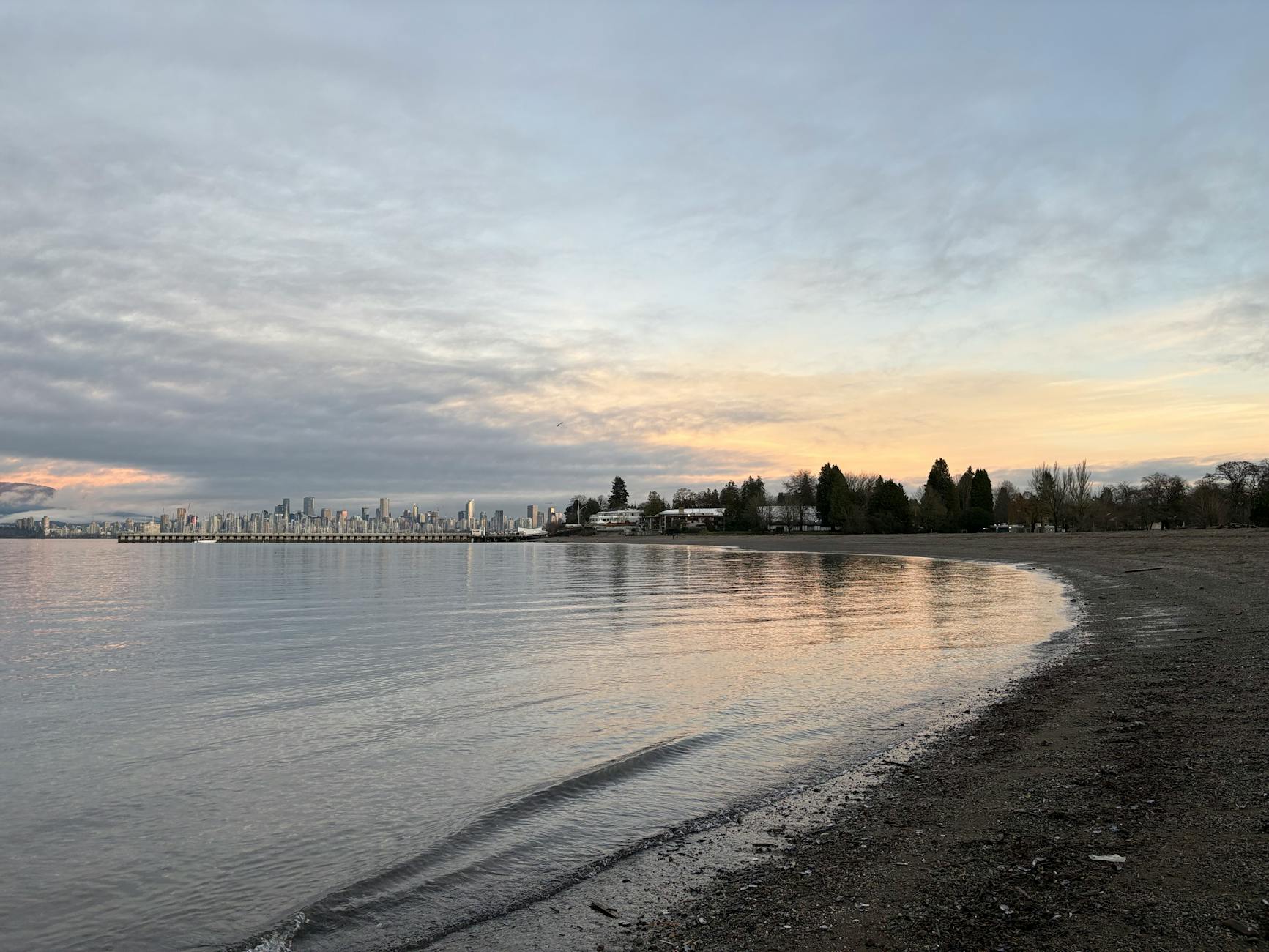
    Sea-to-Sky Highway winding along the coast with islands in the distance
    The Sea-to-Sky Highway is 120 km from Vancouver to Whistler. Photo by Ali Kazal on Pexels.

    Getting to Whistler

    Whistler is 120 km north on the Sea-to-Sky Highway (Highway 99). Drive time 1h50m–2h15m depending on traffic.

    Shuttles (no car needed):

    • YVR Skylynx / Whistler Shuttle: downtown Vancouver or YVR to Whistler Village. $32–$55 one-way depending on booking window and origin. 5–10 departures daily.
    • Epic Rides: downtown pickup, scenic Sea-to-Sky photo stops included, $48–$65 one-way.
    • Rider Express: the budget option, $35 one-way, fewer departures.

    Rental car from YVR: the flexibility premium. Stock winter tires Oct 1–Apr 30. Porteau Cove, Shannon Falls, and Brandywine Falls are worthwhile stops on the drive.

    Heli-tour (splurge): Sky Helicopters flies YVR–Whistler in 25 minutes for $695 per person (minimum 2). Used primarily by ski-in guests of Four Seasons Whistler.

    West Coast Express (commuter train)

    A rush-hour-only commuter train runs Monday–Friday from downtown Waterfront Station east to Mission City, stopping at Port Moody, Coquitlam, Pitt Meadows, Maple Ridge, and Mission. Five outbound trains in the afternoon, five inbound in the morning. Tourists rarely use it — the Expo and Millennium SkyTrains cover the same approximate corridor more frequently — but it’s useful if you’re staying in Coquitlam or Maple Ridge and want to avoid rush-hour traffic. Fares: 3-zone ($5.40 Compass) to 5-zone ($8.95).

    Wheelchair user boarding accessible transit via deployable ramp
    Every TransLink bus, SkyTrain, and SeaBus is wheelchair-accessible. Photo by Craig Adderley on Pexels.

    Accessibility: Wheelchair & Mobility

    Vancouver transit is among the most accessible in North America. All SkyTrain stations have elevators; trains have designated priority seating and flip-up seats for wheelchairs. All TransLink buses are low-floor with kneel-down function and deployable ramps. The SeaBus has level boarding and designated wheelchair spaces.

    HandyDART is TransLink’s door-to-door accessible shared-ride service for registered travellers with a disability. Visitors can register with a letter of medical necessity; advance booking required (up to 7 days, minimum 1 day).

    Sidewalks are universally ramped at intersections downtown and in most tourist neighbourhoods. The Stanley Park seawall is smooth-paved and mostly flat — wheelchair users and cyclists share the designated lane. Granville Island has some cobblestone and ramp quirks; the Public Market is fully accessible. Most major attractions (Science World, Vancouver Art Gallery, Aquarium, VanDusen) are fully accessible.

    Getting Around During FIFA 2026 (June 13–July 7)

    Vancouver hosts seven 2026 FIFA World Cup matches at BC Place between June 13 and July 7, 2026. On match days, expect:

    • SkyTrain: Stadium–Chinatown station will be crowded 3 hours pre-match and 90 minutes post-match. TransLink is adding extra trains but plan an extra 30 minutes.
    • Road closures: Expo Boulevard, Pacific Boulevard, and parts of Beatty Street close on match days. Rogers Arena and Science World remain accessible but via different approaches.
    • Uber/Lyft surge: 1.7–2.5x is normal in the post-match window; 3x+ possible for weekend night games.
    • Compass Card/ticket matches are expected to be honoured on match days with a valid ticket stub, but as of April 2026 FIFA has not confirmed this; check the official 2026 FIFA Vancouver transit page the week of your game.

    The move: stay downtown, walk to BC Place (12–20 minutes from most downtown hotels), and skip all road transport. For post-game celebrations, Gastown and Yaletown both absorb the overflow well; Granville Entertainment District will be at capacity.

    FAQs

    Do I need a car in Vancouver?

    No. TransLink (SkyTrain, bus, SeaBus), the Aquabus, Mobi bike-share and walking cover every Vancouver itinerary. A car is only useful if you’re extending to Whistler, Squamish, the Fraser Valley wineries, or Vancouver Island beyond the ferry walk-on radius.

    How do I get from YVR airport to downtown Vancouver?

    Take the Canada Line SkyTrain — 26 minutes to Waterfront Station, $10.50 including the airport AddFare, trains every 6–10 minutes. The station is inside the terminal. Alternatives: taxi flat-rate $36, Uber $40–$55, hotel shuttle $95–$150.

    How much does a Compass Card cost?

    $6 refundable deposit plus whatever stored value you load (minimum $5). You get the $6 back from any vending machine when you return the card. Cards never expire and work on SkyTrain, bus, SeaBus, and the West Coast Express.

    Can I use my credit card to tap on Vancouver transit?

    Yes. Any contactless Visa, Mastercard, Amex, or Interac card works at SkyTrain gates and bus readers, as do Apple Pay and Google Pay. You pay the cash fare but get the $11.50 daily cap automatically.

    How late does the SkyTrain run?

    Last trains arrive at downtown terminals between 1:10 and 1:20 a.m. Sunday through Thursday, and 1:45 a.m. Friday and Saturday. NightBus service picks up until around 5 a.m. when SkyTrain resumes.

    Is Uber available in Vancouver?

    Yes. Uber and Lyft both operate across Metro Vancouver, including YVR pickup. Expect surge pricing Fri/Sat 10 p.m.–2 a.m. in the Granville Entertainment District and on FIFA match days.

    How do I get to Whistler from Vancouver without a car?

    Take the YVR Skylynx, Epic Rides, or Rider Express shuttle from downtown or YVR directly to Whistler Village — $32–$55 one-way, 2h10m, 5–10 departures daily.

    How do I get from Vancouver to Victoria?

    Take TransLink Route 620 from Bridgeport SkyTrain Station to Tsawwassen Ferry Terminal, then BC Ferries (1h35m) to Swartz Bay, then BC Transit Route 70/72 (~40 minutes) to downtown Victoria. Total cost ~$25 one-way, total time ~4 hours.

    Is Vancouver walkable for tourists?

    Yes. Downtown Vancouver is a peninsula under 5 km end-to-end. Most trips between tourist neighbourhoods (Coal Harbour, Gastown, Yaletown, West End) are faster walked than transited.

    When does the Broadway Subway open?

    Fall 2026. It extends the Millennium Line under Broadway Avenue from VCC–Clark to Arbutus, with six new stations. After opening, the 99 B-Line express bus is largely replaced.

    What’s the best transit app for Vancouver?

    The official TransLink app for trip planning and real-time arrivals. Google Maps is also fully integrated with TransLink data. The Compass app is for managing your Compass Card balance.

    Are Vancouver buses accessible?

    Yes. All buses are low-floor with deployable ramps and kneel-down function. All SkyTrain stations have elevators. Priority seating for wheelchairs on every vehicle.

    Can I take bikes on the SkyTrain?

    Yes, outside of weekday rush hours (6:30–9:00 a.m. and 3:00–6:30 p.m. inbound/outbound respectively). Two bikes per car, use the designated bike area. Bikes are always welcome on the SeaBus.

    Official resources & further reading

  • Best Time to Visit Vancouver: Month-by-Month Guide (2026)

    Best Time to Visit Vancouver: Month-by-Month Guide (2026)

    Updated April 2026. There is no single "best" month to visit Vancouver — the right month depends on what you want out of the trip. July is warmest, September has the best weather-to-crowds ratio, April brings the cherry blossoms, and June–July 2026 hosts the FIFA World Cup. This guide maps every month to the traveller it suits, with 2026-specific event dates and 30-year climate normals from Environment Canada.

    We’ve built this around a decision matrix rather than a month-by-month brain dump. Start with the question "who are you on this trip?" — then jump to your month.

    Best Month to Visit Vancouver for YOU (decision matrix)

    You care most about… Best month Runner-up Why
    Warmest weather, driest days July August Average high 22 °C; only 36 mm rain; longest days
    Best weather-to-crowds ratio September Late April 19 °C highs, kids back in school, hotel rates drop 20–25 %
    Cherry blossoms April (especially 5–15) Late March 43,000 ornamental cherry trees peak mid-April; the Vancouver Cherry Blossom Festival runs April 3–29, 2026
    Skiing or snowshoeing January February / early March Coldest temps; deepest snow at Cypress, Grouse, Seymour, Whistler
    Whale watching (orcas, humpbacks) July–August June Resident orca pods feed in the Salish Sea; humpbacks return in numbers
    FIFA World Cup 2026 matches June 13–July 7 7 matches at BC Place; 2026 mega-event calendar
    Cheapest trip Mid-January Early November Hotel rates drop 50 %+ from peak; cheapest flights
    Alaska cruise embarkation May or September August Season runs late April to early October; shoulder rates + daylight
    Film festivals, arts & culture Late September October VIFF (Vancouver International Film Festival); Writers Fest
    Family holiday / winter magic December VanDusen Festival of Lights, Bright Nights at Stanley Park, Christmas Market
    Photography (light, clarity) September February (snow + sun) Golden-hour skies, low-angle light; dramatic post-rain clarity
    Digital nomads (3+ week stays) May October Weather trending up, tourist rates still low, full daylight returning
    Pick your priority row and jump to the month below. The monthly write-ups cover weather, events, crowds, hotel prices, and "who should visit this month."

    Wondering what the best time to visit Vancouver actually is? This month-by-month 2026 guide weighs weather, crowds, prices, and events to pinpoint the best time to visit Vancouver for every type of trip.

    TL;DR: the best time to visit Vancouver for the balance of sunshine and reasonable prices is mid-May to mid-June or the second half of September.

    Looking for the essentials? This guide covers everything about best time to visit Vancouver for 2026 — prices, hours, bookings, local tips, and the quirks only locals know.

    Vancouver skyline at sunset with glass towers and coastal mountains
    Vancouver’s seasons each favour a different kind of traveller. Photo by Luke Lawreszuk on Pexels.

    Vancouver’s Climate in One Minute

    Vancouver sits on the mild, marine-influenced Pacific Coast. Winters are wet but rarely cold — it almost never drops below freezing in the city proper, though the three North Shore ski hills (Cypress, Grouse, Seymour) accumulate over 900 cm of snow annually. Summers are dry, warm, and famously pleasant: average high of 22–23 °C (72–73 °F), low humidity, and extended daylight (over 16 hours in June).

    Month Avg high / low (°C) Rainfall (mm) Daylight Crowds Avg hotel ADR (CAD)
    January 7 / 1 169 8h 30m Low $160
    February 8 / 2 105 10h Low $170
    March 10 / 3 114 12h Low-Med $185
    April 13 / 5 89 14h Med $215
    May 17 / 8 65 15h 30m Med-High $260
    June 20 / 11 54 16h 15m Peak (FIFA) $360
    July 22 / 13 36 16h Peak $340
    August 23 / 13 37 14h 30m Peak $330
    September 19 / 10 51 13h Med-High $280
    October 13 / 7 121 11h Med $210
    November 9 / 4 189 9h Low $175
    December 6 / 2 162 8h 15m Med (holiday) $220
    Averages from Environment Canada’s 1991–2020 climate normals for YVR (station 1108447). ADR figures from Destination Vancouver’s Visitor Economy Report.
    Snow-covered mountain with ski lift cables crossing the frame
    Cypress, Grouse and Seymour open late November and run through early April. Photo by Ömer Gülen on Pexels.

    January: Cheapest & Snowiest

    Weather: Avg. high 7 °C, low 1 °C. 169 mm rainfall. ~15 rainy days.
    Daylight: Sun rises ~8:00 a.m., sets ~4:40 p.m. (growing).
    Who should visit: Skiers, budget travellers, locals-off-the-beaten-path enthusiasts.

    January is Vancouver’s cheapest travel month by a wide margin: hotel rates drop 45–55 % below July peak, flights are the lowest of the year after the January 6 holiday-return spike, and restaurants launch Dine Out Vancouver Festival (Jan 17–Feb 2, 2026) with $25/$35/$55 three-course tasting menus at 350+ restaurants — this is the month to book the impossible-to-get reservations (St. Lawrence, Published on Main, Kissa Tanto).

    The three local mountains — Cypress, Grouse, Seymour — open by late November and run through early April. Whistler is 2 hours away and skis through mid-May. Pack waterproof shells; January in the city is wet more than cold. The "cheapest week" pattern: January 12–18 (post-holiday, pre-Chinese New Year) consistently sees hotel ADRs below $150.

    February: Quiet, Value-Heavy, Lunar New Year

    Weather: Avg. high 8 °C, low 2 °C. 105 mm rainfall. Slightly drier than January.
    Daylight: ~10 hours.
    Who should visit: Couples seeking Valentine’s in the rain; budget Dine Out continues; Lunar New Year festival-goers.

    February’s Lunar New Year parade winds through Chinatown (typically the first weekend after the lunar new year); the Chinatown Storytelling Centre runs family events. The Vancouver Writers Fest has its mid-winter showcase. Ski season peaks. Hotel ADRs sit ~$170. Rain is stubborn but slightly less than January.

    Cyclist on a paved seaside path with trees and ocean in the background
    Biking the Stanley Park seawall is the classic Vancouver summer move — best July to September. Photo by Travis Kerkvliet on Pexels.

    March: The Blossoms Start

    Weather: Avg. high 10 °C, low 3 °C. 114 mm rainfall.
    Daylight: ~12 hours — equinox around March 20.
    Who should visit: Early-blossom photographers; ski-last-runs enthusiasts; arts-festival attendees (CapU Jazz, Vancouver International Dance Festival).

    Vancouver’s ornamental cherry trees begin blooming late March in protected locations — Akebono and Whitcomb varieties are early; Kanzan peaks later. The VanDusen Botanical Garden daffodils open mid-March. Snow linger on the local mountains; you can ski in the morning and cherry-blossom-chase in the afternoon (a legitimate Vancouver bragging point).

    Cherry blossom trees in full bloom lining a city street
    Vancouver’s 43,000 ornamental cherry trees peak April 5–15, 2026. Photo by Sevda Ozdemir on Pexels.

    April: Cherry Blossom Peak

    Weather: Avg. high 13 °C, low 5 °C. 89 mm rainfall.
    Daylight: 14 hours by month’s end.
    Who should visit: Blossom chasers, couples, photographers, crowd-averse travellers.

    April is when Vancouver’s 43,000 ornamental cherry trees reach peak bloom — roughly April 5–15, 2026 for most Kanzan varieties. The Vancouver Cherry Blossom Festival runs April 3–29, 2026, with the Big Picnic under the blossom tunnel at David Lam Park typically on the first Sunday. Best viewing locations: Queen Elizabeth Park, Graveley Street, Burrard SkyTrain Station, the Japanese Garden at VanDusen, Stanley Park near Lumbermen’s Arch. Weather is warming, crowds haven’t yet built, and hotel rates average $215.

    Large Alaska cruise ship at a dock with mountains visible behind
    The Alaska cruise season from Canada Place runs late April to early October. Photo by The Six on Pexels.

    May: Shoulder Season Hits Its Stride

    Weather: Avg. high 17 °C, low 8 °C. 65 mm rainfall.
    Daylight: 15½ hours.
    Who should visit: First-time visitors wanting comfortable weather and manageable crowds; Alaska cruisers; digital nomads.

    May is the month Vancouver locals half-seriously recommend to out-of-town friends. The weather has turned — sunny afternoons, 17 °C highs — but the tourism peak is still three weeks away. Alaska cruise season opens mid-to-late April; May Saturdays see sailings leaving Canada Place (the best time to photograph cruise ships from Stanley Park). Vancouver Craft Beer Week (late May/early June) launches the summer festival season. Hotel ADRs ~$260.

    Soccer stadium packed with fans waving flags during an evening match
    BC Place hosts seven FIFA World Cup 2026 matches between June 13 and July 7, 2026. Photo by Maulana Diki on Pexels.

    June: Peak Begins & FIFA Arrives

    Weather: Avg. high 20 °C, low 11 °C. 54 mm rainfall.
    Daylight: 16h 15m at the June 21 solstice.
    Who should visit: FIFA fans; early-summer beach-goers; festival enthusiasts.

    June 2026 is the month. FIFA World Cup matches arrive at BC Place on June 13, 18, 21, 24, and 26, with group-stage games featuring Canada vs. Qatar, Switzerland vs. Canada, Australia vs. Turkey, New Zealand vs. Egypt, and New Zealand vs. Belgium. Hotel rates on match nights surge 80–140 %. The Bard on the Beach Shakespeare festival opens (Jun 3–Sep 26, 2026), and the TD Vancouver International Jazz Festival runs late June into early July. Celebrate Canada Day (July 1) warm-ups fill Canada Place the last weekend.

    If you’re not a FIFA fan and want to visit in June 2026, consider flipping to Whistler or Victoria on match dates, or booking before June 13. Non-match June weekdays are still reasonable.

    Sunbathers on a Vancouver beach with the ocean and mountains visible
    July and August are Vancouver’s warmest, driest months — beach weather and peak hotel prices. Photo by Uzay Yildirim on Pexels.

    July: The Warmest Month

    Weather: Avg. high 22 °C, low 13 °C. 36 mm rainfall (Vancouver’s driest month).
    Daylight: Still over 16 hours early in the month.
    Who should visit: Beach-goers; event chasers; families on summer break; FIFA fans (the tournament continues through July 7).

    July finishes FIFA (Round of 32 July 2; Round of 16 July 7) and launches Vancouver’s peak summer festival season. Honda Celebration of Light fireworks compete over English Bay on July 25, August 1, and August 5 — book a West End hotel with balcony if dates align. Vancouver Folk Music Festival, Khatsahlano Street Party, Queer Arts Festival. Whale watching peaks with resident orca pods feeding in the Salish Sea. Stanley Park beaches (Second Beach, Third Beach, English Bay) are packed by 1 p.m. Arrive by 10 a.m. for a spot.

    Fireworks exploding over a harbour with city lights reflected in the water
    The Honda Celebration of Light fireworks festival runs three Saturdays late July–early August. Photo by Owen_s on Pexels.

    August: The Peak Continues; Pride & PNE Arrive

    Weather: Avg. high 23 °C, low 13 °C. 37 mm rainfall.
    Daylight: 14½ hours by month’s end.
    Who should visit: Peak-summer travellers; Pride attendees; families (PNE fair opens Aug 22).

    August is warm, dry, and busy. Vancouver Pride Parade (typically the first Sunday in August) is the city’s biggest street event; the Davie Street Party closes the village Friday and Saturday. The PNE fair runs Aug 22–Sep 7 at Hastings Park (rides, minidonuts, Superdogs). Cruise-season Saturdays continue to sell out downtown hotels. Fire-season haze can occasionally drift in from BC Interior wildfires — this has become a real consideration for photographers; check the AQHI on visiting-day mornings.

    Whale watching boat on open water with orca fin breaking the surface
    Resident orcas and humpbacks return to the Salish Sea June through September. Photo by Claudia Solano on Pexels.

    September: The Local’s Favorite

    Weather: Avg. high 19 °C, low 10 °C. 51 mm rainfall.
    Daylight: 13 hours.
    Who should visit: Mid-budget first-timers; foodies; photographers; cruisers bookending their Alaska sailing.

    If you ask ten Vancouverites which month they’d recommend to a friend, six will say September. Weather holds at 19 °C with low humidity, crowds drop sharply after Labour Day, and hotel ADRs fall ~20 % from peak. Vancouver International Film Festival (VIFF) opens late September. Alaska cruises continue through early October. This is the month to book Tojo’s, Published on Main, and St. Lawrence — reservations are merely difficult rather than impossible.

    Maple trees with red and orange leaves in a city park
    Vancouver’s autumn peaks mid-October in Stanley Park, VanDusen Garden, and the North Shore. Photo by Volker Thimm on Pexels.

    October: Storm Season Begins; Value Holds

    Weather: Avg. high 13 °C, low 7 °C. 121 mm rainfall — Vancouver’s transition into storm season.
    Daylight: 11 hours.
    Who should visit: Writers-Fest-goers (Vancouver Writers Fest late October); fall-colour photographers at VanDusen & UBC; travellers who love coastal Pacific Northwest weather.

    October is moody and often beautiful — Stanley Park’s deciduous trees turn in the second half of the month, and post-rain sun makes for luminous photography light. Hotel rates have dropped to $210 average. The city doesn’t shut down — indoor options like the Museum of Anthropology, FlyOver Canada, the Vancouver Aquarium, and the brewery district make rainy-day plans easy.

    Rainy Vancouver street at dusk with reflective pavement and neon signs
    Vancouver gets 1,189 mm of rain a year — November and January are the wettest months. Photo by Arnet Xavier on Pexels.

    November: The Wettest Month

    Weather: Avg. high 9 °C, low 4 °C. 189 mm rainfall (the wettest month).
    Daylight: Sun sets before 5 p.m.
    Who should visit: Ski-season-opening enthusiasts; Grey Cup fans (if hosted at BC Place); travellers who want the cheapest possible rates and don’t mind umbrellas.

    November is quiet. Hotel ADRs drop to $175. The local ski hills open late in the month (Cypress typically Nov 28; Grouse Nov 22; Seymour Dec 6; Whistler Nov 27). The Bright Nights Christmas train at Stanley Park lights the first weekend of December, but setup starts in late November. Pack waterproof shells, waterproof shoes, and a sense of humour about the weather.

    Empty cinema theatre with rows of red seats facing the screen
    VIFF, Vancouver’s major film festival, runs late September to early October. Photo by Tima Miroshnichenko on Pexels.

    December: Holiday Magic in the Dark

    Weather: Avg. high 6 °C, low 2 °C. 162 mm rainfall.
    Daylight: Just 8h 15m at the December 21 solstice (Vancouver’s shortest day).
    Who should visit: Family Christmas market-goers; ski early-birds; cozy-restaurant diners.

    December has its own charms. The VanDusen Festival of Lights (typically Dec 1–Jan 2) illuminates a million lights through the botanical garden. Bright Nights at Stanley Park runs through early January. The Vancouver Christmas Market at Jack Poole Plaza brings German mulled wine, gingerbread, and craft stalls. Hotel rates climb mid-month as holiday travel begins; the cheapest December week is early (Dec 1–10) or early January (Jan 2–18).

    Head-to-Head Month Comparisons

    August vs. September

    August has the best beach weather and the biggest events (Pride, fireworks, PNE). September has nearly the same temperatures, fewer crowds, lower hotel rates, and film-festival energy. Pick September unless you’re specifically in town for Pride or Celebration of Light.

    June vs. September

    Both have similar daytime temps (20 vs. 19 °C). June has longer daylight and the FIFA World Cup energy; September has lower prices and more relaxed attractions. Pick June for events and long days; September for value and calm.

    April vs. May

    April gives you cherry blossoms and cheaper hotels. May gives you warmer weather and the start of cruise season. Pick April if you’re a blossom chaser; May if you want warmth without July-level crowds.

    January vs. February (ski trips)

    January is often the coldest and snowiest. February sees more stable base + longer daylight. Pick February for ski trips — better conditions and less chance of rain-on-snow storms.

    The Cheapest Weeks to Visit Vancouver

    Window Typical hotel ADR (CAD) Why it’s cheap
    Jan 12–18, 2026 $145 Post-holiday, pre-Lunar NY, pre-Valentine’s; deepest value of the year
    Feb 17–Mar 1, 2026 $165 Post-Family Day (BC holiday), pre-spring-break
    Apr 13–25, 2026 $200 Post-blossom-peak, pre-cruise season
    Oct 19–Nov 8, 2026 $180 Post-Thanksgiving, pre-ski season
    Dec 1–10, 2026 $190 Post-US Thanksgiving, pre-holiday travel
    Windows avoid major events and Saturdays. Combine with Tuesday/Wednesday flight patterns for best total trip cost.

    Avoid at all costs if you’re price-sensitive: FIFA match nights (Jun 13, 18, 21, 24, 26; Jul 2, 7); BC Day long weekend (early August); the first full weekend of the Vancouver Marathon (early May); cruise-season Saturdays at Canada Place-adjacent hotels.

    Rainy-Day Playbook by Month

    Vancouver receives measurable rain on 159 days per year on average. Planning around rain doesn’t mean avoiding it — it means knowing the indoor equivalents.

    • November & December (often stormy): Museum of Vancouver + Maritime Museum (both in Vanier Park); VanDusen Festival of Lights; dim sum crawl on Main Street; brewery tour in Mount Pleasant.
    • January & February: Dine Out Vancouver Festival; PNE’s indoor hockey games at Rogers Arena; Vancouver Aquarium; MOA at UBC.
    • March, April (showery): Cherry-blossom photography between showers (the light pops); Vancouver Art Gallery; Polygon Gallery on the North Shore; Gastown coffee-bar crawl.
    • Late spring / summer (brief rain): wait it out at Granville Island’s indoor Public Market; Guelph Street Fire Hall architecture walk; FlyOver Canada for its VR motion-flight (timed tickets).
    • September & October (variable): VIFF screenings; Writers Fest readings; rainy-day picnics inside the Vancouver Public Library’s atrium; coffee and pastries at Bel Café.
    Skier carving through deep powder snow on a mountain run
    Whistler Blackcomb’s 2025-26 season runs November 27 through late May. Photo by Flo Maderebner on Pexels.

    Should You Avoid Vancouver During FIFA 2026?

    If you aren’t a football fan and you’re price-sensitive, yes — or at least dodge the match dates. Between June 13 and July 7, Vancouver hotel rates run 40–140 % above normal, restaurant reservations vanish 5–7 days in advance, and transit crushes after each game. Match dates at BC Place:

    • Saturday, June 13 — Australia vs. Turkey
    • Thursday, June 18 — Canada vs. Qatar
    • Sunday, June 21 — New Zealand vs. Egypt
    • Wednesday, June 24 — Switzerland vs. Canada
    • Friday, June 26 — New Zealand vs. Belgium
    • Thursday, July 2 — Round of 32
    • Tuesday, July 7 — Round of 16

    The cleanest FIFA-avoidance window in June/July is June 28–July 1 (between the group-stage finale and the Round of 32). Alternatively, stay in Whistler or Victoria on match nights and day-trip into Vancouver for non-match activities.

    Frequently Asked Questions

    What is the best time to visit Vancouver?

    July and August are warmest. September has the best weather-to-crowds balance. April brings the cherry blossoms. The "best" month depends on which of those matters most to you — see the decision matrix at the top.

    What is the cheapest month to visit Vancouver?

    January. Hotel rates drop 45–55 % below July peak; flights are cheapest; Dine Out Vancouver Festival gives you $25/$35/$55 three-course tasting menus at 350+ restaurants. The cheapest week is roughly January 12–18, 2026.

    What is the rainiest month in Vancouver?

    November, averaging 189 mm across ~19 days. December and January are close behind at 162 and 169 mm respectively.

    Is Vancouver worth visiting in winter?

    Yes — if you’re skiing (three local hills, plus Whistler two hours north), dining (Dine Out Vancouver Festival in January/February), or city-exploring on a budget. It’s not worth visiting in winter for beaches or Stanley Park Seawall photography.

    When do cherry blossoms bloom in Vancouver 2026?

    Early varieties (Akebono, Whitcomb) start blooming late March 2026. The dominant Kanzan variety peaks April 5–15. The Vancouver Cherry Blossom Festival runs April 3–29, 2026, with festival events throughout.

    Is June or September better for Vancouver?

    June has longer days, warmer evenings, and the 2026 FIFA World Cup. September has lower prices, fewer crowds, and nearly the same daytime temperatures. Pick June for events and daylight; September for value and calm.

    What months can you see whales near Vancouver?

    May through October, with peak sightings in July and August when resident orca pods feed heaviest in the Salish Sea. Tours run from Vancouver and from Steveston, in Richmond.

    Will FIFA 2026 make Vancouver more expensive?

    Yes — on match dates (Jun 13, 18, 21, 24, 26; Jul 2, 7). Expect 40–140 % hotel surcharges that week; restaurant reservations vanish a week out. Rates normalize quickly between matches.

    When does ski season start in Vancouver?

    Local hills open late November: Cypress around Nov 28, Grouse Nov 22, Mount Seymour Dec 6. Whistler Blackcomb opens Nov 27 and runs through mid-May.

    What is the best month for weather in Vancouver?

    July and August (warmest, driest). September is close behind with slightly cooler nights. Avoid November if clear-weather photography matters.

    How many days should I plan in Vancouver?

    Three days hits the main attractions without feeling rushed. Five unlocks Victoria and whale watching. Seven with Whistler is the dream trip. See our dedicated Vancouver itinerary guide for day-by-day plans.

    Weather data is based on Environment Canada 1991–2020 climate normals for Vancouver International Airport. Festival dates are confirmed against 2026 official calendars. Last reviewed April 2026.

    Official resources & further reading

  • Where to Stay in Vancouver: Best Neighbourhoods & Hotels (2026 Guide)

    Where to Stay in Vancouver: Best Neighbourhoods & Hotels (2026 Guide)

    Updated April 2026. Vancouver’s hotel landscape is shifting fast — a $75-million Fairmont Hotel Vancouver renovation is wrapping this May, the 11-tower Sen̓áḵw development is topping out at the Burrard Bridge’s south foot, and FIFA World Cup matches are pushing downtown nightly rates 140 %+ above normal between June 13 and July 7. Picking the right neighborhood matters more in 2026 than in any year we can remember.

    This is a neighborhood-first guide, not a ranked hotel list. We first help you decide which area fits your trip — by vibe, budget, traveller type, and transit access — and then share the specific hotels we’d actually book within each. Every price is a 2026 CAD average; every address is exact.

    Which Vancouver Neighborhood Is Right for You?

    Start here. This matrix is built from ~6,000 guest-review snapshots and 2026 TransLink data, and it will shortcut 80 % of the choice.

    If you want… Best neighborhood Walk to Stanley Park? 2026 mid-range nightly (CAD)
    Views, upscale feel, walk to cruise ship Coal Harbour / Downtown Yes — 10–15 min $380–$520
    Heritage cobblestones + nightlife, indie vibe Gastown 20 min $260–$420
    Buzzy restaurant scene, BC Place on foot Yaletown 25 min / SkyTrain $290–$460
    Quiet, residential, English Bay sunsets West End / Davie Village 10 min $240–$380
    Beach mornings, Granville Island nearby Kitsilano & Fairview Bus #2 or cycle seawall $260–$395
    Indie food, brewery crawl, price relief Mount Pleasant / Main St 20 min via SkyTrain $180–$260
    FIFA matches, stadium-door distance Yaletown or Gastown 25 min $420–$780
    Alaska cruise embarkation Coal Harbour (hotels attached to Canada Place) 10 min $420–$780
    Families with kids Yaletown or West End 10–15 min $300–$460
    Couples on a special trip Coal Harbour or Gastown 10–20 min $480–$850+
    Budget / backpackers Mount Pleasant or West End hostels Bus $55–$215
    Airport proximity only Richmond / YVR SkyTrain 35 min $185–$295
    Pick a row and jump to the detailed write-up. Each section includes exact hotels, transit options, and the “sleep test” — the thing that’ll actually matter at 2 a.m.

    Trying to figure out where to stay in Vancouver? This 2026 neighbourhood guide ranks every central area by vibe, walkability, nightlife, and price — so you can match where to stay in Vancouver to the trip you actually want.

    At a glance: the best places to figure where to stay in Vancouver are Downtown/Coal Harbour for first-timers, Gastown for culture, Yaletown for food, the West End for walkability, and Kitsilano for beach-lovers.

    Looking for the essentials? This guide covers everything about where to stay in Vancouver for 2026 — prices, hours, bookings, local tips, and the quirks only locals know.

    Luxury waterfront district with yachts moored and glass towers behind
    Coal Harbour is Vancouver’s highest-end base — yachts, mountain views, Fairmont Pacific Rim. Photo by Mila Emilivna on Pexels.

    Coal Harbour & Downtown Core

    Vibe: Glass-tower skyline; seaplane traffic on the harbour; cruise ships docked at Canada Place; morning joggers on the Seawall. This is where most first-time visitors end up — and rightly so for 3-day trips.

    Best for: First-time visitors, cruise pre-nights, couples, luxury travellers.

    Skip if: You want a neighborhood feel (too corporate), or you’re a FIFA fan who wants cheaper stadium proximity (Yaletown wins).

    The sleep test: Request a harbour-view room above floor 15 — it’s the single biggest quality bump.

    Hotels in Coal Harbour

    • Fairmont Pacific Rim — 1038 Canada Place. 2026 avg. CAD $795/night. The city’s flagship luxury property; live jazz in the Lobby Lounge, Willow Stream Spa, seafront balconies. Walk to cruise terminal = 3 minutes.
    • Shangri-La Vancouver — 1128 West Georgia. $720. Tallest hotel in the city; 12–61 floor rooms with Stanley Park views; CHI Spa; Market by Jean-Georges dining.
    • Pan Pacific Vancouver — 999 Canada Place. $420. Literally built above the cruise terminal — walk your bags to the ship. Outdoor heated pool; harbour fireworks views in August.
    • Loden Vancouver — 1177 Melville. $465. Boutique feel, 77 rooms, free town-car service within downtown.
    • Sandman City Centre — 180 West Georgia. $215. Reliable mid-budget chain, clean, basic; two blocks to Gastown.

    Fairmont Hotel Vancouver — 2026 reopening note

    The iconic 1939 "Castle on Hotel Hill" (900 West Georgia) wraps its $75 M restoration in May 2026. Rates expected around CAD $525–$720 for standard rooms; the Presidential Suite (hosted the Queen, Elvis, and Obama) returns at ~$4,800/night.

    Heritage brick street at night with glowing lanterns and cobblestone road
    Gastown’s heritage-brick streets host Vancouver’s best cocktail bars and boutique hotels. Photo by Caio on Pexels.

    Gastown

    Vibe: Cobblestone streets, Victorian brick warehouses, heritage-cast iron lampposts, the steam clock tourist-flash, and after 7 p.m. one of North America’s best cocktail strips.

    Best for: Couples, food lovers, indie-leaning travellers, solos.

    Skip if: You’re sensitive to street homelessness — Gastown’s east edge touches the Downtown Eastside (see the safety note below).

    The sleep test: Ask for a room facing Water Street or the harbour, not Hastings Street (noise + the DTES boundary).

    Hotels in Gastown

    • Rosewood Hotel Georgia — 801 West Georgia (Gastown’s western edge). $780. 1927 heritage hotel, Reflections rooftop bar, Hawksworth restaurant; restored to near-perfection.
    • The Douglas, Autograph Collection — 39 Smithe St. $510. Inside the Parq Vancouver complex, glass-walled rooms, casino access.
    • L’Hermitage Hotel — 788 Richards. $455. Quietly luxurious boutique, 22-m indoor pool, Maison Saint-Georges restaurant.
    • Victorian Hotel — 514 Homer. $235. Character rooms in a restored 1898 building; great value; some shared bathrooms on older floors.
    • Skwachàys Lodge — 29/31 West Pender. $210. Canada’s first Indigenous boutique arts hotel; each room designed with an Indigenous artist; social-enterprise mission supports Vancouver artists.
    Urban neighbourhood with mid-rise residential towers and tree-lined pedestrian street
    Yaletown is Vancouver’s converted-warehouse district: loft hotels, dog parks, and destination restaurants. Photo by Erwin Cachin on Pexels.

    Yaletown

    Vibe: Converted warehouse lofts on brick-and-steel streets that feel like SoHo. Restaurants with marble patios; sushi omakase counters; quick SkyTrain to BC Place.

    Best for: Restaurant-driven travellers, FIFA attendees, families (Aquabus out the door to Granville Island).

    Skip if: You want to walk to Stanley Park (it’s 25+ minutes — you’ll bus).

    The sleep test: A room facing False Creek (south side) beats one facing an interior courtyard, every time.

    Hotels in Yaletown

    • OPUS Vancouver — 322 Davie St. $495. Five themed-character designs (ask at booking for which "persona" fits you). Live DJ in OPUS Bar.
    • Parq Vancouver (JW Marriott & The Douglas) — 39 Smithe. $540. Two hotels inside a casino-plus-6-restaurant complex; spa; walk to BC Place in 5 minutes.
    • Georgian Court Hotel — 773 Beatty St. $310. Reliable mid-range; the steakhouse downstairs is a rare old-guard Vancouver classic.
    Residential street lined with mid-century apartments and mature trees
    The West End connects directly to Stanley Park and Sunset Beach. Photo by The Six on Pexels.

    West End & Davie Village

    Vibe: Leafy residential streets; heritage apartment buildings; Canada’s largest historically LGBTQ+ neighborhood along Davie Street; English Bay Beach a few minutes west; Stanley Park at the north end.

    Best for: Travellers who want quiet nights, beach mornings, Stanley Park access, LGBTQ+ community feel.

    Skip if: You want constant nightlife at your doorstep (Gastown beats this).

    The sleep test: A sunset-facing room above the 10th floor on English Bay is Vancouver’s best-value view.

    Hotels in the West End

    • The Sylvia Hotel — 1154 Gilford St. $265. Ivy-draped 1912 landmark directly on English Bay; the bar overlooking the beach is quietly iconic.
    • The Listel Hotel — 1300 Robson St. $385. Art-filled, locally owned; Forage restaurant downstairs is one of the city’s best farm-to-table rooms.
    • Barclay Hotel — 1348 Robson. $185. Simple, clean, well-priced European-style hotel; basic rooms but unbeatable location.
    • HI Vancouver Downtown (hostel) — 1114 Burnaby. From $55 dorm / $165 private. The city’s best-run hostel; Central West End location.

    Davie Village (LGBTQ+ note)

    Davie Street between Burrard and Denman is the heart of queer Vancouver — rainbow crosswalks at Bute, the Junction bar, Numbers, PumpJack. Most West End hotels are a 3-minute walk.

    Sandy beach with people sunbathing and the ocean in the foreground
    Kitsilano’s beaches, yoga studios and brunch culture make for a laid-back Vancouver stay. Photo by JP on Pexels.

    Kitsilano & Fairview

    Vibe: Craft-coffee and yoga-studio energy; a wide pebbly beach with a heated Olympic-length outdoor pool (Kits Pool); lower-rise heritage character homes; Granville Island next door.

    Best for: Second-time visitors, wellness travellers, slow mornings, long stays, summer trips.

    Skip if: You’re short on time (getting back downtown after dinner adds 15–20 minutes via bus).

    The sleep test: Kits Beach-facing rooms vs. south Granville/Fairview; beach-side wins for summer, inland wins for rainy-season walkability.

    Hotels in Kitsilano & Fairview

    • Granville Island Hotel — 1253 Johnston St. $395. The only hotel on Granville Island; waterside rooms above Dockside Restaurant; Aquabus at your front door.
    • Kitsilano Suites (short-term rentals) — 2nd & Yew area. $275. Licensed short-term suites, 1–2 bedroom, full kitchens. Best for 4+ night stays.
    • Hampton Inn & Suites Vancouver Downtown — 111 Robson (technically downtown-adjacent but serves Fairview overflow). $245. Breakfast included; mid-range brand reliability.

    Kitsilano’s zoning restricts most chain hotels. Expect short-term rentals, licensed B&Bs, and one hotel. It’s also where the Sen̓áḵw tower district is rising at the Burrard Bridge’s south foot — the Squamish Nation’s 11-tower development will add boutique hotel capacity by 2027–28.

    Industrial craft brewery taproom with stainless fermenters and wooden bar
    Mount Pleasant is Vancouver’s brewery district — 15 taprooms within a 1 km radius. Photo by cottonbro studio on Pexels.

    Mount Pleasant & Main Street

    Vibe: Vancouver’s indie-food capital; brewery district; vinyl shops; street murals; real-estate still in the “up-and-coming” phase for visitors.

    Best for: Budget travellers, foodies, brewery crawlers, longer stays, return visitors who’ve done downtown.

    Skip if: You want water views or walk-everywhere downtown convenience.

    The sleep test: Proximity to Broadway-City Hall or Olympic Village SkyTrain station — either is 10 minutes to Waterfront.

    Where to stay in Mount Pleasant

    Few traditional hotels exist; the inventory skews licensed short-term rentals, Airbnbs, and hostels in the wider Main Street corridor. Expect CAD $180–$260 mid-range. The Apartment Inn on Main (2nd & Main area) and Cambie Hostel — Seymour (515 Seymour, downtown-adjacent) are reliable; otherwise search for licensed rentals on Main Street between 12th and 25th Avenue.

    Coastal harbour view with snow-capped mountains rising directly behind
    North Vancouver puts you 10 minutes from Grouse, Capilano, and the Lynn Canyon trails. Photo by Farnaz Kohankhaki on Pexels.

    Olympic Village / False Creek

    Vibe: 2010 Olympics legacy-neighborhood on the south side of False Creek; brewery tasting rooms, the 6-metre bronze sparrows at Hinge Park, Science World a stroll away; the Seawall goes right past.

    Best for: Urbanists, design-minded travellers, long-stay travellers.

    Skip if: You want hotel-brand concierge service — most options are short-term rentals.

    A new 1 Hotel Vancouver (converted from the former Trump tower property on West Georgia) is soft-opening July 2026 and sits at the border of Coal Harbour and Yaletown rather than Olympic Village proper — but it extends the high-end inventory meaningfully. 2026 avg. rate around CAD $895.

    Modern airport hotel exterior with glass lobby entrance
    Airport-adjacent hotels in Richmond run CAD $180–260 and sit right on the Canada Line SkyTrain. Photo by Mingyang LIU on Pexels.

    Richmond / YVR Airport Area

    Vibe: Chinese-Canadian cultural heart of Metro Vancouver; Aberdeen Centre & McArthurGlen outlets; summer Richmond Night Market (8,000+ visitors each night); steps from YVR via Canada Line.

    Best for: Early flights; layovers; foodies hunting dim sum/hot-pot/Taiwanese beef noodle.

    Skip if: Vancouver is your primary destination (35–45 minutes to downtown via Canada Line).

    Hotels in Richmond

    • Fairmont Vancouver Airport — inside the YVR terminal, soundproofed rooms, indoor pool; from $295.
    • Pacific Gateway Hotel — 3500 Cessna Dr. $215. Free airport shuttle; river views.
    • Versante Hotel — 8499 Bridgeport Rd. $295. Boutique; walk to Aberdeen Centre and the Canada Line.
    Family hotel suite with two double beds and pull-out sofa in a bright room
    Family hotels in Vancouver prioritise two-queen rooms, pools, and proximity to Stanley Park. Photo by Quang Nguyen Vinh on Pexels.

    Where to Stay by Traveller Type

    Families with kids

    Yaletown and the West End are the two easy winners. Yaletown puts Aquabus + Science World a 5-minute stroll away and connects directly to BC Place. The West End means Stanley Park becomes your front yard. Look for pools at the Sheraton Vancouver Wall Centre (1088 Burrard, from CAD $315), the Westin Grand (433 Robson, from $340), and the Pan Pacific for cruise-bound families.

    Couples on a special trip

    Coal Harbour for the view, Gastown for the character, or Kitsilano if you’re drawn to water and wellness. The Fairmont Pacific Rim, Rosewood Hotel Georgia, Shangri-La, and Loden are the four that routinely show up in "best honeymoon" lists — and deserve to.

    Cruise passengers (Alaska)

    Stay at a hotel attached or adjacent to Canada Place so you can walk to the ship with your own bags. Top picks: Pan Pacific Vancouver (literally built on top of the terminal), Fairmont Pacific Rim (3-minute walk), The Westin Bayshore (a scenic 12-minute walk past the marina). Book 3–5 months out; Alaska-cruise season Saturdays between May and September see 88 % peak occupancy.

    FIFA World Cup 2026 attendees

    Priority one: walk home from BC Place. Transit gridlocks for 60–90 minutes post-match on the Expo Line. Yaletown hotels (OPUS, JW Marriott Parq, Georgian Court) get you home in 15 minutes on foot. Gastown (Rosewood, Douglas Autograph, Victorian) in 20 minutes. Avoid North Shore and Kitsilano hotels on match nights — the SeaBus terminal and Burrard Bridge queues hour-long. See match dates in our FIFA modifier section of the itinerary pillar.

    Budget travellers

    The real value stack: HI Vancouver Downtown hostel for dorms, Barclay Hotel for private rooms in the West End, Sandman City Centre as a chain-fallback, Victorian Hotel (~$235) in Gastown for character on the cheap, and licensed short-term rentals on Main Street. Setting a hard cap of CAD $220/night is realistic if you book 8+ weeks out and avoid FIFA/Saturday cruise nights.

    Accessibility

    Full roll-in shower inventory is best at the Sheraton Wall Centre, Westin Bayshore, Pan Pacific, and Hyatt Regency. The SeaBus and all SkyTrain lines are fully elevator-equipped; TransLink maintains a real-time elevator-outage tracker. Granville Island, Gastown, and Stanley Park Seawall are wheelchair navigable; Accessible Vancouver (by the Rick Hansen Foundation) rates individual properties.

    Elegant hotel lobby with marble floor, chandelier and curated art
    Vancouver’s five-star hotels — Rosewood, Shangri-La, Fairmont Pacific Rim — cluster in Coal Harbour and downtown. Photo by Quang Nguyen Vinh on Pexels.

    2026 Vancouver Hotel Price Landscape

    Tier Typical nightly (CAD) Example hotel Book by
    Luxury $650–$950+ Fairmont Pacific Rim, Rosewood, Shangri-La 3–6 months out
    Upscale boutique $420–$580 Loden, OPUS, L’Hermitage 2–4 months out
    Mid-range brand $280–$395 Pan Pacific, Westin Grand, Sheraton Wall Centre 6–10 weeks out
    Value / character $180–$265 Sylvia, Victorian Hotel, Barclay, Sandman 4–8 weeks out
    Budget / hostel $55–$165 HI Vancouver Downtown, Cambie Hostel 2–4 weeks out
    FIFA match nights +40–140 % of the above Any downtown Book by early May 2026
    2026 CAD averages based on guest-review mining and published rate cards. Add 12–17 % tax (5 % PST + 5 % GST + 2–3 % MRDT + 1.5 % Tourism Vancouver levy).

    The tax math matters. A "$350 room" lands around $410 after taxes. Always compare post-tax totals when benchmarking.

    World Cup fans celebrating with flags and crowds in a city square
    Vancouver hotels are already up 140% for FIFA 2026 match dates (June 13 – July 7). Photo by Caio on Pexels.

    Booking Order: What to Lock In First

    1. Cruise-season Saturdays (May–Sep): 4–5 months out. Canada Place-adjacent hotels sell out Friday + Saturday before every Alaska sailing.
    2. FIFA match nights (Jun 13, 18, 21, 24, 26; Jul 2, 7): book before May 15, 2026. After that, inventory collapses and rates 2×.
    3. July and August Saturdays: 10–12 weeks out; anything closer risks "$750 only" nights in low tiers.
    4. Shoulder (Apr, late Sep, Oct): 4–6 weeks out usually gets best rates.
    5. Winter (Nov, Jan, Feb): 2–3 weeks out; last-minute deals appear Tuesdays/Wednesdays.

    Loyalty point value: Marriott Bonvoy and Hilton Honors both perform well in Vancouver; Marriott’s The Douglas Autograph, JW Marriott Parq, Westin Bayshore, Westin Grand, and Sheraton Wall Centre give five downtown options under one program. Fairmont/Accor redemptions also work well at the Fairmont Pacific Rim and the reopened Fairmont Hotel Vancouver.

    Clean minimal budget hotel room with twin beds and neutral wall colour
    Budget stays in Vancouver — hostels, Gastown pub-hotels, and Richmond roadside motels — start around CAD $75 per night. Photo by Mowbray Court Hotel London on Pexels.

    Is Vancouver Safe for Hotels? The Downtown Eastside Note

    Vancouver is generally safe for visitors, but the Downtown Eastside (DTES) — a several-block area roughly bounded by Main, Victory Square, Powell, and Clark — has visible street homelessness and drug use. The DTES sits immediately east of Gastown.

    Practical advice: most Gastown hotels west of Columbia Street (Victorian, Rosewood’s western edge, L’Hermitage) are well away from the DTES core. Avoid walking east on Hastings Street after dark. Uber rides in/out are cheap and trivially safe. The situation is sad rather than dangerous for tourists; exercise the same city awareness you’d use in any major North American metro.

    Frequently Asked Questions

    What is the best area to stay in Vancouver for first-time visitors?

    Coal Harbour or Downtown, if your budget supports it. You’ll be able to walk to Stanley Park, Canada Place, Gastown, and the Seawall. Gastown and Yaletown are the second-best picks; they trade walk-to-Stanley-Park for richer evening dining scenes.

    Is it better to stay in Downtown or Gastown Vancouver?

    Downtown Coal Harbour for views, Stanley Park access, and cruise-terminal walkability. Gastown for heritage-character, nightlife, and food scene. They’re 10 minutes apart on foot, so the decision is really about which morning-light experience you want.

    How much does a Vancouver hotel cost per night in 2026?

    Mid-range downtown averages CAD $280–$395 pre-tax (roughly $330–$465 after 12–17 % taxes). Luxury runs $650–$950+. Budget lands at $180–$265. FIFA match nights push everything 40–140 % higher.

    Where should I stay in Vancouver without a car?

    Anywhere in the downtown peninsula or Kitsilano/Fairview. The Compass Card, SkyTrain, SeaBus, Aquabus, and your feet cover 100 % of a normal visit. Avoid Richmond/YVR hotels unless you have early flights.

    Is Gastown safe to stay in at night?

    The Gastown core (Water Street, Cambie, Cordova) is well-populated and well-lit. Avoid walking east on Hastings Street after dark; take a 5-minute Uber if you cross into the DTES. The west half of Gastown borders the financial district and is among the safest areas downtown.

    What’s the best Vancouver neighborhood for families?

    Yaletown — you’ll have the Aquabus, Science World, the False Creek Seawall, and a short SkyTrain to Stanley Park. The West End is the runner-up, since Stanley Park is your front yard.

    Where do cruise passengers stay in Vancouver?

    Hotels attached or one block from Canada Place: Pan Pacific Vancouver (on the terminal), Fairmont Pacific Rim, The Westin Bayshore. Book 3–5 months out for Saturday sailings in May–September.

    Where should I stay for FIFA World Cup 2026 Vancouver matches?

    Yaletown wins — walk home from BC Place in 15 minutes. Gastown takes 20 minutes. Coal Harbour works at 25 minutes. Do not book North Shore hotels on match dates; SeaBus queues are over an hour post-game. Match dates: June 13, 18, 21, 24, 26; July 2, 7, 2026.

    Is Kitsilano worth staying in?

    For second-time visitors or summer/wellness trips, yes — beaches, yoga, brunch, Granville Island at your door. For first-time 3-day trips, no — you’ll spend too much time commuting back downtown at night.

    What’s the closest hotel to Stanley Park?

    The Westin Bayshore (1601 Bayshore Dr) sits at the park’s eastern edge — walk into the park in 3 minutes. The Sylvia Hotel in the West End (1154 Gilford) is a 10-minute walk from the park’s southwest entrance.

    Which Vancouver hotels have the best views?

    High-floor north-facing rooms at the Shangri-La (toward Stanley Park and the North Shore mountains), harbour-facing rooms at the Fairmont Pacific Rim and Pan Pacific, and sunset-facing English Bay rooms at the Sylvia and Listel.

    Hotel pricing and availability is tracked quarterly; last review April 2026. Report an issue or suggest a missing property — we read every note.

    Official resources & further reading

  • Vancouver Itinerary: How to Plan the Perfect Trip (1–7 Days, 2026 Guide)

    Vancouver Itinerary: How to Plan the Perfect Trip (1–7 Days, 2026 Guide)

    Updated April 2026. Vancouver is having a landmark year — FIFA World Cup matches at BC Place (June 13 – July 7), Nat Geo’s “Best of the World 2026” listing, and 43,000 cherry trees in peak bloom — so getting the itinerary right matters more than usual. This guide gives you field-tested plans for every trip length from a 12-hour layover to a full week, with hour-by-hour timing, exact transit steps, and real 2026 CAD prices.

    We wrote this as an itinerary hub, not another ranked list of attractions. Start at the decision block below — it points you to the right plan in under a minute. Every itinerary assumes you’re using Compass-card transit and walking; all of them also work car-free.

    Which Vancouver Itinerary Fits You?

    The biggest mistake first-time visitors make is copying a generic 3-day template onto a 4-day trip. Use this matrix to pick your starting point — then jump to that section.

    You are… Trip length Start with Must-include
    A YVR layover or cruise arrival day 12–18 hours 1-Day Itinerary Stanley Park, Granville Island, Gastown dinner
    Weekend-tripper from Seattle or Calgary 2 days 2-Day Itinerary Seawall, Granville Island, Capilano or Lynn Canyon
    First-time visitor, North America 3 days 3-Day Itinerary (the classic) Seawall, Granville Island, Grouse Mountain, Gastown nights
    First-time visitor wanting one big add-on 4 days 4-Day Itinerary Day 3 in the North Shore or Victoria ferry day
    Explorer with time for neighborhoods 5 days 5-Day Itinerary Mount Pleasant, Commercial Drive, MOA at UBC, whale watching
    Full-week BC traveller 7 days 7-Day + Whistler 2 nights in Whistler, Sea-to-Sky highlights
    Cruise passenger (Alaska) 1–2 pre-cruise days Cruise add-on Canada Place terminal 10-min walk, Capilano, FlyOver Canada
    Family with kids 5–12 any Family modifier Science World, Aquarium, Granville Island Kids Market, Lynn Canyon
    FIFA World Cup 2026 attendee 2–3 days around match FIFA modifier BC Place, FIFA Fan Festival, BC Place-to-Gastown walk
    Hit by Pacific-NW rain any Rainy-day modifier Museum of Vancouver, MOA, FlyOver Canada, brewery district
    Start here. Each row links to the exact section below.
    Vancouver downtown skyline with glass towers and Coast Mountains in the distance
    Downtown Vancouver is the base for every itinerary in this guide. Photo by Luke Lawreszuk on Pexels.

    Best Base Neighborhood for Each Itinerary Length

    Where you sleep matters more in Vancouver than most people realize — the city is small but the seawall, Stanley Park and Granville Island all radiate out from the downtown peninsula. Pick a base and most activities will be under 15 minutes away.

    Trip length Best base Why Nightly rate (2026, avg. mid-range)
    1–2 days Coal Harbour / downtown core Seawall, Stanley Park and Canada Place on foot; Skybridge to Granville Island CAD $280–$450
    3 days Gastown or Yaletown Walkable to nightlife, closest to BC Place and SkyTrain CAD $240–$380
    4–5 days West End (near English Bay) Sunset views; #19 bus to Stanley Park; Denman St dining; quiet residential blocks CAD $230–$350
    7 days + Whistler Downtown + 2 nights Whistler Village Drop downtown bags Thursday; relocate Friday to Whistler Whistler: CAD $280–$420
    Cruise pre-nights Coal Harbour (hotels literally attached to Canada Place) Walk to the ship with bags; no taxi needed CAD $320–$520 (May–Sep)
    Family with kids Yaletown or False Creek Aquabus, Science World and Seawall all at your doorstep CAD $260–$400
    Budget Mount Pleasant / Main Street 15-min SkyTrain to downtown; better food prices; hostel and indie-hotel options CAD $150–$240
    Every itinerary below assumes a downtown/Gastown base unless noted.

    If you want a full breakdown by neighborhood, vibe and hotel picks, see our dedicated guide on where to stay in Vancouver (published separately in this series). For FIFA matches, book as close to BC Place as possible: the post-match walk back through Yaletown beats a taxi that won’t move for an hour.

    SkyTrain passing over an urban rail track at dusk
    The Canada Line SkyTrain reaches downtown from YVR in 26 minutes. Photo by Glen Zi on Pexels.

    How to Get Around During Your Itinerary

    You almost certainly don’t need a car. Vancouver’s peninsula is compact enough that every itinerary below relies on walking, the SkyTrain, the SeaBus, buses and the Aquabus (a mini harbour ferry). Here’s the short primer.
    Compass Card (buy this on day one)

    A reusable tap-on/tap-off card for every mode of transit. Buy it at any SkyTrain vending machine for a CAD $6 refundable deposit. Tourists should load it with cash and use the DayPass ($12.15) on heavy-movement days — unlimited all-zone travel 24 hours. Single rides are $3.20 (Zone 1, includes trips within downtown / North Shore / UBC core).

    YVR → downtown

    Take the Canada Line SkyTrain from YVR — ~26 minutes to Waterfront Station, every 7–10 minutes, fare CAD $10.50 (includes the $5 AddFare leaving the airport). It’s faster than a taxi in rush hour and dramatically cheaper than a rideshare. The last train leaves YVR around 12:57 a.m.; if you’re landing later, rideshare is ~$40–$55 to downtown.

    SeaBus to the North Shore

    A 12-minute harbour crossing from Waterfront Station to Lonsdale Quay, included in a single Zone-1 fare. Every itinerary that includes Capilano, Grouse Mountain or Lynn Canyon uses the SeaBus as the starting leg.

    Aquabus & False Creek Ferries

    Tiny yellow and rainbow-striped boats that hop between Granville Island, Yaletown, Science World and Olympic Village. Fares CAD $4–$8; all-day passes ~$18. Not technically transit, but an iconic Vancouver experience.

    Cycling the Seawall

    Rent at Spokes Bicycle Rentals (1798 W Georgia) or Mobi bikeshare docks (daily pass CAD $15). The full 28-km Seawall loop takes 2.5–3 hours at easy pace — one of the best cycling experiences in North America.

    Small colorful water taxi crossing an urban harbour with city buildings behind
    The Aquabus connects Granville Island, Yaletown, Science World and Olympic Village. Photo by ARK FILMS on Pexels.

    1-Day Vancouver Itinerary (layovers, cruise arrivals, 12-hour visits)

    This is the plan if you have between a morning and an evening in Vancouver — a YVR layover, a cruise disembarkation day, or a Seattle-to-Vancouver day trip. The goal is to feel the city, not tick boxes: you’ll see the waterfront, walk into Stanley Park, eat well, and still make your flight.

    Hour-by-hour

    • 8:30 a.m. — Coffee and a cardamom bun at Revolver Coffee (325 Cambie St, Gastown).
    • 9:15 a.m. — Walk Water Street to the Gastown Steam Clock (Water & Cambie) and catch the 9:30 whistle.
    • 10:00 a.m. — Catch the #19 Stanley Park bus at Pender & Richards; get off at Stanley Park Drive / Information Booth.
    • 10:20 a.m.–12:30 p.m. — Walk (or rent a bike from Spokes near the park entrance) to Brockton Point totem poles, then carry on to Prospect Point and Siwash Rock via the Seawall.
    • 12:45 p.m. — Lunch at Tap & Barrel Coal Harbour or a patio on Denman Street.
    • 2:00 p.m. — Aquabus from Hornby Street dock to Granville Island; browse the Public Market, the artisan shops and the Kids Market if you’re with family.
    • 4:30 p.m. — Aquabus back; walk through Yaletown.
    • 5:30 p.m. — Early happy-hour oysters at Rodney’s Oyster House or dim sum at Kirin Downtown.
    • 7:00 p.m. — Sunset at English Bay Beach — catch the #5 bus from West End; the bench-lined seawall faces due west.
    • 8:30 p.m. — Return to YVR on the Canada Line (last train ~12:57 a.m.).

    Budget for a 1-day layover (per person): transit $12.15, lunch $25, Aquabus $9, dinner $55, coffee/snacks $15 — roughly CAD $120. Parking at YVR is free if you’ve stored bags at the airport’s secure hold (CAD $6–$14/day).

    People on a sandy beach with the ocean and mountains in the background
    Kitsilano Beach is Vancouver’s favourite summer hangout — a Day 2 highlight. Photo by Uzay Yildirim on Pexels.

    2-Day Vancouver Itinerary (the efficient weekend)

    You landed Friday night and fly out late Sunday. Two days is enough to see Vancouver’s core without feeling rushed — provided you commit to two regions and skip the rest.

    Day 1 — Downtown & Stanley Park

    • Morning: Coffee in Gastown, walk the Seawall from Canada Place into Stanley Park (8 km round trip to Siwash Rock).
    • Lunch: Patio on Denman Street (Tacofino, Forage West End).
    • Afternoon: Vancouver Aquarium in Stanley Park, or bike the inner park trails.
    • Evening: Dinner in Gastown (L’Abattoir, Ask for Luigi, Pidgin).

    Day 2 — Granville Island, Kitsilano & English Bay sunset

    • Morning: Aquabus to Granville Island by 9:15 a.m. before crowds; Public Market, Net Loft, beer tasting at Granville Island Brewing.
    • Lunch: Public Market food counters (Go Fish, La Baguette, Oyama).
    • Afternoon: #4 bus to Kitsilano; walk Kits Beach, duck into the Museum of Vancouver or the Vancouver Maritime Museum.
    • Evening: Early sushi at Tojo’s (reserve) or casual at Minami Yaletown, then English Bay for sunset.

    Budget: ~CAD $420–$650 per person (mid-range hotel, meals out, one paid attraction).

    Evening view of a heritage brick street lined with restaurants and string lights
    Gastown’s cobblestones and heritage bricks make for Vancouver’s best evening stroll. Photo by Ian Caballero on Pexels.

    3-Day Vancouver Itinerary: The Classic

    Three days is the sweet spot for a first-timer. You get Vancouver’s big three — seawall, market, mountains — and a third day to go deeper without feeling rushed.

    Day 1 — The Seawall & Stanley Park (the photo day)

    • 8:30 a.m. — Seawall walk from Canada Place west into Stanley Park.
    • 10:00 a.m. — Totem poles at Brockton Point; Coast Salish welcome gates; new Totem Talks guided tour (Squamish-led; check stanleypark.com for times).
    • 12:00 p.m. — Lunch at Prospect Point Café or back at Teahouse at Ferguson Point.
    • 2:00 p.m. — Stanley Park Aquarium or rent a bike and complete the Seawall loop.
    • Evening: Dinner in the West End; sunset at English Bay.

    Day 2 — Granville Island, False Creek & Yaletown

    • 9:00 a.m. — Aquabus from Hornby dock to Granville Island.
    • 9:30 a.m.–12:30 p.m. — Public Market, artisan shops, paddleboard rental at Ecomarine if the weather is kind.
    • 1:00 p.m. — Aquabus to Yaletown; lunch at Minami or Blue Water Café.
    • 3:00 p.m. — Walk the Seawall at False Creek to Science World (30 min), taking in the Olympic Village and the bronze sparrows at Hinge Park.
    • Evening: Dinner in Gastown; nightcap at Guilt & Co (live music basement speakeasy).

    Day 3 — North Shore mountains

    • 9:00 a.m. — SeaBus from Waterfront to Lonsdale Quay.
    • 9:30 a.m. — Bus #236 to Capilano Suspension Bridge or bus #228 + walk to Lynn Canyon (free alternative).
    • 12:30 p.m. — Capilano free shuttle to Canada Place; lunch back downtown.
    • 2:00 p.m. — SeaBus again, then the Grouse Mountain Skyride (bus #236 from Lonsdale Quay). The summit has the lumberjack show in summer, the snowshoe trails in winter.
    • Evening: Early dinner on return — try Miku for flame-seared aburi salmon before flying out the next day.

    Budget: CAD $700–$1,100 per person total for 3 days (mid-range hotel, meals, two paid attractions, transit).

    Victoria Inner Harbour with the Empress Hotel and Parliament Buildings lit at dusk
    Victoria is a 1h35m ferry crossing from Vancouver, perfect for a Day-4 itinerary addition. Photo by Uzay Yildirim on Pexels.

    4-Day Vancouver Itinerary: Adding a Day Trip

    Day 4 is where Vancouver itineraries really diverge. You have three compelling options — pick the one that fits your traveller type.

    Option A — Victoria ferry day (recommended for first-timers)

    • 6:45 a.m. — Pacific Coach bus from Parq Vancouver or SkyTrain + #620 from Bridgeport to Tsawwassen terminal.
    • 9:00 a.m. — BC Ferries sailing (1h35m, CAD $19.15 walk-on adult, 2026 rate). Spot orcas on the crossing May–Sep.
    • 11:30 a.m. — Victoria’s Inner Harbour, the Fairmont Empress for afternoon tea (reserve two weeks ahead), Parliament Buildings.
    • Afternoon: Butchart Gardens (seasonal highlight) or the Royal BC Museum (all-weather).
    • 8:00 p.m. sailing back; asleep in Vancouver by 11 p.m.

    Option B — Whistler in a day

    • Epic Rides / YVR Skylynx shuttle from downtown (CAD $32–$55 one-way, ~2h 15m).
    • PEAK 2 PEAK Gondola between Whistler and Blackcomb peaks (CAD $79 summer, $119 winter incl. ski pass portions).
    • Lunch in Whistler Village; last shuttle back around 8 p.m.
    • Caveat: A day trip sacrifices the reason you’d go to Whistler. If you’re picking this, consider the 7-day itinerary with a 2-night Whistler stay instead.

    Option C — Bowen Island or Sea-to-Sky highlights

    • Ferry from Horseshoe Bay (20 minutes, CAD $13.85 walk-on) to Bowen Island for a half-day of coastal trails and oysters at Doc Morgan’s.
    • Alternatively rent a car and drive the Sea-to-Sky Highway to Shannon Falls, the Sea to Sky Gondola in Squamish (CAD $59.95 adult), and the new Kiók Estate spa outside Squamish. Back by dinner.
    Geodesic dome science centre at dusk with reflection on calm water
    Science World’s geodesic dome is a family-itinerary highlight in False Creek. Photo by Diana on Pexels.

    5-Day Vancouver Itinerary: The Complete Explorer

    Five days is when Vancouver opens up — you can slow down, spend a full day on the water, dig into neighborhoods the weekenders miss, and still bookend the trip with the greatest-hits days.

    Days 1–3: The 3-day classic above.

    Day 4 — On the water

    • 9:00 a.m.Takaya Tours Indigenous-led kayak trip in Indian Arm (Tsleil-Waututh guides, ~CAD $139/half-day). Reserves need 48-hour advance booking in summer.
    • 1:00 p.m. — Lunch in Deep Cove; Honey Doughnuts.
    • 3:00 p.m.Prince of Whales or Wild Whales Vancouver 3-hour whale-watching tour (CAD $189 adult, May–October; resident orcas feed in the Salish Sea).
    • Evening: Sushi in Kits at Ajisai or Tojo’s.

    Day 5 — Neighborhoods & culture

    • 9:30 a.m. — Bus #14 to UBC. Museum of Anthropology (MOA) — reopened 2023 after a major seismic retrofit; the Great Hall of Coast Salish and Haida masterworks is world class.
    • 12:30 p.m. — Lunch at UBC Farm or downtown again.
    • Afternoon: Main Street / Mount Pleasant — the Brewery District (Brassneck, 33 Acres, Main Street Brewing), indie shopping, a farewell feast at AnnaLena in Kitsilano or St. Lawrence in Railtown (book 3–4 weeks ahead).
    • Evening: Commercial Drive for Italian coffee at Cafe Calabria, wine bar nightcap at Grapes & Soda.
    Whistler Village in winter with snow-covered buildings and mountain backdrop
    Whistler is a 2-hour drive north of Vancouver; a 2-night stay pairs perfectly with a Vancouver itinerary. Photo by TonyNojmanSK on Pexels.

    7-Day Vancouver Itinerary + Whistler

    A week lets Vancouver breathe. You stop rushing and start having the small, unplanned mornings that make a trip memorable. The best structure is 4 days Vancouver, 2 nights Whistler, 1 final day in Vancouver.

    Days 1–4: The 4-day Vancouver plan

    Run Days 1–3 of the classic 3-day plan, plus your choice of Day 4 modifier (Victoria ferry, Bowen Island, or Sea-to-Sky taster).

    Sea to Sky Highway winding along Howe Sound coast with islands in the distance
    The Sea-to-Sky Highway between Vancouver and Whistler is one of North America’s great drives. Photo by Ali Kazal on Pexels.

    Day 5 — Drive (or shuttle) to Whistler

    • 10:00 a.m. — Leave downtown via the Sea-to-Sky Highway (Hwy 99).
    • 11:30 a.m. — Stop at Shannon Falls (335-m waterfall) and the Stawamus Chief trailhead parking lot to ogle the monolith.
    • 12:30 p.m. — Sea to Sky Gondola (CAD $59.95) in Squamish; lunch at the Summit Lodge.
    • 3:00 p.m. — Continue to Whistler; check into hotel in Whistler Village or the Upper Village.
    • Evening: Village stroll, dinner at Araxi or Bar Oso.

    Day 6 — Whistler activities

    • Morning: PEAK 2 PEAK Gondola (3.03 km span between Whistler and Blackcomb peaks).
    • Afternoon: Zipline with Superfly or bike the Whistler Valley Trail; or in winter, ski a half-day at Whistler Blackcomb (2,180 skiable hectares).
    • Evening: Vallea Lumina night walk (reservations), followed by dessert at Purebread.

    Day 7 — Return to Vancouver; final neighborhood day

    • Drive back in the morning; check into the downtown hotel again.
    • Afternoon in Kitsilano, MOA, or Commercial Drive — whatever you didn’t fit before.
    • Farewell dinner at Published on Main (3-month waiting list in summer) or Kissa Tanto.

    Budget: CAD $2,400–$3,800 per person for the full week (mid-range, two paid attractions/day, 2 nights Whistler hotel, no flights).

    Rainy city street with reflections on wet pavement and a pedestrian with umbrella
    Vancouver gets 159 rainy days a year — every itinerary in this guide has indoor backups. Photo by Travis Saylor on Pexels.

    Modifier: Rainy-Day Swaps

    Vancouver receives 159 rainy days a year on average — more in autumn and winter. Don’t let it ruin your plan; every outdoor stop above has an indoor equivalent.

    Original plan Rainy-day swap
    Stanley Park Seawall Vancouver Aquarium + Nat-History Sun Yat-Sen Garden covered pavilions
    Grouse Mountain / Capilano FlyOver Canada (VR flight over Canada) + Vancouver Lookout
    Granville Island walking tour Public Market is indoor year-round; add Railspur alley artisan studios
    English Bay sunset Miku aburi sushi + walk the indoor arcade at Pacific Centre
    Kitsilano Beach Museum of Vancouver + Vancouver Maritime Museum (both in Vanier Park)
    Whale watching Museum of Anthropology (MOA) at UBC — reserve 4+ hours
    Sea-to-Sky drive Brewery District crawl in Mount Pleasant (5 breweries in a 10-minute radius)
    Even in October, Vancouver has enough indoor depth to fill a full week without going outside.
    Large cruise ship docked at an urban port terminal at sunset
    Canada Place is the main Alaska cruise homeport; sailings run late April through early October. Photo by The Six on Pexels.

    Modifier: Cruise-Passenger Add-On

    Vancouver is the main Alaska cruise homeport; the season runs late April through early October with ~290 sailings from Canada Place. If you’re sailing north, bank at least one full pre-cruise day — the flight risk into YVR plus pre-board nerves does not make for a good same-day arrival.

    Pre-cruise day plan

    • Morning: Arrive YVR, Canada Line to Waterfront Station, drop bags at a Coal Harbour hotel (Pan Pacific Vancouver sits on top of Canada Place).
    • 11:00 a.m. — FlyOver Canada (in the Canada Place complex, CAD $31.95 adult).
    • 12:30 p.m. — Lunch at Five Sails or a casual bowl at Chewies.
    • 2:00 p.m. — Capilano Suspension Bridge via the free shuttle from Canada Place (every 20 minutes, ~25-min ride each way).
    • Evening: Gastown dinner; walk back to hotel through the Convention Centre.

    Embarkation day

    • Late check-out at 11 a.m.; walk (yes, walk) to Canada Place with bags; boarding typically opens 11:30 a.m.–1:30 p.m.
    • Grab Tim Hortons or Canada Place food court for a last land-side lunch; boarding lanes sort you by cruise line.

    Post-cruise day plan

    • Debark ~7–9 a.m.; most cruise lines offer walk-off with your own bags.
    • Brunch in Gastown (Nuba, Tuc Craft Kitchen).
    • Granville Island afternoon via Aquabus.
    • Evening return to YVR for red-eye home.

    Modifier: Family with Kids 5–12

    Vancouver is an easy family town — compact, walkable, with a high concentration of kid-engaging attractions. The changes are in what you emphasize, not which city you visit.

    • Swap Day 1 afternoon: Vancouver Aquarium instead of Stanley Park cycling.
    • Swap Day 2 morning: Granville Island Kids Market (Adventure Zone go-karts; Kids Only Mall).
    • Add a half-day for Science World: dome-shaped geodesic landmark at False Creek, KidSpace for under-6s, outdoor Ken Spencer Science Park.
    • Swap Day 3 morning: Lynn Canyon Park’s free suspension bridge and ecology centre (less intense than Capilano, easier with strollers).
    • Whistler add: Whistler Olympic Plaza has a free kids splash park in summer and a public skating rink in winter.
    Soccer stadium interior packed with fans holding flags during a night match
    BC Place hosts seven FIFA World Cup 2026 matches between June 13 and July 7. Photo by Bernhard Oberle on Pexels.

    Modifier: FIFA World Cup 2026

    Vancouver is hosting seven FIFA World Cup matches at BC Place between June 13 and July 7, 2026. If your itinerary overlaps, these are the logistics you need.

    Date Match Kickoff (PDT)
    Sat Jun 13 Australia vs. Turkey 12:00 p.m.
    Thu Jun 18 Canada vs. Qatar 6:00 p.m.
    Sun Jun 21 New Zealand vs. Egypt 12:00 p.m.
    Wed Jun 24 Switzerland vs. Canada 6:00 p.m.
    Fri Jun 26 New Zealand vs. Belgium 3:00 p.m.
    Thu Jul 2 Round of 32 2:00 p.m.
    Tue Jul 7 Round of 16 3:00 p.m.
    All kickoffs Pacific Daylight Time. Confirm on fifa.com closer to the match.
    • Stadium access: BC Place sits directly on the SkyTrain Expo Line (Stadium–Chinatown station). Plan 45 minutes security on match days.
    • FIFA Fan Festival: Hosted at PNE Amphitheatre (Hastings Park) with big-screen viewings of out-of-town matches; free entry; free Compass transit with your match ticket the day of.
    • Where to stay: Yaletown (post-match walkable in 15 minutes) or Gastown (20 minutes). Avoid North Shore hotels on match days — SeaBus queues balloon.
    • Pre-match food: Bao Bei in Chinatown, The Keg Yaletown, or the food trucks at Terry Fox Plaza. Most kitchens in Yaletown extend hours into late evening on match days.

    Sample Budgets by Itinerary Length (CAD, mid-range traveller, 2026)

    Itinerary Hotel Food Attractions Transit Total
    1 day (no hotel) $95 $0–$35 $12 $107–$142
    2 days / 1 night $320 $180 $70 $24 $594
    3 days / 2 nights $640 $280 $140 $36 $1,096
    4 days / 3 nights $960 $360 $210 (incl. Victoria ferry) $60 $1,590
    5 days / 4 nights $1,280 $450 $340 (incl. whale watch) $72 $2,142
    7 days incl. Whistler (Van + 2 Whistler nights) $2,000 $700 $540 $180 (incl. shuttle) $3,420
    Figures per person, in CAD, based on April 2026 research. Luxury travellers should plan ~1.8× these numbers; budget/hostel travellers ~0.55×.

    Expect higher hotel rates on FIFA match dates (June 13, 18, 21, 24, 26 and July 2, 7) — average downtown rates surge 35–60 % versus non-match June nights. Cruise-season Saturdays (May–September) also see premium pricing.

    Traveller walking through an airport terminal with luggage
    YVR is Canada’s second-busiest airport; the Canada Line SkyTrain connects it to downtown in 26 minutes. Photo by Martijn Stoof on Pexels.

    Booking Order: What to Lock In First

    The difference between a smooth Vancouver trip and a frustrating one is usually booking sequence, not budget. Do these in order.

    1. Flights & hotel (8–16 weeks out): Prices stabilize around the 10-week mark; longer than that and you’re paying for flexibility you may not need.
    2. Cruise & ferry, if applicable (10–12 weeks): Lock in Alaska-cruise dates and BC Ferries reservations (reserve a car sailing to Victoria; walk-on you can do last-minute).
    3. High-demand dining (4–8 weeks): St. Lawrence, Published on Main, Kissa Tanto, Tojo’s — book through OpenTable or Resy as soon as reservations open (usually 30 days out, 60 for some).
    4. Tours & attractions (2–4 weeks): Whale watching, Takaya Tours, Sea to Sky Gondola, Capilano timed entry.
    5. Transit passes (arrival day): Compass Card at YVR SkyTrain; don’t pre-buy.
    6. Restaurant walk-ups (day-of): Public Market stalls, brewery flights, Denman Street patios.

    For FIFA matches specifically, tickets went on general sale in November 2025 via FIFA.com; resale via official FIFA Ticket Resale (not StubHub) is the only safe secondary option.

    Frequently Asked Questions

    How many days do you need in Vancouver?

    Three days is the sweet spot for first-timers — you can hit Stanley Park, Granville Island, Gastown and a mountain or bridge without feeling rushed. Four or five unlocks a Victoria ferry day, whale watching and the deeper neighborhoods (Mount Pleasant, Commercial Drive, UBC). Seven with Whistler is the dream trip.

    Is 2 days in Vancouver enough?

    Two days is enough to see the core — Stanley Park seawall, Granville Island, Gastown evening — if you commit to downtown only and skip the North Shore mountains. Seattle and Calgary weekenders pull this off routinely.

    What is the best month to visit Vancouver?

    July and August are warmest and driest. Late March through late April brings the cherry blossoms and fewer tourists. September combines great weather with lower crowds. Ski-season visitors should target January through mid-March.

    Is Vancouver walkable for tourists?

    Yes — the downtown peninsula is one of the most walkable neighborhoods in North America. Stanley Park, Gastown, Yaletown, Coal Harbour and Canada Place are all under 30 minutes apart on foot. The Seawall alone gives you 28 km of car-free path.

    How do I get from YVR airport to downtown Vancouver?

    Take the Canada Line SkyTrain from the YVR station — 26 minutes to Waterfront, CAD $10.50 including the airport AddFare, trains every 7–10 minutes. Rideshare is CAD $40–$55 at off-peak and much more at rush hour.

    Can I do Whistler as a day trip from Vancouver?

    You can, and the Sea-to-Sky drive is world class, but you’ll spend nearly 5 hours in a vehicle for a half-day in the village. If your trip is 5+ days, bank 2 nights in Whistler instead; anything shorter and the day trip is a reasonable compromise.

    Do I need a car in Vancouver?

    No. Transit, the SeaBus, the Aquabus and your feet cover every itinerary above. Rent a car only if you’re adding Whistler (and even then, the Epic Rides shuttle is cheaper and lets you drink), Squamish, or a deeper Vancouver Island trip.

    Is Vancouver or Victoria better to visit?

    For a first Pacific Northwest trip, Vancouver is the better hub — it’s bigger, has more food and music, and hosts the FIFA 2026 matches. Victoria is a superb day trip from Vancouver, and ideal as a 2- or 3-night extension if you have a full week. Doing Victoria only means missing the mountains and the city energy.

    What is the #1 attraction in Vancouver?

    Stanley Park, by almost any measure — the 405-hectare forest-ringed peninsula with the Seawall, the totem poles and the Aquarium sits at the top of every major ranking. It’s also free.

    How much does a trip to Vancouver cost per day?

    Budget CAD $200–$350 per person per day for a mid-range trip (hotel split, meals, transit, one paid attraction). Luxury lifts that to $500–$900; budget/hostel travellers can land at $100–$160 by using Mount Pleasant accommodation, food markets and free attractions.

    Plan the Rest of Your Trip

    This pillar is your roadmap; the next step is to drill into the details. If you want to go deeper, we’ve built companion guides for the pieces most visitors get wrong:

    Have feedback or a correction? The goal of this guide is to be the most useful and most accurate Vancouver itinerary on the internet. Tell us what you’d add.

    Official resources & further reading

  • Things to Do in Vancouver: The 2026 Visitor’s Guide (30+ Attractions, Real Prices, Local Tips)

    Things to Do in Vancouver: The 2026 Visitor’s Guide (30+ Attractions, Real Prices, Local Tips)

    Updated April 2026. Vancouver was named one of National Geographic’s “Best of the World 2026” destinations, and between FIFA World Cup matches at BC Place, 43,000 cherry trees in full bloom, and a coastline that hits mountains in under 20 minutes, the city has arguably never had a better year to visit.

    This is the definitive guide to the best things to do in Vancouver, British Columbia — more than 30 attractions ranked for real value, every price in Canadian dollars, exact addresses, and the transit line you’ll actually take. We wrote it the way we’d brief a friend who just landed at YVR.

    Pink cherry blossoms in full bloom on a Vancouver neighbourhood street in April
    Vancouver’s 43,000 ornamental cherry trees peak between late March and late April each spring. Photo by Red Nguyen on Pexels.

    Looking for the best things to do in Vancouver? This guide ranks 50+ attractions by neighbourhood, price, and season — the only things-to-do-in-Vancouver list a 2026 visitor needs.

    Quick picks: the top 10 things to do in Vancouver for first-timers are Stanley Park, Granville Island, the Capilano Suspension Bridge, Grouse Mountain, Gastown, Canada Place, Kitsilano Beach, VanDusen Gardens, the Museum of Anthropology, and the Seawall.

    Vancouver’s Top 25 Attractions at a Glance

    This is the shortlist — the 25 attractions every first-time visitor should at least consider, ranked by a blend of uniqueness, visitor reviews, and how well they represent what makes Vancouver, Vancouver. Detailed write-ups of each follow further down.

    # Attraction Neighborhood Approx. cost (adult, CAD) Time needed Best for
    1 Stanley Park & the Seawall Downtown / West End Free 3–4 hrs Everyone
    2 Granville Island & Public Market False Creek Free entry 2–4 hrs Foodies, families
    3 Capilano Suspension Bridge Park North Vancouver $69.95 3 hrs Iconic photos
    4 Grouse Mountain North Vancouver $89 Skyride Half–full day Views, adventure
    5 Gastown & the Steam Clock Gastown Free 1–2 hrs Heritage, dining
    6 FlyOver Canada Canada Place $33 1 hr First-timers, rainy days
    7 Vancouver Aquarium Stanley Park $47 2–3 hrs Families
    8 Museum of Anthropology (MOA) UBC / Point Grey $25 2–3 hrs Culture, history
    9 VanDusen Botanical Garden Shaughnessy $13.15 2 hrs Gardens, spring
    10 Queen Elizabeth Park South Cambie Free 1–2 hrs Views, picnics
    11 Chinatown & Dr. Sun Yat-Sen Garden Chinatown $16 2 hrs Culture
    12 Vancouver Lookout Downtown $19.25 1 hr City views
    13 Science World Main Street $34.20 2–3 hrs Families
    14 Vancouver Art Gallery Downtown $29 1–2 hrs Art lovers
    15 Lynn Canyon Suspension Bridge North Vancouver Free 2–3 hrs Budget travelers
    16 Aquabus + False Creek Downtown $4–8 30 min Easy sightseeing
    17 Whale watching tour Coal Harbour / Granville Island $175–225 4–5 hrs Wildlife
    18 Harbour Air Seaplane Coal Harbour $129+ 20–30 min Bucket list
    19 Deep Cove & Quarry Rock North Vancouver Free Half day Hikers
    20 Museum of Vancouver Kitsilano $20 1–2 hrs History
    21 Bill Reid Gallery Downtown $13 1 hr Indigenous art
    22 Kitsilano Beach Kitsilano Free Half day Summer chill
    23 Bloedel Conservatory QE Park $8 45 min Rainy days
    24 Chinatown Storytelling Centre Chinatown $12 1 hr Hidden gem
    25 Indigenous-led walking tour Various $45–95 1.5–3 hrs Meaningful travel
    Prices are 2026 gate rates in CAD and exclude GST/PST where applicable. Kids, students, and seniors often save 20–40%.
    Stanley Park Seawall footpath curving alongside Burrard Inlet with cedar forest on one side
    The 10 km Stanley Park Seawall hugs the shoreline of downtown Vancouver’s 1,000-acre urban rainforest. Photo by Travis Kerkvliet on Pexels.

    Stanley Park: The Must-See Anchor

    If you have time for only one thing in Vancouver, make it Stanley Park. At 405 hectares — 10% bigger than New York’s Central Park — this isn’t just a park, it’s an old-growth rainforest that the city grew around rather than paved over. It’s also the traditional territory of the xʷməθkʷəy̓əm (Musqueam), Sḵwx̱wú7mesh (Squamish), and Səl̓ílwətaʔ/Selilwitulh (Tsleil-Waututh) Nations, and that heritage is woven into how the park is interpreted today.

    The Seawall: Vancouver’s Signature Walk

    The Stanley Park Seawall is a flat, 9.5-km paved path that loops around the park’s perimeter. Walking the full loop takes 2.5–3 hours; cycling it (counter-clockwise only) takes about 60 minutes at a leisurely pace. Rental bikes start around $10/hour from Spokes Bicycle Rentals (1798 W Georgia St) right at the park entrance. The seawall is part of a larger 28-km waterfront path that continues through Coal Harbour, False Creek, and out to Kitsilano.

    Brockton Point Totem Poles & the new Totem Talks Tour

    Nine totem poles stand at Brockton Point, making them one of British Columbia’s most-visited attractions. As of 2025, Destination Vancouver and local Indigenous knowledge keepers run a free Totem Talks tour (typically June–September, daily at 11 a.m. and 2 p.m.) that explains the stories, carvers, and living traditions behind each pole. It’s the respectful, accurate way to engage with these monuments and it’s one of the highest-value free experiences in the city.

    Other Stanley Park Highlights

    • Prospect Point — the park’s highest point, with straight-on views of the Lions Gate Bridge and North Shore mountains.
    • Siwash Rock — a 32-million-year-old sea stack visible from the seawall between Third Beach and Prospect Point.
    • Third Beach & Second Beach — calmer than English Bay, with a saltwater outdoor pool at Second Beach (open late May–September, $6.25 adults).
    • Rose Garden & Shakespeare Garden — peak bloom late June through August.
    • Stanley Park Nature House (free) at Lost Lagoon — great for kids interested in local wildlife.

    Getting there: The #19 Stanley Park bus runs along W Pender St and into the park loop. On foot, it’s a pleasant 15-minute walk from Burrard SkyTrain Station along the Coal Harbour waterfront. Drivers: pay-and-display parking runs $4–8/hour (April–September) depending on lot.

    Fresh produce stall inside Granville Island Public Market with colorful fruits and vegetables
    The Granville Island Public Market packs 50+ vendors into a waterfront warehouse beneath the Granville Bridge. Photo by Farnaz Kohankhaki on Pexels.

    Granville Island & the Public Market

    Granville Island isn’t really an island — it’s a peninsula under the south side of Granville Bridge — but it’s a genuine working waterfront, and that’s what keeps it from feeling like a tourist trap. The Public Market (50 vendors; open daily 9 a.m.–6 p.m.) is anchored by stalls that have been there for decades: Lee’s Donuts (try the honey-glazed), Oyama Sausage Co., Siegel’s Bagels, Stuart’s Bakery, and a seafood counter where you can eat fresh-shucked oysters over a crushed-ice tray.

    Beyond the market, the Island hosts:

    • Kids Market — two levels of toy shops plus the newly expanded Adventure Zone (opened 2024) with indoor climbing and VR exhibits.
    • Artisan studios — glass-blowers, potters, letterpress printers working behind glass walls. Free to watch.
    • Granville Island Brewing — Canada’s first microbrewery (est. 1984); $12 flight tastings.
    • Net Loft — independent paper, yarn, jewelry, and bookstores tucked into a converted industrial building.

    Getting there: The best approach is by water. The Aquabus rainbow mini-ferries run every 5–10 minutes from Hornby Street or Yaletown (fare $4–8 depending on zone). It’s part of the experience. Alternatively, bus #50 from Downtown drops you right at the entrance. Driving is possible but weekend parking is a blood sport — try the 3-hour free lot under Granville Bridge if you arrive before 10 a.m.

    Capilano Suspension Bridge spanning 140 metres across a forested Pacific Northwest canyon
    The Capilano Suspension Bridge swings 70 metres above the Capilano River. Photo by Ali Kazal on Pexels.

    Capilano Suspension Bridge & Cliffwalk

    The original Capilano Suspension Bridge has been here since 1889 and it’s still the single most-photographed attraction in Vancouver — about 800,000 people cross it every year. You walk 137 metres across a swaying cedar-plank deck suspended 70 metres above the Capilano River. The bridge itself takes about three minutes to cross, but the park around it is much bigger than you think: the Treetops Adventure winds through a series of seven smaller suspended bridges among 250-year-old Douglas firs, and the Cliffwalk is a glass-and-steel walkway that cantilevers out over the canyon.

    2026 adult admission: $69.95 (youth 13–16: $49.95; children 6–12: $21.95; under 5 free). Allow 2.5–3 hours.

    Getting there without a car: A free shuttle runs every 15 minutes from downtown pickup points (Canada Place, Westin Bayshore, Blue Horizon, Hyatt Regency, and Melia). You can also take the SeaBus to Lonsdale Quay and transfer to bus #236 (free with transit ticket).

    Money-saving tip: If Capilano’s price tag stings, Lynn Canyon (see below) has a 50-metre suspension bridge and it’s completely free. It’s smaller and less polished, but the canyon itself is arguably more dramatic.

    Panoramic view of Vancouver from Grouse Mountain in the North Shore Mountains
    Grouse Mountain’s summit sits 1,231 metres above Vancouver, accessible by Skyride gondola year-round. Photo by James Wheeler on Pexels.

    Grouse Mountain: The Peak of Vancouver

    Grouse is the most accessible of the three North Shore ski mountains — the base is 20 minutes from downtown by car. The Skyride aerial tram ($89 round-trip, 2026 gate rate) whisks you 1,250 metres up in about eight minutes, and from the top you get a panorama that includes downtown Vancouver, Vancouver Island, and on clear days Mount Baker rising over Washington State.

    What’s actually up there:

    • Eye of the Wind — a 20-metre-tall observation pod on top of an active wind turbine; Canada’s only such attraction.
    • Grizzly bear habitat — resident bears Grinder and Coola in a 2-hectare natural enclosure (April–November).
    • Lumberjack Show — a surprisingly charming live-axe throwing and pole-climbing show, multiple shows daily May–October.
    • Grouse Gravity Coaster (opened 2025) — a 298-foot alpine coaster descent, included in Ultimate day pass.
    • Grouse Bike Park (summer 2025 expansion) — 11 lift-accessed mountain bike trails from beginner green to advanced black, bike and armor rentals on-site.
    • Ice skating pond — winter only, free with admission.

    The free alternative: The Grouse Grind is a 2.9-km hiking trail that climbs the same 853 metres of elevation — locals call it “Mother Nature’s Stairmaster.” Hike up (60–90 minutes; fit hikers can do it in 40), then take the Skyride down for a reduced rate of $20. The Grind is typically open May through October.

    Gastown Steam Clock releasing a white plume of steam on a Vancouver street corner
    The Gastown Steam Clock whistles every 15 minutes at the corner of Water and Cambie. Photo by Brendan Chen on Pexels.

    Gastown: Heritage, the Steam Clock & the Evening Hangout

    Gastown is Vancouver’s oldest neighborhood, named for the steam-powered saloonkeeper “Gassy Jack” Deighton who opened the city’s first bar here in 1867. Red-brick warehouses were preserved as a National Historic Site in 1971 and today the neighborhood is where the best design, cocktail bars, and independent boutiques live.

    The Steam Clock at Cambie & Water Street is, frankly, an Instagram trap — it’s one of the only working steam-powered clocks in the world, but it was built in 1977, not 1877. Still, stand across the street at the top of the hour and watch the whistle-blowing routine once; it’s a fun minute.

    What actually makes Gastown worth an evening:

    • L’Abattoir — farm-to-table in a former jail-turned-restaurant; $75–110 per person.
    • The Diamond — upstairs cocktail bar behind an unmarked door; consistently rated among Canada’s top 50.
    • Alibi Room — craft beer with 60+ rotating taps.
    • Nelson the Seagull — daytime coffee and sourdough that locals actually go to.
    • Independent shops on Water St — John Fluevog shoes, Inform Interiors, and Old Faithful Shop for curated homeware.

    Safety note: The eastern edge of Gastown borders the Downtown Eastside, which has visible poverty and an ongoing opioid crisis. Stick to Water, Cordova, and Alexander streets west of Columbia and you’ll be in the heart of the tourist district. Read more in our safety guide for visitors.

    FlyOver Canada & Canada Place

    Canada Place is that white-sailed building you’ll see in every Vancouver postcard. It’s simultaneously the cruise ship terminal, the convention centre, and home to FlyOver Canada — an “immersive flight” experience where you’re strapped into a seat that lifts off the floor in front of a 20-metre spherical screen. You glide over the Rocky Mountains, Niagara Falls, the Maritimes, and the Northern Lights. It’s kitschy and it’s a little bit magic. $33 adult; kids $23; sessions every 30 minutes, 10 a.m.–9 p.m.

    The Canada Place promenade is free and worth a sunset stroll. Look for the Canadian Trail embedded in the pavement — a 300-metre coast-to-coast walkable map of Canadian history.

    Vancouver Lookout at Harbour Centre

    The Lookout is a 169-metre-tall observation deck reached by a glass elevator that rockets up the outside of the building in 40 seconds. It’s $19.25 for a 360° panorama that stays valid all day — so buy once, go up at golden hour, then again after dark. There’s a revolving restaurant (Top of Vancouver) at the top if you want to turn it into dinner.

    If you’ve already done Grouse Mountain, the Lookout is skippable. If you haven’t, it’s a solid orienting stop on your first day.

    Sea lion swimming underwater in an aquarium exhibit with blue-green lighting
    The Vancouver Aquarium in Stanley Park houses 30,000 animals representing 65,000 marine species. Photo by Matej Bizjak on Pexels.

    Vancouver Aquarium

    Canada’s largest aquarium, inside Stanley Park, is a rainy-day staple. Since phasing out its cetacean program in 2017, the focus has shifted to rescue, research, and Pacific species: sea otters, jellyfish, a Treasures of the BC Coast gallery, and the 4-D Theatre. $47 adult / $27 child (5–12). Expect 2–3 hours.

    If you only have time for one family attraction and kids are between 4 and 10, we’d pick the Aquarium; between 10 and 14, we’d pick Science World.

    Museum of Anthropology at UBC

    The MOA is a Pacific Northwest masterpiece designed by Arthur Erickson. The Great Hall’s 15-metre glass walls frame totem poles and Haida longhouse forms against Burrard Inlet. The museum holds over 50,000 objects from around the world but is most celebrated for its collection of First Nations art, including Bill Reid’s Raven and the First Men cedar sculpture, arguably the single most important artwork in British Columbia.

    $25 adult; $23 senior/student; free every Thursday 5–8 p.m. (2026). The #4 or #14 bus from Downtown reaches UBC campus in 40 minutes. Plan 2–3 hours inside and add an extra hour for the outdoor totem pole park and Nitobe Memorial Garden next door.

    Gardens & Green Spaces in the City

    VanDusen Botanical Garden

    22 hectares of themed gardens in the heart of the city. Peak visit times: late April (laburnum walk golden arches in full bloom), late May/June (roses and perennials), and late November through early January for the Festival of Lights, when 1 million bulbs turn the grounds into a seasonal holiday spectacle. $13.15 adult summer rate; $8.50 winter.

    Queen Elizabeth Park & Bloedel Conservatory

    At 152 metres, QE Park is the highest point in Vancouver proper — which means unobstructed sightlines from the Quarry Gardens (built into a former basalt mine) all the way to the North Shore mountains. It’s free and popular for wedding photos. Inside the domed Bloedel Conservatory, 200 free-flying tropical birds and 500 exotic plants make it a go-to rainy-day stop ($8 adult).

    Dr. Sun Yat-Sen Classical Chinese Garden

    The first authentic Ming-era scholar’s garden built outside China, completed in 1986. Every tile, timber, and stone was hand-crafted by artisans using 14th-century techniques. Guided tours run hourly and are included in admission ($16 adult). If you have 30 minutes and no budget, the free adjacent Dr. Sun Yat-Sen Park next door gives you a taste.

    Orca killer whale breaching above the surface of the Pacific Ocean
    Resident orca pods travel the Salish Sea between May and October — the prime window for Vancouver whale-watching tours. Photo by Ali Kazal on Pexels.

    Water Adventures: Aquabus, Whale Watching, Seaplane, Kayak

    Vancouver is a water city — almost every pillar of the skyline faces a working harbour — so the best way to understand its geography is to get out on it.

    False Creek Ferries & the Aquabus

    Two competing services run tiny passenger ferries around False Creek (the inlet between Downtown and Kitsilano). Both are $4–8 per zone, both run every 5–10 minutes in summer, and both will deliver you to Granville Island, Yaletown, Olympic Village, the Maritime Museum, or Science World. Day passes are about $17. Honestly, it’s the most charming $5 you’ll spend on Vancouver transport.

    Whale Watching

    From April through October, whale watching tours depart daily from Coal Harbour and Granville Island. You’re looking for orcas (both resident and transient Bigg’s populations), humpbacks, minkes, harbour porpoises, sea lions, and bald eagles. Trips run 3–5 hours on open-deck Zodiacs ($175–225 adult) or covered catamarans (slightly pricier but easier in cold weather). Prince of Whales, Wild Whales Vancouver, and Vancouver Whale Watch are the three best-reviewed operators. Spotting rates in peak season (June–September) run above 90%.

    Harbour Air Seaplane Tours

    A 20–30-minute scenic flight from Coal Harbour over the harbour, Stanley Park, and the North Shore mountains runs from $129. It’s Vancouver’s signature bucket-list experience and it’s cheaper than most people expect. If you’re coming from Victoria or Nanaimo, Harbour Air also runs scheduled passenger service.

    Kayak & Stand-Up Paddleboard

    Ecomarine and Jericho Beach Kayak rent sit-on-top kayaks ($50/2 hr) and SUPs out of Jericho Beach, Kitsilano Beach, and English Bay. Beginners should stick to the protected waters of False Creek. For a guided Indigenous-led paddle, check out Takaya Tours, run by the Tsleil-Waututh Nation.

    Pacific Northwest temperate rainforest with tall cedars, ferns and a mossy creek
    Lynn Canyon Park offers a free suspension bridge, waterfalls and old-growth rainforest trails. Photo by Michael Brennan on Pexels.

    North Shore Adventures (and the Free Alternative to Capilano)

    Lynn Canyon Suspension Bridge

    A 50-metre suspension bridge, 50 metres above a turquoise canyon, surrounded by second-growth rainforest — and it’s completely free. Lynn Canyon Park is smaller than Capilano and has no Cliffwalk or Treetops equivalent, but the setting is arguably more dramatic and a fraction as crowded. Take the SeaBus to Lonsdale Quay and transfer to bus #227.

    Deep Cove & Quarry Rock

    Deep Cove is a village of fewer than 5,000 people at the eastern end of Indian Arm, and it’s one of the prettiest half-day escapes you can do on transit. The Quarry Rock hike is a 3.8-km round-trip climb that ends at a granite outcrop with a jaw-dropping view of the fjord. Reward yourself at Honey Doughnuts & Goodies (the honey-dipped is the move). Bus #212 from Phibbs Exchange gets you there in 20 minutes.

    Cleveland Dam & Capilano River Regional Park

    Just uphill from Capilano Suspension Bridge. The dam holds back the reservoir that supplies a third of Metro Vancouver’s drinking water, and the viewing platform gives you a mountain panorama and a salmon-ladder view of the river below — again, free.

    Traditional Chinatown gate entrance arch with red pillars and green tiled roof
    Vancouver’s historic Chinatown is one of the largest in North America. Photo by Jeffry Surianto on Pexels.

    Neighborhoods Worth Building a Day Around

    Chinatown

    Vancouver has the third-largest Chinatown in North America after San Francisco and New York. Start at the Millennium Gate on Pender Street, visit Dr. Sun Yat-Sen Garden, then duck into the Chinatown Storytelling Centre (168 E Pender; $12) — Canada’s only permanent Chinese-Canadian history museum, opened in 2021. Lunch at New Town Bakery (pork buns and apple tarts) or Kent’s Kitchen for the classic three-item-combo tray.

    Kitsilano

    West-side surf-town-meets-yoga-studio vibe. The 500-metre Kits Beach is Vancouver’s most social summer beach, with beach volleyball courts, a heated outdoor pool, and a grassy area that becomes an impromptu picnic carpet on warm evenings. West 4th Avenue is the shopping and café strip. The Museum of Vancouver and H.R. MacMillan Space Centre share a waterfront building at Vanier Park.

    Mount Pleasant & the Brewery District

    Main Street between 5th and 25th Avenue is where locals eat, drink, and second-hand shop. Main & 5th (sometimes called the Brewery District) has six craft breweries within a four-block walk: 33 Acres, Red Truck, Brassneck, Main Street Brewing, R&B Brewing, and Faculty. Most run $10 flights and close at 11 p.m.

    Commercial Drive (“The Drive”)

    Vancouver’s most eclectic commercial strip — Italian cafés from the 1960s sit next to Ethiopian restaurants, vegan bakeries, and thrift stores. Grab an espresso at Caffè Calabria and walk north to Grandview Park.

    Soccer stadium interior with retractable roof and bright field lighting
    BC Place in downtown Vancouver will host seven FIFA World Cup 2026 matches between June 13 and July 7. Photo by The Six on Pexels.

    FIFA World Cup 2026: Vancouver’s Biggest Tourist Year

    Between June 13 and July 7, 2026, BC Place will host seven FIFA World Cup matches, including Canada’s group-stage openers and both Round of 32 and Round of 16 knockout games. Vancouver is one of only two Canadian host cities (the other is Toronto), and city officials expect over one million visitors during the tournament window.

    Key dates at BC Place (2026):

    • June 13 — Australia vs. Turkey (Group A)
    • June 18 — Canada vs. Qatar (Group B)
    • June 21 — New Zealand vs. Egypt (Group E)
    • June 24 — Switzerland vs. Canada (Group B)
    • June 26 — New Zealand vs. Belgium (Group E)
    • July 2 — Round of 32 match
    • July 7 — Round of 16 match

    If you’re visiting during World Cup windows, book accommodation now — downtown hotel rates are running 300–800% above normal, and walking-distance inventory near BC Place is extremely thin. Alternatives: North Vancouver (20-minute SeaBus), Burnaby (Brentwood or Metrotown SkyTrain), or New Westminster.

    Fan zones are planned for Larwill Park, Jack Poole Plaza, and the PNE. Even without match tickets, downtown Vancouver during World Cup weekends is going to be extraordinary — think bagpipe-and-flag crowds crossing the Burrard Bridge to free live screenings.

    Attractions by Traveler Type

    Families with Kids

    If you have four days, we’d hit: Stanley Park (train, playground, water park at Lumberman’s Arch), Vancouver Aquarium, Kids Market on Granville Island, Science World, Grouse Mountain (bears and lumberjacks), and Capilano Suspension Bridge. All manageable with a stroller. Free kid wins: Lumberman’s Arch water park (July–August), Stanley Park Nature House, and any of the beaches.

    Couples & Romantic Getaways

    A seaplane tour over the harbour at golden hour, followed by dinner at Miku (aburi sushi overlooking Canada Place). Walk the Coal Harbour seawall hand-in-hand. Spend a morning at VanDusen Garden and an afternoon at the Vancouver Art Gallery. Stay in Yaletown (elegant) or the West End (walkable, slightly quieter).

    Budget Travelers

    You can have a phenomenal 3-day Vancouver trip for less than $100/day in attractions. Every item on this list is free: Stanley Park Seawall, Brockton Point totem poles, Lynn Canyon, Queen Elizabeth Park, Canada Place promenade, Granville Island (entry), Kitsilano Beach, Cleveland Dam, Jericho Beach, the Vancouver Public Library central branch (architectural marvel), and the Vancouver Art Gallery on the first Friday evening of every month (by donation).

    Accessibility

    Stanley Park Seawall is flat, paved, and fully wheelchair accessible. The Aquabus and False Creek Ferries have accessible boats. Capilano Suspension Bridge is step-free to the main bridge (the Treetops Adventure has stairs). The Vancouver Aquarium, Science World, Museum of Anthropology, and Vancouver Art Gallery are all fully accessible. Adaptive seating is available at BC Place for World Cup matches. TransLink’s SkyTrain and SeaBus are both 100% wheelchair accessible. Access Vancouver is the official accessibility resource from Destination Vancouver.

    LGBTQ+ Travelers

    Vancouver is one of the most LGBTQ+-friendly cities in North America — Canada legalized same-sex marriage in 2005 and the Davie Village (between Burrard and Jervis) has been the city’s gay neighborhood since the 1970s. Davie Street has pink bus stops, rainbow crosswalks, and anchor venues like Celebrities Nightclub, The Fountainhead Pub, and Numbers. Vancouver Pride takes over downtown the first weekend in August. Year-round, the Davie Village Business Improvement Association runs an LGBTQ+ visitor concierge.

    Cyclist riding along a paved waterfront seawall path with downtown towers in the background
    The 28 km Vancouver Seawall is the longest uninterrupted waterfront path in the world. Photo by D4V1D on Pexels.

    How to See Vancouver in 1 Day, 3 Days, or a Week

    For in-depth itineraries, see our dedicated guides (1-day, 3-day, 5-day, and 7-day). The quick summary:

    One-day Vancouver

    Sunrise Stanley Park Seawall (bike rental), coffee in Gastown, lunch at Granville Island Public Market, Aquabus around False Creek, sunset at Prospect Point or English Bay. Skip the North Shore.

    Three-day Vancouver (the sweet spot)

    Day 1: Stanley Park, Gastown, Canada Place, Vancouver Lookout. Day 2: Capilano, Grouse Mountain, Lynn Canyon. Day 3: Granville Island, VanDusen Garden or Museum of Anthropology, Kitsilano Beach. Three days is the length most visitors should plan for.

    Seven days + Whistler

    Add days 4–5 for Whistler (2 hours up the Sea to Sky), day 6 for Victoria (ferry day trip), and day 7 for whale watching or a day trip to Bowen Island or Squamish.

    Vancouver Attraction Passes: Worth It?

    The math on the two main passes, 2026 rates:

    Pass Cost (adult) What’s included Worth it if…
    Vancouver Attractions Pass (City Experiences) $139 / 3 days FlyOver Canada, Vancouver Lookout, Hop-On/Off bus, Aquabus day pass, Prince of Whales mini-cruise You’d do 3+ of those things anyway
    Go City Vancouver All-Inclusive Pass $189 / 2 days; $279 / 3 days 40+ attractions including Capilano, Grouse, Aquarium, whale watching You’re doing 4+ attractions/day and one is Capilano or whale watching

    Honest take: if your trip is at an attraction-heavy pace (4+ activities/day), the Go City pass almost always wins. If you’re going slower, pay à la carte.

    English Bay Beach at sunset with swimmers silhouetted against golden water
    English Bay’s west-facing beach is Vancouver’s most popular sunset viewing spot. Photo by Adi K on Pexels.

    Practical Tips Before You Visit

    Getting Around

    Vancouver’s downtown core is compact and very walkable. For anything further, the SkyTrain (Expo, Millennium, and Canada Lines), SeaBus (to North Vancouver), and TransLink bus system are the most efficient. A Compass Card is $6 with a refundable deposit; fares are $3.20–$6.45 by zone. See our full Vancouver transportation guide for YVR-to-downtown options, driving notes, and Mobi bike-share details.

    When to Visit

    June through September is peak — perfect weather, long days, festivals. April’s cherry blossoms (43,000 trees, with the official Cherry Blossom Festival running April 3–29, 2026) are arguably the most beautiful time of year and a lot cheaper than summer. November through February is cool, wet, and cheap. See our best time to visit Vancouver pillar for month-by-month detail.

    Money & Tipping

    Tipping is 15–20% at sit-down restaurants and 10–15% for taxis and tours. Sales tax: 5% federal GST plus 7% provincial PST is added at the till on most things, with an extra 8% on restaurant alcohol and 10% on liquor-store purchases. Debit and credit cards are universally accepted; almost nobody uses cash.

    Safety

    Vancouver is one of the safest cities in North America by any major metric, but the Downtown Eastside — roughly Hastings Street between Main and Gore — has visible poverty, tent encampments, and open drug use. It’s not a high-violence area for tourists, but it’s uncomfortable and easy to avoid; stick to West Hastings and north of Cordova.

    Weather & What to Pack

    Even in summer, pack a light rain shell — Vancouver averages 166 rainy days a year and microclimates are real (North Shore gets double the rain of downtown). A collapsible umbrella, comfortable waterproof shoes, and layers will serve you every month. In winter, add a warm insulated layer and gloves.

    Frequently Asked Questions

    How many days do you need in Vancouver?

    Three days is the sweet spot for a first-time visitor — enough to cover Stanley Park, the North Shore (Capilano or Grouse), Granville Island, and a neighborhood of your choice. One day is enough for cruise-ship passengers to get a taste. Five-plus days lets you add Whistler or Victoria without rushing.

    Is Vancouver expensive for tourists?

    Yes, Vancouver is among the most expensive Canadian cities. Plan on $135–220/day for a budget traveler (hostel, transit, one paid attraction, supermarket breakfasts, one sit-down dinner), $305–435/day mid-range, and $600+ for luxury. Summer 2026 hotel rates run $300–600/night in the downtown core, and June–July World Cup dates will be significantly higher.

    What is Vancouver famous for?

    Mountains that meet the ocean inside the city limits; Stanley Park; the busiest cruise ship port on the West Coast; consistently top-5 global livability rankings; Hollywood North film production; and a food scene that blends Pacific seafood, Cantonese dim sum, Japanese sushi, and Indigenous Coast Salish traditions.

    What is the best time to visit Vancouver?

    June through September for long days, dry weather, and festivals. April for cherry blossoms and shoulder-season pricing. November–January is cheapest but cool and rainy. Avoid mid-June through early July 2026 unless you have pre-booked accommodation — the FIFA World Cup will saturate the city.

    How do I get from YVR airport to downtown Vancouver?

    The Canada Line SkyTrain runs from the airport to downtown in 26 minutes for $9.85 (a surcharge is added to the base fare). Trains run every 6–12 minutes, 5 a.m. to 1 a.m. A taxi is $40–45 flat-rate and an Uber or Lyft runs $35–50. See our YVR to downtown guide for the full breakdown.

    What free things can you do in Vancouver?

    A lot. Stanley Park Seawall, Brockton Point totem poles, Lynn Canyon Suspension Bridge, Queen Elizabeth Park, Canada Place promenade, VanDusen on Yom Kippur, Vancouver Art Gallery by-donation nights, all Mountain Equipment Co-op (MEC) outdoor film screenings, Cleveland Dam, and every public beach (Kitsilano, English Bay, Jericho, Third Beach, Spanish Banks). See our free things to do in Vancouver guide for more.

    Is Vancouver safe for solo female travelers?

    Very safe. Vancouver consistently ranks among the top cities globally for solo female travel. Standard urban awareness applies; the Downtown Eastside is uncomfortable but not particularly dangerous. Transit is well-lit and monitored late into the evening.

    Do I need a passport and visa to visit Vancouver?

    Yes, all international visitors (including Americans) need a valid passport. Citizens of most European countries, Australia, Japan, and many others need an eTA (Electronic Travel Authorization, CA$7, applied online, usually approved in minutes). US citizens don’t need an eTA by air but do need a passport or NEXUS card. Check IRCC (the Canadian government immigration site) for your country’s status.

    What’s the best day trip from Vancouver?

    For most first-time visitors, Whistler (2 hours north up the Sea to Sky Highway) is the obvious pick; Victoria (via ferry from Tsawwassen, 3 hours total) is the second-best if you want old-British charm and the Butchart Gardens. Our top alternative picks are Squamish & the Sea to Sky Gondola (1 hour) and Bowen Island (30 minutes by ferry). See our day trips pillar for the full ranking.

    Is April a good time to visit Vancouver?

    April is one of our favorite months. Cherry blossoms peak, average highs climb from 12°C to 16°C, the rainy season eases, the whale watching season kicks off, and hotel prices are 30–50% below July rates. The only catch is that some seasonal attractions (the Stanley Park miniature train, the outdoor pool at Second Beach) don’t open until May.

    Plan Your Visit

    Vancouver is that rare city where your longest debate won’t be whether to visit again — it’ll be which neighborhood to live in while you do. Once you’ve lined up the top attractions above, dive deeper into the stuff that matters most for your trip: how to get around Vancouver, where to stay, the best 3-day itinerary, the city’s best restaurants, and our month-by-month best time to visit breakdown. Every guide on vancouvertourism.org is written for travelers, updated for 2026, and priced in Canadian dollars.

    See a price or detail that’s changed? Email us — we update this page continuously.

    Official resources & further reading