Updated April 2026. Vancouver is one of the easiest North American cities to visit without a car. A single tap of a Compass Card or contactless credit card unlocks a SkyTrain from YVR to downtown (about 27 minutes on board to Waterfront), a SeaBus to the North Shore in 12 minutes, and buses to every neighbourhood for CAD $3.50 a ride by contactless card, or $2.85 on Compass stored value. This guide walks you through every mode — what it costs in 2026, when to use it, and the small tricks locals rely on (peak-fare windows, the Compass Card deposit refund, the Canada Line AddFare, Mobi bike zones). Read once, move like a Vancouverite.
Vancouver’s transit agency, TransLink, runs SkyTrain (3 rapid-transit lines), buses (200+ routes), the SeaBus ferry to North Vancouver, and the West Coast Express commuter train. Layered on top: False Creek Ferries / Aquabus (private mini-ferries), BC Ferries (to Victoria and the Gulf Islands), rideshare (Uber, Lyft), taxis, rental cars, and the Mobi by Rogers bike-share system. Plus: the downtown peninsula is compact and walkable.
Vancouver Transportation at a Glance (cost & time table)
| Mode | Typical trip | 2026 fare (CAD) | Frequency / hours | Best for |
|---|---|---|---|---|
| SkyTrain (Canada Line) | YVR → downtown | $11.60 weekdays before 6:30 p.m., $10.00 evenings, weekends & holidays (incl. $6.50 AddFare; $10.70 / $9.35 on Compass) | Every 6–15 min; leaves YVR 5:09 a.m.–12:54 a.m. | Airport arrivals / departures |
| SkyTrain (Expo & Millennium) | Downtown → Metrotown | $5.10 cash / $4.20 Compass (2 zones weekdays before 6:30 p.m.; $3.50 / $2.85 otherwise) | Varies by line and time of day | Day-to-day moves across Vancouver & Burnaby |
| Bus | Downtown → Kitsilano Beach | $3.50 / $2.85 (always 1 zone) | Varies by route; NightBus from about 1:30 a.m. | Kits, UBC, crosstown routes |
| SeaBus | Waterfront → Lonsdale Quay | $5.10 / $4.20 weekdays before 6:30 p.m.; $3.50 / $2.85 otherwise | Every 10–30 min | North Shore visits, Capilano Bridge shuttle |
| DayPass | Unlimited TransLink (all zones) | $12.55 | Valid any single day | 3+ trips, North Shore + Richmond combos |
| Aquabus | Granville Island → Yaletown | $6.50 one-way | Every 15 min from Yaletown, from 7 a.m.; last boats vary by route | Granville Island, Olympic Village, Science World hops |
| BC Ferries (walk-on) | Tsawwassen → Swartz Bay (Victoria) | $22.05 adult foot passenger | Sailings vary by date; 1h35m crossing | Vancouver Island day / overnight trips |
| Uber / Lyft | Downtown → YVR | Varies; check the in-app estimate | 24/7 | Early-morning flights, groups of 3–4, luggage-heavy |
| Taxi | Downtown → YVR | Meter (the $46 flat fare runs the other way, YVR → downtown) | 24/7 | Regulated meter rates, no surge pricing |
| Mobi bike-share | Seawall / downtown | Classic: $1.25 + $0.29/min; e-bike: $2 + $0.39/min; $49/mo | 24/7; 250+ stations | Stanley Park seawall, False Creek loop |
| Rental car | 3-day economy | Get quotes; add insurance and parking | 24/7 | Whistler, Squamish, Fraser Valley wineries |
| Whistler shuttle | Downtown or YVR → Whistler | $32 from downtown, $55 from YVR (Skylynx one-way) | About 1h45m from downtown (Epic Rides); up to 3h from YVR (Skylynx) | Ski trips, Whistler extensions |
| Walking | Waterfront → Gastown → Chinatown | Free | 24/7 | Short hops between downtown neighbourhoods |
Table of Contents
- Vancouver Transportation at a Glance (cost & time table)
- YVR Airport to Downtown: Every Option Compared
- SkyTrain: Lines, Hours & How to Pay
- The Compass Card & Fare Structure
- Bus Network & NightBus
- SeaBus to North Vancouver
- Aquabus & False Creek Ferries
- Uber & Lyft in Vancouver
- Taxis
- Rental Cars, Driving & Parking
- Biking: Mobi Bike-Share & Rentals
- Walking: When It’s Faster Than Anything Else
- BC Ferries: Vancouver Island & Beyond
- Getting to Whistler
- West Coast Express (commuter train)
- Accessibility: Wheelchair & Mobility
Looking for the essentials? This guide covers everything about Vancouver transportation for 2026 — prices, hours, bookings, local tips, and the quirks only locals know.
The one-sentence rule of thumb: if your trip starts or ends downtown and you’re not going to Whistler, use TransLink. Everything else is an exception.

YVR Airport to Downtown: Every Option Compared
Vancouver International Airport (YVR) sits on Sea Island in Richmond, south of downtown Vancouver. It is Canada’s second-busiest airport (over 26 million passengers in 2025). Four options cover every traveller.
1. Canada Line SkyTrain (the winner for most)
Cost: by contactless card or cash, $11.60 one-way on weekdays before 6:30 p.m. and $10.00 after 6:30 p.m., on weekends and on statutory holidays, both including the $6.50 YVR AddFare; on Compass stored value it’s $10.70 and $9.35. Kids 12 and under ride free. Time: about 27 minutes on the train to Waterfront Station downtown (25 to Vancouver City Centre), plus waiting and walking. Frequency: every 6 minutes at peak, 8 midday, 10 early in the morning, 12 in the evening and 15 late at night; every 8–15 minutes on weekends and holidays. Hours: trains leave YVR for downtown from 5:09 a.m. to 12:54 a.m. daily; heading to the airport, the first train leaves Waterfront at 4:48 a.m. and the last at 1:08 a.m.
The Canada Line station is inside the YVR terminal — follow "Canada Line" signs from the arrivals hall, take the elevator or escalator two floors up, and you’re on the platform. Tap a contactless credit card, Google Pay, or Apple Pay at the fare gate (no Compass Card needed for one-offs). The AddFare is charged automatically on trips from YVR; trips to YVR do not incur the AddFare.
The Canada Line stops at Bridgeport (connects to Richmond), Marine Drive, Langara-49th, Oakridge–41st, King Edward, Broadway–City Hall, Olympic Village, Yaletown–Roundhouse, Vancouver City Centre, and ends at Waterfront. If your hotel is in downtown, Yaletown, or Olympic Village, walk from the closest station.
When to skip it: four or more adults with luggage (Uber math wins), flights landing after the last train leaves YVR at 12:54 a.m. or before the first at 5:09 a.m., or hotels beyond walking range of a Canada Line station (e.g., Kitsilano, North Shore).
2. Uber or Lyft
Cost: varies with the provider, the time of day and your pickup point; the app shows an estimate before you book. Time: depends on traffic, so allow extra at rush hour. Pickups are from the airport rideshare zone — follow the "Rideshare" signs from domestic arrivals (Level 2) or international arrivals (Level 2 via the walkway). The rideshare zone is shared with taxis; a dispatch attendant checks your app pickup code.
Surge pricing: rideshare fares climb when demand does. If the quote looks steep, compare it with the Canada Line before you book.
3. Taxi (flat-rate to Vancouver zones)
Cost: taxis leaving YVR charge flat fares by destination, with GST and the airport pickup charge included: $46 to downtown and Canada Place, $40 to Kitsilano and Broadway, and $46 to UBC. Richmond has its own flat-fare zones. Anywhere outside Vancouver and Richmond goes on the meter, plus a $4 YVR pickup charge. Tip as you see fit.
The queue is at the front of the terminal; a dispatcher assigns the next taxi. Flat rate is per trip, not per passenger. This is the most predictable cost because no surge ever applies.
4. Hotel Shuttle / Private Car
If you want to be met on arrival, ask your hotel whether it can arrange an airport pickup, and book in advance. For six adults travelling together, get a quote for a private vehicle and compare it with live rideshare estimates for the same trip.
5. What about the YVR Skylynx bus?
YVR Skylynx is the coach to Whistler and Squamish. Besides YVR, it stops downtown on Melville Street outside the Hyatt Regency (near Burrard Station) and at Pacific Central Station. It is priced for the Sea-to-Sky trip (standard one-way fares to Whistler are $32 from downtown and $55 from YVR) — not a useful downtown transfer unless you are continuing to Whistler the same day.
6. Driving yourself to YVR (for departures)
On departure day, YVR’s published daily maximums are $31 at the Value Long Term Lot and $36 at jetSet; booking ahead online can change the price. Use these for trips of 3+ days; for anything shorter, Uber + Canada Line wins on total cost.
SkyTrain: Lines, Hours & How to Pay
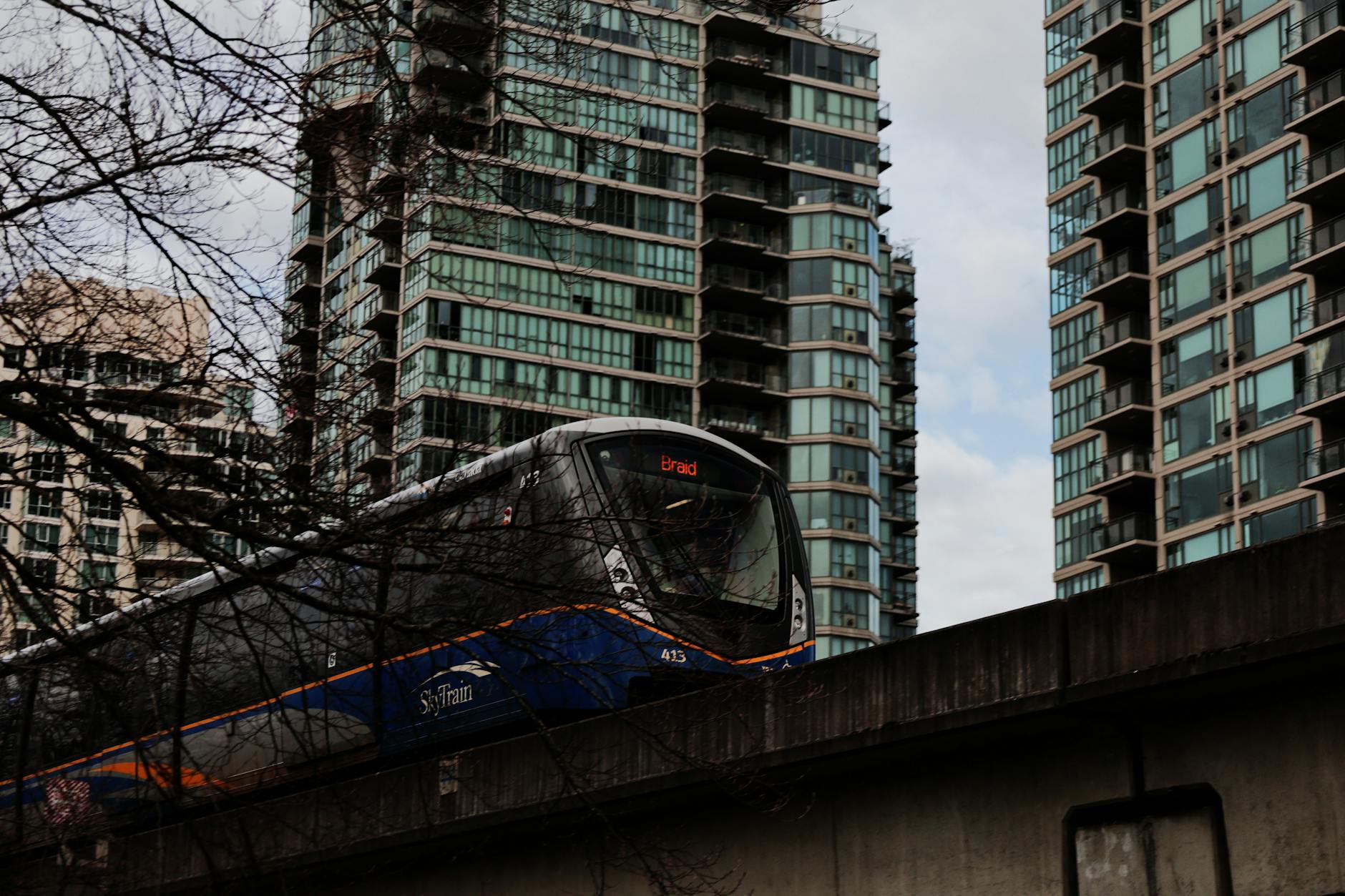
SkyTrain is the backbone of Vancouver transit — three lines, fully automated (no driver), running largely elevated with some underground downtown segments. In the second quarter of 2026 it carried an average of 450,400 rides each weekday.
The three lines
Expo Line (blue): Waterfront → Production Way–University (with a Surrey branch to King George). The original line: free service began on December 11, 1985, and paid service on January 3, 1986. Hits downtown, Stadium–Chinatown (BC Place), Main Street–Science World, and Commercial–Broadway (transfer for the Millennium Line).
Millennium Line (yellow): VCC–Clark → Lafarge Lake–Douglas. Serves East Vancouver, Burnaby’s SFU hillside, and the Tri-Cities. Note: the Millennium Line does not currently reach downtown — you transfer to Expo at Commercial–Broadway.
Canada Line (teal): Waterfront → Richmond–Brighouse, with a branch to YVR airport (splits at Bridgeport). Opened 2009 for the Olympics. Underground downtown, elevated in Richmond.
Broadway Subway (new): An extension of the Millennium Line under Broadway Avenue from VCC–Clark to Arbutus, scheduled to open in 2027. Six new stations (Great Northern Way, Mount Pleasant, Broadway–City Hall, Oak–VGH, South Granville, Arbutus). Once it opens, the 99 B-Line will connect with it at Arbutus for the run to UBC.
Hours of operation
SkyTrain hours vary by line, station and day, and the Expo and Millennium lines start later on weekends, so check TransLink’s first- and last-train tables for your station. On the Canada Line, the first airport-bound train leaves Waterfront at 4:48 a.m. (the one to know for an early flight) and the last at 1:08 a.m.; trains from YVR into downtown run from 5:09 a.m. until the last departure at 12:54 a.m. On Sundays and holidays, Expo Line service finishes earlier than on weekdays.
How to pay
Three ways, all working equally well in 2026:
- Tap a contactless credit card or phone (Apple Pay, Google Pay) at the gate. You pay the adult cash fare ($3.50 one-zone, $5.10 two-zone, $6.70 three-zone). No card required. Each tap is charged as a single fare; for a heavy day, buy a DayPass ($12.55) instead.
- Compass Card — reloadable smart card, $6 refundable deposit. Stored-value fares are cheaper: $2.85 one-zone, $4.20 two-zone, $5.40 three-zone. Buy at any SkyTrain station vending machine or at the YVR Canada Line station upon arrival. To get your $6 deposit back, return the card to the TransLink Customer Service Centre at Waterfront Station, or mail it in with a completed refund form.
- Compass Tickets — single-ride paper tickets from vending machines: $3.50, $5.10, $6.70. DayPass $12.55. Use these if you’re here for 1–2 days and don’t want the card.
Zones: Vancouver uses a 3-zone fare system on weekdays before 6:30 p.m. — weekends, holidays, and weekday evenings after 6:30 p.m. are all one zone. The fare-zone map on TransLink’s fares page shows where each zone begins. Most tourists only pay 1-zone fares because they visit downtown during the day or North Shore in the evening.
Transfers
A tapped fare is valid for 90 minutes on any combination of SkyTrain, bus, and SeaBus. Ride downtown, hop off for lunch, reboard the same direction — still one fare. Just re-tap each time; the system tracks your journey.
The Compass Card & Fare Structure
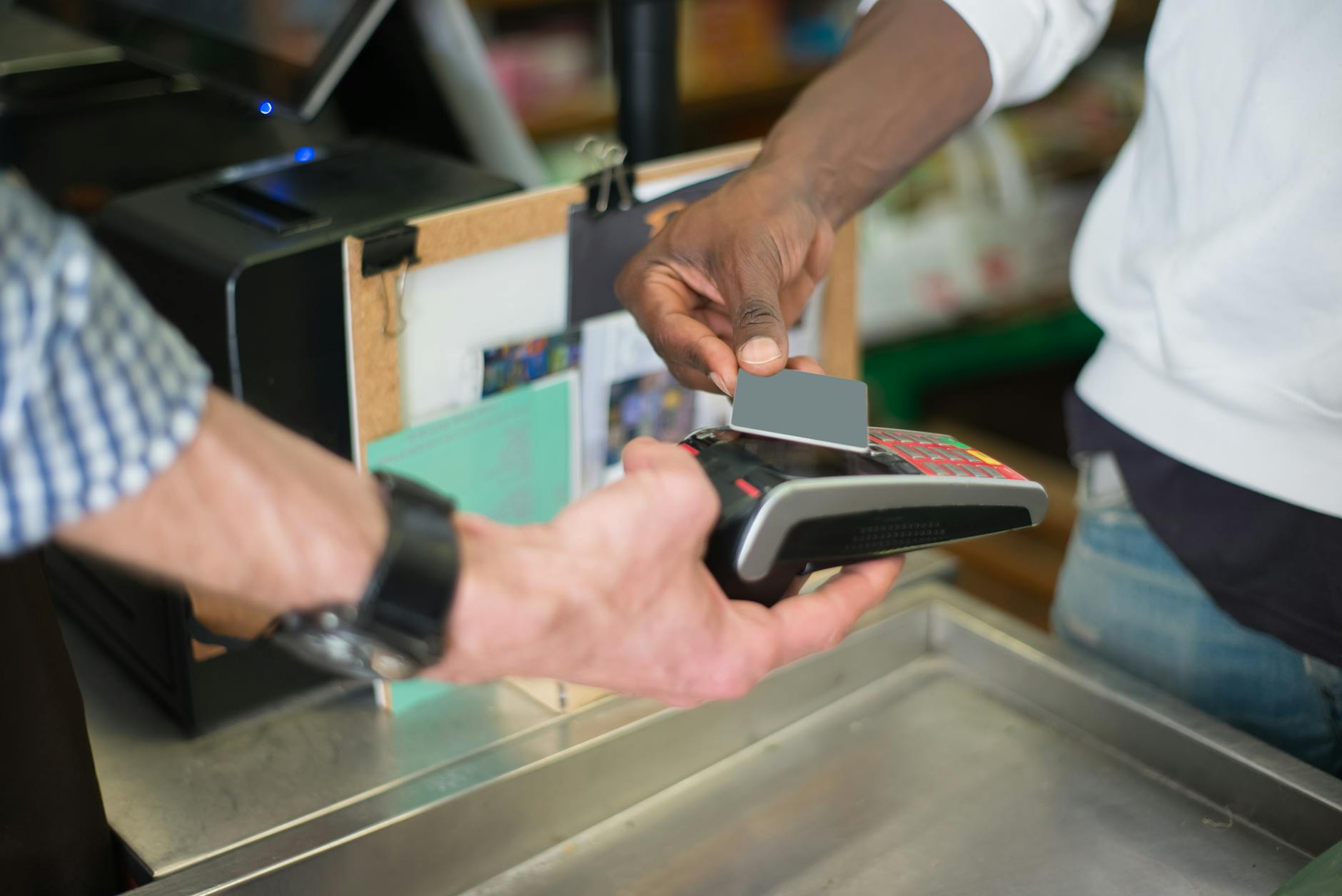
The Compass Card is TransLink’s tap-and-go fare card. Stored value costs less than cash on every fare ($0.65 to $1.30 less, depending on zones), so the more separate trips you take, the more it saves. But the real reason most visitors get one: the DayPass loaded on a Compass Card works seamlessly for three generations of travellers from one device (up to three cards sharing a single family account).
Where to buy: vending machines at SkyTrain stations, select London Drugs stores and other authorized retailers, the Customer Service Centre at Waterfront Station, or online at compasscard.ca. The YVR Canada Line station has machines past the fare gates and before them.
Cost breakdown: $6 refundable deposit + whatever you load. Minimum load $5. The card never expires. Tap-to-pay debits the stored-value fare automatically.
Stored-value fares (2026):
- 1 zone: $2.85 (cash $3.50)
- 2 zones: $4.20 (cash $5.10)
- 3 zones: $5.40 (cash $6.70)
- Concession (youth 13–18, seniors 65+): $2.30 one zone, $3.40 two zones, $4.60 three zones
- DayPass: $12.55
- Monthly pass: $117.20 (1-zone), $156.70 (2-zone), $211.65 (3-zone)
Contactless credit-card tap: contactless Visa, Mastercard, American Express and Interac Debit cards all work at Compass readers (Interac Debit since January 11, 2023). You pay the cash fare (not stored-value) on every trip, and taps don’t turn into a DayPass on their own: if you’ll take four or more one-zone rides in a day, buy the $12.55 DayPass up front. Same for Apple Pay / Google Pay.

Bus Network & NightBus
TransLink runs 200+ bus routes across Metro Vancouver. The ones tourists actually use:
- Route 4 — UBC / Powell: runs down 4th Ave through Kitsilano to UBC, another way out to campus besides the 99.
- Route 99 B-Line — Broadway Express: the articulated express that shuttles from Commercial–Broadway SkyTrain to UBC. When the Broadway Subway opens (scheduled for 2027), the 99 will pick up subway riders at Arbutus Street and carry on to UBC.
- Route 5 — Robson: a tourist-friendly ride through downtown and the West End along Robson and Denman, ending at Davie St and Denman.
- Route 620 — Bridgeport SkyTrain / BC Ferries Tsawwassen: the cheap way to the Victoria ferry: a one-zone bus fare ($2.85 Compass, $3.50 contactless) plus the ferry fare.
NightBuses
Once SkyTrain finishes for the night (the time depends on line and day), NightBus takes over, with downtown departures starting around 1:30 a.m. Ten routes (N8, N9, N10, N15, N17, N19, N20, N22, N24, N35) radiate from Granville Street downtown, reaching most suburbs; each route’s timetable shows its last run. Regular fare applies. Useful if you’re closing out Granville Entertainment District or Gastown bars.
Paying on the bus
Tap your Compass Card or contactless card at the reader when boarding through the front door. Cash fare ($3.50) is exact change only — drivers can’t make change. Transfers are free within 90 minutes, automatic if you tap.
SeaBus to North Vancouver
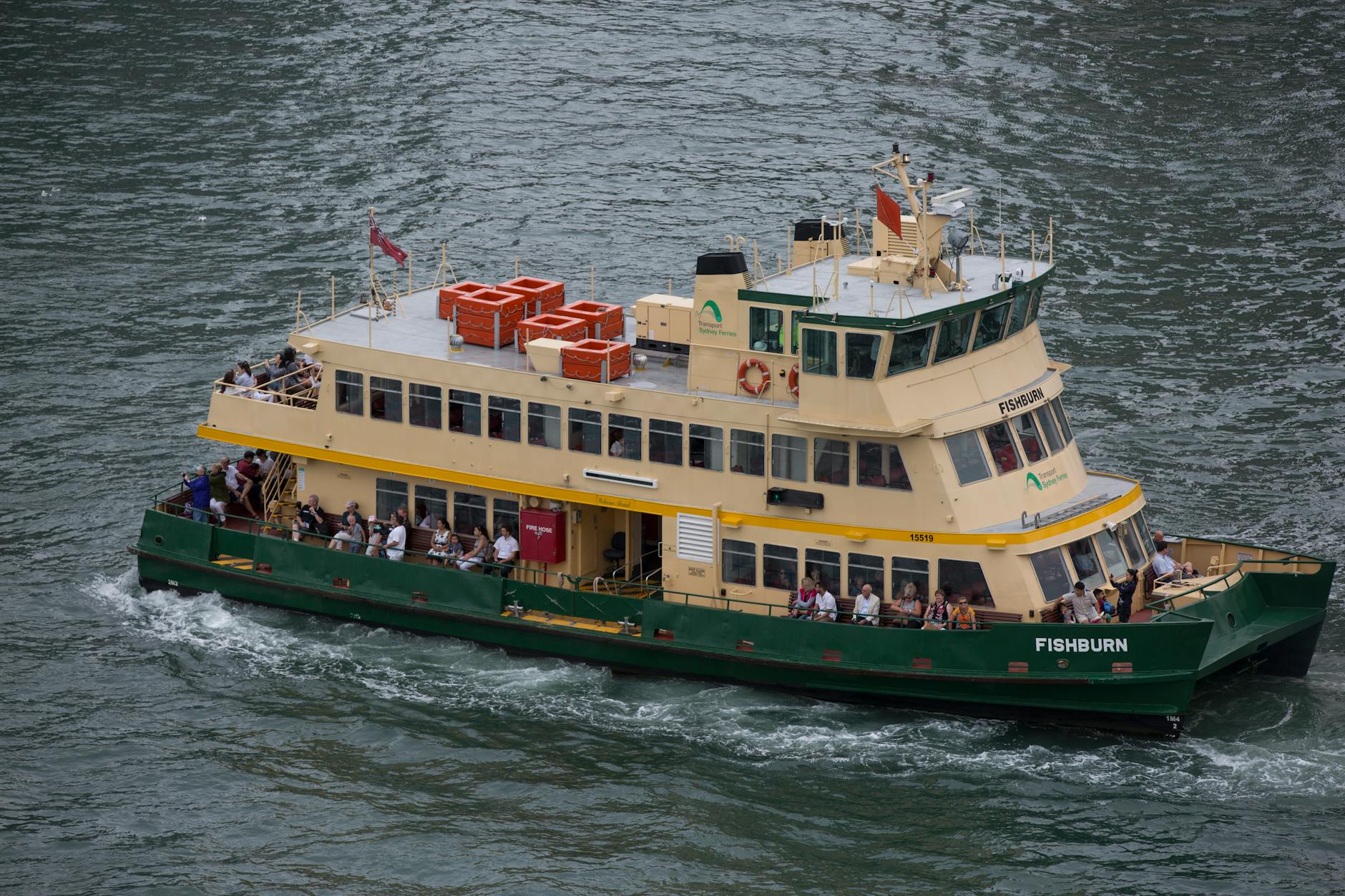
The SeaBus is a 12-minute passenger ferry across Burrard Inlet linking downtown Vancouver (Waterfront Station, shared with SkyTrain and West Coast Express) to Lonsdale Quay in North Vancouver. Three vessels run at peak for 10-minute service, two for 15-minute service and one when sailings drop to every 30 minutes; it’s TransLink and fares are the same as any bus or train (2-zone weekdays before 6:30 p.m. = $4.20 Compass; one-zone evenings & weekends = $2.85).
Frequency: every 10 minutes at weekday peak; on Sundays every 15 minutes until late evening, then every 30. Hours: approx 6:00 a.m.–1:00 a.m. Monday–Saturday; 8:00 a.m.–11:30 p.m. Sundays and statutory holidays.
Why take it? Lonsdale Quay Market (fish & chips, Tacofino, Polygon Gallery) is directly at the terminal. The 236 bus from Lonsdale runs to Capilano Suspension Bridge and the Grouse Mountain Skyride; journey times vary by departure, so check the route timetable. It’s the cheapest route to the North Shore, and the crossing itself is the photo op — city skyline, Burrard Inlet boat traffic, North Shore mountains rising behind.
Aquabus & False Creek Ferries
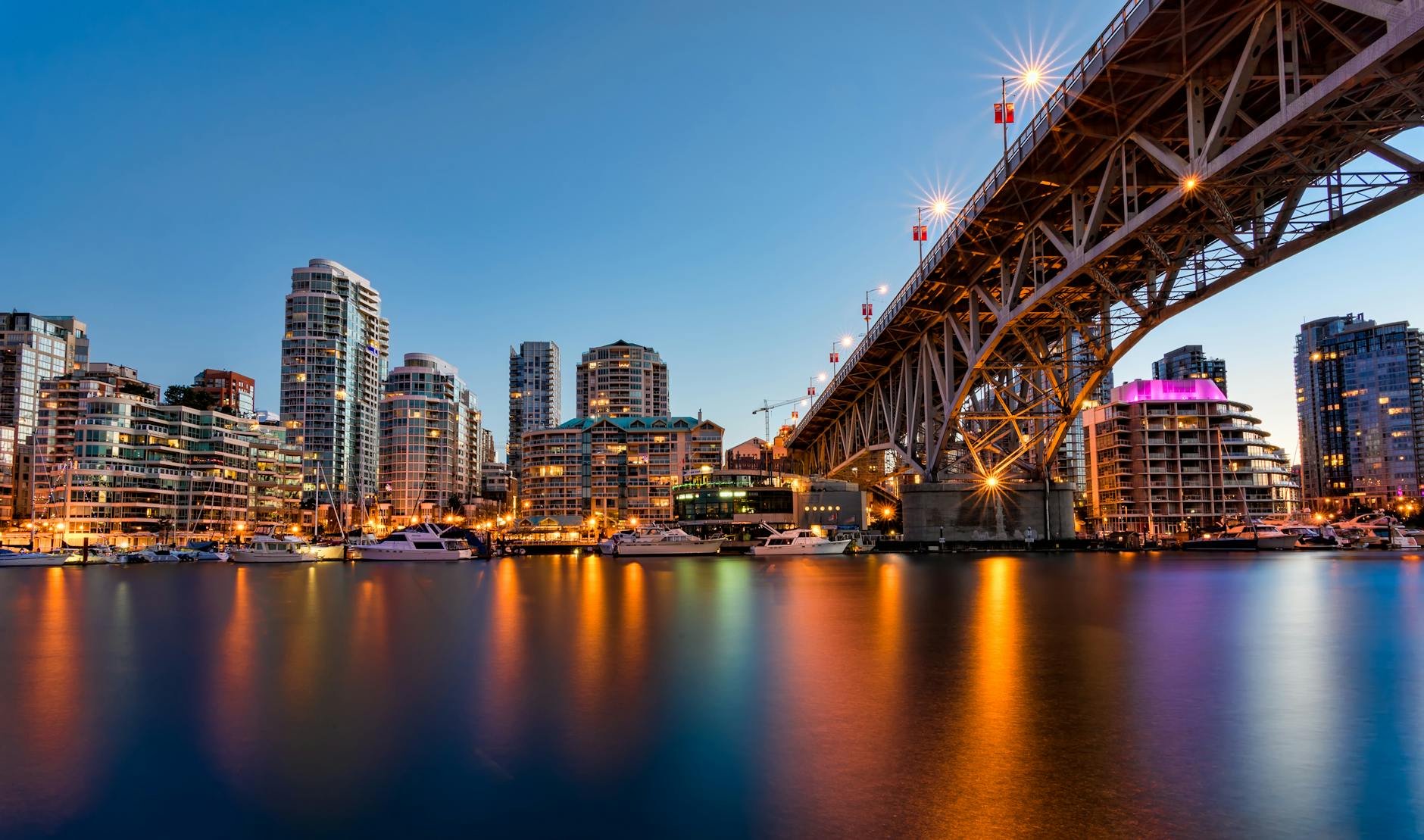
Two competing private operators run small passenger ferries in False Creek, the inlet between downtown and Granville Island. The Aquabus (rainbow-painted small boats) and False Creek Ferries (blue-trim boats). Their docks and timetables differ, so check the hours at your dock; from Yaletown, Aquabus boats leave every 15 minutes starting at 7 a.m.
Stops: Hornby Street (downtown), Granville Island, Yaletown (Davie St), Olympic Village, Stamp’s Landing, Spyglass Place, Science World, Plaza of Nations. Fares (2026): Aquabus adult one-way fares run $5–$11 by route ($3.50–$8.50 for children and seniors); both operators sell an adult day pass for $22. Kids ride free at three and under on Aquabus, two and under on False Creek Ferries.
This is not TransLink — Compass Cards don’t work. Pay cash, tap credit card, or buy a day pass at the dock kiosk. It’s a fun tourist amenity but also a practical one: Aquabus from Yaletown to Granville Island beats any other mode for time + views.
Uber & Lyft in Vancouver
Rideshare arrived late in Vancouver — Uber and Lyft launched in 2020 after a lengthy regulatory fight. Both operate in Vancouver and at YVR; check the app for coverage at a specific address. A third player, Kabu Ride, serves the Chinese-speaking community but has smaller coverage.
Pricing: fares vary with the provider, time of day and location, and the app gives you an estimate before you confirm. UberX and Lyft are the standard products; Lyft also offers Lyft XL, and each app lists the other ride types running at the time.
When rideshare beats transit: groups of three or four (split the fare and you’re at transit-rate per head), late nights after NightBus gaps, hotel-to-hotel moves with luggage, and any wet weather trip under 5 km.
Surge warnings: Uber and Lyft raise prices when riders outnumber drivers, so the same trip can cost noticeably more at a busy moment. Check the estimate before you confirm, and weigh it against SkyTrain or NightBus.
Driver ratings: Vancouver drivers must hold a Class 4 Commercial licence, pass criminal record checks, and obtain a PTB (Passenger Transportation Branch) licence.
Taxis
Vancouver taxis run on meters (CAD $3.75 flag drop, $2.18/km, $38.93 an hour while waiting, GST included). Four main companies: Yellow Cab, Black Top & Checker Cabs, MacLure’s, Vancouver Taxi. All are dispatchable by phone, app (Kater, Yellow Cab’s own app), or hail from stands.
Best taxi stands downtown: Waterfront Station, Vancouver Convention Centre, Pacific Centre mall (Howe & Robson), Pan Pacific, Fairmont Hotel Vancouver, Rogers Arena (post-events). Hail is legal but less common outside downtown.
Flat-rate from YVR: $46 to downtown and Canada Place, $40 to Kitsilano and Broadway, both with GST and the airport pickup charge included. Flat rates only apply outbound from YVR; return trips run on meter. Tipping is up to you.
Rental Cars, Driving & Parking
You don’t need a car in Vancouver proper. You do want one if you’re extending to Whistler, Squamish, the Fraser Valley wine country (Langley, Abbotsford), the Sunshine Coast, or Vancouver Island beyond Victoria.
Renting at YVR
Rental companies at YVR don’t all work from the same place: some, Sixt among them, operate off-airport and run courtesy shuttles from the terminal. Rates vary by company, car class and dates, so compare quotes. Taxes depend on the car too: rental-car PST is set by the vehicle’s tax-rate value, a separate passenger vehicle rental tax applies to qualifying short-term rentals, and the rental company’s quote shows any airport and other fees.
Insurance: Canadian provincial insurance (ICBC) is not included in US-based rental rates. Verify your credit-card coverage for Canada specifically — Amex and Chase Visa Infinite cover; most basic Visa/MC rental benefits do not. Otherwise, add the rental company’s CDW; ask for the daily price when you book.
Renting downtown
Renting from a downtown branch is useful if you’re arriving by train/cruise or not flying into YVR. If you’re choosing between downtown and the airport, compare quotes for the same dates, fees included.
Driving rules
Visitors can drive in BC for up to 6 months on a valid licence from home. Traffic keeps to the right. Speed limits are in km/h: unless signs say otherwise, the default is 50 inside municipalities and 80 outside them, so follow the posted limit. Winter tires or chains are legally required on the Sea-to-Sky Highway to Whistler from Oct 1 to Mar 31, starting just north of Horseshoe Bay. Drivers must yield to pedestrians crossing at crosswalks, though pedestrians may not step out in front of a car too close to stop — this is taken very seriously here. Turning right on red is permitted unless signed otherwise. Talking/texting while driving = $368 + penalty points.
Parking downtown
Street meter rates depend on location: check the rate posted on the meter and pay with the PayByPhone app (location number posted on the meter). Meters are in effect 9 a.m.–10 p.m. every day, including Sundays and holidays. Residential permit zones surround the downtown core — don’t park in a permit-only zone without a permit; ticketing is relentless.
Garages: Pacific Centre, Vancouver Art Gallery (under Robson Square), Library Square, Canada Place, Coal Harbour. Rates differ from garage to garage, so check the posted prices, and compare your hotel’s daily parking charge with a nearby garage for the length of your stay.
Gas: pump prices change often and differ from station to station, so compare before you fill up, including in the Fraser Valley or on your way out of town.

Biking: Mobi Bike-Share & Rentals
Mobi by Rogers is Vancouver’s bike-share system — 2,000 classic bikes and 600 e-bikes at more than 250 stations, so classic bikes make up most of the fleet. The live map on Mobi’s site shows which neighbourhoods it reaches.
Pricing (2026): Pay-as-you-go $1.25 unlock + $0.29/minute (classic) or $2 unlock + $0.39/minute (e-bike), before tax. The Monthly Pass ($49) covers unlimited 30-minute classic-bike rides; the Annual Pass ($169) stretches that to 60 minutes. Taxes and extra usage charges apply. Helmet required by BC law; one is attached to each Mobi bike, but a lot of seasoned cyclists carry their own.
Where it shines: the Stanley Park seawall (about 9 km, mostly flat, iconic); the False Creek seawall loop (12 km, passes Granville Island, Olympic Village, Science World); the West End / Sunset Beach runs; Kitsilano Beach to Jericho Beach to Spanish Banks (7 km, beach-hopping). Don’t attempt it on the first day — get jet-lag out of your system, then go.
Traditional bike rentals: Spokes Bicycle Rentals (Denman & Georgia, the entrance to Stanley Park seawall) is the classic, with cruisers and e-bikes; ask for current full-day rates. Reckless Bike Stores (Granville Island, Fairview) and Bayshore Bike Rentals (Coal Harbour) are alternatives.

Walking: When It’s Faster Than Anything Else
Downtown Vancouver is a peninsula, and its tourist neighbourhoods sit close together. For short trips, walking can be the most convenient option; compare the actual route before you wait for a bus.
Walk these routes instead of transiting:
- Waterfront Station → Gastown → Chinatown: three neighbourhoods in one walk.
- Canada Place → Coal Harbour seawall → Stanley Park entrance: along the water the whole way.
- Robson Street shopping strip (Burrard to Denman): easy end to end on foot; your pace depends on the shop stops.
- Yaletown → BC Place → Rogers Arena (game nights): close enough to walk; allow extra time in the crowds.
- Canada Place cruise terminal → Hotel Vancouver / Rosewood / Fairmont Pacific Rim: walkable if you’re not hauling much luggage.
The city is pedestrian-friendly by North American standards — wide sidewalks, signalled crossings, short blocks in the grid areas (Fairview, Kitsilano, Main Street). One exception: the West End–Stanley Park crossing at Georgia & Denman during rush hour is brutal.
BC Ferries: Vancouver Island & Beyond
If you’re day-tripping or overnighting to Victoria, Nanaimo, the Gulf Islands, or the Sunshine Coast, BC Ferries is the operator. For Victoria, the main route is Tsawwassen (near YVR) → Swartz Bay (about 32 km north of Victoria); 1h35m crossing. Standard one-way foot-passenger fares, fuel surcharge included, are $22.05 for ages 12 and over and $11.03 for children 5–11; under-5s travel free. A standard vehicle up to 20 ft is $93.45 one-way, plus driver and passenger fares; Saver fares vary. Booking ahead is recommended for vehicles (Saver fares include a booking), and walk-on sailings can fill at peak times. Sailing times change by date, so check the day’s schedule on BC Ferries’ site.
Getting to Tsawwassen without a car: take the Canada Line to Bridgeport Station, then TransLink Route 620 bus to Tsawwassen Ferry Terminal ($3.50 contactless bus fare + $22.05 walk-on ferry = $25.55 each way from Bridgeport). Plan the connection with TransLink’s trip planner, and leave time for the transfer and for buying your ferry ticket.
Other useful routes: Horseshoe Bay → Nanaimo (Departure Bay) for mid-Island; Horseshoe Bay → Langdale for the Sunshine Coast. Both depart West Vancouver, easier if you’re renting a car.
Getting to Whistler
Whistler is 120 km north on the Sea-to-Sky Highway (Highway 99). Drive time 1h50m–2h15m depending on traffic.
Shuttles (no car needed):
- YVR Skylynx / Whistler Shuttle: downtown Vancouver or YVR to Whistler Village. Standard one-way fares are $32 from downtown and $55 from YVR.
- Epic Rides: direct, nonstop service from downtown, $33.50 one-way or $44 return, averaging 1 hour 45 minutes.
Rental car from YVR: the flexibility premium. Winter tires (or chains) are the law on the Sea-to-Sky from Oct 1 to Mar 31. Porteau Cove, Shannon Falls, and Brandywine Falls are worthwhile stops on the drive.
Heli-tour (splurge): Sky Helicopters runs sightseeing tours and custom charters; ask them for a charter quote if you want to fly to Whistler.
West Coast Express (commuter train)
A rush-hour-only commuter train runs Monday–Friday from downtown Waterfront Station east to Mission City, stopping at Port Moody, Coquitlam, Pitt Meadows, Maple Ridge, and Mission. Five outbound trains in the afternoon, five inbound in the morning. Tourists rarely use it — the Expo and Millennium SkyTrains cover the same approximate corridor more frequently — but it’s useful if you’re staying in Coquitlam or Maple Ridge and want to avoid rush-hour traffic. Fares (adult Compass stored value, one-way from Waterfront): $7.55 for 3 zones, $9.20 for 4, $12.40 for 5.
Accessibility: Wheelchair & Mobility
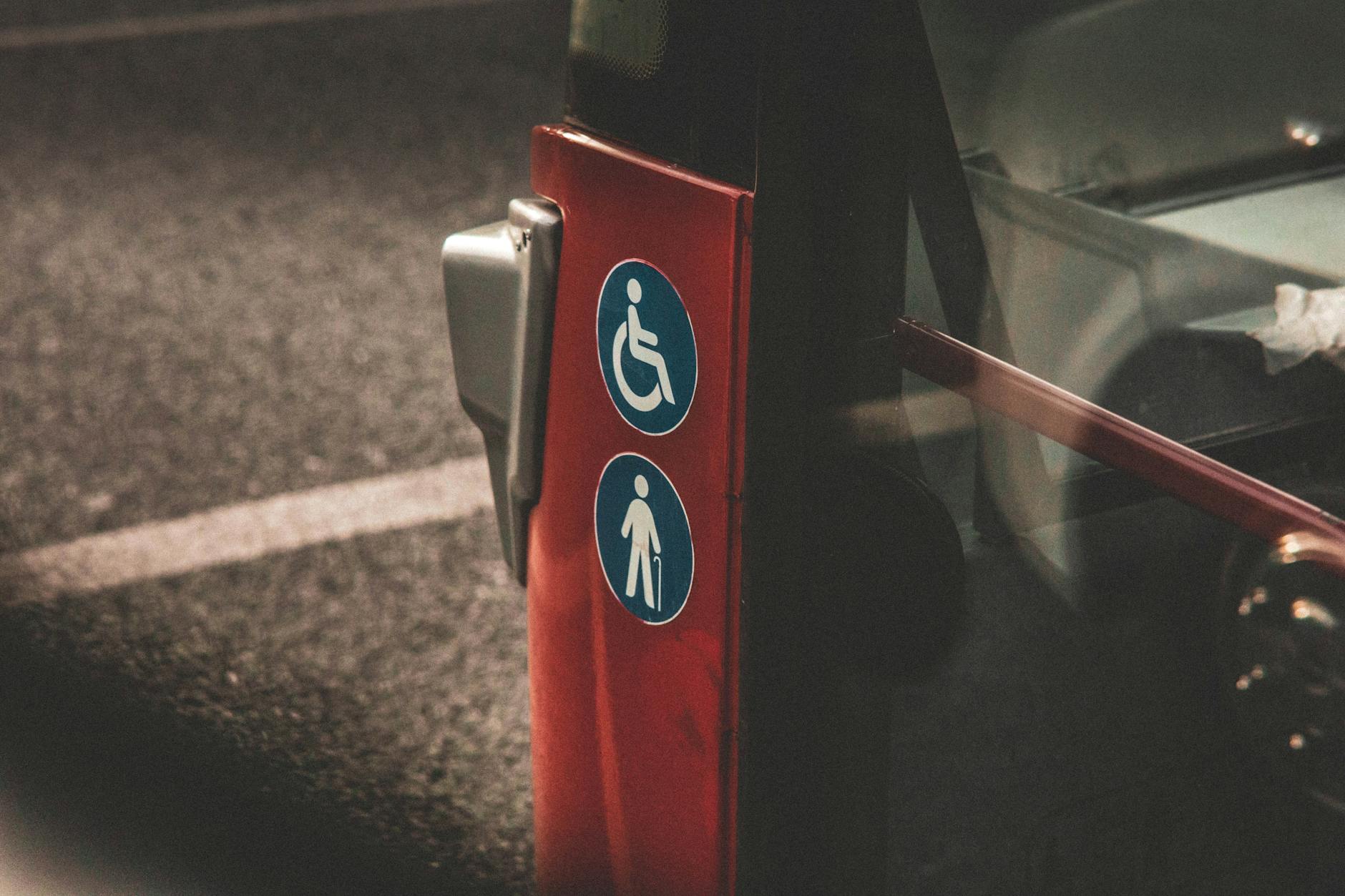
Vancouver transit is among the most accessible in North America. All SkyTrain stations have elevators; trains have designated priority seating and flip-up seats for wheelchairs. All TransLink buses are low-floor with kneel-down function and deployable ramps. The SeaBus has level boarding and designated wheelchair spaces.
HandyDART is TransLink’s door-to-door accessible shared-ride service for registered travellers with a disability. Visitors apply with the HandyDART Visitor Application Form, and trips must be booked in advance.
Sidewalks are universally ramped at intersections downtown and in most tourist neighbourhoods. The Stanley Park seawall is smooth-paved and mostly flat — wheelchair users and cyclists share the designated lane. Granville Island has some cobblestone and ramp quirks; the Public Market is fully accessible. Most major attractions (Science World, Vancouver Art Gallery, Aquarium, VanDusen) are fully accessible.
Getting Around on BC Place Event Days
Vancouver hosted seven 2026 FIFA World Cup matches at BC Place between June 13 and July 7, 2026. The same stadium advice applies to any big event there:
- SkyTrain: Stadium–Chinatown station fills up before and after big events at BC Place, so allow extra time.
- Road closures: streets around BC Place can close on event days, so check the day’s notices before you plan a drive.
The move: stay downtown, walk to BC Place (how long depends on your hotel, so map the route from yours), and skip all road transport.
Getting Around Vancouver: Every Option Explained
Each of the guides below goes deeper than this page can — opening hours, current prices, how to get there, and what we’d skip. Start here if you already know what you want to plan.
- YVR to Downtown Vancouver: Your Transport Options in 2026 (SkyTrain, Taxi, Uber)
- Vancouver SkyTrain: The Complete Visitor’s Guide for 2026
- TransLink Fares & Compass Card Explained (2026 Visitor’s Guide)
- Driving in Vancouver: Rental Cars, Parking & Tips for 2026
- Taxi & Rideshare in Vancouver: Uber, Lyft & Local Taxis (2026)
- Bus Travel in Vancouver: Routes, Apps & Tips (2026 Guide)
- Vancouver SeaBus: Downtown to North Vancouver the Scenic Way (2026)
- Aquabus & False Creek Ferries Guide (2026)
- Biking in Vancouver: Best Routes, Bike Shares & Rentals (2026)
- Vancouver on Foot: Walking Routes & Safety (2026)
FAQs
Do I need a car in Vancouver?
No. TransLink (SkyTrain, bus, SeaBus), the Aquabus, Mobi bike-share and walking cover every Vancouver itinerary. A car is only useful if you’re extending to Whistler, Squamish, the Fraser Valley wineries, or Vancouver Island beyond the ferry walk-on radius.
How do I get from YVR airport to downtown Vancouver?
Take the Canada Line SkyTrain — about 27 minutes on board to Waterfront Station, $11.60 by contactless card on weekdays before 6:30 p.m. or $10.00 evenings, weekends and holidays (AddFare included; $10.70 / $9.35 on Compass stored value), trains every 6–15 minutes. The station is inside the terminal. Alternatives: the taxi flat fare to downtown is $46, and Uber or Lyft charge whatever the app quotes at the time.
How much does a Compass Card cost?
$6 refundable deposit plus whatever stored value you load (minimum $5). To get the $6 back, return the card at Waterfront Station’s TransLink Customer Service Centre or post it with a refund form. Cards never expire and work on SkyTrain, bus, SeaBus, and the West Coast Express.
Can I use my credit card to tap on Vancouver transit?
Yes. Any contactless Visa, Mastercard, Amex, or Interac card works at SkyTrain gates and bus readers, as do Apple Pay and Google Pay. You pay the cash fare on every trip; if you’ll ride a lot in one day, a $12.55 DayPass bought separately can work out cheaper.
How late does the SkyTrain run?
It depends on the line, station and day. On the Canada Line the last train leaves YVR for downtown at 12:54 a.m., and Sunday service on the Expo Line ends earlier than on weekdays; the last-train table for your station has the exact time. After that, NightBus routes run overnight.
Is Uber available in Vancouver?
Yes. Uber and Lyft both operate in Vancouver, with pickups at YVR. Fares change with demand and time of day, and the app quotes before you confirm.
How do I get to Whistler from Vancouver without a car?
Take a shuttle straight to Whistler Village. YVR Skylynx charges $32 one-way from downtown and $55 from YVR (allow up to three hours from the airport); Epic Rides runs nonstop from downtown in about 1 hour 45 minutes.
How do I get from Vancouver to Victoria?
Take TransLink Route 620 from Bridgeport SkyTrain Station to Tsawwassen Ferry Terminal, then BC Ferries (1h35m) to Swartz Bay, then BC Transit into downtown Victoria. Bridgeport to Swartz Bay costs $25.55 one-way ($3.50 bus + $22.05 ferry), plus the Victoria bus fare; total time depends on your connections.
Is Vancouver walkable for tourists?
Yes. Downtown Vancouver is a compact peninsula, and walking between its tourist neighbourhoods (Coal Harbour, Gastown, Yaletown, West End) is easy.
When does the Broadway Subway open?
It is scheduled to open in 2027. It extends the Millennium Line under Broadway Avenue from VCC–Clark to Arbutus, with six new stations. The 99 B-Line will keep running between Arbutus and UBC.
What’s the best transit app for Vancouver?
The official TransLink app for trip planning and real-time arrivals. Google Maps is also fully integrated with TransLink data. Manage your Compass Card balance at compasscard.ca.
Are Vancouver buses accessible?
Yes. All buses are low-floor with deployable ramps and kneel-down function. All SkyTrain stations have elevators. Priority seating for wheelchairs on every vehicle.
Can I take bikes on the SkyTrain?
Yes, any time on the Canada Line. On the Expo and Millennium lines, bikes aren’t allowed westbound 7–9 a.m. or eastbound 4–6 p.m. on weekdays. Two bikes per car, use the designated bike area. Bikes are always welcome on the SeaBus.
Related Guides
- Vancouver Itinerary: Perfect Plans for 1, 2, 3, 4, 5 & 7 Days — route-specific travel patterns for each trip length.
- Where to Stay in Vancouver — neighbourhoods mapped to transit access.
- Best Time to Visit Vancouver — seasonal weather’s impact on walkability and biking.
- Things to Do in Vancouver — attractions with transit directions.