TaiwanFest Vancouver is a free three-day Taiwanese cultural festival held each Labour Day weekend along Granville Street in downtown Vancouver. The 2026 edition ran September 5–7 under the theme “Islands in the Wind,” exploring the connections between Taiwan, Canada and Scotland, with a particular spotlight on Hakka culture. Expect Taiwanese food vendors, live music across multiple stages, traditional and contemporary performance, film screenings and art exhibitions — all free to attend. Labour Day weekend is the reliable slot year to year.
This guide covers everything for festival visitors — what to eat, the performances worth planning around, how the site is laid out, transit, and what makes TaiwanFest different from the city’s other summer street festivals.
Table of Contents
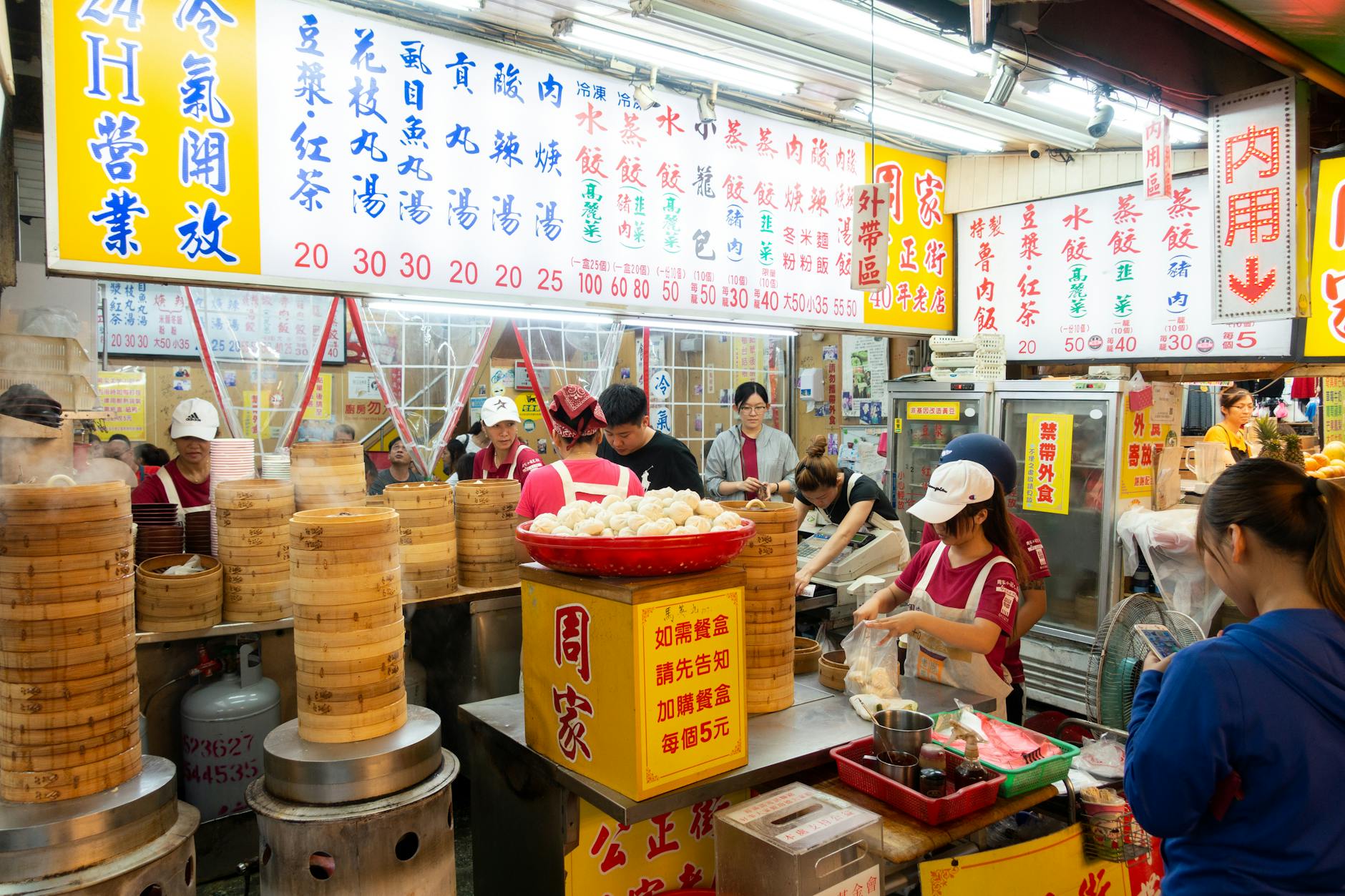
TaiwanFest Vancouver Quick Overview
- 2026 dates: September 5–7 — Labour Day weekend
- Hours: roughly 11 AM–9 PM Saturday and Sunday; 11 AM–7 PM Monday
- Cost: free — admission and most programming
- Location: Granville Street, downtown Vancouver, closed to traffic
- Food: 50+ vendors
- 2026 theme: “Islands in the Wind” — Taiwan, Canada and Scotland
- Expected 2027: Labour Day weekend, early September
- Best for: food, live music, and a genuinely substantial cultural programme rather than a food-stall-only street fair
Go hungry and go early. Food is the main draw and the queues at the best stalls build quickly through the afternoon. Arriving at opening on Saturday gets you the pick of the vendors before the lunch rush.
When TaiwanFest Happens
TaiwanFest is reliably fixed to Labour Day weekend — the first weekend of September — running Saturday through Monday. That makes it one of the easiest festivals to plan around, because the date pattern does not move.
- 2026: Saturday September 5 through Monday September 7
- Saturday and Sunday: approximately 11 AM–9 PM — the full programme, biggest crowds
- Monday: approximately 11 AM–7 PM — shorter day, noticeably quieter
- 2027: expect Labour Day weekend again; programme details announced in summer
Monday is the insider’s day. Same vendors, same stages, a fraction of Saturday’s crowd, and you can actually get to the front of a food queue.
The Annual Theme
TaiwanFest is unusual among cultural festivals in that it reinvents itself every year around a theme pairing Taiwan with another culture — a deliberate dialogue rather than a fixed showcase. Previous years have partnered Taiwan with Hong Kong, Japan, the Philippines, Malaysia, Vietnam and Korea.
The 2026 theme, “Islands in the Wind,” drew connections between Taiwan, Canada and Scotland — island and coastal cultures shaped by weather, migration and a complicated relationship with a larger neighbour. The 2026 edition also put a particular spotlight on Hakka culture, one of Taiwan’s major ethnic groups and one rarely foregrounded in festival programming.
This matters practically: if you attended a previous year, the programme will be substantially different. The food vendors stay broadly consistent, but the performances, exhibitions and talks are rebuilt around the new theme.
Festival History
TaiwanFest began in 1990 and is organised by the Asian-Canadian Special Events Association, which also runs a Toronto edition. It grew out of Taiwanese Canadian community programming into one of the largest Asian cultural festivals in North America.
The thematic-pairing format came later and has become the festival’s defining characteristic. Rather than presenting Taiwanese culture in isolation, each year sets it in conversation with another culture, which tends to produce more interesting programming than a straightforward showcase — and reflects the reality of a diaspora community in a multicultural city.
Location & Layout
The festival takes over Granville Street downtown, which is closed to vehicles for the weekend, plus adjacent plazas and indoor venues.
- Main site: Granville Street, roughly between Robson and Nelson
- Food vendors: lining the street, the densest concentration in the middle blocks
- Main stage: for headline music and performance
- Secondary stages: smaller performance and demonstration spaces
- Indoor venues: nearby theatres and halls for films, talks and exhibitions
- Cultural activity areas: workshops, crafts and hands-on programming
Walk the whole strip before buying food. The layout rewards a reconnaissance lap — vendors are not sorted by cuisine and the thing you actually want may be three blocks from where you started.
Taiwanese Food Highlights
Food is why most people come, and Taiwanese street food is well suited to a festival — built for eating standing up, in small portions, from a stall.
- 50+ vendors, a mix of Vancouver Taiwanese restaurants, specialist operators and community groups
- Prices typically in the C$8–15 range per item
- Payment: most take cards, but bring cash — networks congest and some stalls are cash-only
- Portions are snack-sized by design; the correct strategy is many small things rather than one meal
- Peak queues: 12–2 PM and 5–7 PM
Community-run stalls are often the best food at the festival and the least visually polished. Look for the ones with a long queue of Taiwanese families rather than the ones with the best signage.
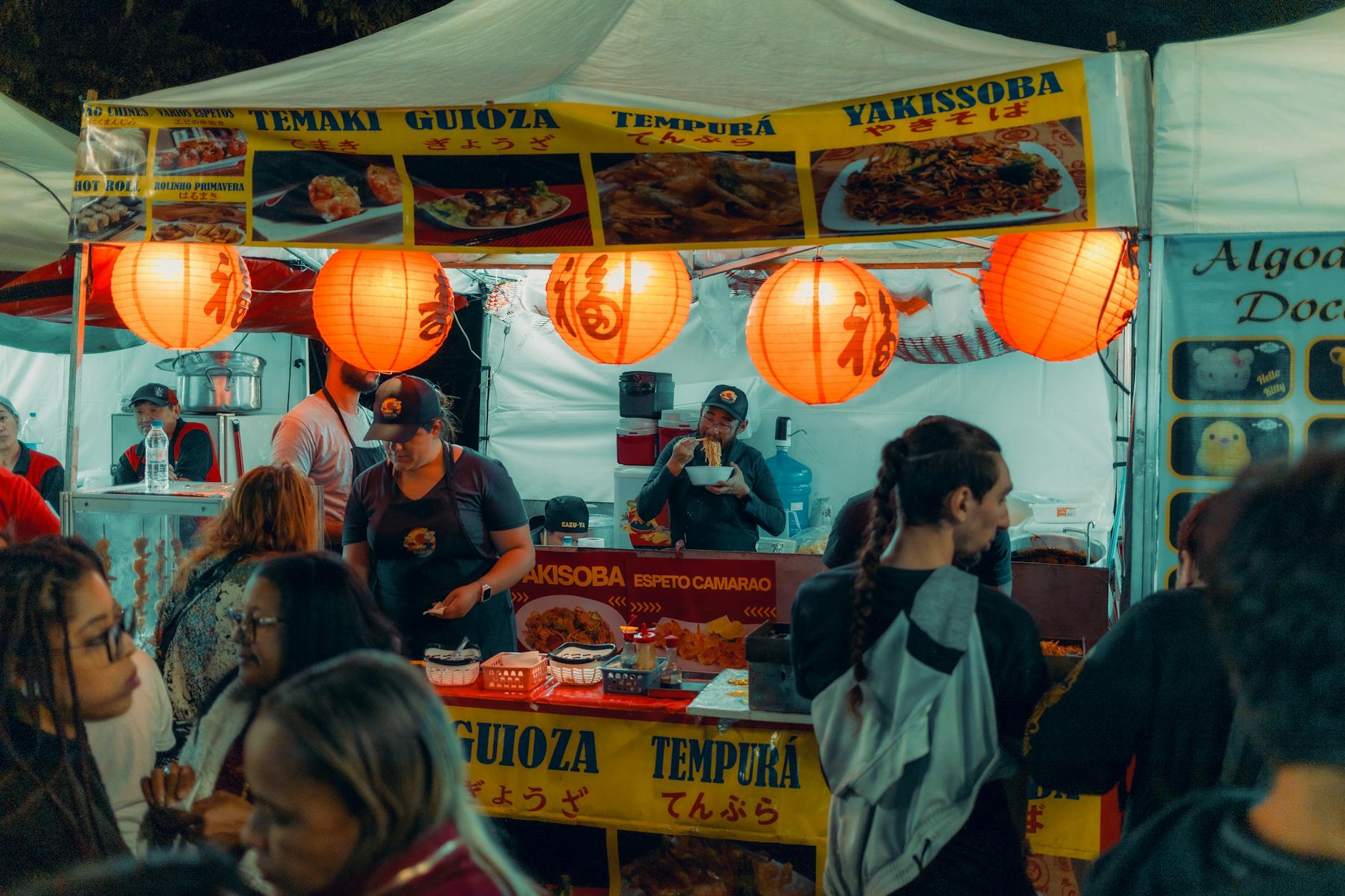
Must-Eat Dishes
- Beef noodle soup — Taiwan’s unofficial national dish; braised beef shank, hand-pulled noodles, star anise and soy in the broth
- Gua bao — the steamed folded bun with braised pork belly, pickled mustard greens, crushed peanut and coriander
- Popcorn chicken — fried with basil leaves and five-spice; the single most ordered item at the festival
- Scallion pancake — flaky, layered, often folded around egg
- Xiao long bao — soup dumplings; eat carefully, the filling is molten
- Oyster omelette — a night-market classic, with a distinctive sweet-potato-starch chew
- Taiwanese sausage — sweeter than Western sausage, often served with raw garlic
- Pineapple cake — the standard Taiwanese gift pastry, and the easiest thing to take home
- Shaved ice — mango and condensed milk in particular, if the weather is warm
- Stinky tofu — fermented, pungent, and a genuine test; it tastes markedly better than it smells
Ordering strategy for a group: split up, queue at different stalls simultaneously, and share everything. Doing it sequentially wastes the afternoon in lines.
Music & Performances
The performance programme runs continuously across stages through each festival day, and it is more substantial than a typical street festival.
- Taiwanese indie and pop acts, often flown in for the festival
- Traditional music — including Hakka and Indigenous Taiwanese forms
- Indigenous Taiwanese performance — Taiwan’s Austronesian peoples, whose presence in the programme is a long-standing commitment
- Dance, traditional and contemporary
- Theme-driven collaborations — in 2026, Taiwanese and Scottish musicians performing together
- Local Taiwanese Canadian performers and community groups
The cross-cultural collaborations are usually the programme’s high point and the reason to check the schedule rather than just wandering in. Headline sets are typically in the evening.
Art & Cultural Exhibits
- Themed exhibitions built around the year’s cultural pairing
- Visual art by Taiwanese and Taiwanese Canadian artists
- Craft demonstrations — calligraphy, paper arts, textiles
- Historical and documentary displays on Taiwanese history and migration
- Interactive installations and hands-on activity areas
The exhibitions are frequently housed indoors at nearby venues, which makes them a useful escape if the weather turns — early September in Vancouver can go either way.
Family-Friendly Programming
TaiwanFest is strongly family-oriented and free, which makes it one of the better value weekend outings in the city.
- Children’s activity areas with crafts and hands-on cultural activities
- Family-appropriate performances throughout the day
- Food that suits children — bao, popcorn chicken, shaved ice and bubble tea all go down well
- Stroller access — the street is flat and closed to traffic, though crowded at peak
- Best timing with kids: Saturday or Monday morning, before the afternoon density
Film Screenings
TaiwanFest programmes Taiwanese cinema at nearby indoor venues, usually free or low-cost, and it is one of the few chances to see contemporary Taiwanese film on a screen in Vancouver.
- Contemporary Taiwanese features and documentaries
- Shorts programmes, often by emerging filmmakers
- Theme-linked selections tied to the year’s cultural pairing
- Indoor venues near the main festival site
- Not to be confused with the Vancouver International Film Festival, which runs in October
- Check the schedule — screenings are limited and seating is finite
If it rains, the film programme becomes the best thing at the festival.
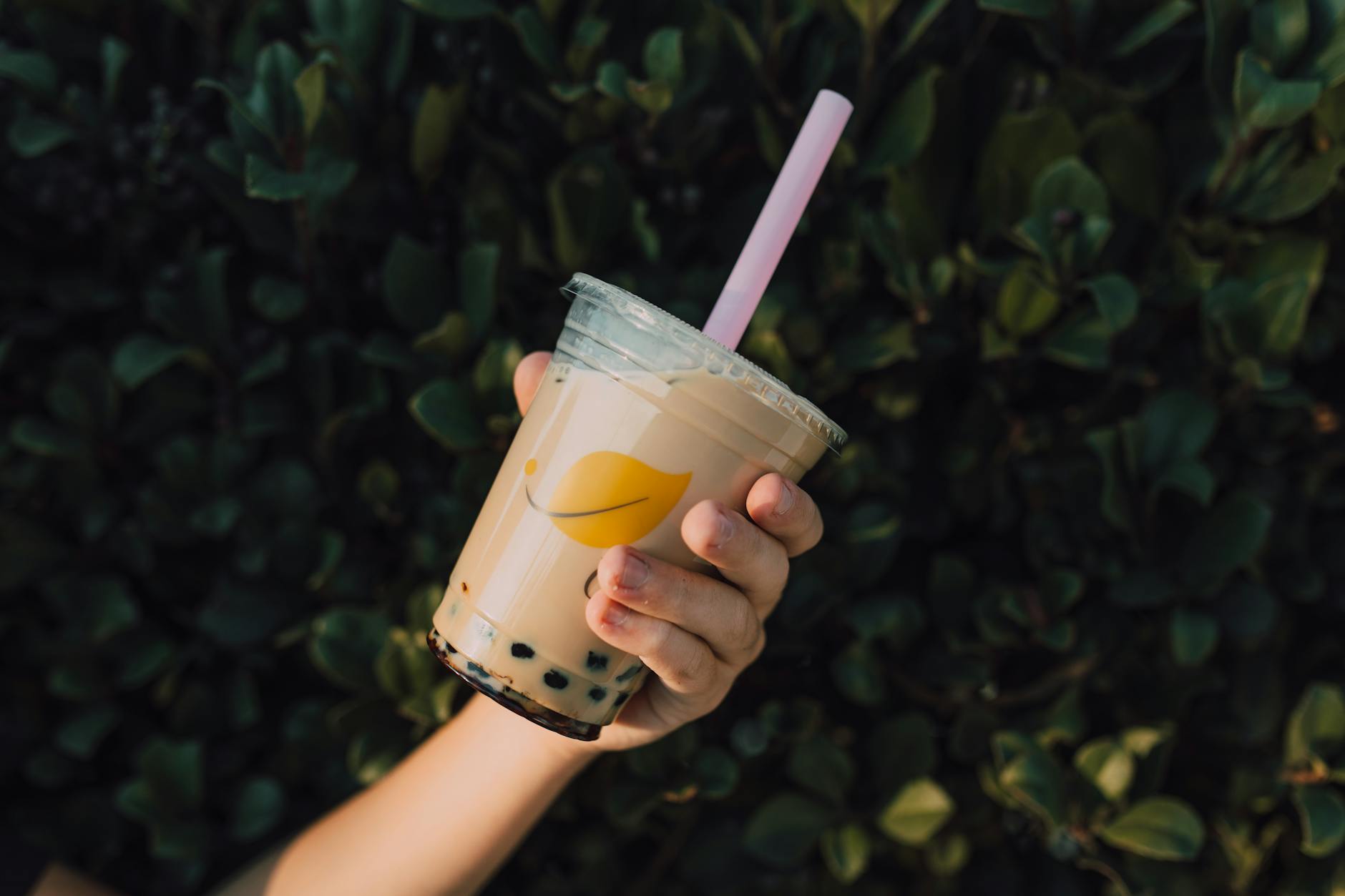
Tea & Bubble Tea
Bubble tea was invented in Taiwan in the 1980s, and the festival takes it seriously — alongside the traditional tea culture that most visitors overlook entirely.
- Bubble tea vendors in quantity, with the full range of toppings
- Traditional tea tastings — oolong in particular, for which Taiwan is genuinely world-class
- Tea ceremony demonstrations
- High-mountain oolong — if there is a tasting, do it; it bears no resemblance to supermarket tea
The tea tastings are consistently the most underrated thing at TaiwanFest. Most people walk past them on the way to a bubble tea queue.
Transit & Parking
Granville Street is closed and this is the middle of downtown — take transit.
- SkyTrain: Vancouver City Centre or Granville station, both on the festival’s doorstep
- Bus: downtown routes are rerouted around the closure; check before relying on one
- Walking: easy from anywhere downtown or the West End
- Parking: paid garages nearby, expensive and full at peak; not worth it
- Cycling: bike racks nearby, and the seawall connects easily
Labour Day Monday has noticeably lighter downtown traffic if you do decide to drive.
Taiwanese Food Beyond the Festival
If TaiwanFest leaves you wanting more, Vancouver has one of North America’s better Taiwanese food scenes year-round — concentrated in Richmond rather than downtown.
- Richmond — the centre of the region’s Taiwanese and Chinese food scene, 25 minutes on the Canada Line
- Beef noodle houses across Richmond and along Kingsway
- Bubble tea — essentially everywhere in Richmond
See our guides to cheap eats in Vancouver, the Vancouver restaurants and food scene pillar, and the Chinatown heritage walk for more of the city’s Asian food landscape.
Pro Tips for Visitors
- Go Monday for the same festival at half the density
- Arrive at 11 AM opening if you want food without queueing
- Do a full reconnaissance lap before buying anything
- Split up in a group and queue at different stalls simultaneously
- Bring cash as well as cards
- Check the performance schedule — the cross-cultural collaborations are the highlight
- Do a tea tasting, not just bubble tea
- Try the stinky tofu — it is better than it smells
- Use the indoor venues if the weather turns
- Take SkyTrain; Granville Street is closed and parking is miserable
- Buy pineapple cakes before you leave — the one thing that travels home well
Related Vancouver guides
Keep planning with these guides:
- Cheap Eats in Vancouver (2026)
- Chinatown Vancouver Heritage Walk (2026)
- PuSh International Performing Arts Festival (2026)
TaiwanFest Vancouver FAQs
When is TaiwanFest Vancouver?
Labour Day weekend every year, Saturday through Monday. In 2026 it ran September 5–7, roughly 11 AM to 9 PM on Saturday and Sunday and 11 AM to 7 PM on Monday. Expect the same pattern in 2027.
Is TaiwanFest free?
Yes. Admission and the great majority of programming — performances, exhibitions and activities — are free. You pay only for food and merchandise.
Where is TaiwanFest held?
On Granville Street in downtown Vancouver, closed to traffic for the weekend, roughly between Robson and Nelson, plus adjacent plazas and nearby indoor venues for films and exhibitions.
What should I eat at TaiwanFest?
Beef noodle soup, gua bao, popcorn chicken with basil, scallion pancake, xiao long bao, oyster omelette and Taiwanese sausage. Finish with shaved ice or bubble tea, and buy pineapple cakes to take home. Portions are snack-sized, so order several small things rather than one meal.
What’s the best day to go to TaiwanFest?
Monday. The same vendors and stages run with a fraction of Saturday’s crowd and much shorter food queues. If you can only go at the weekend, arrive at the 11 AM opening.
What is the TaiwanFest theme?
Each year pairs Taiwan with another culture in a deliberate dialogue. The 2026 theme, “Islands in the Wind,” connected Taiwan, Canada and Scotland, with a particular spotlight on Hakka culture. Previous years have paired Taiwan with Hong Kong, Japan, the Philippines, Malaysia, Vietnam and Korea.
Is TaiwanFest good for kids?
Yes — it is free, the street is flat and traffic-free, there are children’s craft and activity areas, and the food suits young palates. Saturday or Monday morning is the easiest timing with children.
How do I get to TaiwanFest?
Take SkyTrain to Vancouver City Centre or Granville station, both of which open onto the festival site. Granville Street is closed to traffic and downtown parking is expensive and full at peak, so driving is not worth it.
How big is TaiwanFest?
More than 50 food vendors, multiple performance stages, film screenings and exhibitions across a three-day run — one of the largest Asian cultural festivals in North America. It has run since 1990 and also has a Toronto edition.
Where can I get Taiwanese food in Vancouver outside the festival?
Richmond, 25 minutes away on the Canada Line, is the centre of the region’s Taiwanese food scene, with beef noodle houses and bubble tea throughout.
Related reading: Pair this with our Vancouver events and festivals pillar and our cheap eats guide.