Celebration of Light is normally the world’s largest offshore fireworks competition — three nights of internationally judged pyrotechnics over English Bay each summer, free to watch from any beach in the area. It did not run in 2026. A funding shortfall of roughly C$1 million forced the cancellation of the three-night competition, and the City staged a single free replacement night instead — Summer Lights in English Bay, on Friday July 31, 2026. The City has described that as a one-year stopgap and says it is working to bring the full festival back in 2027.
This guide covers what happened in 2026, what to expect for 2027, and the evergreen practical advice that applies to any fireworks night at English Bay — best free viewing spots, timing, transit, food and what to bring.
Table of Contents
What Happened in 2026
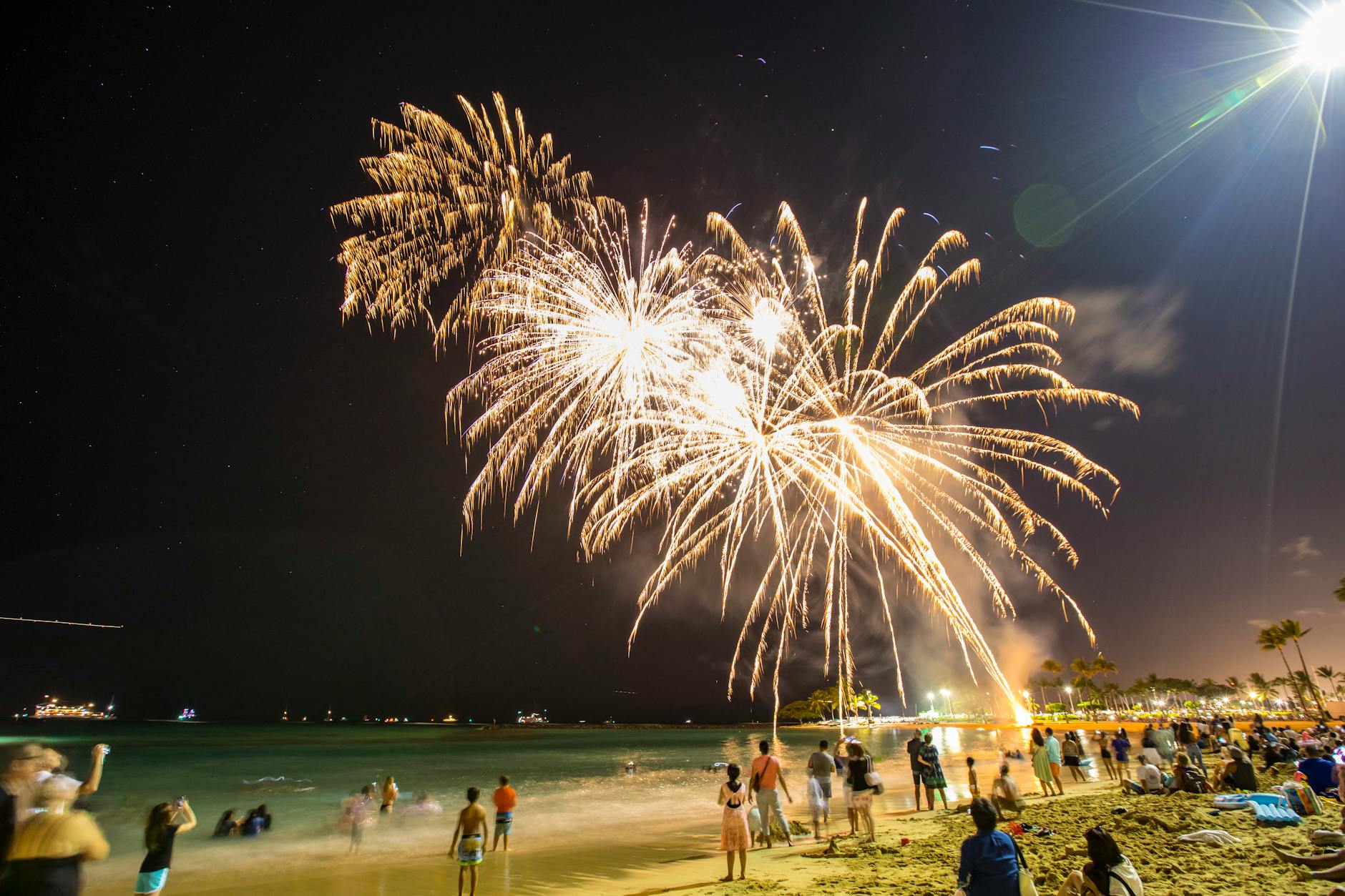
The Honda Celebration of Light did not take place in 2026. The three-night international competition was cancelled after its funding came up roughly C$1 million short.
The City of Vancouver responded by redirecting about C$1.4 million from the festival budget and adding a further C$600,000 to stage a single free fireworks night in its place:
- Event: Summer Lights in English Bay
- Date: Friday, July 31, 2026
- Fireworks: 10:00–10:25 PM, from a barge off English Bay Beach Park
- Cost: free, no tickets, rain or shine
- Food trucks: on Beach Avenue from 3 PM
- Live music: on the Bathhouse rooftop from 6:30 PM
- Format: a single display — no international competition, no judging, no competing countries
It was a genuine fireworks night and it drew a large crowd, but it was one 25-minute show rather than three competitive evenings. The City was explicit that this was a one-year measure rather than a permanent replacement.
Celebration of Light Quick Overview
In a normal year, this is the largest event on Vancouver’s summer calendar and one of the biggest fireworks competitions anywhere.
- Format: three nights, three countries, each with a 25–30 minute choreographed display
- Location: a barge anchored in English Bay
- Timing: late July into early August, typically Saturdays
- Start time: about 10 PM, once it is properly dark
- Cost: free from any beach or waterfront vantage point
- Attendance: several hundred thousand people per night across the viewing area
- Soundtrack: each display is choreographed to music, broadcast on local radio and over beach speakers
- 2026 status: cancelled; replaced by a single free night on July 31
The scale is hard to overstate. On a competition night the entire West End, Kitsilano and Vanier Park waterfront fills, the seawall becomes impassable, and the downtown peninsula’s transit system runs at capacity in both directions. Plan around the crowd, not just the show.
What to Expect in 2027
The City has said the single-night 2026 format was a stopgap and that it is working to return the full three-night international competition in 2027. That is an intention rather than a confirmed schedule.
- Likely window: late July into the first week of August, on Saturdays, if the competition returns
- Funding: the shortfall that caused the 2026 cancellation was a sponsorship and funding problem, not a logistical one
- Confirmation: dates and competing countries are normally announced in spring
- Fallback: if the full competition does not return, a single free night on the 2026 model is the most likely alternative
If you are planning a 2027 trip around it, wait for the spring announcement before booking accommodation at premium summer rates. West End hotel pricing on competition nights is among the highest of the year, and it is not worth paying for an event that has not been confirmed.
When Does It Happen?
In competition years the festival runs across three Saturdays from late July into early August. Displays begin at roughly 10 PM, when it is finally dark enough — Vancouver’s summer twilight runs late, and the show cannot start before the sky cooperates.
- Nights: three, typically Saturdays
- Display length: 25–30 minutes each
- Start: around 10 PM
- Crowds arrive: from early afternoon for prime beach positions
- Weather: the show runs rain or shine; only severe wind would stop it
The Competition Format
Three countries are invited each year, each given one night. Teams are professional pyrotechnic companies representing their country, and they compete on a set of judged criteria — technical execution, synchronisation with the musical score, creativity and overall impact.
Each display is choreographed to a soundtrack, simulcast on local radio and played over speakers along the English Bay beachfront. Bring a radio or use a phone and headphones if you are watching from further away, because the music genuinely changes the experience — without it you are watching fireworks, with it you are watching a composition.
Countries have included Japan, the United Kingdom, Australia, Italy, Croatia, South Africa, India, Mexico and the Philippines over the years. The winner is announced after the third night.
Best Free Viewing Spots
The barge sits in English Bay, so anywhere with a clear sightline to the water between Stanley Park and Kitsilano works. The trade-off is always the same: the closer you get, the better the view and the worse the crowding and the exit.
- English Bay Beach — closest, loudest, most atmospheric; also the most crowded and the hardest to leave
- Sunset Beach — slightly east, marginally less packed, still excellent
- Kitsilano Beach — across the water, full skyline behind the fireworks, far easier logistics
- Vanier Park — grassy, family-friendly, room to spread out
- Jericho Beach — further west, much quieter, smaller-looking display
- Stanley Park’s southwest shore — Second Beach and the seawall near Ferguson Point
- Burrard Bridge — closed to traffic and opened to pedestrians on show nights; a genuinely good elevated vantage point
- Granville Island rooftops and the seawall — partial views, much smaller crowds
- Queen Elizabeth Park — distant but elevated, with the whole city in frame
- West End apartment rooftops — if you happen to know someone, this is the best seat in the city
The best overall compromise is Kitsilano Beach or Vanier Park. You get the fireworks with the downtown skyline behind them, which is the better photograph, and you can actually walk out afterwards instead of standing in a crowd waiting to move.
English Bay Beach (Premium)
The closest and most intense option. The barge sits directly offshore, the speakers carry the soundtrack, and the shells burst almost overhead.
- Arrive: by early afternoon for a spot on the sand; 3–4 PM at the latest
- Pros: closest view, full audio, best atmosphere
- Cons: extremely crowded, difficult exit, limited washrooms, no alcohol permitted
- Not ideal for: small children, anyone with mobility limitations, anyone who needs to be somewhere afterwards
Expect to be on the beach for six or seven hours if you want a front position. Bring everything you will need.
Vanier Park (Family-Friendly)
Vanier Park, beside the Museum of Vancouver in Kitsilano, is the best family option. It is grass rather than sand, there is room to spread a blanket without being shoulder to shoulder, and you are looking across the water at the display with the city behind it.
- Arrive: mid to late afternoon
- Pros: space, grass, easier exit, good sightlines, washrooms nearby
- Cons: further from the barge, less of the concussive effect
- Good for: families, groups, anyone who wants to sit comfortably
Kitsilano Beach (Best Logistics)
Kits Beach is the balance point. The view across English Bay puts the downtown skyline directly behind the fireworks — the classic shot — and the surrounding neighbourhood has restaurants, washrooms and multiple exit routes.
- Arrive: mid-afternoon for a good spot, later if you will stand at the back
- Pros: skyline backdrop, restaurants and shops nearby, far easier to leave
- Cons: still busy, and further from the speakers
- Getting out: walk up into Kitsilano and catch a bus from Broadway or 4th rather than fighting the beachfront
Stanley Park Spots
The park’s southwest shore offers a different angle and noticeably smaller crowds than the West End beaches.
- Second Beach: good sightlines, family-friendly, busy but manageable
- Ferguson Point and the seawall: quieter, with rocky shoreline seating
- Third Beach: the quietest of the three, and the longest walk out afterwards
The catch is the exit: leaving Stanley Park after dark with a large crowd means a long walk, and transit options at the park edge are limited. Budget for it. Our Stanley Park guide covers the geography.
Paid VIP Options
In competition years, ticketed options exist for people who would rather not sit on sand for six hours.
- Reserved beachfront seating at English Bay — the official ticketed option, with a guaranteed seat and washroom access
- Boat charters and dinner cruises — on-water viewing, sold out well in advance
- Restaurant and hotel packages in the West End and along the Kitsilano waterfront
- Private rooftop events hosted by bars and venues with sightlines
These sell out early and cost accordingly. For most visitors the free options are genuinely good enough — this is an event designed to be watched from a beach.
When to Arrive
Arrival timing is the single biggest factor in how much you enjoy the night.
- English Bay front row: by 1–3 PM
- English Bay, any spot on the sand: by 5–6 PM
- Kits Beach or Vanier Park, comfortable spot: by 6–7 PM
- Standing room anywhere with a sightline: by 8–9 PM
- Burrard Bridge: it closes to traffic in the evening; arrive by 9 PM
- Turning up at 9:45 PM: you will see fireworks, from somewhere, over someone’s head
What to Bring
- Blanket or folding chairs — you will be sitting for hours
- Layers — the waterfront drops sharply after sunset even in July
- Food and water — queues at vendors are long
- Portable phone charger — networks get congested and batteries drain
- A radio or headphones for the simulcast soundtrack
- Garbage bag — take your rubbish out; bins overflow early
- Ear protection for small children — it is genuinely loud close to the barge
- Cash — some vendors, and phone payment can fail in congestion
- No alcohol — beaches are patrolled and enforcement is active on fireworks nights
Transit & Parking
Do not drive. This is the firmest advice in this guide. The West End is closed off extensively, parking is effectively nonexistent, and getting a car out afterwards can take hours.
- SkyTrain: to Burrard or Granville, then walk 15–20 minutes to English Bay
- Bus: extra service runs on event nights, but routes near the beaches are rerouted
- Cycling: good going in, though bike parking near the beaches fills; the seawall gets closed to bikes in the crush
- Walking: from downtown hotels, English Bay is 15–25 minutes on foot — the most reliable option
- Kitsilano side: markedly easier, with buses along Broadway and 4th
- Ride-share: surge pricing is extreme and pickup zones are far from the beaches
Food Strategy
Food trucks and vendors operate along Beach Avenue and at the main viewing areas, but queues are long and prices are event prices.
- Best plan: bring a picnic. It is cheaper, faster and you keep your spot.
- Second best: eat in Kitsilano or the West End before heading to your spot, around 6–7 PM
- Food trucks: on Beach Avenue, generally from mid-afternoon
- Grocery stops: stock up in the West End or on Denman Street on the way in
- Avoid: trying to get a restaurant table near English Bay after 7 PM without a reservation
Getting Home Afterwards
The exit is the part people underestimate. Several hundred thousand people leave the same small peninsula within about twenty minutes.
- Wait it out. Stay on the beach for 30–45 minutes after the finale. The crush clears substantially and you will get home faster than if you join it.
- Walk east or south for 15–20 minutes before trying to board transit — stations nearest the beaches are at capacity.
- From Kits: walk up to Broadway rather than queueing on Cornwall.
- Don’t count on ride-share immediately after; surge pricing and gridlock make walking faster for the first half hour.
- SkyTrain runs extended service on event nights, but expect to queue to enter the station.
Pro Tips
- Check whether the event is actually running before planning around it — 2026 proved that is not a given
- Kits Beach or Vanier Park beats English Bay on the overall experience for most people
- Tune into the radio simulcast — the choreography is the point
- Arrive hours early or accept standing room
- Bring layers; the waterfront gets cold after dark
- Stay 30–45 minutes after the finale to skip the worst of the exit
- Do not drive to the West End
- No alcohol on the beaches — enforcement is real
- Book West End accommodation early if you want to walk home — rates spike on show nights
- For photos, shoot from Kits or Vanier to get the skyline in frame
Related Vancouver guides
Keep planning with these guides:
- Vancouver in Summer (2026)
- Best Beaches in Vancouver (2026)
- Vancouver Pride (2026)
- Vancouver Cherry Blossom Festival (2026)
Celebration of Light FAQs
Did the Celebration of Light happen in 2026?
No. The three-night international competition was cancelled after its funding fell roughly C$1 million short. The City redirected about C$1.4 million and added C$600,000 to stage a single free replacement night — Summer Lights in English Bay, on Friday July 31, 2026, with fireworks from 10:00 to 10:25 PM.
Will the Celebration of Light return in 2027?
The City has described the 2026 single-night format as a one-year stopgap and says it is working to bring the full three-night competition back in 2027. That is an intention, not a confirmed schedule — dates and competing countries are normally announced in spring.
Is the Celebration of Light free?
Yes. The fireworks are free to watch from any beach or waterfront vantage point around English Bay. Reserved beachfront seating, boat charters and restaurant packages are sold in competition years for those who want a guaranteed spot.
Where’s the best place to watch the Vancouver fireworks?
Kitsilano Beach or Vanier Park for the best balance — the display with the downtown skyline behind it, room to sit, and a manageable exit. English Bay Beach is closest and most atmospheric but requires arriving by early afternoon and is very hard to leave.
What time do the fireworks start?
Around 10 PM, once it is properly dark. Vancouver’s summer twilight runs late, so the show cannot start earlier. Displays last 25–30 minutes.
How early should I arrive?
For a front position at English Bay, by 1–3 PM. For any spot on the sand, by 5–6 PM. For a comfortable spot at Kits Beach or Vanier Park, by 6–7 PM. Standing room with a sightline is usually still available by 8–9 PM.
Can I drive to the Celebration of Light?
You can, but don’t. The West End is extensively closed, parking is effectively nonexistent, and leaving can take hours. Take SkyTrain to Burrard or Granville and walk, or watch from the Kitsilano side where transit is far easier.
Is there music with the fireworks?
Yes. Each display is choreographed to a soundtrack, simulcast on local radio and played over speakers along the English Bay beachfront. Bring a radio or headphones if you are watching from further away — the synchronisation is the whole point of the competition format.
Can I drink alcohol on the beach during the fireworks?
No. Alcohol is not permitted on the beaches and enforcement is active on fireworks nights.
Is the Celebration of Light good for kids?
Yes, with the right location. Vanier Park is the best family option — grass, space and an easier exit. Bring ear protection for small children if you are close to the barge, and be realistic about a 10 PM start time.
How do I get home afterwards?
Wait 30–45 minutes on the beach for the crush to clear, then walk 15–20 minutes away from the waterfront before boarding transit. Stations nearest the beaches run at capacity immediately after the finale, and ride-share surges hard.
Related reading: Pair this with our Vancouver events and festivals pillar, our guide to free things to do in Vancouver, and our best beaches for families guide.