Bill Reid Gallery of Northwest Coast Art is Vancouver’s only public gallery dedicated to contemporary and historic Northwest Coast Indigenous art. It sits at 639 Hornby Street downtown, a five-minute walk from the Vancouver Art Gallery, and holds Bill Reid’s own masterworks in gold, silver and bronze — including the monumental frieze Mythic Messengers and the jewellery in the Raven’s Trove gallery — alongside rotating exhibitions by contemporary Indigenous artists. Adult admission is C$15, children 12 and under are free, and entry is free on the first Friday of each month from 2 to 5 PM.
This guide covers everything for Bill Reid Gallery visitors — who Bill Reid was, which works to look for, current ticketing and seasonal hours, and how it fits into a downtown culture day.
Table of Contents
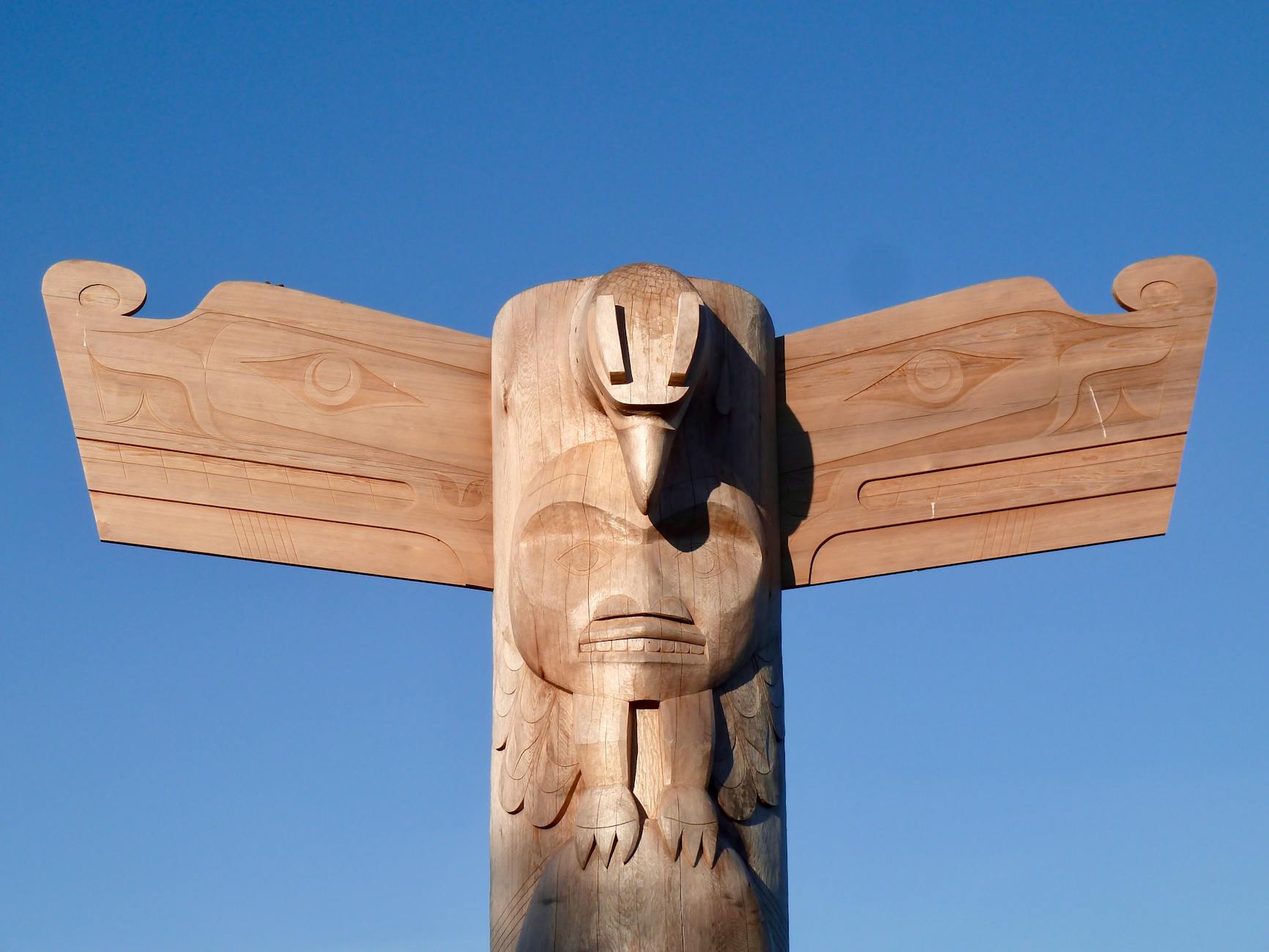
Bill Reid Gallery Quick Overview
This is a small gallery, and that is its strength. Two floors, an hour to see properly, and a collection with a single clear subject — which makes it a far less tiring proposition than a large museum, and an easy pairing with almost anything else downtown.
- Address: 639 Hornby Street, downtown Vancouver
- Adult: C$15
- Senior: C$12 — student with ID: C$10 — youth 13–17: C$8
- Children 12 and under: free
- Family rate: C$32 for two adults and two youth
- Free: first Friday of each month, 2–5 PM
- Hours: daily 10 AM–5 PM in summer; Tuesday–Saturday 10 AM–5 PM from October to May
- Time needed: about 1 hour
- Best for: anyone who saw The Raven and the First Men at MOA and wants the rest of the story
Check the season before you go. The gallery runs seven days a week through summer but closes Sundays and Mondays through the winter, which catches out visitors working from summer guidance.
About Bill Reid
Bill Reid (1920–1998) is the central figure in the twentieth-century revival of Haida art, and his route to it was indirect. He was born in Victoria to a Haida mother, Sophie Gladstone of Skidegate, and an American father of Scottish-German descent. Under the assimilation pressures of the era his Haida ancestry was not something the family discussed, and Reid grew up substantially disconnected from it.
He became a radio announcer, working for the CBC, and came to Haida art sideways — through a jewellery-making course taken while he was still broadcasting. The connection turned out to be closer than he knew: his grandfather Charles Gladstone was a silversmith, and his great-great-uncle was Charles Edenshaw, among the greatest of all Haida artists. Reid effectively taught himself the classical Haida formline system by studying historical pieces in museum collections, including at what is now the Museum of Anthropology.
He worked at every scale, from rings and bracelets to monumental sculpture, producing well over a thousand pieces. Diagnosed with Parkinson’s disease in the 1970s, he continued working with a team of assistants — many of whom, including Haida artists who went on to major careers of their own, learned the tradition in his studio. That transmission is arguably his largest single contribution.
Reid died in 1998, and his ashes were taken by canoe to Tanu in Haida Gwaii, his mother’s ancestral village. In 2020 he was honoured on a Canadian $2 circulation coin.
Bill Reid’s Masterworks
The gallery holds the largest public collection of Reid’s work outside the major institutional pieces, and it covers his full range — which is the point. Seeing a gold bracelet and a monumental bronze in the same room makes clear that he was working one system at different scales.
- Mythic Messengers — the monumental bronze frieze; the gallery’s centrepiece
- The Raven and the First Men, in white onyx — a smaller version of the yellow cedar sculpture at MOA
- Gold and silver jewellery — bracelets, brooches, rings and boxes in the Raven’s Trove gallery
- Masks and carvings in wood and argillite
- Works on paper — drawings and prints, including preparatory studies
- Wire sculptures and smaller experimental pieces
The white onyx Raven and the First Men is worth seeking out precisely because the famous version is elsewhere. Same composition, entirely different material — translucent, cool and pale where the MOA carving is warm yellow cedar. It reads as a distinct work rather than a study.
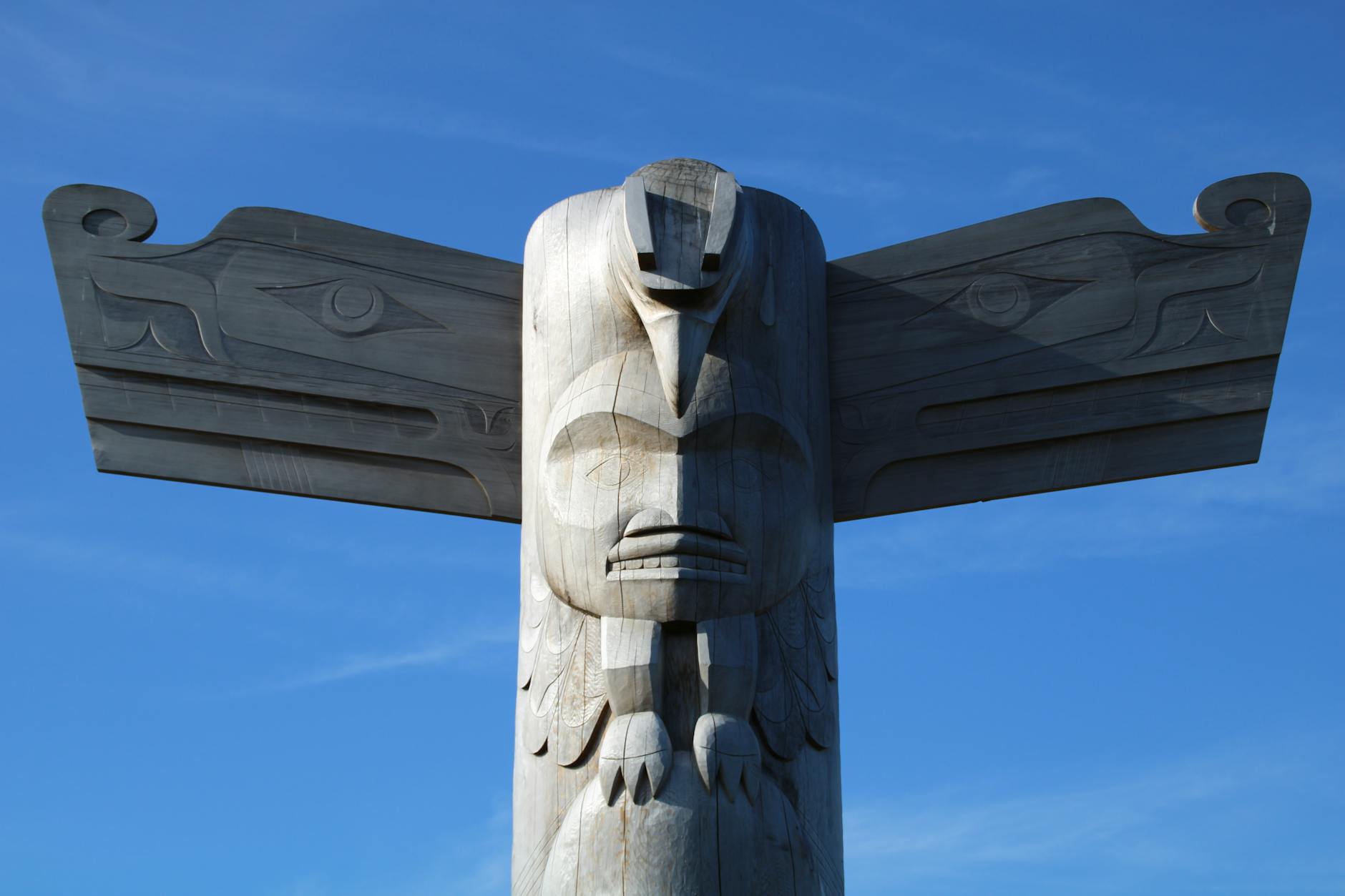
Mythic Messengers
Mythic Messengers is the work most visitors come away remembering. It is a long bronze frieze of interlocking figures drawn from Haida oral literature, each creature passing into the next so that the whole thing reads as a continuous band rather than a sequence of separate scenes.
The composition rewards slow reading. Start at one end and work along it, identifying where one being ends and another begins — the transitions are deliberately ambiguous, which is exactly how transformation works in the stories it draws on. Figures speak to one another through tongues and limbs that connect them physically.
It is also the work that put Reid’s art into millions of Canadian wallets: Mythic Messengers, along with The Raven and the First Men, The Spirit of Haida Gwaii and Haida Grizzly Bear, appeared on the back of the Canadian Journey series $20 note issued in 2004 and circulated until 2012.
Raven’s Trove: The Jewellery
The Raven’s Trove gallery holds Reid’s jewellery, and it is the part of the collection most visitors underestimate. Reid began as a jeweller and never stopped, and the small work is where the formline discipline is most exacting — there is no room to hide a weak curve on a bracelet.
- Engraved gold and silver bracelets, the classic Haida form
- Boxes and containers in precious metal
- Brooches, pendants and rings
- Pieces showing the influence of his great-great-uncle Charles Edenshaw
Bring your reading glasses. The engraving is fine enough that the detail is genuinely hard to see otherwise, and it is the difference between glancing at a case of jewellery and understanding what Reid could do.
Contemporary Indigenous Art
The gallery is not a Bill Reid mausoleum, and it takes some care not to be. Its mandate covers Northwest Coast art broadly, with a sustained programme of contemporary Indigenous artists — which is consistent with Reid’s own role as a teacher whose studio trained a generation.
- Solo and group exhibitions by contemporary Northwest Coast artists
- Work across carving, jewellery, printmaking, textiles and new media
- Artists from Haida, Coast Salish, Kwakwaka’wakw, Nisga’a and other Nations
- Artist talks, demonstrations and public programming
If you are building a sequence across a trip: MOA for the historical monumental work, the Bill Reid Gallery for the twentieth-century revival and its inheritors, and the Vancouver Art Gallery for contemporary Indigenous art in a wider art-world frame.
Rotating Exhibitions
Temporary exhibitions occupy a significant share of the gallery at any time, typically running three to six months. Because the building is small, a major temporary show meaningfully changes what is on view — the permanent Reid material remains, but the surrounding programme shifts.
Check billreidgallery.ca before visiting if there is something specific you want to see. Works can also travel out on loan.
Tickets & Hours
Admission (2026):
- Adult: C$15
- Senior: C$12
- Student with valid ID: C$10
- Youth 13–17: C$8
- Children 12 and under: free
- Family rate: C$32 — two adults and two youth
Hours:
- Summer (roughly May–September): daily, 10 AM–5 PM
- Winter (roughly October–May): Tuesday–Saturday, 10 AM–5 PM — closed Sunday and Monday
Seasonal changeover dates shift slightly year to year, so confirm on the gallery’s site if you are visiting in late spring or early autumn.
Free First Fridays
Admission is free on the first Friday of each month, 2 to 5 PM. It is a three-hour window rather than a full day, and the gallery is small, so it fills.
- When: first Friday monthly, 2–5 PM
- Strategy: arrive at 2 PM or after 4 PM; the middle of the window is busiest
- Stack it: the Vancouver Art Gallery also runs free first-Friday hours, 4–8 PM, five minutes’ walk away
That overlap is the best free culture afternoon downtown: Bill Reid at 2 PM, then walk to the VAG for 4 PM. See our guide to free museum days in Vancouver for the rest of the monthly pattern.
Guided Tours
The gallery offers guided tours and talks, and in a collection this dense with symbolic content they add a great deal. Formline is a strict visual system — ovoids, U-forms, and the rules governing how they combine — and once someone shows you how to read it, every piece in the building becomes legible.
- Docent-led highlight tours, schedules varying by season
- Artist talks and demonstrations tied to current exhibitions
- School and group tours by advance booking
- Indigenous-led programming when available
Ask at the front desk on arrival — in a gallery this size, staff will often walk you through the key works informally if a scheduled tour is not running.
Bill Reid’s Work Elsewhere in Vancouver
Reid’s major public works are scattered across the city, and several are free to see.
- The Raven and the First Men — the yellow cedar original at MOA, UBC; paid admission
- The Spirit of Haida Gwaii: The Jade Canoe — Vancouver International Airport, international departures; free if you are flying
- Chief of the Undersea World — the bronze killer whale outside the Vancouver Aquarium in Stanley Park; visible without aquarium admission
- Haida house frames — carved with Doug Cranmer, on the grounds behind MOA; free
- Mythic Messengers — here at the Bill Reid Gallery
Between the killer whale in Stanley Park, the Jade Canoe at the airport and the outdoor house frames at MOA, it is possible to see a good deal of Reid’s monumental work without paying anything.
Gift Shop
The gallery shop is one of the most reliable places downtown to buy Northwest Coast art with proper attribution — work by named Indigenous artists, with information about who made it and which Nation they belong to. That matters in a city where a great deal of “Native-style” merchandise in tourist shops is mass-produced and unattributed.
- Jewellery by contemporary Northwest Coast artists
- Prints and cards, the most affordable way to take something home
- Books on Reid, Haida art and formline design
- Carvings and higher-value collector pieces
The shop can be visited without paying gallery admission.
Getting There
- Address: 639 Hornby Street, between West Georgia and Dunsmuir
- SkyTrain: Burrard or Granville station, both about five minutes’ walk
- On foot: five minutes from the Vancouver Art Gallery, ten from Canada Place
- Parking: paid downtown lots nearby; driving is not worth it for this one
- Accessibility: step-free access and lift service between floors
The entrance is modest and easy to walk past — look for the signage rather than a grand frontage.
Pair with Downtown Culture Day
At about an hour, the Bill Reid Gallery slots into almost any downtown plan.
- Vancouver Art Gallery — five minutes’ walk; allow 2–3 hours
- Vancouver Public Library Central Branch — free, architecturally spectacular
- Christ Church Cathedral — a block away
- Robson Square — Erickson’s sunken plaza
- Canada Place and the seawall — ten minutes north
Sample half-day: Bill Reid Gallery at 10 AM (1 hour) → coffee on Hornby → Vancouver Art Gallery at 11:30 AM (2–3 hours) → late lunch → walk down to Canada Place. Note the VAG is closed Tuesdays, and the Bill Reid Gallery is closed Sundays and Mondays in winter — between them, Wednesday to Saturday is the safe window.
Pro Tips
- First Friday, 2–5 PM is free — and stacks with the VAG’s free 4–8 PM window
- Check the season — closed Sundays and Mondays October to May
- Children 12 and under are free; the family rate is C$32
- Bring reading glasses for the jewellery engraving
- Ask staff to explain formline — it makes the whole collection readable
- See MOA first if you can; the Reid material lands harder with the historical context behind it
- An hour is enough — this is a focused gallery, not an endurance museum
- The shop is free to browse and one of the best attributed sources downtown
Related Vancouver guides
Keep planning with these guides:
- Museum of Anthropology at UBC: Complete Guide (2026)
- Vancouver Art Gallery: Visitor’s Guide (2026)
- Free Museum Days in Vancouver (2026)
Bill Reid Gallery FAQs
Where is the Bill Reid Gallery?
At 639 Hornby Street in downtown Vancouver, between West Georgia and Dunsmuir. It is a five-minute walk from the Vancouver Art Gallery and from both Burrard and Granville SkyTrain stations.
How much is admission to the Bill Reid Gallery?
C$15 adult, C$12 senior, C$10 student with valid ID, and C$8 for youth 13–17. Children 12 and under are free, and a family rate of C$32 covers two adults and two youth.
Is the Bill Reid Gallery ever free?
Yes — free admission on the first Friday of each month from 2 to 5 PM. Children 12 and under are always free. The Vancouver Art Gallery runs its own free window on the same evening from 4 to 8 PM, five minutes away.
What are the Bill Reid Gallery hours?
Daily 10 AM to 5 PM through the summer, and Tuesday to Saturday 10 AM to 5 PM from roughly October to May, closed Sundays and Mondays. Confirm the changeover dates on the gallery’s site if visiting in spring or autumn.
Who was Bill Reid?
A Haida artist (1920–1998) and the central figure in the twentieth-century revival of Haida art. Born in Victoria to a Haida mother from Skidegate and an American father, he worked as a CBC radio announcer before coming to art through jewellery-making, and taught himself classical formline by studying historical pieces in museum collections.
What is Mythic Messengers?
A monumental bronze frieze of interlocking figures from Haida oral literature, and the gallery’s centrepiece. It appeared on the back of the Canadian Journey series $20 note — along with The Raven and the First Men, The Spirit of Haida Gwaii and Haida Grizzly Bear — issued in 2004 and circulated until 2012.
Is The Raven and the First Men at the Bill Reid Gallery?
A white onyx version is, and it is worth seeing. The famous large yellow cedar carving is at the Museum of Anthropology at UBC. Same composition, very different material and effect.
How long does it take to visit the Bill Reid Gallery?
About an hour. It is a small two-floor gallery, which makes it easy to combine with the Vancouver Art Gallery or another downtown stop in the same half-day.
Where else can I see Bill Reid’s work in Vancouver?
The Raven and the First Men at MOA; The Spirit of Haida Gwaii: The Jade Canoe at Vancouver International Airport; Chief of the Undersea World, the bronze killer whale outside the Vancouver Aquarium in Stanley Park; and the Haida house frames he carved with Doug Cranmer on the grounds behind MOA. Several of these are free to see.
Is the Bill Reid Gallery worth visiting?
Yes, particularly if you have seen the MOA collection and want the twentieth-century story that follows it. At an hour and C$15 it is a low-commitment, high-density visit, and the jewellery in the Raven’s Trove gallery is the part people most often say they did not expect to love.
Is the Bill Reid Gallery good for kids?
Reasonably — children 12 and under are free and the gallery is small enough not to exhaust them. The masks and monumental bronze hold attention better than the jewellery cases. Allow 30–45 minutes with younger children.
Related reading: Pair this with our Vancouver culture and history pillar and our Museum of Anthropology guide.