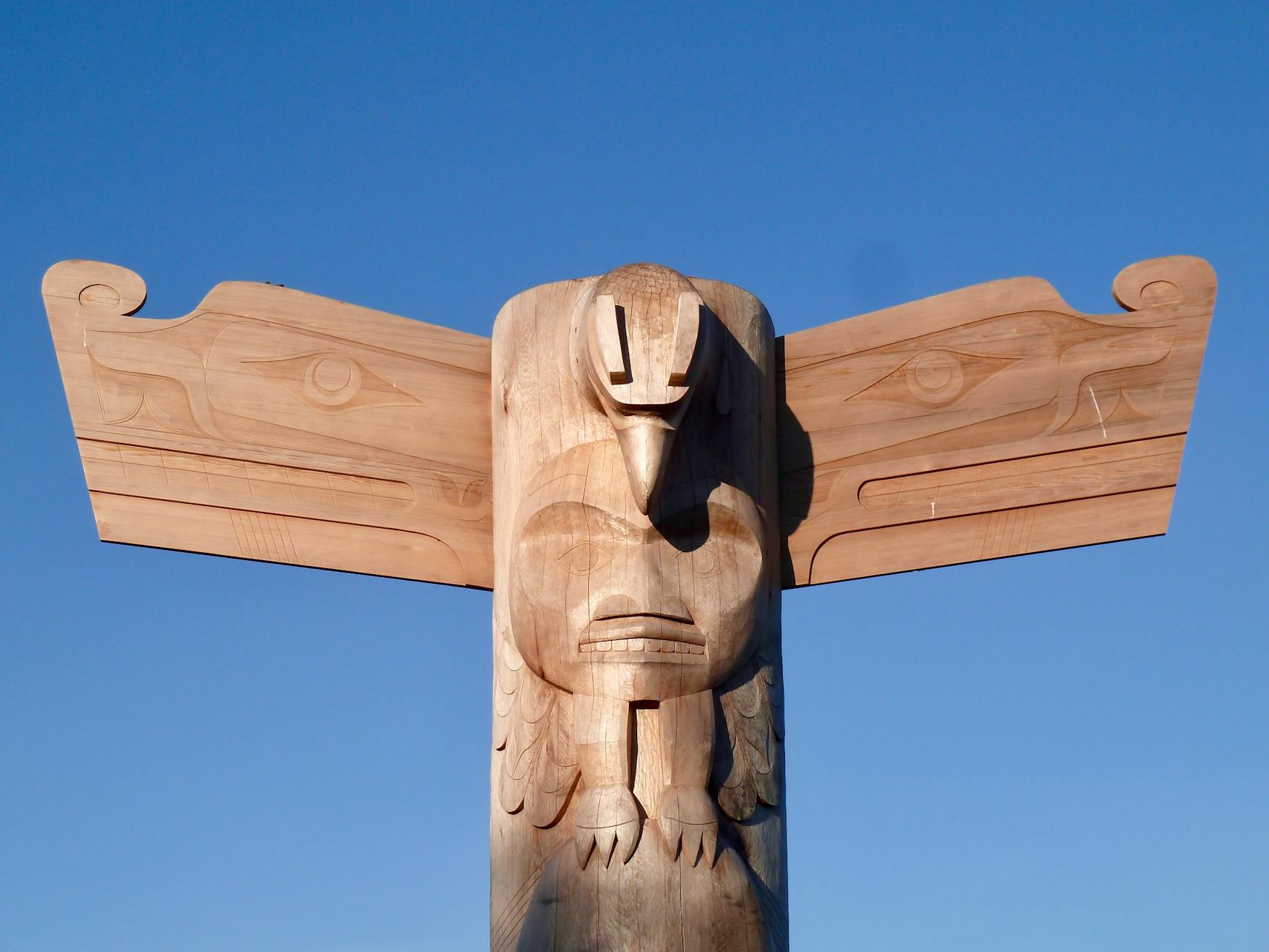
Museum of Anthropology UBC (MOA) is one of the world’s most renowned museums for Northwest Coast First Nations art — housed in a striking Arthur Erickson-designed building at the University of British Columbia. The museum features the Great Hall with monumental totem poles, Bill Reid’s “The Raven and the First Men” sculpture, the Multicultural Galleries with artifacts from around the world, and outdoor totem poles and Haida houses. Adult admission is C$26, and Thursday evenings after 5 PM are half price. MOA is about 45 minutes by transit from downtown via the 99 B-Line — well worth the trip for one of Vancouver’s most internationally recognized cultural institutions.
This guide covers everything for visitors to the Museum of Anthropology — what to see, how long to allow, free guided tours, the gift shop, café, and how to make MOA part of your Vancouver cultural visit.
Table of Contents
MOA Quick Overview
MOA sits at the far western edge of the UBC campus in Point Grey, on a bluff above the Strait of Georgia. That location is part of the experience: the galleries are built to open onto the trees and water behind them, so the collection is never entirely separated from the landscape it came from. Plan a half-day if you want to do it properly — this is not a museum that rewards a rushed lap.
- Address: 6393 NW Marine Drive, UBC, Vancouver
- Adult admission (19–64): C$26
- Senior (65+) / Student (19+): C$23
- Youth (6–18): C$13 — children 5 and under free
- Free admission: Indigenous visitors, UBC students/staff/faculty, MOA members
- Hours: 10 AM–5 PM daily, Thursdays until 9 PM
- Closed: Mondays from October 15 to May 15
- Time needed: 2–3 hours
- Architect: Arthur Erickson (opened 1976)
- Best for: Indigenous art lovers, anthropology fans, architecture enthusiasts
The single best-value move: visit on a Thursday evening. MOA stays open until 9 PM and admission drops to half price after 5 PM — C$13 for an adult instead of C$26 — and the galleries are markedly quieter than a weekend afternoon.
Arthur Erickson Architecture
The MOA building is a Vancouver landmark in its own right, and understanding its logic makes the collection read differently. Arthur Erickson — who also designed Robson Square, Simon Fraser University, and the Canadian embassy in Washington — took the post-and-beam construction of Northwest Coast Indigenous houses as his structural starting point. The concrete frame steps down the slope in a sequence of increasing heights, so that walking from the entrance into the Great Hall mimics the approach to a village fronting the water.
The Great Hall’s north wall is 15 metres of glass facing the trees and the Strait beyond. Erickson’s argument was that monumental poles were never meant to stand in dim, sealed rooms; they were made to be seen outdoors, in daylight, against sky and sea. The glass wall is the compromise that gets them close.
Architectural highlights:
- Concrete-and-glass Modernist structure, opened 1976
- Post-and-beam frame drawn from Northwest Coast house construction
- 15-metre glass walls in the Great Hall, opening onto the totem pole grounds
- A deliberate indoor–outdoor sequence from entrance ramp to water view
- Reopened June 2024 after an 18-month seismic upgrade
Worth photographing: the exterior concrete forms from the totem pole lawn, the Great Hall poles backlit against the glass wall in late afternoon, and the ramp approach from the entrance, which frames the first poles as you descend.
The Great Hall
The Great Hall is the reason most people come. It holds monumental poles, house posts, carved figures, feast dishes, bentwood boxes and canoes from the Northwest Coast, most of them from the mid-nineteenth century, standing in a daylit space tall enough to take them at full height. Several poles run past 12 metres.
What makes the hall unusual among world museums is that the works are not behind glass and not lit theatrically. You walk among them at ground level in natural light that changes through the day. The 2024 seismic upgrade was undertaken specifically so this space, and the works in it, would survive a major earthquake — the poles are now secured on engineered mounts that are largely invisible from the floor.
Cultures represented:
- Haida — Haida Gwaii; the most internationally recognised Northwest Coast style
- Tlingit — northern coast and southeast Alaska
- Tsimshian — Skeena and Nass river territories
- Nuxalk — Bella Coola valley
- Kwakwaka’wakw — northern Vancouver Island and adjacent mainland
- Coast Salish — the peoples on whose territory Vancouver and UBC sit
What to actually look at: read two or three poles closely rather than photographing all of them. Find the crest figures at the base, follow them upward, and check the panel text for which family or lineage the crests belong to. A pole is a legal and genealogical document as much as an artwork, and the difference between the styles above becomes obvious once you have looked hard at a few.
Time: 30–45 minutes for thorough exploration.
Bill Reid’s “Raven and the First Men”
MOA’s most famous single work sits in its own skylit rotunda: Bill Reid’s The Raven and the First Men, finished on April 1, 1980. Reid and his assistants carved it from a single block of laminated yellow cedar — roughly 106 blocks glued into one mass — over about two years of work beginning in autumn 1978.
The sculpture renders a Haida creation story. The Raven, a trickster who is bored and hungry, finds a partly open clamshell on the beach at Rose Spit with the first humans inside, reluctant to emerge. He coaxes and bullies them out into the world. Reid’s carving catches the moment of hesitation: the figures are half in, half out, limbs tangled, expressions somewhere between fear and curiosity.
MOA holds the world’s largest collection of Bill Reid’s work, and the rotunda displays other pieces in gold, silver, argillite and wood alongside the main sculpture. Reid (1920–1998) was of Haida and Scottish-German descent and came to carving through jewellery and broadcasting; he is the central figure in the twentieth-century revival of Haida art, and his work also stands at Vancouver International Airport and the Bill Reid Gallery downtown.
- Carved from laminated yellow cedar, 1978–1980
- Roughly 2 metres tall
- Depicts the Haida creation story of Raven finding humans in a clamshell
- Featured on the reverse of the Canadian C$20 note in the Canadian Journey series, 2004–2012
- Displayed in the Bill Reid Rotunda with his gold, silver and argillite work
Tip: circle it completely. The piece is composed to be read from all sides, and the human figures on the far side from the entrance are the ones most visitors never see.
Multicultural Galleries
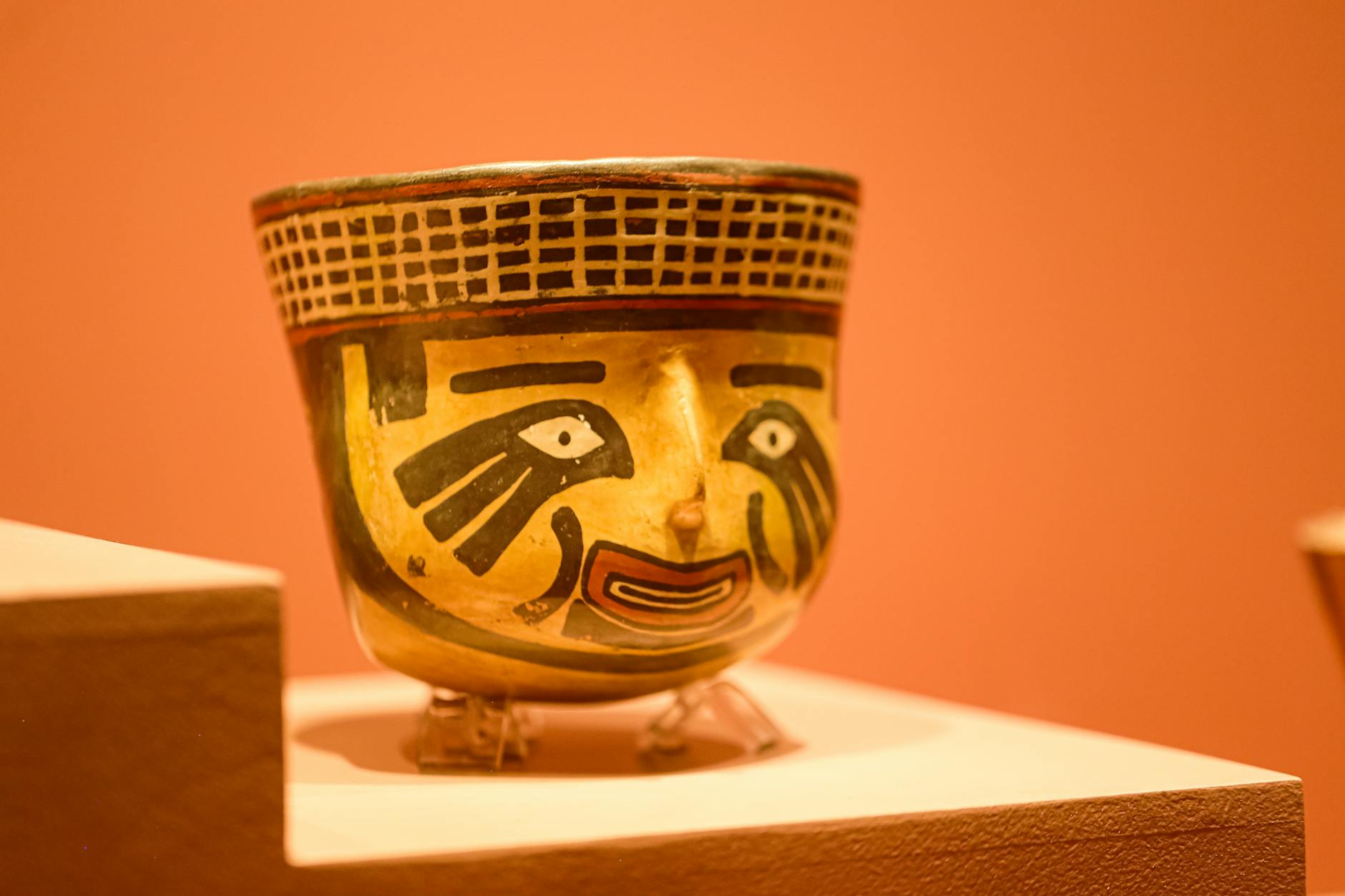
Beyond Northwest Coast art, MOA holds extensive collections from cultures worldwide, and it presents them in a way the museum itself pioneered. Rather than selecting a few hundred highlights and warehousing the rest, MOA put its stored collection on public view in glass-topped drawers and cases — “visible storage” — so visitors can open drawers and work through thousands of objects at their own pace, with catalogue information available for each.
It is a genuinely different museum experience: less curated narrative, more open archive. Some visitors find it overwhelming and move through quickly; others lose an hour in the ceramics drawers.
What you’ll see:
- African masks, textiles and carved figures
- Asian collections, including substantial Chinese and Japanese holdings
- European folk art and ceramics
- Pacific Islands material culture
- South American archaeological artifacts and textiles
- The Koerner European Ceramics collection
Time: 30–60 minutes, depending entirely on whether you are a drawer-opener.
Outdoor Totem Poles & Haida Houses
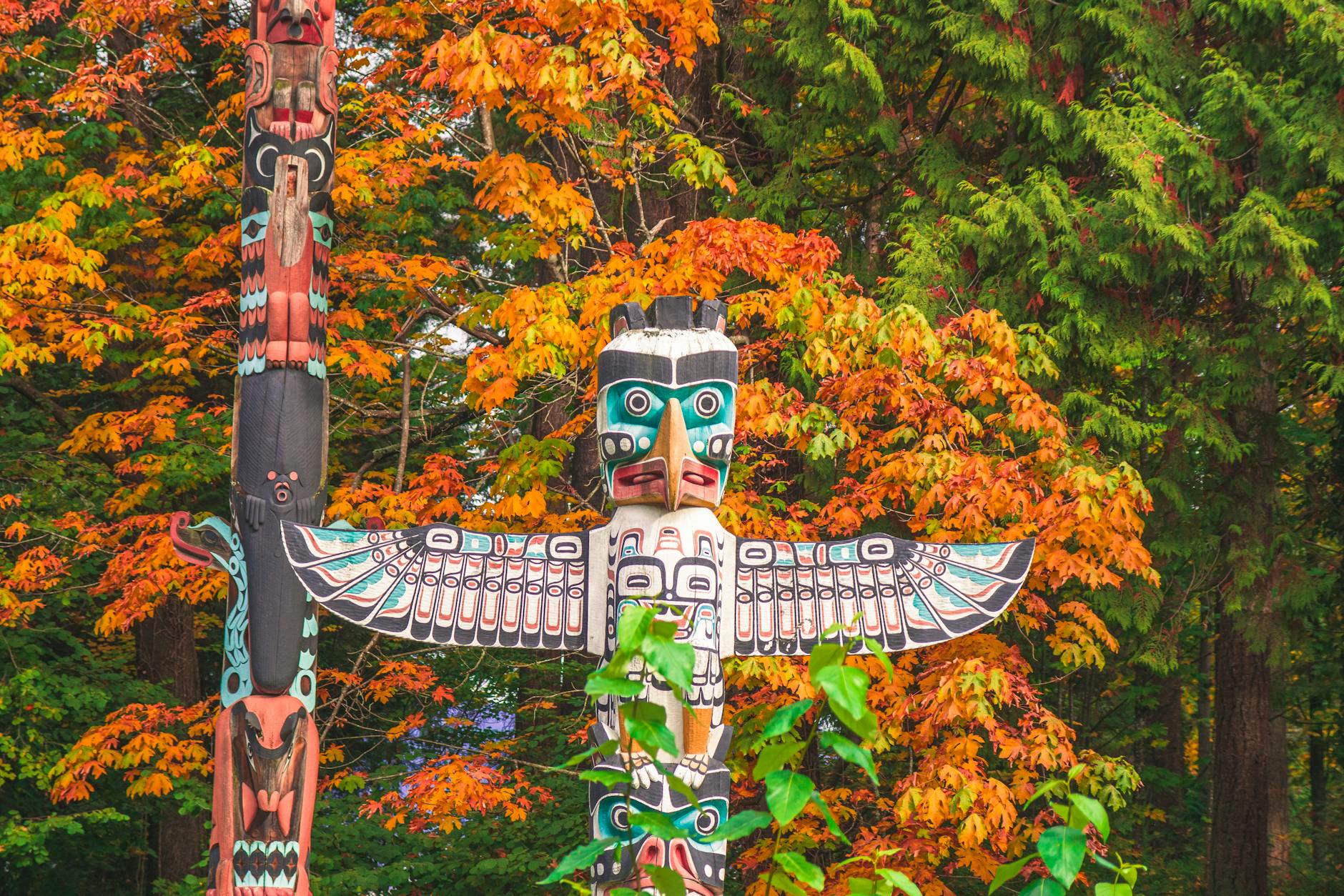
Behind the museum, on the grass bluff facing the water, stands a group of poles and two Haida house frames. These are not salvaged originals but works carved in the 1950s and 1960s by Haida artist Bill Reid and Kwakwaka’wakw carver Doug Cranmer, built as a living demonstration that the tradition had not ended.
Because they stand outdoors and are allowed to weather, they read very differently from the sheltered poles inside. This is how poles were meant to age — greying, softening, eventually returning to the ground.
- Free-standing poles in a landscaped bluff-top setting
- Two Haida house frames, carved by Bill Reid and Doug Cranmer
- Views over the Strait of Georgia to Vancouver Island on clear days
Free to explore: yes — the outdoor grounds are open without museum admission, which makes them a reasonable stop even if you arrive too late in the day to do the galleries justice.
How to See MOA: Suggested Routes
MOA is bigger than it looks from the entrance, and the visible storage galleries can swallow unlimited time. Two routes that work:
The 90-minute version. Entrance ramp and first poles (10 min) → Great Hall, reading two or three poles closely (35 min) → Bill Reid Rotunda (15 min) → outdoor poles and house frames (20 min) → gift shop (10 min). Skip visible storage entirely; you will not miss the headline works.
The half-day version. Add the Multicultural Galleries and visible storage (45–60 min) between the Rotunda and the outdoor grounds, take the free highlight tour if the timing lines up, and break for coffee on the café patio. Three to three and a half hours total.
If you only have an hour — because you are catching a ferry or a flight — do the Great Hall and the Rotunda and nothing else. Those two spaces are the museum’s international reputation.
Tickets & Hours
Admission (2026):
- Adult (19–64): C$26
- Senior (65+): C$23
- Student (19+ with ID): C$23
- Youth (6–18): C$13
- Children 5 and under: free
- Indigenous visitors: free
- UBC students, staff and faculty; MOA members: free
- Thursday after 5 PM: half price
- Access Pass: C$35 for a year of unlimited visits — worth it if you will come twice
Hours:
- Monday–Wednesday, Friday–Sunday: 10 AM–5 PM
- Thursday: 10 AM–9 PM
- Closed Mondays from October 15 to May 15
Buying tickets: MOA sells admission at the door only — there is no online advance purchase, so do not go looking for a timed-entry booking. Cash, debit and major credit cards are accepted. Groups of 10 or more get reduced rates by arrangement in advance.
Vancouver Public Library Cultural Pass: library cardholders can reserve free admission through vpl.ca. Passes are limited and go quickly, so book well ahead.
Best Time to Visit & Avoiding Crowds
MOA’s busiest hours are weekend afternoons between noon and 3 PM, especially in July and August when cruise passengers and campus tours overlap. The Great Hall is large enough to absorb a crowd, but the Bill Reid Rotunda is not — at peak times you will be waiting for a clear view of the sculpture.
- Quietest: Thursday evening after 6 PM, and the first hour after opening on any weekday
- Best light in the Great Hall: mid-to-late afternoon on a bright day, when the glass wall backlights the poles
- Worst: summer weekend afternoons, and any rainy Sunday, when MOA becomes the city’s default indoor plan
- Watch the Monday closure: from October 15 to May 15 the museum is shut Mondays, which catches a lot of shoulder-season visitors out
The Thursday evening slot is the standout: late hours, half-price entry, and the fewest people in the building all week.
Free Guided Tours
MOA runs free highlight tours included with admission, generally around 45 minutes, led by trained volunteer guides. They are worth building your visit around. A pole is dense with information that is close to invisible if you do not know the conventions — which crest belongs to which lineage, why a figure is placed where it is, what the carving says about the family that commissioned it. A guide unlocks all of that in a way the wall panels cannot.
- Daily highlight tours: free with admission, about 45 minutes
- Gallery-specific tours: offered periodically; check the day’s schedule
- Indigenous-led tours and programming: offered when available — prioritise these if the timing works
- Behind-the-scenes and group tours: advance booking required
Tour schedule: times vary by season and day; confirm at moa.ubc.ca or at the front desk when you arrive.
Getting There
MOA is on the UBC campus at Point Grey, on Vancouver’s West Side — not to be confused with West Vancouver, which is a separate municipality across the harbour. It is the far end of the peninsula, about 30 minutes from downtown without traffic.
By transit:
- The 99 B-Line express runs from Commercial–Broadway station along Broadway to the UBC Exchange
- From downtown, take the 44 or 14, or the Canada Line to Broadway–City Hall and transfer to the 99
- Roughly 45 minutes door to door from downtown
- From the UBC Exchange it is a 10–12 minute walk northwest through campus
- The 68 shuttle from the UBC Exchange stops much closer to MOA if you would rather not walk
- Fares are two-zone from downtown; a Compass Card or contactless tap is cheapest
By car:
- 20–30 minutes from downtown via 4th Avenue or 16th Avenue
- Paid parking directly in front of MOA at about C$4 per hour
- The Rose Garden Parkade is the overflow option and a short walk away
- Three accessible spaces are available at the museum entrance
Tip: the 99 B-Line is frequent and genuinely express, but it is also the busiest bus route in North America. Avoid it between 8–9:30 AM and 3–6 PM on weekdays if you have a choice.
Accessibility & Visiting with Mobility Needs
The building is step-free throughout the main visitor route. Erickson’s design uses a long ramp rather than stairs to move between the entrance level and the Great Hall, so the museum’s central sequence is fully wheelchair accessible without detours.
- Step-free access from the entrance through the Great Hall and Rotunda
- Three accessible parking spaces at the museum entrance
- Accessible washrooms on the main level
- Wheelchairs available to borrow at the front desk
- The outdoor totem pole grounds are on grass and a gentle slope — firm underfoot in summer, softer after heavy rain
The visible storage drawers sit at a range of heights, and the lowest are difficult to use from a seated position. Staff at the desk can help if there is something specific you want to see.
Gift Shop & Café
The MOA Shop is one of the better places in Vancouver to buy Indigenous art honestly, which matters in a city where a great deal of “Native-style” merchandise in tourist shops is mass-produced and unconnected to any artist. MOA sells work by named Northwest Coast artists with attribution, alongside prints, books and jewellery at a wide range of prices.
- Jewellery, prints and carvings by named Indigenous artists
- Bill Reid prints and monographs
- One of the city’s strongest anthropology and Indigenous studies book sections
- Affordable options — cards, small prints, books — alongside serious collector pieces
The café serves coffee, pastries and light lunches, with an outdoor patio looking toward the water. It is a pleasant break rather than a destination meal; if you want a proper lunch, the UBC village is a 10-minute walk east.
Pair with UBC Visit
MOA is a great anchor for a UBC campus day, and the other attractions are close enough to combine on foot or with one short bus hop.
- Nitobe Memorial Garden: a highly regarded traditional Japanese garden, five minutes’ walk from MOA
- UBC Botanical Garden: 44 hectares including the Greenheart TreeWalk canopy walkway
- Beaty Biodiversity Museum: home to a 26-metre blue whale skeleton; good with kids
- Wreck Beach: famous clothing-optional beach below the bluff — reached by a long, steep stairway
- Rose Garden viewpoint: free, with a straight view across to the North Shore mountains
Sample UBC day:
- 10 AM: arrive at UBC; MOA galleries and outdoor poles
- 1 PM: lunch at the UBC village or the MOA café patio
- 2 PM: Nitobe Memorial Garden, then the Botanical Garden or Beaty Biodiversity
- 4 PM: Rose Garden viewpoint, or the stairs down to Wreck Beach if the weather is good
- 5:30 PM: 99 B-Line back downtown
Pro Tips
- Thursday evening is the value play: open until 9 PM, half price after 5 PM, and the quietest hours of the week
- No online tickets: MOA sells at the door only — do not waste time hunting for a booking link
- Check the Monday closure: shut Mondays between October 15 and May 15
- Take the free highlight tour: it adds more than any audio guide would
- Indigenous visitors enter free, year-round
- The outdoor poles are free: worth a look even without paid admission
- Access Pass pays for itself on the second visit at C$35
- Photography is allowed without flash; respect any “no photo” signage on specific items
- Allow 2–3 hours, or 90 minutes for the headline works only
- It is an all-weather plan — which is exactly why it fills up on rainy Sundays
Related Vancouver guides
Keep planning with these guides:
- Vancouver to Victoria: Complete Day Trip Guide (2026)
- Museum of Vancouver: City Stories Told Well (2026)
- Stanley Park Totem Poles Guide (2026)
MOA FAQs
Where is the Museum of Anthropology?
The Museum of Anthropology (MOA) is at 6393 NW Marine Drive on the UBC campus in Point Grey, on Vancouver’s West Side — not West Vancouver, which is a separate municipality. It is about 45 minutes by transit from downtown via the 99 B-Line.
How much is admission to the Museum of Anthropology?
Adult (19–64) C$26; senior (65+) and student (19+) C$23; youth (6–18) C$13; children 5 and under free. Indigenous visitors, UBC students, staff and faculty, and MOA members enter free. Thursday evenings after 5 PM are half price.
Can I buy Museum of Anthropology tickets online?
No. MOA sells admission at the door only — there is no online advance purchase or timed-entry system. Cash, debit and major credit cards are accepted. Groups of 10 or more can arrange reduced rates in advance.
Is the Museum of Anthropology closed on Mondays?
Only part of the year. MOA is closed Mondays from October 15 to May 15, and open seven days a week the rest of the year. Thursdays it stays open until 9 PM year-round.
What’s the most famous thing at the Museum of Anthropology?
Bill Reid’s “The Raven and the First Men” (1980), carved from laminated yellow cedar and displayed in its own skylit rotunda — featured on the reverse of the Canadian C$20 note in the Canadian Journey series, issued 2004 and in circulation to 2012. The Great Hall of monumental Northwest Coast poles is equally renowned.
How long does it take to visit the Museum of Anthropology?
Plan 2–3 hours for a thorough visit, or about 90 minutes if you focus on the Great Hall, the Bill Reid Rotunda and the outdoor poles. The visible storage galleries can absorb another hour on their own.
Is photography allowed at the Museum of Anthropology?
Yes — photography is generally allowed without flash. Some specific items carry “no photo” signage, which should be respected.
What’s special about the Museum of Anthropology architecture?
Arthur Erickson designed it around the post-and-beam construction of Northwest Coast Indigenous houses, stepping the concrete frame down the slope toward the water and fronting the Great Hall with 15-metre glass walls so the poles stand in daylight. It opened in 1976 and reopened in June 2024 after an 18-month seismic upgrade.
How do I get to the Museum of Anthropology from downtown?
Take the 99 B-Line express to the UBC Exchange, then walk 10–12 minutes northwest through campus, or catch the 68 shuttle which stops closer. About 45 minutes total. By car it is 20–30 minutes via 4th or 16th Avenue, with paid parking outside MOA at roughly C$4 per hour.
Is the Museum of Anthropology wheelchair accessible?
Yes. The main visitor route is step-free — Erickson used a long ramp rather than stairs between the entrance and the Great Hall. There are three accessible parking spaces at the entrance, accessible washrooms on the main level, and wheelchairs available to borrow at the front desk.
Is the Museum of Anthropology good for kids?
Yes, with realistic expectations. Youth 6–18 pay C$13 and under-6s are free. The Great Hall and outdoor poles hold children’s attention well; the visible storage galleries generally do not. Plan 1.5–2 hours, and consider pairing with the Beaty Biodiversity Museum and its blue whale skeleton nearby.
What other UBC attractions can I pair with MOA?
Nitobe Memorial Garden (five minutes’ walk), UBC Botanical Garden and its TreeWalk canopy walkway, the Beaty Biodiversity Museum, the Rose Garden viewpoint, and Wreck Beach down a long stairway below the bluff. A half-day or full-day UBC visit works well.
Related reading: Pair this with our Vancouver culture and history pillar, Bill Reid Gallery, and Indigenous tours Vancouver.