

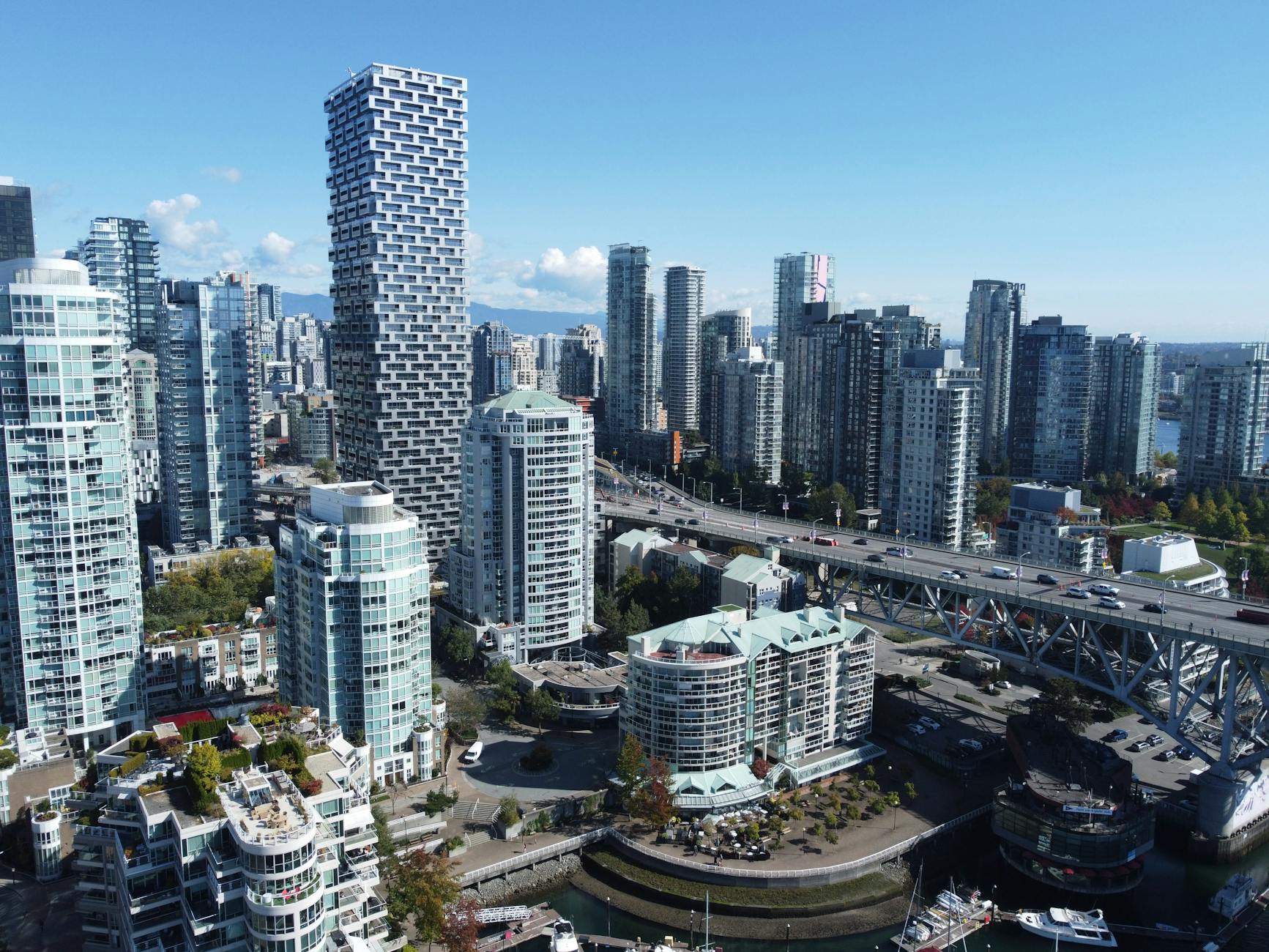
West End Vancouver is the leafy, residential southwest quadrant of downtown — bounded by Burrard Inlet to the north, Stanley Park to the west, English Bay to the south, and Burrard Street to the east. About 47,000 residents pack into 2 km², making it one of the densest neighbourhoods in Canada — and yet the streetscape feels remarkably calm: tree-lined streets, low-rise apartment buildings, restaurants, dog parks, and the famous Davie Village (Vancouver’s LGBTQ+ neighbourhood) running along its southern edge.
This 2026 neighbourhood guide covers the West End and Davie Village in depth — what to see and do, the best hotels and B&Bs, the dining strips on Davie and Denman, the LGBTQ+ history and venues, and how the West End compares to other downtown sub-areas for a Vancouver stay.
Table of Contents

West End Vancouver: A Quick Overview
The West End is Vancouver’s densest residential neighbourhood — 47,000 people on roughly 2 km² of low-rise and mid-rise apartments along leafy streets like Robson, Davie, Denman, Pendrell, and Comox. The area’s defining features:
- Stanley Park 5–10 minutes’ walk from any West End hotel
- English Bay Beach 0–10 minutes’ walk
- The Davie Village LGBTQ+ neighbourhood along Davie Street (Burrard to Jervis)
- Robson Street’s western blocks (the West End side, between Burrard and Denman)
- Three small parks: Nelson Park, Sunset Beach Park, English Bay Beach Park
- 250+ restaurants and cafés
- Direct bus access to downtown attractions and Stanley Park
West End hotels lean budget-to-mid-range — the area has fewer luxury options than Coal Harbour or Robson Street, but better Stanley Park access and a more genuinely “neighbourhood” feel.
For wider city overview see our where to stay pillar.
A Brief West End History
The West End was Vancouver’s first wealthy residential neighbourhood — between 1890 and 1920, the city’s lumber and railway barons built large Victorian and Edwardian houses on streets like Beach Avenue and Pendrell. Most were torn down in the 1950s–1970s as the city’s first wave of high-rise apartments transformed the area into the dense residential neighbourhood you see today.
The Davie Village’s role as Vancouver’s LGBTQ+ neighbourhood emerged in the 1970s, anchored by the original gay bar Numbers Cabaret (1980, still operating) and the visible community organizations along Davie. Vancouver’s first Pride parade was held in 1981 along Davie Street.
The neighbourhood’s tree-lined streets and walkable density came from a 1970s-era zoning experiment that limited buildings to 3–6 storeys on the residential blocks while concentrating high-rises on Robson and along the southern edge. The result is one of Canada’s most walkable urban neighbourhoods.
For more Vancouver history see our Vancouver culture and history pillar.
Davie Village & LGBTQ+ Vancouver
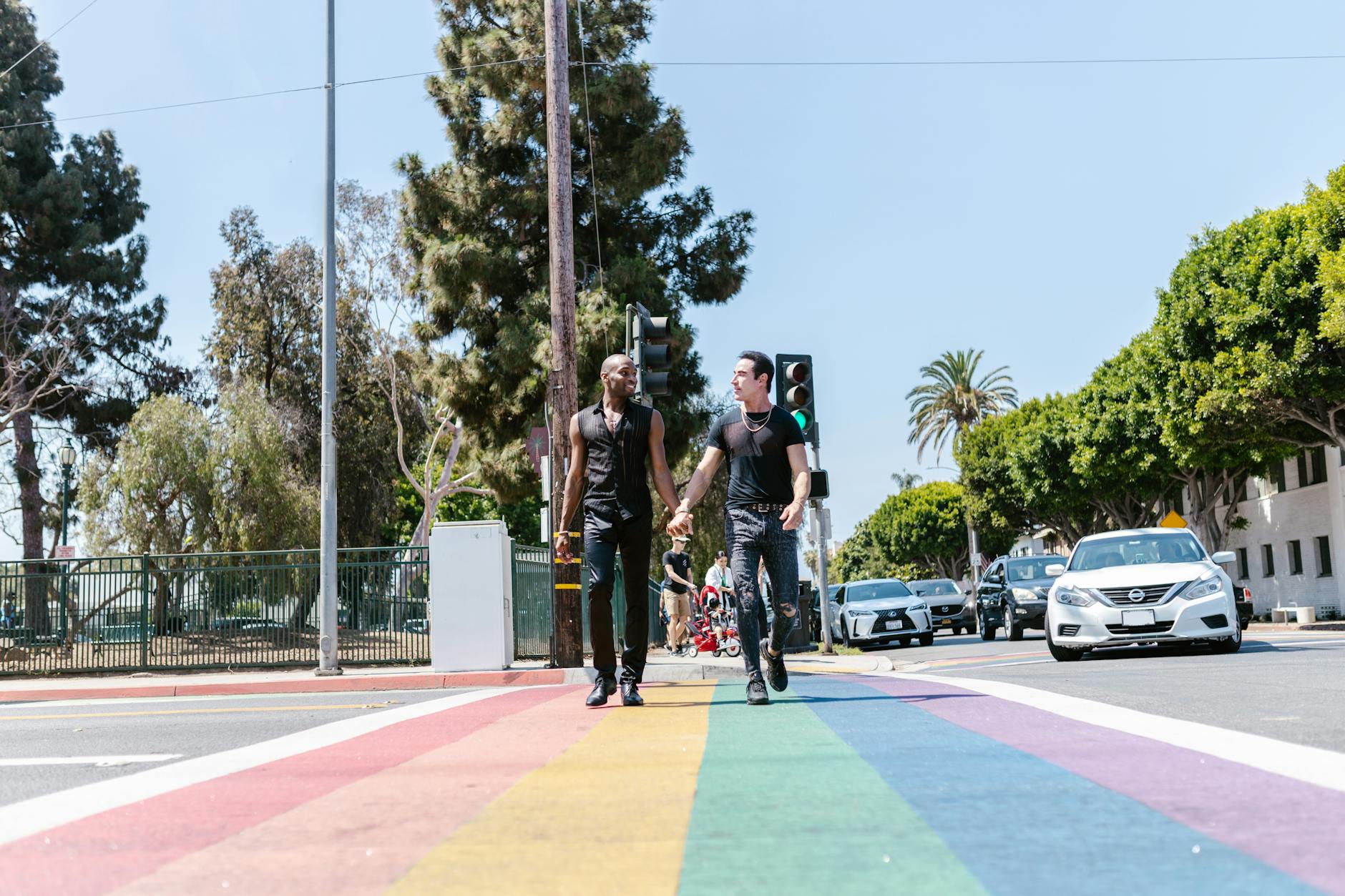
Davie Village runs along Davie Street between Burrard and Jervis (about 6 blocks). The pink crosswalks, the “Davie Village” street-flag designation, and the rainbow-painted street furniture all date from the 2010s, but the neighbourhood’s role as Vancouver’s LGBTQ+ centre goes back to the 1970s.
Anchor venues and businesses:
- Numbers Cabaret (1042 Davie) — Vancouver’s longest-running gay bar, since 1980.
- Celebrities Nightclub (1022 Davie) — long-running gay dance club with regular drag and DJ programming.
- Junction Public House (1138 Davie) — relaxed neighbourhood pub welcoming all.
- The Score on Davie (1262 Davie) — sports bar with a strong LGBTQ+ following.
- The Pumpjack Pub (1167 Davie) — long-running mixed crowd.
- Little Sister’s Book and Art Emporium (1238 Davie) — Canada’s oldest LGBTQ+ bookstore (since 1983); legal precedent for LGBTQ+ free speech in Canada.
Vancouver Pride Festival typically runs late July through early August; the parade ends at the Davie Village festival on Sunday. See our events and festivals pillar.
The neighbourhood is welcoming and inclusive year-round; the rainbow crosswalks at Bute and Davie mark the Davie Village heart.
Things to Do in the West End
The West End is more of a “live and walk” neighbourhood than a sightseeing district. Specific stops:
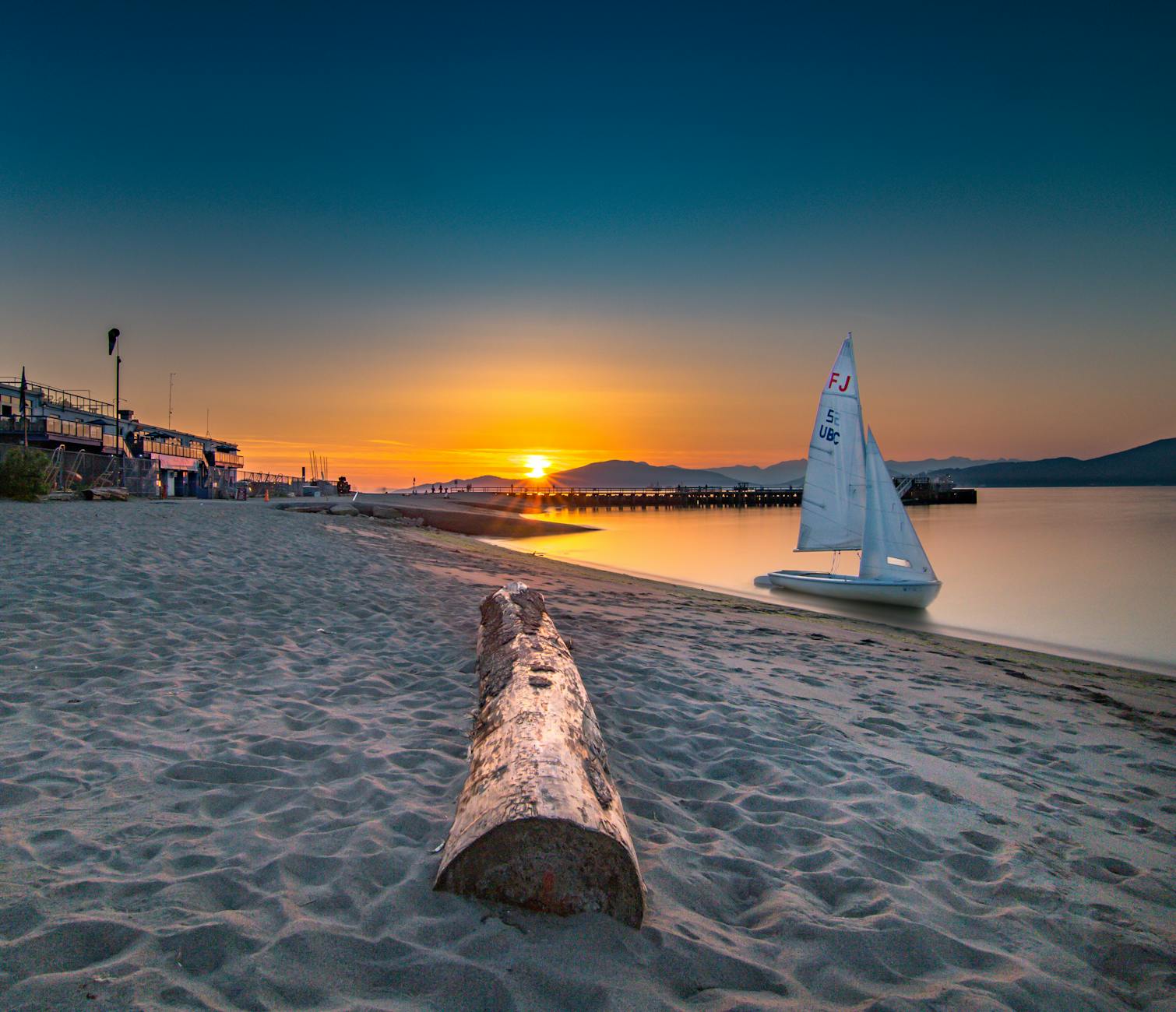
1. English Bay Beach. The southwestern beach in the West End, with the famous “AAA Engaging” laughing-bronze figures by Yue Minjun (2009). Sunset is the move; in summer, the beach plays host to the annual Celebration of Light fireworks (late July/early August — see our events pillar).
2. Stanley Park entrance. The southeast park entrance is a 5-minute walk from any West End hotel. Bike rentals at Spokes (Denman & Georgia) for the seawall ride.
3. Robson Street’s West End blocks. The Robson strip from Burrard to Denman has a more local-feeling restaurant/café cluster than the central tourist Robson section.
4. Sunset Beach Park. Smaller than English Bay; best for quiet picnics and the inukshuk sculpture (the same design that became Vancouver’s Olympic 2010 logo).
5. The seawall walk. West End access to the Stanley Park Seawall (counter-clockwise to Brockton Point) and the False Creek Seawall (under the Burrard Bridge to Granville Island).
6. Walk Davie Village. Pink crosswalks, rainbow-painted bus shelters, and the Davie Village banner. Best on weekends or any sunny afternoon.

Best Hotels in the West End
The West End’s hotel cluster runs budget-to-mid-range with a few unique heritage options.
Sylvia Hotel (1154 Gilford). The most-loved West End hotel — restored 1912 heritage building, ivy-covered exterior, intimate; only 119 rooms. Rooms with English Bay view are the prize. From $230/night.
The Listel Hotel Vancouver (1300 Robson). Boutique art-themed hotel with rotating gallery exhibitions. From $280/night.
Best Western Plus Sands Hotel (1755 Davie). Dated but clean; classic budget Stanley Park-adjacent option. From $180/night.
Sandman Suites Vancouver – Davie Street (1160 Davie). All-suites with full kitchens; family-friendly. From $230/night.
Times Square Suites Hotel (1821 Robson). Suites with kitchenettes; long-stay friendly. From $200/night.
Days Inn by Wyndham Vancouver Downtown (921 W Pender, technically downtown but West End-adjacent). Reliable budget. From $150/night.
Buchan Hotel (1906 Haro). Restored 1926 heritage building; budget-boutique hybrid. From $170/night.
Many West End vacation rentals exist as well, mostly converted condos. With Vancouver’s May 2024 short-term rental rules, listings now require principal-residence registration. Typical rates: $250–$400/night for a one-bedroom.

Best West End Restaurants
The West End’s three main restaurant strips are Davie Street, Denman Street, and the West End blocks of Robson:
Joe Fortes Seafood & Chop House (777 Thurlow). The Vancouver classic seafood/steakhouse since 1985; mains $44–$78.
Stepho’s Greek Taverna (1124 Davie). 30-year cult favourite; the best Greek in Vancouver; mains $24–$36. No reservations; 30-minute queue typical.
Forage (Listel Hotel, 1300 Robson). Locally-focused Pacific Northwest; mains $32–$48.
Glowbal at Telus Garden (590 W Georgia, West End edge). Glamorous; signature steakhouse classics.
Kingyo Izakaya (871 Denman). Traditional Japanese izakaya; small plates $14–$28.
Banana Leaf Malaysian Cuisine (1096 Denman). Long-running Malaysian; mains $24–$32.
Café Crepe (1003 Davie). Casual French crepes; weekend brunch favourite.
The Templeton (1087 Granville, West End edge). Diner-style classics; the city’s beloved late-night vinyl-and-comfort-food spot.
For more dining see our Vancouver food scene pillar.

West End Bars & Nightlife
The West End nightlife is more local-pub and LGBTQ+-focused than downtown. Highlights:
Davie Village venues (covered above): Numbers Cabaret, Celebrities Nightclub, Junction Public House.
Eight 1/2 Restaurant Lounge (151 W 8th). Stylish neighborhood lounge.
Cardero’s (1583 Coal Harbour, West End edge). Waterfront patio; sunsets are excellent.
Lift Bar Grill View (333 Menchions Mews). Coal Harbour-edge waterfront cocktails.
The Sylvia Lounge (Sylvia Hotel). Cozy heritage pub; Vancouver’s first cocktail bar (1954).
For wider nightlife see our Vancouver nightlife pillar.

English Bay Beach & the Seawall
English Bay Beach sits at the southwestern corner of the West End, one of Vancouver’s most-loved free outdoor spaces.
What’s there:
- 500 m of sandy beach with the iconic logs and unobstructed views to Vancouver Island and Bowen Island
- The “AAA Engaging” laughing-bronze figures by Yue Minjun
- Lifeguards (May–Labour Day)
- Concession stand
- The Vancouver Aquatic Centre (heated indoor pool, just east) — adult $7.91
Vancouver’s biggest summer festival, the Honda Celebration of Light fireworks competition, takes place over English Bay (late July/early August), drawing 1.5 million spectators across three Saturday nights. Free; arrive 4–5 hours early for prime beach blanket spots.
The seawall connects English Bay to Stanley Park (counter-clockwise) and to Granville Island (south under the Burrard Bridge). The 5-km Stanley Park entrance to Granville Island walk is one of Vancouver’s signature urban walks.

Getting to & Around the West End
From YVR airport. Canada Line SkyTrain to Burrard or Vancouver City Centre stations, then 5–10 minute walk west.
From Canada Place cruise terminal. 15-minute walk west.
To Stanley Park. 5–10 minutes’ walk to the southeast entrance.
To downtown core. 5–15 minutes’ walk to Robson Street, Vancouver Lookout, or Granville Street SkyTrain.
To Granville Island. 25-minute walk via Sunset Beach + Burrard Bridge, or 12-minute False Creek Ferry from the Aquatic Centre.
The #19 bus runs along West Pender to Stanley Park; the #5 along Davie; both are useful for tourists.
Parking. Most West End hotels charge $30–$45/night for parking. Street parking metered $4–$6/hour. Limited.

Pros & Cons of Staying in the West End
Pros:
- Closest non-luxury hotels to Stanley Park (5–10 min walk)
- Walking distance to English Bay Beach
- Davie Village + LGBTQ+ inclusive atmosphere
- Mid-budget hotel cluster
- Tree-lined residential character
- Quieter than Robson or Granville Street
- 250+ restaurants within walking distance
- Excellent for couples and budget travellers
Cons:
- Fewer luxury hotel options than Coal Harbour
- 15-minute walk to Vancouver Lookout
- 20-minute walk to Canada Place cruise terminal
- Davie Village can be lively/loud Friday/Saturday nights
- Limited SkyTrain access (Burrard is the closest, on the far edge)
- Older heritage hotels may have inconsistent room sizes/elevators

West End with Kids
The West End is family-friendly, especially for visitors who prioritize Stanley Park access. Kid-specific anchors:
- Stanley Park playground (Ceperley) and Second Beach pool — 10–15 minutes’ walk
- English Bay Beach (sandy, lifeguarded in summer)
- Vancouver Aquatic Centre (heated indoor pool)
- Stanley Park Train (seasonal, especially Halloween Ghost Train and Christmas Bright Nights)
- Mobile food trucks at Sunset Beach Park
- Family-friendly hotel suites at Sandman Suites Davie or Times Square Suites
For full family planning see our Vancouver with kids pillar.

West End Vancouver FAQs
Is the West End a good area to stay in Vancouver?
Yes — for visitors who want Stanley Park-adjacent stays, mid-budget hotel options, and a residential neighbourhood feel. Best for couples, budget travellers, and visitors who plan to walk Stanley Park every morning.
What are the best West End hotels?
The Sylvia Hotel ($230/night, heritage) is the most-loved. The Listel Hotel ($280/night, art-themed boutique) is the best mid-range. Sandman Suites Davie ($230, family suites) and Best Western Plus Sands ($180/night) cover budget.
How far is the West End from Stanley Park?
5–10 minutes’ walk from any West End hotel to the park’s southeast entrance. The closest hotels (Sylvia, Best Western Sands) are 5 minutes.
Is the West End safe?
Yes — one of downtown Vancouver’s safer residential neighbourhoods. Davie Village is generally welcoming and well-policed. Standard urban awareness applies.
What is Davie Village in the West End?
The 6-block stretch along Davie Street between Burrard and Jervis is Vancouver’s LGBTQ+ neighbourhood since the 1970s. Pink crosswalks, rainbow street art, and an active LGBTQ+ business and venue cluster. Vancouver Pride parade ends at the Davie Village festival each summer.
Is the West End good for couples?
Yes. Walking-distance Stanley Park, English Bay Beach sunsets, the Sylvia Lounge cocktails, and the dense restaurant strip make the West End one of Vancouver’s most romantic neighbourhoods.
What’s the best West End restaurant?
Joe Fortes (the Vancouver seafood classic), Stepho’s Greek (cult favourite), Kingyo Izakaya, and Forage are the four reliable West End picks. Davie Village adds Banana Leaf Malaysian and many Asian fusion options.
Is parking easy in the West End?
No. Most West End hotels charge $30–$45/night for parking and street parking is metered. Better to use transit/walk and rent a car only for day trips.
Second Beach & Sunset Beach Park
The West End extends west into Stanley Park’s southern edge. Two of Stanley Park’s most-loved beach areas — Second Beach and Sunset Beach Park — sit within 10 minutes’ walk of any West End hotel. Both are free, both heavily used by locals year-round, and both offer a different beach character than the more touristy English Bay.
Second Beach (Stanley Park). The family beach. Heated outdoor 50 m saltwater pool (open mid-May through mid-September; adult $7.91 in 2026), Ceperley Playground (the largest playground in any Vancouver park), free outdoor showers, lifeguards through summer, picnic tables, public BBQs available for rental, the iconic Second Beach Concession (burgers, fries, ice cream; open seasonally), and connections to the Stanley Park Seawall in both directions. Second Beach is West End-residents-with-kids territory.
Sunset Beach Park. The smaller, quieter beach east of English Bay (between English Bay Beach and the Burrard Bridge). The “secret” beach the locals reach when English Bay is too crowded. Distinguishing features: the iconic inukshuk sculpture (the same design that became Vancouver’s 2010 Winter Olympics logo); the Vancouver Aquatic Centre indoor heated pool adjacent ($7.91 adult); the Burrard Civic Marina; and the False Creek Ferry dock that connects to Granville Island.
Beach water temperature. 15–18 °C (59–64 °F) at peak summer. Locals do swim in the ocean off both beaches; most visitors prefer the heated saltwater pools. Second Beach Pool is genuinely warm (28 °C) and excellent for kids; the Vancouver Aquatic Centre’s indoor pool runs 27 °C.
Best activities at Second Beach.
- Heated pool (mid-May to mid-September): $7.91 adult. The 50 m pool has a separate kids’ shallow area; lap-swim hours 6:30–9 a.m. weekdays.
- Ceperley Playground: Free; one of Vancouver’s most-loved playgrounds. Adventure climbing structures, sandbox, accessible swings.
- Disc golf: Free disc-golf course adjacent (9 holes); bring your own discs.
- Beach pickleball: 4 dedicated pickleball courts; first-come-first-served; bring your own paddles and balls.
- Public BBQs: Reservable through the Vancouver Park Board; $30 for a 4-hour BBQ slot.
- Yoga in the park: Free community yoga during summer (Wednesday and Saturday mornings).
Best activities at Sunset Beach.
- Vancouver Aquatic Centre: Indoor heated pool ($7.91 adult), sauna, hot tub, water slide. Open year-round.
- Inukshuk sculpture photo.
- False Creek Ferry to Granville Island: 12-minute crossing ($7).
- Stanley Park Seawall connection — walk west into Stanley Park; about 90 minutes to Brockton Point round-trip.
- Drum circle (Tuesday evenings, May–September): Free informal drum circle on the grass; 7 p.m. start; bring your own drum or just enjoy.
Both beaches in winter. The pools close mid-September. Lifeguards leave Labour Day. The beaches themselves remain open (free) year-round; on a sunny December day you’ll find local dog-walkers, runners, and the occasional cold-water-plunge enthusiasts. The Second Beach Pool reopens for swimming the following May.
West End Cafés & Daily Routines
The West End has Vancouver’s densest coffee-and-café culture per square kilometre — partly because the residential density supports it, partly because the long-term local population includes many Vancouver writers, designers, and creative professionals who work from cafés daily. The West End café circuit:
49th Parallel Coffee Roasters Burrard (1124 Davie or 2152 W 4th in Kitsilano). Vancouver’s flagship specialty coffee roaster. The Davie location is the West End anchor; flat whites, cortados, and pour-overs from $5–$8. Open 6 a.m. – 7 p.m.
JJ Bean Coffee Roasters (multiple West End locations: Denman, Davie, Robson). Vancouver’s largest local coffee chain; reliable everywhere. The Denman location near Stanley Park is the local-runners morning anchor.
Caffè Artigiano (Robson at Cardero). Italian-style espresso bar; the macchiato is the local specialty. Slower service; better for an espresso-and-newspaper morning.
Cosmic Coffee (Denman Street). Smaller independent; cult following among West End regulars.
Small Victory Bakery (Yaletown but West End-edge). Excellent pastries plus solid espresso; West End locals walk to it weekly.
Continental Coffee (Commercial Drive but worth the trip; 30 minutes from West End by transit). The 1973-founded Italian classic; West End coffee enthusiasts make pilgrimages.
Daily routines. The classic West End coffee routine: morning walk along the seawall (4–6 km), coffee at 49th Parallel or JJ Bean afterward (8–9 a.m.), late breakfast or brunch at home or at one of the West End brunch spots (Stepho’s Greek, Banana Leaf Malaysian, the Sylvia Lounge brunch). Evening coffee or wine at Café Artigiano or one of the West End wine bars.
Best brunch spots. The Sylvia Lounge (1154 Gilford) is the heritage classic — Vancouver’s first cocktail bar (1954) and one of the city’s longest-running brunches. Stepho’s Greek Taverna (1124 Davie) is the cult favourite for moussaka and souvlaki brunch. Cardero’s (1583 Coal Harbour Quay) is the West End-edge waterfront brunch with the marina view.
Café for working. If you need a café to work from, the JJ Bean on Davie has reliable Wi-Fi and dozens of power outlets — the most “remote-worker-friendly” West End café. The Robson Square JJ Bean has a quieter atmosphere if you need to make calls.
Wine bar evenings. The West End has several intimate wine bars: Wine Bar (Bidwell Street), the Sylvia Lounge (Gilford), and the Bistro Boulevard (Davie). All accommodate solo evening visitors and open late (typically until midnight or later).
Vancouver Pride: A Brief History
Vancouver Pride is the third-largest Pride festival in Canada (after Toronto and Montreal) and one of the longest-running in North America. The West End’s role as Vancouver’s LGBTQ+ neighbourhood is essential to understanding the city’s culture, and Vancouver Pride traces directly through the West End’s Davie Village.
The early years (1970s). Vancouver’s first formal Pride march occurred in 1971 at the Vancouver Public Library — a small group of activists organized by the Gay Liberation Front (GLF). The Davie Village’s emergence as Vancouver’s LGBTQ+ neighbourhood happened over the next decade as gay-friendly businesses (the original Numbers Cabaret in 1980, the Pumpjack Pub, Junction Public House) opened along Davie Street between Burrard and Jervis.
1981 — first official Vancouver Pride parade. Held August 1, 1981 along Davie Street, ending at the Davie Village. About 300 marchers; the first sanctioned Pride event in Vancouver. The original parade was specifically organized as a political march for LGBTQ+ rights amid the AIDS crisis that was beginning to devastate the community.
1992 — formalization. Vancouver Pride Society incorporated as a non-profit; the parade became an annual event at scale.
2000s — growth and politicization. Vancouver’s Pride parade grew through the early 2000s; same-sex marriage legalized in BC in 2003 (Canada-wide in 2005), and Pride increasingly celebrated victories alongside ongoing advocacy.
2010s — corporate sponsorship and expansion. Pride became larger, more corporate, and broader in programming. The full Pride Festival now runs 10 days, with the parade as the centerpiece on the Sunday of the closing weekend (typically late July to early August).
2026 Vancouver Pride. Provisional dates are July 25 – August 2, 2026. The parade is Sunday, August 2 (typically the Sunday closest to BC Day weekend). The route runs along Davie Street, ending at the Davie Village festival in Lord Roberts Square. Free.
Davie Village landmarks of LGBTQ+ history:
- Numbers Cabaret (1042 Davie; opened 1980). Vancouver’s longest-running gay bar.
- Celebrities Nightclub (1022 Davie). Long-running gay dance club.
- Little Sister’s Book and Art Emporium (1238 Davie; opened 1983). Canada’s oldest LGBTQ+ bookstore; subject of a landmark 2000 Supreme Court of Canada free-speech case (Little Sisters Book and Art Emporium v. Canada (Minister of Justice)).
- The AIDS Memorial (Sunset Beach Park, just south of the West End). Named “Sunset Beach AIDS Memorial,” dedicated 2004; the largest AIDS memorial in Western Canada.
- The pink crosswalks at Bute and Davie — installed 2013 as the official designation of Davie Village.
Pride Week 2026 events to know. Beyond the parade, Pride Week includes the Davie Street Block Party (free; the Saturday before the parade), the West End Concert Series (free outdoor concerts; Friday and Saturday), the Pride Film Festival (Vancouver Pride Society’s curated cinema; ticketed at $15–$25 per film), and the Big Sunday at Sunset Beach (the post-parade festival; free).
For travellers visiting outside Pride. Davie Village is welcoming year-round. The pink crosswalks at Bute and Davie are the most-photographed LGBTQ+ landmark; Numbers Cabaret runs nightly drag shows; Celebrities has weekly dance nights. Visiting LGBTQ+ travellers report the West End as one of North America’s most welcoming neighbourhoods regardless of season.
Related reading: Where to Stay in Vancouver Master Pillar · Downtown Vancouver Guide · Yaletown Guide · Kitsilano Guide · Stanley Park Guide · Events & Festivals
