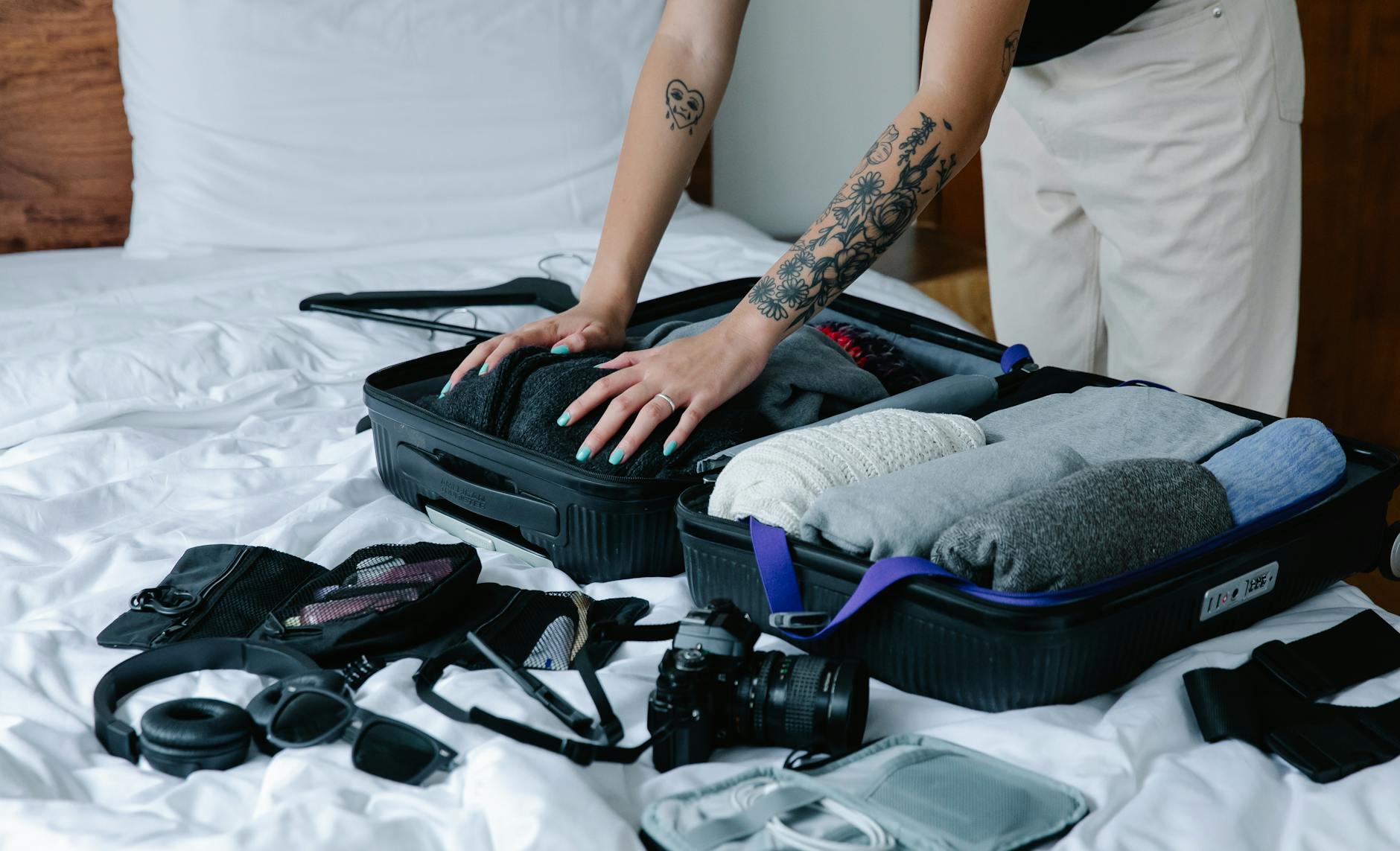
What to pack for Vancouver depends on the season, but three items belong in every suitcase regardless of when you visit: a packable rain shell, comfortable waterproof walking shoes, and layers that work in 8°C mornings and 22°C afternoons. Vancouver’s maritime climate punishes single-temperature wardrobes — you’ll often experience 10°C of swing in a single day.
This guide is broken into four full seasonal packing lists plus year-round essentials, what NOT to bring, and special-case lists for hikers, cruise passengers, photographers, and business travelers.
Table of Contents

Vancouver Packing Philosophy: Layers + Waterproofing
Vancouver’s weather rewards three principles. First, layers over thickness: it’s better to bring three medium-weight pieces you can stack than one heavy coat. The city averages 10°C between morning and afternoon highs, and stepping from sun-warmed downtown into the shade of Stanley Park’s old growth can feel like a different season.
Second, waterproof beats water-resistant: in coastal rain, the difference is real. Water-resistant gear handles 20 minutes of drizzle; truly waterproof gear (10,000mm+ rating with sealed seams) handles a full day of horizontal Pacific rain.
Third, walking-friendly footwear is non-negotiable: Vancouver is one of North America’s most walkable cities. Visitors routinely hit 20,000+ steps per day exploring Stanley Park, the Seawall, Granville Island, and Gastown. Bring shoes already broken in.
One frequent mistake: dressing for the high. Vancouver’s temperatures look mild on paper, but ocean wind, evening cooling, and indoor air conditioning routinely make a “20°C forecast” feel 14°C. Always pack one layer warmer than you think you need.

Year-Round Essentials
Bring these regardless of season:
- Compact umbrella — windproof if possible (Vancouver gusts can flip standard umbrellas)
- Packable rain shell — even in summer; weighs under 300g and saves a trip if drizzle hits
- Comfortable waterproof walking shoes — your single most important purchase
- Layered tops — long-sleeve base, lightweight fleece or sweater, plus a t-shirt for warm afternoons
- Reusable water bottle — Vancouver’s tap water is among the world’s best; bottled water is unnecessary
- Daypack — for layers, water, sunscreen, snacks during walking days
- Sunscreen SPF 30+ — UV is high near water and on clear days even in winter
- Sunglasses — winter sun off snow at North Shore mountains is intense
- Power adapter — Canada uses Type A/B (same as US); travelers from elsewhere need adapters
- Travel toiletries — high-quality drugstores (Shoppers Drug Mart, London Drugs) are everywhere if you forget anything

Spring Packing List (March–May)
March highs hit 10°C (50°F) with 17 wet days; May highs reach 17°C (63°F) with 12 wet days. The defining feature is variability — pack for both ends.
Clothing:
- Waterproof rain jacket (10,000mm+ rating)
- Mid-weight fleece or sweater
- 2-3 long-sleeve shirts
- 1-2 short-sleeve shirts (for warmer May days)
- Mid-weight pants (jeans, chinos, or hiking pants)
- 1 pair shorts (May only)
- Light scarf (for cool mornings/evenings)
- Compact gloves (March nights can drop to 4°C)
Footwear:
- Waterproof walking shoes (primary)
- One alternate pair for indoor/restaurant evenings
Spring extras: Tissues for cherry blossom pollen sneezes, allergy medication if pollen-sensitive, polarizing camera filter for water reflections.

Summer Packing List (June–August)
June highs hit 20°C (68°F); July and August peak at 22°C (72°F). Rain drops to 7-8 wet days/month — but evenings can still surprise at 12°C (54°F).
Clothing:
- 4-5 t-shirts or short-sleeve tops
- 1-2 long-sleeve shirts (evening + air-conditioned restaurants)
- Lightweight rain shell (compact, packs into daypack)
- Light fleece or hoodie (evenings on the seawall, ferry decks)
- 2-3 pairs shorts
- 1 pair light pants (for nicer dinners or temperature dips)
- Sundress(es) or warm-weather options
- Swimsuit (Kits Pool, Second Beach, Wreck Beach, hotel pools)
- Quick-dry towel
Footwear:
- Comfortable walking shoes/sneakers
- Sandals (hot days, beach)
- One slightly-dressier pair for evening dining
Summer extras: Reef-safe sunscreen for ocean swimming, hat with brim, sunglasses, mosquito spray for evening seawall walks (especially in the West End and at Lost Lagoon), N95 mask in case of wildfire-smoke days, after-sun lotion.

Fall Packing List (September–November)
September highs hit 19°C (66°F) and feel summery; November highs drop to 9°C (48°F) with 20 wet days/month. Plan for two distinct sub-seasons.
Clothing for early fall (September–early October):
- Same as summer plus mid-weight fleece
- Long-sleeve shirts replace short-sleeve as primary
- Light scarf or buff
- Compact rain jacket
Clothing for late fall (mid-October–November):
- Waterproof rain jacket (essential)
- Warm sweater or fleece
- Mid-weight pants
- Insulated vest (versatile layer)
- Warm scarf, hat, gloves
- Long-sleeve base layers
Footwear: Waterproof boots or shoes are essential. Standing water is common on sidewalks during atmospheric river events. Quick-dry socks (merino wool) make a difference.
Fall extras: Vitamin D supplement (sunshine hours drop sharply November onward), good headlamp or flashlight (early sunsets in November), umbrella that can handle wind.

Winter Packing List (December–February)
Winter highs run 7-8°C (45-46°F); lows 1-2°C (34-36°F). Snow happens but is rarely persistent at sea level. The challenge isn’t cold — it’s wet, dim, and sometimes icy.
Clothing:
- Waterproof, insulated winter jacket (a 3-in-1 with removable liner is ideal)
- Warm sweaters, fleece, or merino base layers
- Long pants (jeans, wool, or insulated hiking pants)
- Thermal base layers if doing snow activities or staying out late
- Warm hat (toque), warm gloves, insulating scarf
- Long-sleeve thermal underwear (for ski days or cold snaps)
- Multiple pairs warm socks (merino wool ideal)
Footwear:
- Waterproof boots with grippy soles (essential — Vancouver hills get slippery in mixed precip)
- Backup waterproof walking shoes
- Indoor shoes for hotel/Airbnb floors during dry-out
Winter extras: If skiing, base layers + rental gear at Grouse/Cypress/Whistler is fine; if you want your own gear, ski socks and base layers travel well. Hand warmers for mountain days. Ice cleats (Yaktrax) for icy sidewalks during cold snaps. Lip balm with SPF (winter sun off snow burns).

Choosing Vancouver-Worthy Rain Gear
Not all rain jackets are created equal. Three things matter for Vancouver: waterproof rating, breathability, and fit.
Waterproof rating: Look for 10,000mm or higher hydrostatic head. 5,000mm jackets fail in heavy rain after 30-60 minutes. Premium shells (Gore-Tex, eVent) are rated 28,000mm+ and outlast budget alternatives by years.
Breathability rating: Match it to activity level. Casual walking: 5,000g/m² works. Hiking: 10,000g/m² minimum. Skiing: 15,000g/m²+. Without breathability, sweat soaks you from the inside.
Sealed seams: Critical. Without them, water tracks through stitch holes. Check the inside of the jacket for visible seam tape.
Fit: The jacket should accommodate one fleece + one sweater underneath without restricting movement. Vancouver weather demands layering, so size up if you’re between sizes.
Brands that perform: Arc’teryx (founded in North Vancouver), Patagonia, Mountain Equipment Company (MEC, Canada’s REI equivalent), Helly Hansen, North Face. MEC has a flagship store on Broadway with fitting expertise.

Footwear: The Single Biggest Decision
Travelers consistently underestimate footwear and pay for it on day three. Vancouver demands shoes that handle wet sidewalks, long days, and varied terrain.
For walking-heavy itineraries (most visitors): Waterproof leather sneakers or low hiking shoes. Brands: Allbirds Mizzles, Vessi (Vancouver-founded), Merrell Moab, Salomon X Ultra, Hoka Anacapa, KEEN Targhee.
For hiking add-ons (Grouse Grind, Lighthouse Park, Lynn Canyon): Waterproof hiking shoes with proper tread. Trail runners work in summer; mid-cut hiking shoes are safer in fall/winter mud.
For skiing: Ski boots are almost always rented at the mountain — leave them at home. Bring warm waterproof boots for walking around the village.
For cruise passengers: One pair walking shoes, one pair “smart casual” for dinners. No formal nights on most modern Alaska cruises.
Critical: Break them in. New shoes + 20,000-step Vancouver days = blisters by lunch. Wear new shoes for at least 30 km before the trip.

Packing for a Vancouver Cruise Departure
If Vancouver is your Alaska cruise embarkation port, your pre-cruise packing has additional considerations.
Pre-cruise day(s) in Vancouver: Pack a small day-bag separately so cruise luggage can be locked at hotel storage or sent ahead. Stanley Park, Capilano Suspension Bridge, and Granville Island fit easily into a half- or full-day before boarding.
For the cruise itself: Layered Alaska gear (think Vancouver fall + warmer); waterproof boots; binoculars (whales, glaciers); polarizing sunglasses; daypack for shore excursions; reusable water bottle. Most cabins lack adequate hangers — bring magnetic hooks.
Documents: Passport (required for cruises that touch US Alaska from Canada). Cruise documents printed or downloaded. Travel insurance documentation.
Boarding-day timing: Allow 90+ minutes from downtown hotel to Canada Place embarkation, including drop-off and security.

Packing for Vancouver Hiking & Day Trips
Vancouver’s hiking routes range from paved seawall walks to summit scrambles requiring real gear. Match your packing to the actual trail.
Easy urban walks (Stanley Park Seawall, Pacific Spirit Park, Lighthouse Park): Walking shoes, water, snacks, layers, rain shell. Daypack optional but helpful.
Moderate hikes (Lynn Canyon Loop, Quarry Rock, Lighthouse Park trails): Trail runners or hiking shoes, 1L water, snacks, headlamp (early winter sunsets), rain shell, navigation app downloaded offline.
Strenuous hikes (Grouse Grind, St. Mark’s Summit, Mount Seymour, Black Tube): Mid-cut waterproof hiking shoes/boots, 2L+ water, electrolyte tabs, layers, hat, sunscreen, headlamp, emergency whistle, basic first-aid, downloaded GPS map. Bear spray for trails outside Stanley Park.
Whistler day trip (mountain bike park or alpine hike): Mountain bikers should rent at Whistler village; helmets and pads available. Hikers need above-tree-line clothing — even July alpine drops to 5°C with wind.
Sea to Sky/Squamish: Sea to Sky Gondola summit can drop 10°C from base. Bring layers even on warm days.

Photography Gear for Vancouver Light
Vancouver’s light is photographer-friendly: long golden-hour windows in summer (8-10 PM), rich diffused gray in fall/winter that flatters cityscapes, and harsh midday sun that’s actually rare due to clouds.
Essential gear:
- Camera body weather-sealed (rain happens unpredictably)
- Versatile zoom (24-70 or 24-105 covers most needs)
- Wide-angle lens (16-35) for cityscape and Stanley Park forest
- Telephoto (70-200) for mountains, wildlife, cherry blossom isolation
- Tripod (lighter the better; you’ll carry it on long walks)
- Polarizing filter (cuts reflections in water, deepens sky)
- ND filter (long exposures of False Creek, English Bay)
- Spare batteries (cold drains them faster)
- Lens cloths (for rain spots)
- Dry bag or rain cover for camera
Phone-only photographers: Bring an external battery pack (cold weather drains phones), and consider a small clip-on wide-angle lens for cityscapes.

Business & Conference Travel Packing
Vancouver’s business culture is among the most casual in North American major cities. Tech, biotech, and startup environments are jeans-and-sneakers default; even law and finance trend smart-casual.
Standard business travel: 1 blazer/jacket, 2-3 dress shirts, 1 pair dress pants, 1 pair smart-casual pants. Skip the tie unless you know the venue specifically requires it.
Convention Centre events: Vancouver Convention Centre is steps from cruise terminals and downtown hotels. Walking shoes for exhibitor halls; one nicer pair for receptions.
Tech/startup industry: Smart-casual maximum. A single button-down, dark jeans, and clean sneakers is acceptable for nearly all client meetings.
Always pack: Reliable rain gear, even for indoor conferences (you’ll walk between hotel and venue), comfortable shoes, and one casual outfit for exploring after sessions end.

What NOT to Bring to Vancouver
Save space and weight by leaving these at home.
- Heavy down parka in summer: Even cool evenings rarely require it. A fleece + rain shell handles most situations.
- Multiple umbrellas: One windproof compact umbrella is enough.
- Heels for evenings: Vancouver dining is uniformly casual. Even Michelin-starred restaurants don’t require formal wear.
- Bottled water: Vancouver’s tap water is excellent. Refill stations everywhere.
- Beach umbrella: Stanley Park beaches don’t allow private umbrellas in some areas; rentals available.
- Excessive cash: Cards work everywhere. Tipping handled with cards. Avoid carrying more than C$200 cash.
- Bear spray (unless hiking): Not needed in Stanley Park or city. Required only for backcountry trails.
- Heavy formal wear: Even theatre, opera, and symphony are smart-casual.
- Workout gear if hotel has gym: Most Vancouver hotels include gym access.
- US-only converters: Canada uses the same plug as the US (Type A/B).
Carry-On Only: A Vancouver Packing Strategy
Carry-on only travel works year-round in Vancouver if you plan deliberately. The trick is committing to wear-not-pack pieces and embracing laundry options.
Wear, don’t pack: Your bulkiest items go on the plane. Wear the rain jacket (or tie it through your daypack handle), wear the hiking shoes, wear the sweater. This frees 30% of carry-on capacity instantly.
Choose multipurpose pieces: A merino wool sweater handles 8°C mornings and 18°C dinners. Convertible hiking pants do double duty. A neutral-color rain shell works with everything. Black or navy mid-weight pants transition from day exploration to evening dining.
Laundry options: Most Vancouver hotels offer same-day laundry (expensive) or self-service laundromats (cheap). Airbnb stays often include laundry. Granville Island, Kitsilano, and the West End all have full-service laundromats charging C$15-25 for wash+dry.
Packing cubes: They don’t reduce volume but compress wrinkles and let you find things without dumping the bag. Eagle Creek and Peak Design make airline-friendly options.
Liquids strategy: Buy shampoo, body wash, and sunscreen on arrival at Shoppers Drug Mart or London Drugs. Save 1L of carry-on liquids capacity for things you can’t easily replace.
Sample 7-day summer carry-on (worn pieces in italics): walking shoes, jeans, t-shirt, light fleece, rain shell. Packed: 4 shirts, 1 pair shorts, swimsuit, 1 dress/button-down, 5 pairs underwear/socks, sandals, toiletries, daypack folded flat.
Packing for Vancouver with Kids & Babies
Family travel multiplies packing complexity. Vancouver is generally well-equipped for families — but a few items make the difference between a smooth and stressful trip.
For toddlers and small children:
- Compact stroller (Stanley Park trails, seawall, sidewalks all stroller-friendly)
- Rain cover for stroller
- Hooded waterproof jacket and rain boots
- Indoor activity backups (a few books or a tablet for rainy days)
- Layered clothing — kids overheat indoors and chill outdoors faster than adults
- Snacks for trail walks (no bear-attracting candy in Stanley Park or North Shore parks)
For babies:
- Carrier with weather cover (frees hands for trails and crowded markets)
- Diapers/wipes for first 24 hours; restock at any London Drugs
- Familiar food items if your baby is picky — most brands available locally but not all
- Sleep aid (white noise machine or app) — hotel walls can be thin
For teens:
- Their own daypack (they’ll want to carry phones, water, and souvenirs)
- Portable phone charger (long days = dead phones)
- Headphones for transit/seabus rides
- One nicer outfit for a memorable dinner — Vancouver’s restaurant scene is worth dressing up for occasionally
Universal kid kit: Sunscreen, hand sanitizer, basic first-aid (band-aids, hydrocortisone, allergy medication), thermometer, motion sickness remedy if doing whale-watching or ferry trips.
Skip: Full-size strollers (street travel is fine, but they’re awkward in restaurants and museums). Pack-n-play (most family hotels and many Airbnbs include cribs on request).

Vancouver Packing FAQs
Do I need a winter coat in Vancouver?
For December–February, yes — but a waterproof insulated jacket (3-in-1 style) handles 90% of conditions. Heavy down is overkill at sea level.
Are jeans appropriate for Vancouver dining?
Yes, almost universally. Even high-end restaurants accept dark jeans with a button-down or blouse.
What shoes should I bring for cherry blossom season?
Waterproof walking shoes. Spring rain is unpredictable, and you’ll cover 5-10 km/day chasing trees across the city.
Can I rent ski gear in Vancouver instead of bringing it?
Yes, every North Shore mountain rents complete kits. Whistler is the same. Bringing skis is only worthwhile if you’re staying 5+ days and have your own boots.
Do I need a visa or special documentation?
Most travelers from the US, EU, UK, Australia, NZ, and Japan don’t need a visa but do need an eTA (electronic travel authorization) before flying. Check Canada’s IRCC website for your country’s specific requirements.
What’s the best umbrella for Vancouver?
Compact, windproof, double-canopy designs. Brands like Senz, Repel, and Blunt handle Pacific gusts that flip standard umbrellas.
Should I bring my own toiletries or buy on arrival?
Either works. Shoppers Drug Mart and London Drugs are within a few blocks of every downtown hotel and stock major brands at competitive prices. Buying on arrival saves carry-on liquid capacity.
How much cash should I bring?
C$100-200 is plenty as a backup. Cards are universally accepted; tipping is handled on the card. ATMs are everywhere if you need more.
Are pickpockets a concern?
Less than most major cities, but normal urban precautions apply on transit and in tourist-heavy areas like Granville Island, Robson Street, and Gastown. A money belt or anti-theft daypack is overkill for most travelers.
What’s the dress code for the Pacific National Exhibition or other family events?
Casual outdoor wear. Walking shoes, jeans or shorts, t-shirts, and a light layer for evening rides.
Related reading: Pair this with our Vancouver weather by month, Best time to visit Vancouver pillar, and First-time visitor guide.