Museum of Vancouver (MOV) tells the city’s story through period-themed galleries, Indigenous perspectives, and rotating contemporary exhibitions. It sits at 1100 Chestnut Street in Kitsilano’s Vanier Park, and its 1950s and 1960s galleries are the draw — nostalgic, densely detailed, and genuinely funny in places. Adult admission is C$24, children 12 and under are free, and the museum is open seven days a week with late nights Thursday through Saturday. The first Sunday of each month is pay-what-you-can.
This guide covers everything for Museum of Vancouver visitors — period galleries, Indigenous programming, rotating exhibitions, current ticketing, where the famous neon signs went, and how to combine MOV with the adjacent museums for a full Kitsilano culture day.
Table of Contents
Museum of Vancouver Quick Overview
MOV is a city museum rather than a national or provincial one, and the difference shows in the best way: everything in it happened here, often within living memory. It is the place to understand why Vancouver looks and behaves the way it does — the boom-and-bust property cycles, the counterculture, the displacement, the neon. Visitors who arrive expecting a dusty local-history collection generally leave surprised.
- Address: 1100 Chestnut Street, Vanier Park, Kitsilano
- Adult (18+): C$24
- Senior (65+), student with ID, youth 13–18: C$19
- Children 12 and under: free with an adult, up to six per adult
- Indigenous visitors: free
- Hours: Monday–Wednesday and Sunday 10 AM–5 PM; Thursday–Saturday 10 AM–8 PM
- Pay what you can: first Sunday of each month
- Time needed: 1.5–2 hours
- Best for: city history, mid-century nostalgia, families, rainy afternoons in Kitsilano
The family maths is unusually good here. Children 12 and under are free, up to six per accompanying adult, so a family of four with two young children pays a single adult admission plus one. Ticket sales stop 30 minutes before closing.
1950s Gallery
The 1950s gallery is a reconstruction of postwar Vancouver domestic life, and it is the exhibit most visitors remember. Vancouver in the fifties was a city being rebuilt around the car and the single-family house, and the gallery leans into the material culture of that — a kitchen full of new appliances, a living room arranged around a television, the objects that arrived in ordinary homes within a single decade.
What saves it from being simple nostalgia is the framing. The same decade produced restrictive covenants, a housing market already sorting people by race and income, and an urban-renewal impulse that would shortly demolish a neighbourhood. The gallery does not shout about this, but the material is there.
- Reconstructed period kitchen and living spaces
- Postwar appliances, furniture and advertising
- Period music and radio audio
- Consumer objects that mark the arrival of postwar affluence
Older Canadian visitors tend to go quiet in this room. Bring a parent or grandparent if you have one with you.
1960s Gallery
The sixties gallery covers Vancouver’s counterculture decade, and Vancouver’s version was genuinely distinctive rather than a branch office of San Francisco. Fourth Avenue in Kitsilano — a few blocks from where you are standing — was the centre of it, with head shops, communal houses and a street life that the city spent the decade trying to police.
The decade’s most consequential local export was environmental: Greenpeace was founded in Vancouver in 1971, out of a campaign to sail a boat into a US nuclear test zone off Alaska. The gallery traces that from protest meeting to global organisation.
- Kitsilano’s Fourth Avenue counterculture, on its home ground
- The founding of Greenpeace in Vancouver, 1971
- Protest material, posters and period ephemera
- Music, psychedelia and the local scene
The gallery works particularly well because of where the museum sits. Walk ten minutes east after your visit and you are on the same stretch of West 4th, now full of yoga studios and outdoor retailers — a before-and-after that makes the point better than any wall text.
Indigenous Galleries
MOV’s Indigenous programming is developed with the Musqueam, Squamish and Tsleil-Waututh Nations, and it is framed around the city rather than around ethnography — these are the peoples whose territory Vancouver was built on, presented as present-tense communities with a continuing relationship to the place.
The museum has also done sustained work on its own history, including repatriation and the reconsideration of how a settler city museum acquired and displayed Indigenous belongings in the first place. That self-examination is part of the exhibition content, not hidden in a policy document.
- Exhibitions developed in partnership with local Nations
- Coast Salish material culture and contemporary work
- The city’s colonial history told alongside its civic history
- Ongoing repatriation and decolonisation work, discussed openly
For the deeper historical collection, pair this with the Museum of Anthropology at UBC, and consider an Indigenous-led tour for a first-person account.
Neon Vancouver: Where the Signs Went
Important if this is why you were coming: the Neon Vancouver | Ugly Vancouver exhibition is no longer at the Museum of Vancouver. It ran from October 2011 to June 2022, and all 22 heritage signs have since been permanently relocated to the publicly accessible interior areas of The Post redevelopment in downtown Vancouver, where they can be seen for free.
The story behind them is worth knowing either way. In the 1950s Vancouver had roughly 19,000 neon signs — more per capita than Las Vegas, and by some counts more in absolute terms. Granville Street was a wall of light. Then the mood turned: a civic campaign through the 1960s and 1970s recast neon as garish and low-class, sign bylaws tightened, and the signs came down in their thousands. The exhibition’s title captured the whiplash exactly.
- Where the signs are now: The Post, downtown Vancouver — free public access
- Exhibition ran: October 2011 to June 2022 at MOV
- Peak neon: around 19,000 signs in 1950s Vancouver
- Still at MOV: neon and signage material appears in the city history galleries, but not the full display
If vintage neon is a specific interest, plan a downtown stop rather than a Kitsilano one.
Vancouver History Galleries
The city-history galleries run from the pre-contact Coast Salish landscape through the founding of the city to the present, and MOV is notably willing to include the parts that civic histories often skip.
- Incorporation in 1886 — and the Great Fire that destroyed the new city weeks later
- The CPR’s arrival, which created Vancouver essentially as a railway terminus
- The 1907 anti-Asian riots, when mobs attacked Chinatown and Japantown
- The 1914 Komagata Maru, whose passengers were refused entry and forced back to India
- The destruction of Hogan’s Alley, the Black community displaced by viaduct construction in the 1960s and 1970s
- Expo 86, and the property boom that followed it
Those episodes explain a lot about the present city, and they are the thread that ties MOV’s galleries together. This is a museum with a point of view.
Rotating Exhibitions
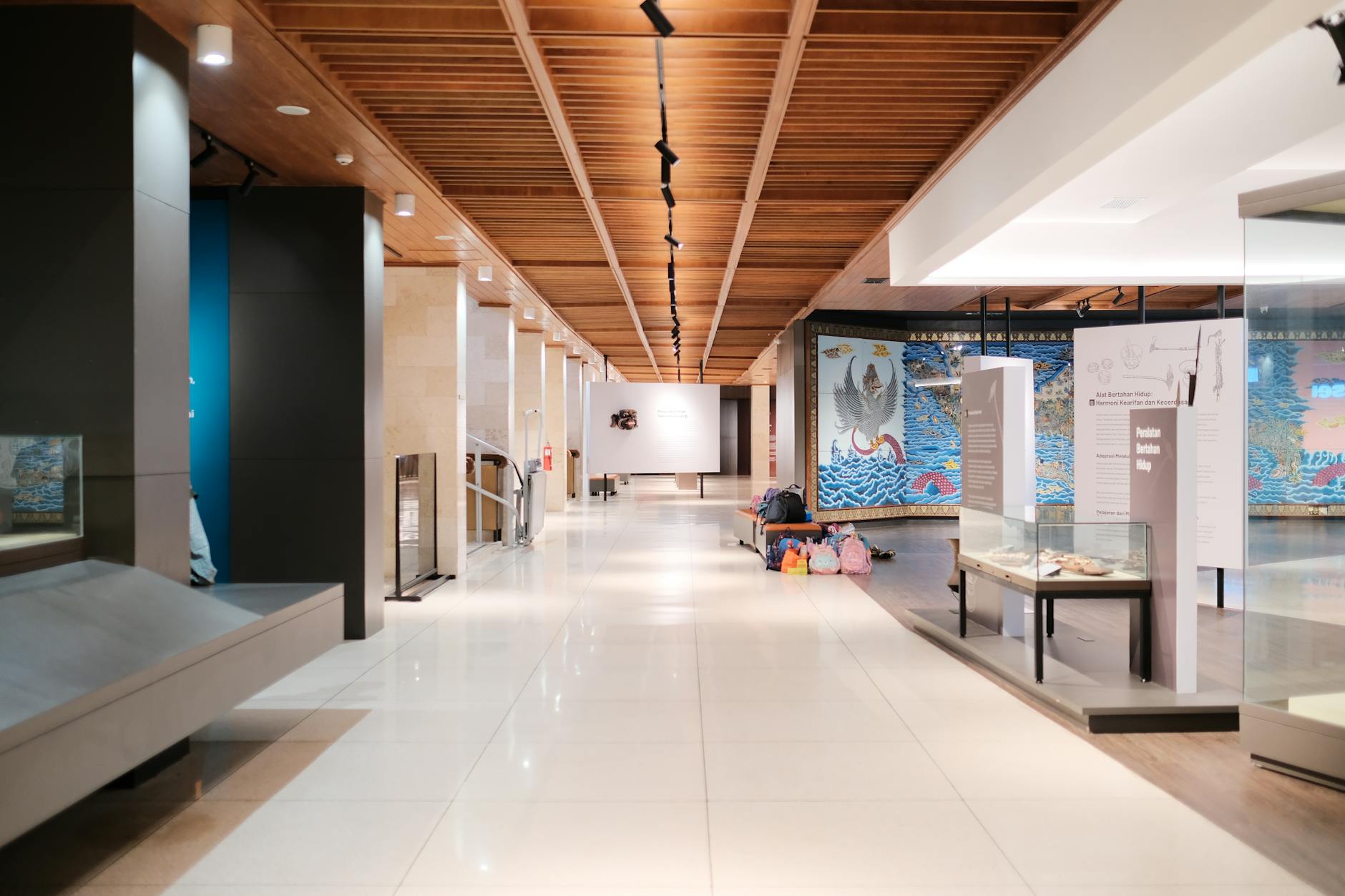
MOV runs an active temporary programme, usually on contemporary urban themes — housing, migration, climate, civic identity — and often locally commissioned rather than toured in. These shows are frequently the most interesting thing in the building, and they are the reason locals return.
- One to three temporary exhibitions at a time
- Strong focus on contemporary Vancouver issues, especially housing and the city’s future
- Locally developed and community-partnered shows
- Typically three to six month runs
Check museumofvancouver.ca before visiting — the temporary programme is what varies most between trips.
Tickets & Hours
Admission (2026):
- Adult (18+): C$24
- Senior (65+): C$19
- Student with ID and youth 13–18: C$19
- Children 12 and under: free with an adult, maximum six per adult
- Indigenous visitors: free
- Groups of 10 or more: reduced rates, booked in advance
- Also accepted: Cultural Access Pass, BCMA Owl Card and ICOM membership — in person only
Hours:
- Monday–Wednesday and Sunday: 10 AM–5 PM
- Thursday–Saturday: 10 AM–8 PM
- Ticket sales close 30 minutes before the museum does
MOV is open seven days a week, including Mondays — which makes it a useful fallback on the day when the Vancouver Art Gallery and several other institutions are shut. The Thursday-to-Saturday late nights to 8 PM are the quietest hours of the week.
Pay What You Can & Low Sensory Sundays
MOV runs two monthly Sunday programmes worth planning around.
- Pay What You Can Sunday — the first Sunday of every month. Set your own admission. Expect it to be the busiest day of the month.
- Low Sensory Sunday — the last Sunday of every month, with reduced non-essential sound throughout the museum. Designed for visitors who find standard museum environments overwhelming, including autistic visitors and people with sensory sensitivities.
The Low Sensory programme is genuinely unusual among Vancouver museums and is worth knowing about if it applies to anyone in your group. For other no-cost options across the city, see our guide to free museum days in Vancouver.
Getting There
MOV is in Vanier Park on the Kitsilano waterfront, just west of the Burrard Bridge — close enough to downtown to walk, if the weather cooperates.
- Bus: the 2 or 22 from downtown to Cornwall and Cypress, then about a five-minute walk
- Walking: 25–30 minutes from downtown across the Burrard Bridge
- From Granville Island: about 15 minutes on foot along the water
- By False Creek ferry: the most enjoyable approach — Aquabus or False Creek Ferries to Vanier Park, landing beside the museum
- Cycling: roughly 30 minutes from downtown via the Burrard Bridge seawall route
- Parking: EasyPark lot at Vanier Park, paid, with five wheelchair-accessible spaces; street parking nearby
Take the ferry if the weather is decent. The little boats run from Granville Island and downtown, cost a few dollars, and put you on the water with a view back to the city skyline — a far better arrival than a bus stop on Cornwall.
The Building & the Crab
The museum’s conical roof is a deliberate reference to a Coast Salish woven cedar hat, and it is one of the more recognisable pieces of mid-century civic architecture in the city. The building opened in 1968 and is shared with the HR MacMillan Space Centre.
The stainless steel crab in the fountain outside is by George Norris, installed for Canada’s 1967 centennial. The usual explanation is that it references a Coast Salish story in which a crab guards the entrance to the harbour — which, given the museum’s position at the mouth of False Creek, is a neat piece of siting. It is also the most photographed object in Vanier Park.
Café & Gift Shop
The museum shop is strong on Vancouver-specific material — local history books, archival print reproductions, mid-century design objects and work by BC makers. It is a better source of genuinely local souvenirs than anything on the downtown tourist strip.
Food service at the museum is limited, but you are two minutes from Kitsilano. Cornwall Avenue and West 4th have a dense run of cafes and restaurants, and Kitsilano Beach is a short walk west if you would rather pick up something and sit outside.
Combine with Vanier Park Museums
Vanier Park holds three institutions within a two-minute walk of each other, which makes it the most efficient museum cluster in the city.
- Museum of Vancouver — city history; 1.5–2 hours
- HR MacMillan Space Centre — planetarium and space exhibits, in the same building; excellent with children
- Vancouver Maritime Museum — home of the St. Roch, the RCMP schooner that was first to navigate the Northwest Passage in both directions; about 1.5 hours
Sample Vanier Park day:
- 10 AM: arrive in Vanier Park, by ferry if the weather allows
- 10:15 AM: Vancouver Maritime Museum and the St. Roch — about 1.5 hours
- 12 PM: lunch on Cornwall or West 4th
- 1 PM: Museum of Vancouver — 2 hours
- 3 PM: HR MacMillan Space Centre, or the Kitsilano counterculture walk along West 4th
- 4:30 PM: Kitsilano Beach for the afternoon light
Check for a combined Vanier Park ticket at the desk if you plan to do two or more — availability varies by season.
Pro Tips
- Children 12 and under are free, up to six per adult — among the best family deals in the city
- Open Mondays, unlike the Vancouver Art Gallery — a useful Monday fallback
- Thursday to Saturday it stays open to 8 PM, and the last two hours are the quietest all week
- First Sunday is pay what you can — cheapest, and busiest
- Last Sunday is Low Sensory, with reduced ambient noise
- The neon signs have moved to The Post downtown — don’t come to MOV for them
- Arrive by False Creek ferry for the best approach
- Ticket sales stop 30 minutes before closing
- Allow 1.5–2 hours, or half a day for the full Vanier Park cluster
- Walk West 4th afterwards to see what the 1960s gallery is talking about
Related Vancouver guides
Keep planning with these guides:
Museum of Vancouver FAQs
Where is the Museum of Vancouver?
At 1100 Chestnut Street in Vanier Park, Kitsilano, just west of the Burrard Bridge. It is a 25–30 minute walk from downtown, a short ride on the 2 or 22 bus, or a False Creek ferry trip that lands beside the museum.
How much is admission to the Museum of Vancouver?
Adults C$24; seniors 65+, students with ID and youth 13–18 C$19; children 12 and under free with an adult, up to six per adult. Indigenous visitors enter free. Groups of 10 or more get reduced rates when booked ahead.
Is the Museum of Vancouver closed on Mondays?
No. MOV is open seven days a week — Monday to Wednesday and Sunday 10 AM to 5 PM, and Thursday to Saturday 10 AM to 8 PM. That makes it a good Monday option when the Vancouver Art Gallery is closed.
Is the Museum of Vancouver ever free or discounted?
The first Sunday of every month is pay what you can. Children 12 and under and Indigenous visitors are always free. The museum also honours the Cultural Access Pass, BCMA Owl Card and ICOM membership in person.
Can I still see the neon signs at the Museum of Vancouver?
No. The Neon Vancouver | Ugly Vancouver exhibition closed in June 2022 after eleven years, and all 22 heritage signs were permanently relocated to the publicly accessible interior areas of The Post redevelopment downtown, where they can be seen free of charge.
What’s the most popular exhibit at the Museum of Vancouver?
The 1950s and 1960s galleries. The 1950s reconstruction of postwar domestic life and the 1960s Kitsilano counterculture gallery — including the founding of Greenpeace in Vancouver in 1971 — are what most visitors remember.
Is the Museum of Vancouver good for families?
Yes, and it is unusually affordable for them, since children 12 and under enter free with an adult. The period galleries hold children’s attention well, and the HR MacMillan Space Centre shares the building if you want to extend the visit.
What is Low Sensory Sunday?
On the last Sunday of each month the museum reduces non-essential sound throughout the galleries, for visitors who find typical museum environments overwhelming. It is one of the few programmes of its kind among Vancouver museums.
Is the Museum of Vancouver Indigenous-focused?
Not exclusively, but Indigenous perspectives run throughout. Exhibitions are developed with the Musqueam, Squamish and Tsleil-Waututh Nations, and the museum is open about its own repatriation and decolonisation work. For a dedicated collection, visit the Museum of Anthropology at UBC.
How long does it take to visit the Museum of Vancouver?
About 1.5 to 2 hours for the permanent galleries and a temporary exhibition. Allow half a day if you are combining it with the Maritime Museum and the Space Centre in Vanier Park.
What other museums are near the Museum of Vancouver?
The HR MacMillan Space Centre shares the building, and the Vancouver Maritime Museum — home of the St. Roch — is a two-minute walk across Vanier Park.
Can I take photos at the Museum of Vancouver?
Generally yes, without flash. Some temporary exhibitions and certain Indigenous belongings carry photography restrictions, which are signposted.
Related reading: Pair this with our Vancouver culture and history pillar and our guide to free museum days in Vancouver.