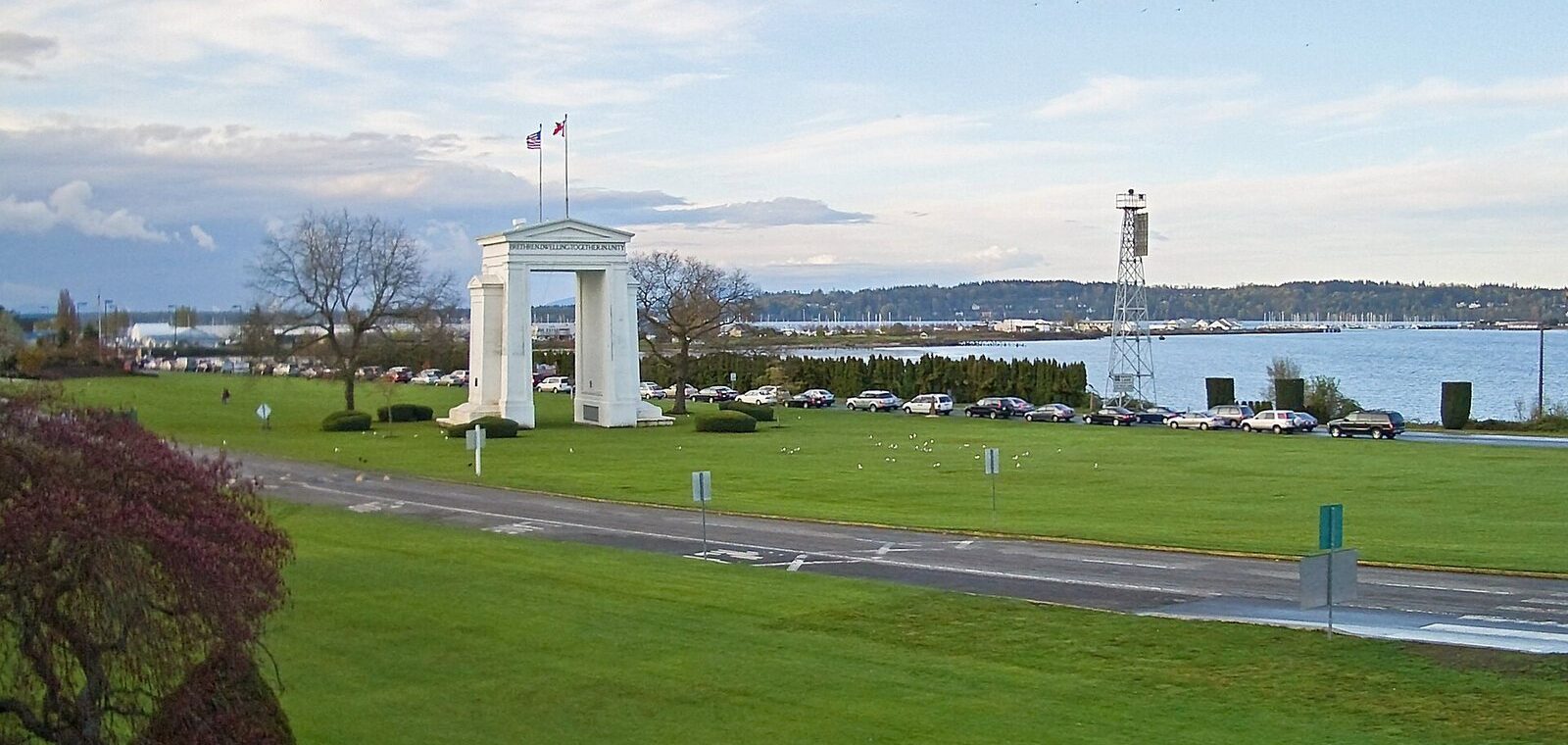
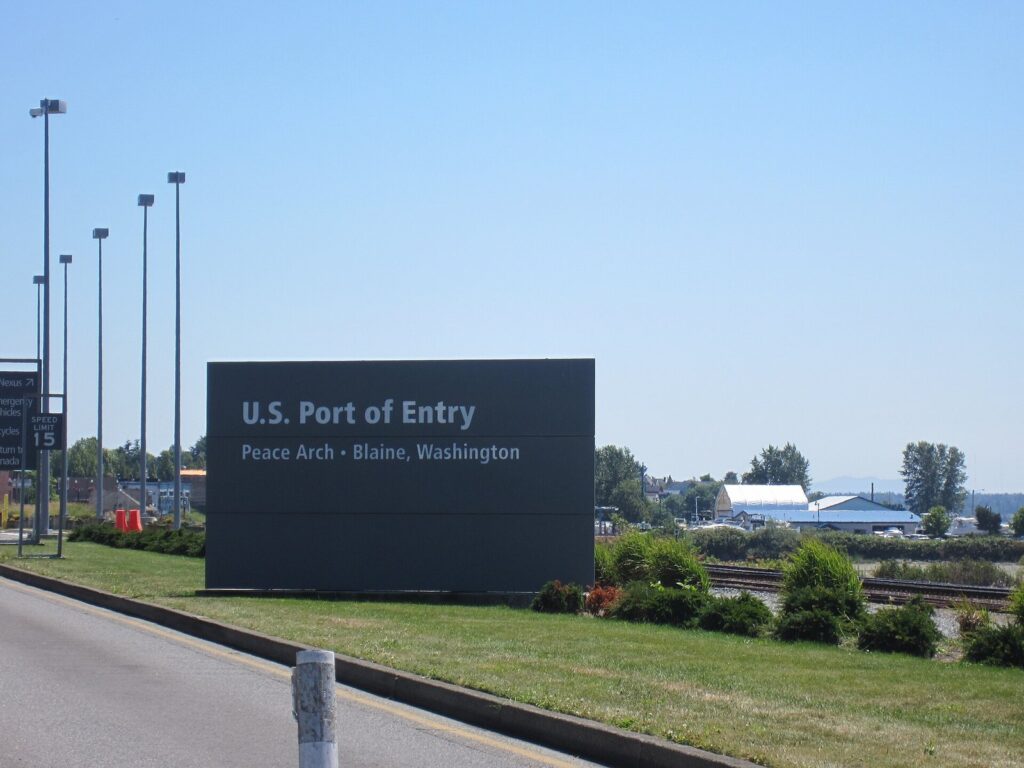
The Peace Arch border crossing, between Blaine, Washington and Surrey, British Columbia, sits on the Seattle to Vancouver run, and it’s open 24 hours. The habit worth forming is to check the live wait times before you commit and compare them with the Pacific Highway crossing a few minutes east, which takes cars as well as trucks. Allow about three to four hours to drive between Vancouver and Seattle, depending on traffic and border wait times.
This guide is for drivers heading up from Seattle, day-trippers going south, and cruise passengers linking the two cities. The caveat that matters: the wait is the one part of the trip you can’t predict from a map, and the posted times don’t include the queue on the approach roads. Everything here was checked September 26, 2026 against the Canada Border Services Agency (CBSA), US Customs and Border Protection (CBP) and Immigration, Refugees and Citizenship Canada. For the rest of the trip planning, see our Vancouver travel tips.
The four crossings near Vancouver at a glance
| Crossing | Hours | Best for |
|---|---|---|
| Peace Arch (Douglas, BC / Blaine, WA) | 24 hours | The Seattle to Vancouver run |
| Pacific Highway (Surrey, BC / Blaine, WA) | 24 hours | An alternative to the Peace Arch; trucks use it too |
| Aldergrove (Aldergrove, BC / Lynden, WA) | 9 a.m. to 1 a.m. from November 1, 2026 to March 14, 2027; check CBSA for other dates | Langley and the Fraser Valley |
| Abbotsford-Huntingdon (Huntingdon, BC / Sumas, WA) | Check the CBSA and CBP border wait pages | Abbotsford and the Fraser Valley |
A fifth crossing, at Point Roberts, only serves that small US peninsula south of Tsawwassen, so it’s not a through route to Seattle.
Which crossing should you use?
Peace Arch: the default
Heading between Seattle and downtown Vancouver, the Peace Arch is the default choice. It’s named for the white arch that stands in the park between the two border stations. Because so many drivers default to it, check its wait time against the Pacific Highway crossing before you commit.
Pacific Highway: the usual alternative
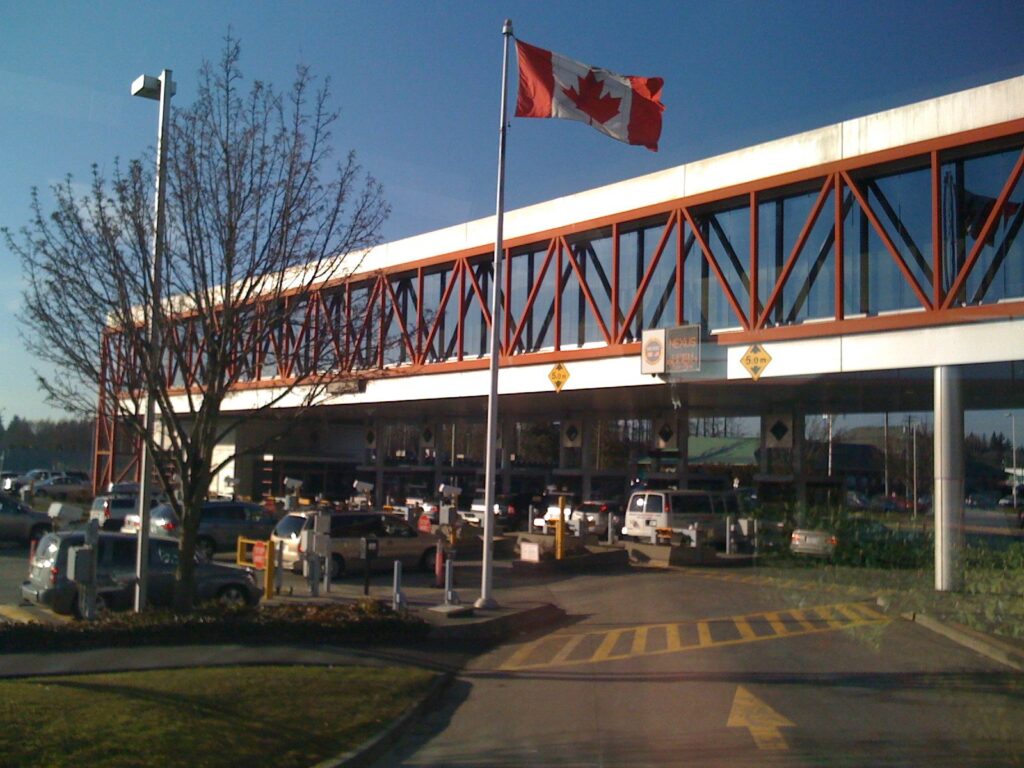
About a kilometre and a half east, the Pacific Highway crossing, known to locals as the truck crossing, handles commercial traffic and cars. Which of the two is quicker changes through the day. Check both wait times before you reach the Blaine exits; switching late means sitting in the same traffic twice.
Aldergrove and Sumas-Huntingdon: the Fraser Valley options
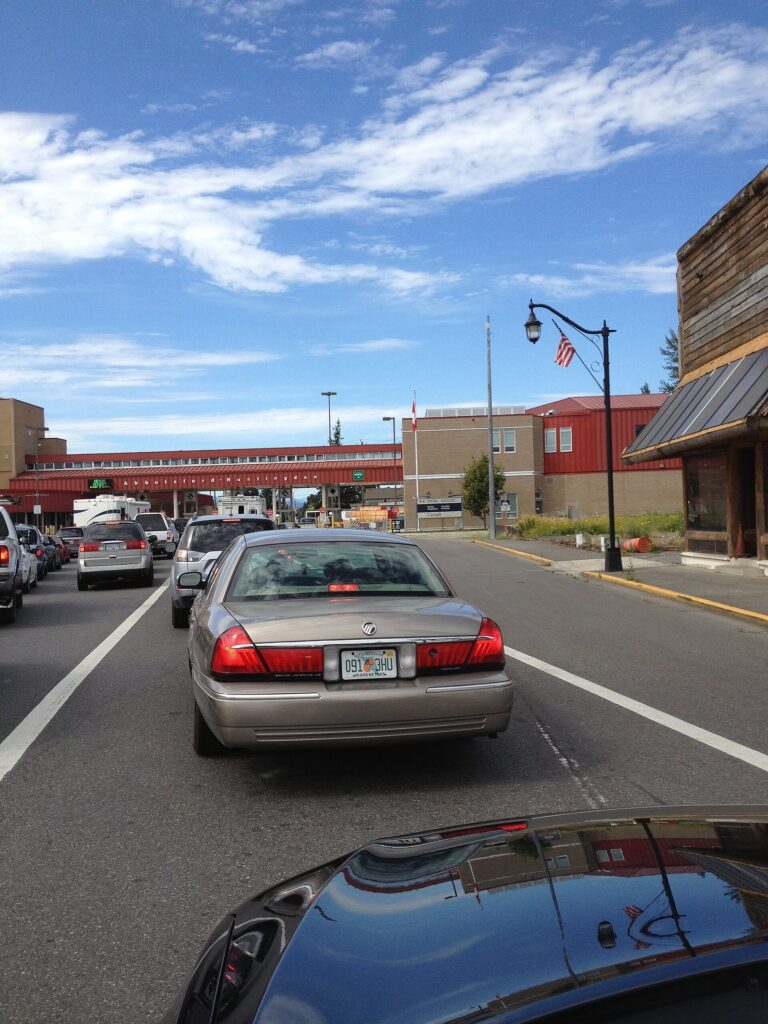
If you’re heading to Langley, Abbotsford, Harrison Hot Springs or the Interior, the inland crossings can make more sense than fighting through Surrey. Aldergrove-Lynden’s Canadian-side hours change to 9 a.m. to 1 a.m. from November 1, 2026 to March 14, 2027, so check them before planning a late-night crossing there. Sumas-Huntingdon is the crossing for Abbotsford. For downtown Vancouver, they add distance, but on a holiday weekend a short line inland can still beat an hour-long one at Blaine.
How long are the waits?
Waits range from a few minutes to several hours, and they swing with holidays, events and the day of the week, so check the live times before you set out.
Check before you commit. CBSA posts estimated waits for travellers entering Canada, CBP posts waits for the US-bound lanes, and the Washington State Department of Transportation runs border wait information and cameras for the Whatcom County crossings. CBSA’s own page warns that its figures don’t include delays on the roads leading to the crossing, and that waits swing with major events, holiday traffic and enforcement actions such as drug or firearm seizures. Treat the number as a floor, not a promise.
A few habits shorten the wait itself: have every passenger’s documents in hand before you reach the booth, take off sunglasses, turn off the radio, and let the driver answer unless the officer asks someone else. Know roughly what you’re bringing and where you’re staying. The officer’s questions are routine, and short, clear answers keep them that way.
What documents do you need?
Entering Canada
No one needs an eTA to enter Canada by land; that’s an air-travel rule. US citizens don’t need a visa, and IRCC recommends travelling with a passport, though at a land crossing Americans may instead show documents proving their full name, date of birth and citizenship. US green card holders need their green card or equivalent proof of US status. Everyone else needs a valid passport, and travellers from visa-required countries need a visitor visa; that includes Mexican citizens, who can use an eTA only when flying. Our guide to Canada’s entry requirements goes through every case, including criminal records, which can make a visitor inadmissible.
Returning to the United States
For the drive home, US citizens need a document that proves citizenship and identity for re-entry: a US passport, passport card, enhanced driver’s licence or NEXUS card. Visitors from other countries entering the US by land need whatever visa or authorization the US requires of them, so check CBP’s current rules for land arrivals before you set off. It’s worth doing this before you leave home, because a problem at the US booth is solved in Seattle, not at the border.
What happens at the booth?
Northbound, a CBSA officer will ask everyone’s citizenship, the purpose and length of your trip, where you’re staying and what you’re bringing, with particular interest in alcohol, tobacco, gifts, cash, firearms and cannabis. Hand over every passenger’s documents together, open the rear windows so the officer can see everyone, and answer the questions that are asked rather than volunteering a life story. Most cars are through in a minute or two.
Sometimes a car is sent to secondary inspection, a parking area beside the booths where officers look more closely at documents or the vehicle. It’s routine, it happens to plenty of people with nothing to hide, and the quickest way through is patience and straight answers. Don’t photograph or film the booths or officers, and keep phones off your ear while you’re at the window. Southbound, CBP’s questions follow the same pattern, and travellers who aren’t US citizens or residents may be sent inside to complete entry formalities, which can add time on a busy day.
Crossing with children
Children need their own documents. US citizens under 16 driving back into the US can generally use a birth certificate instead of a passport. If only one parent is travelling with a child, or the child is with grandparents, friends or a school group, carry a signed consent letter from the absent parent or parents with their contact details, plus copies of custody documents where they apply. Officers on both sides watch closely for children crossing without both parents, and a letter turns a long conversation into a short one.
Planning a day trip across the border
If you’re doing Seattle in a day from Vancouver, or Vancouver in a day from Seattle, the border decides how much of the day you get. Leave early, and check the live wait times before you set off on the return crossing. Build in a generous buffer on weekends and holidays, and have a fallback crossing in mind before you set off. Cruise passengers linking a Seattle sailing with a Vancouver stay should allow even more slack, because a missed embarkation is far costlier than an hour in a café. Our guide to travelling between Vancouver and Seattle sets out the timings for driving, the train and the bus.
What can you bring into Canada?
Declare everything you’re bringing in, including food and gifts. Visitors can bring the following, though duties and taxes may apply to alcohol, tobacco and vaping products:
- Alcohol: 1.5 litres of wine, or 1.14 litres of spirits, or 1.14 litres of wine and spirits combined, or 8.5 litres of beer or ale. You must declare it, duties and taxes may apply, and you must be of legal drinking age in the province, which is 19 in BC.
- Tobacco: 200 cigarettes, 50 cigars, 200 grams of manufactured tobacco and 200 tobacco sticks. You must declare it, and duties and taxes may apply.
- Vaping products: up to 12 containers, with a maximum of 120 millilitres of liquid or 120 grams of solid.
- Gifts: up to C$60 each without duty or taxes, as long as they aren’t alcohol, tobacco, vaping products or advertising. Above C$60, duty and taxes apply to the difference.
Cash and monetary instruments worth C$10,000 or more, in any mix of currencies, cheques, traveller’s cheques or bonds, must be declared. Carrying it is legal; not declaring it isn’t.
What you can’t bring
Cannabis can’t cross the border in either direction, even between Washington and BC, where both allow it; our guide to cannabis in Vancouver for tourists explains buying it legally once you’re here. Pepper spray and similar sprays meant for use on people are prohibited weapons in Canada, while bear spray labelled for use on animals is allowed. Firearms must be declared and handguns are tightly restricted, so anyone travelling with a gun needs to read CBSA’s firearms rules well before the trip. Fresh fruit, vegetables, meat and plants can be restricted, so declare them rather than guess, and bring proof of rabies vaccination for a dog or cat.
Is NEXUS worth getting?
NEXUS is the trusted traveller program run jointly by CBSA and CBP. Members are pre-screened, carry a NEXUS card and can use dedicated lanes, which can shorten the wait when the regular lanes are backed up. CBP lists NEXUS lanes at the Peace Arch, Pacific Highway, Sumas and Point Roberts crossings, so check the lane hours before counting on one late at night. Everyone in the vehicle must be a NEXUS member to use the lane.
The application costs US$120 for adults, and children under 18 apply free. You pay through the US Trusted Traveler Programs system, and approval involves background checks and an interview. That makes it excellent value for anyone who crosses several times a year and pointless for a single trip, since approval can take months. For frequent crossers, the card also works in NEXUS kiosks at major airports.
Should you take the train or bus instead?
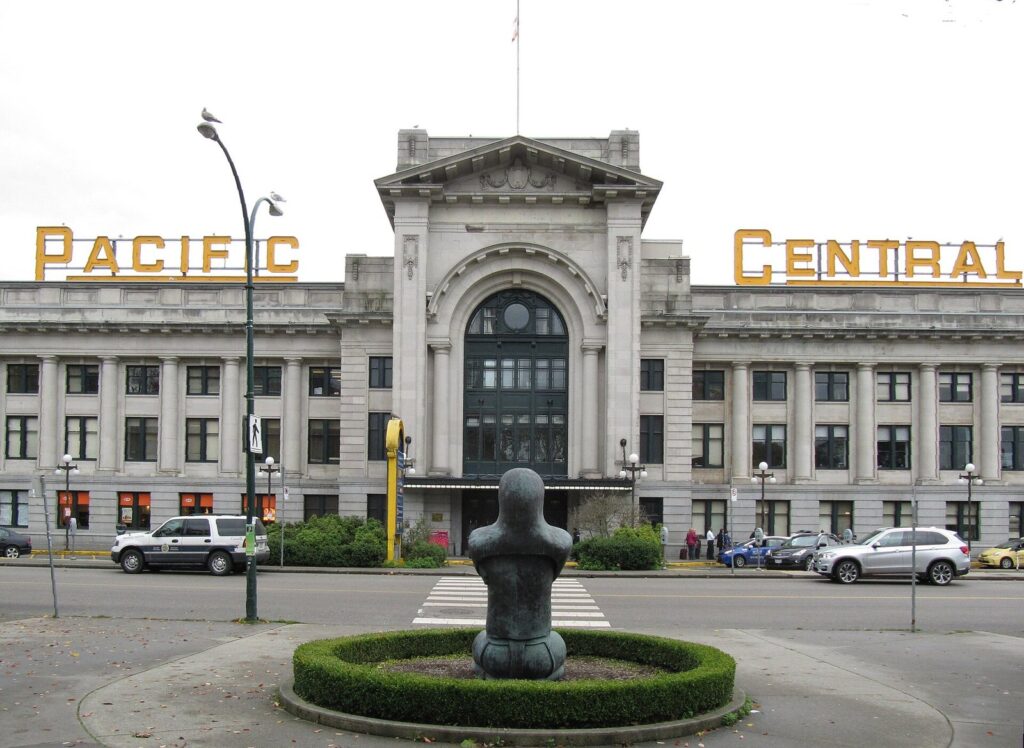
If you’d rather not drive, Amtrak Cascades trains run between Seattle and Vancouver’s Pacific Central Station, and several bus companies run the same route. Border formalities are built into the trip: expect to show documents at the station or at the border, and to have bags inspected like any other traveller. Buses stop at the crossing and everyone gets off to go through inspection, so a busy border delays a bus just as it does a car. The train, running on its own tracks, avoids the highway lineup altogether. The same Vancouver and Seattle guide compares their schedules, prices and journey times.
What should drivers know on the Canadian side?
- Rental cars: most major rental companies allow cross-border trips, but check your contract before you go, and carry the paperwork showing you’re allowed to take the car into Canada.
- Insurance: carry proof of insurance. Many US policies cover driving in Canada, but confirm it with your insurer rather than assuming.
- Units: speed limits and distances are in kilometres, so read the km/h scale on your speedometer and ignore the mph numbers.
- Fuel: gas is sold by the litre and is usually cheaper on the Washington side, so many drivers fill up in Blaine or Bellingham.
- Money: prices are in Canadian dollars; our guide to money in Vancouver covers cards, cash and exchange.
Once you’re in the city, parking is expensive and traffic slow, and our guide to driving in Vancouver covers parking, bridges and the rules that catch out visitors.
Can you visit Peace Arch Park?
Yes. The white arch, completed in 1921, stands in a landscaped park that straddles the border, with a provincial park on the Canadian side and a state park on the American side. Its gardens and lawns make a pleasant stop, especially in summer. It’s a park, though, not a shortcut: to enter the other country, you still have to go through the port of entry with your documents. If you’re only visiting the park, follow the signs and stay on the side you came from.
A little planning makes the Peace Arch border crossing a small part of the day rather than the whole of it: pick your crossing with the live waits open, have documents ready, and declare what’s in the car. For everything else to sort before the trip, see our complete Vancouver planning guide.
US-Canada border crossing FAQ
How long is the wait at the Peace Arch border crossing?
It varies from a few minutes to several hours, and changes with the day, the season and holiday traffic. Check CBSA’s wait times for northbound traffic and CBP’s for southbound before you choose a crossing, and remember that posted times don’t include queues on the approach roads.
Is the Pacific Highway crossing faster than the Peace Arch?
It depends on the day. The Pacific Highway crossing, about a kilometre and a half east of the Peace Arch, handles trucks as well as cars. Compare the live wait times for both before you reach the Blaine exits, because switching late can mean queuing twice.
Do I need a passport to drive from Seattle to Vancouver?
Americans aren’t strictly required to show a passport to enter Canada by land, but IRCC recommends one, and to return to the US you’ll need a passport, passport card, enhanced driver’s licence or NEXUS card. Visitors of other nationalities need a valid passport, and travellers from visa-required countries, including Mexico, need a visitor visa to cross by land.
Can I use the NEXUS lane without a NEXUS card?
No. Everyone in the vehicle must be a NEXUS member carrying their card, or the whole car has to use the regular lanes. Using a NEXUS lane without membership can lead to penalties and the loss of membership for anyone in the car who has it. Check the lane hours on the CBSA and CBP border pages before you count on one.
What can’t you bring across the border into Canada?
Cannabis can’t cross in either direction, even from Washington State. Pepper spray meant for use on people is a prohibited weapon, handguns are tightly restricted, and all firearms must be declared. Fresh food, plants and animal products may be restricted. Declare everything, including cash of C$10,000 or more, and stick to the limits for alcohol and tobacco.
How far is downtown Vancouver from the Peace Arch?
Downtown Vancouver is a drive north on Highway 99, and the time depends on traffic. Allow about three to four hours to drive between Vancouver and Seattle, depending on traffic and border wait times.
Related Vancouver guides
- Vancouver trip planning essentials: money, transit, safety and the rest of the groundwork
- Canada eTA and entry requirements: documents for every nationality
- Vancouver to Seattle: driving, trains and buses between the cities
- Driving in Vancouver: parking, bridges and local rules
- Money in Vancouver: currency, cards and sales tax
Sources and verification
Checked on September 26, 2026 against the border agencies and transport departments listed below. Crossing hours, lane hours and rules can change, so check the live pages before you travel. This guide was compiled from their published information rather than from other travel lists, and it doesn’t claim first-hand crossings.
- Canada Border Services Agency: border wait times, alcohol and tobacco limits, what visitors can bring, travelling with C$10,000 or more, Aldergrove office, NEXUS
- US Customs and Border Protection: land crossings with NEXUS lanes, NEXUS application fee, Blaine port of entry, border wait times
- Washington State Department of Transportation: border crossings
- Immigration, Refugees and Citizenship Canada: what you need to enter Canada
Photo credits
- Pacific Highway crossing: photo by Sam Camera, Wikimedia Commons (CC BY 2.0)
- Sumas border crossing, 2013: photo by Vidor, Wikimedia Commons (CC BY-SA 3.0)
- US Port of Entry sign, Blaine, 2013: photo by Another Believer, Wikimedia Commons (CC BY-SA 3.0)
- Pacific Central Station: photo by kitmasterbloke, Wikimedia Commons (CC BY 2.0)
- Peace Arch Park (featured image): photo by Peace-Arch-3614.jpg: User:Vmenkov derivative work: Myrabella (talk), Wikimedia Commons (CC BY-SA 3.0)