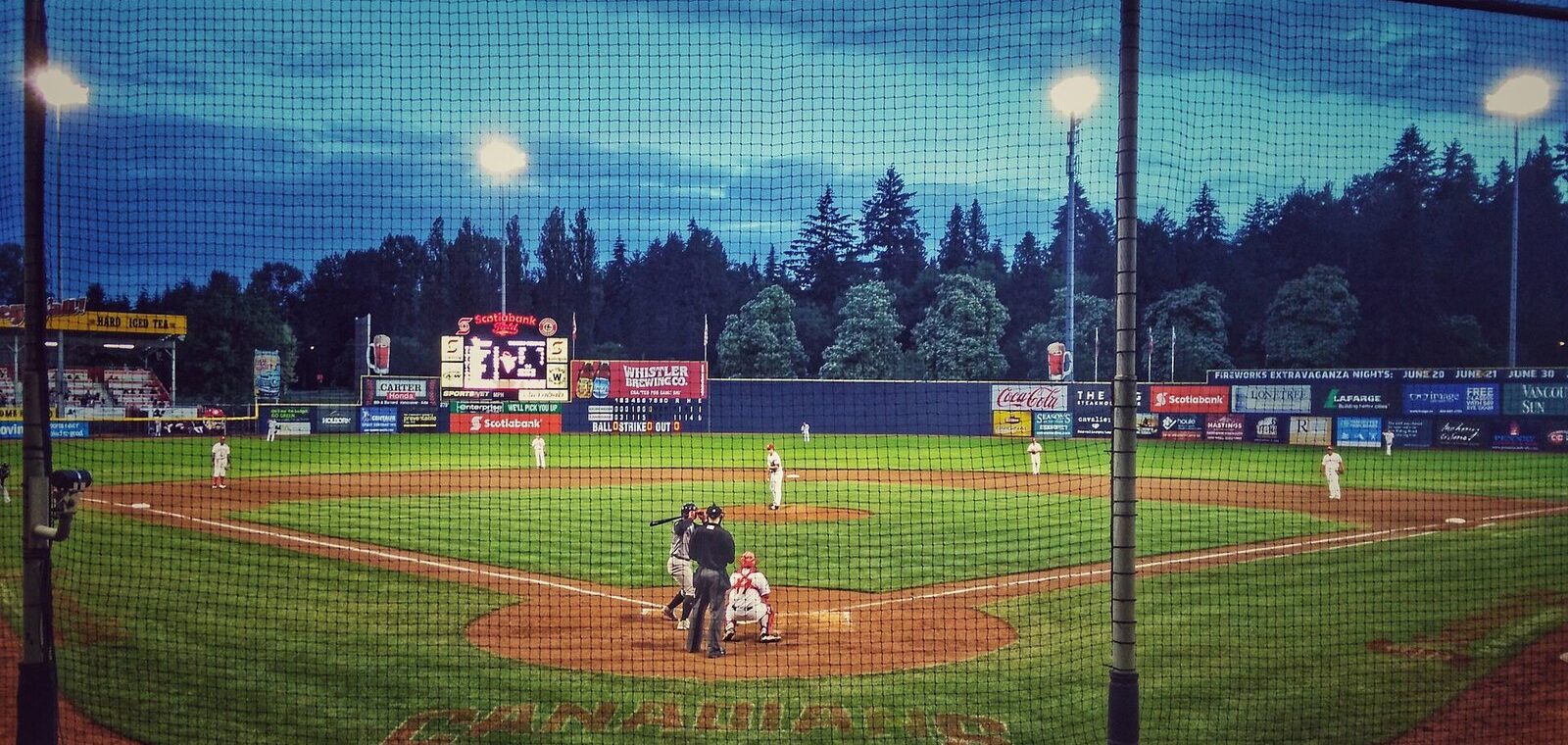
A Vancouver Canadians game at Nat Bailey Stadium is the cheapest, most relaxed pro sports night in the city: High-A baseball played by Toronto Blue Jays prospects, a covered grandstand in a ballpark that opened in 1951, and a wall of tall trees where most ballparks have a skyline. Seats for 2026 home games were advertised from about C$24. The catch is timing. The season runs from April to early September, so if you’re reading this in autumn or winter, the next first pitch is in spring 2027.
This guide is for visitors after an easy summer evening, for families whose kids won’t sit through three periods of hockey, and for locals who keep meaning to go. The caveat: schedules and prices change, so confirm dates with the club before planning around a game. Details were checked September 26, 2026 against official sources, including the club, the City of Vancouver and TransLink. For every team and venue in town, start with our guide to sports in Vancouver.
A Canadians game at a glance
| Question | Short answer |
|---|---|
| Cost | From about C$24 a seat for 2026 home games; group and catered areas cost more |
| Time needed | About 2.5 to 3 hours for the game, plus time for food and finding your seat |
| Best time | June to August evenings; around the solstice it stays light until after 9 p.m. |
| Book ahead? | Only for fireworks nights, holiday games and big groups; otherwise, the week of the game |
| Getting there | Canada Line to King Edward and a 20-minute walk, or the 3 Main Street bus |
| Weather | Open-air, but the grandstand behind home plate is covered |
When is the Vancouver Canadians season?
Northwest League baseball runs from early April to early September. Minor-league schedules are built from six-game series, Tuesday to Sunday, with Mondays usually off, and the Canadians spend much of the summer alternating home and road weeks. In practice that means a given week in Vancouver tends to bring six home games or none, so check the calendar before you promise anyone a ballgame on a particular Saturday. The opponents come from Washington and Oregon, which makes the Canadians the league’s only Canadian team and gives the crowd a mild cross-border edge.
Pick your month with the weather in mind. April and early May nights at the Nat are cool, often around 10°C (50°F) after dark, and a spring shower can delay or wash out a game. June, July and August are the sweet spot: warm evenings around 20°C, dry spells that can last for weeks, and long twilight over the outfield trees. September games come with playoff races, if the Canadians are in one, and noticeably earlier sunsets.
Visiting in the off-season? The ballpark goes quiet from September to April, but the park around it doesn’t, so the ideas under “make a day of it” below still work in October.
What kind of baseball is it?
High-A is the second rung of full-season minor-league ball, three steps below the majors: High-A, then Double-A, Triple-A and the Toronto Blue Jays themselves. The players are mostly in their early 20s, recent draft picks and international signings working their way up the Jays’ system, and part of the fun is seeing someone in Vancouver who may turn up in Toronto a few summers later. The level of play is sharp enough to impress anyone who has only watched baseball on TV, and uneven enough that a routine grounder occasionally turns into an adventure.
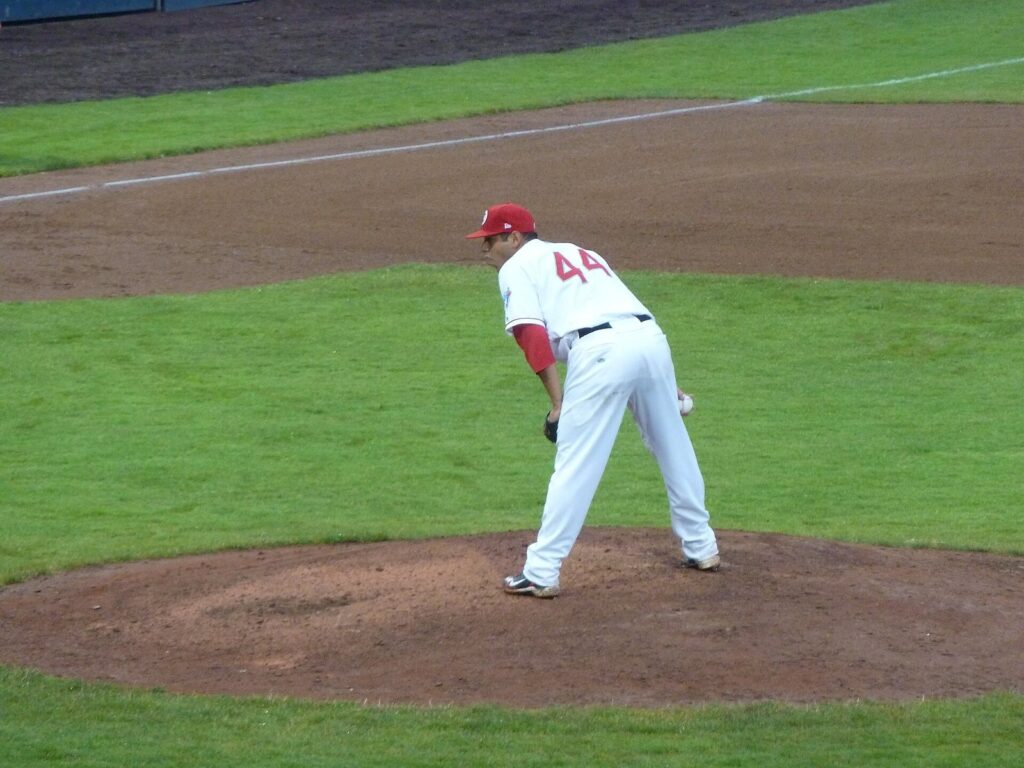
Minor-league games also run on a pitch clock, so a game here moves faster than the stereotype of baseball as a four-hour nap. Expect about two and a half to three hours, which is short enough for young kids and leaves time for a drink on Main Street afterwards.
The history is part of the appeal. The ballpark opened in 1951 as Capilano Stadium and was renamed in 1978 for Nat Bailey, the restaurateur who founded White Spot. The Canadians name arrived the same year with a Triple-A Pacific Coast League team, which moved to Sacramento after the 1999 season; a Northwest League club took over the name in 2000, joined the Blue Jays system in 2011 and moved up to High-A in 2021. Today the park’s official name is Rogers Field at Nat Bailey Stadium, though nobody in Vancouver calls it anything but the Nat.
How do you get Vancouver Canadians tickets?
Buy from the club. Tickets are sold online through the Canadians’ page on the Minor League Baseball site, by phone and in person at the Nat Bailey box office. For 2026 home games, seats were advertised from about C$24; prices vary by section and by game, and holiday dates and promotional nights are the ones to book early. For most games there’s no pressure: you can usually decide the same week and still sit behind the plate.
If you’re going more than once, look at the club’s multi-game options. Its ticket pages list flex packs and NatPacks for repeat visits and catered outings for groups, where a block of seats comes with food, built for office parties and birthday groups.
Resale sites list Canadians tickets too, but for a regular-season game there’s rarely a reason to pay a markup, and buying direct avoids any argument at the gate. The club also has a tradition of weekday lunchtime games, known locally as Nooners, which pull in office workers taking a very long lunch. If one lands during your visit, book ahead, because it’s usually the busiest game on the calendar.
Verdict: Buy direct from the club, a few days out for a normal night and as early as you can for fireworks, holidays and Nooners.
Where should you sit at Nat Bailey Stadium?
The Nat is small enough that there are no bad seats, only different kinds of good ones. The covered grandstand behind home plate is the classic view, with the whole field laid out in front of you and a roof over your head if the sky turns. It’s the best choice for April and May games and for anyone who wants to watch the pitching closely.
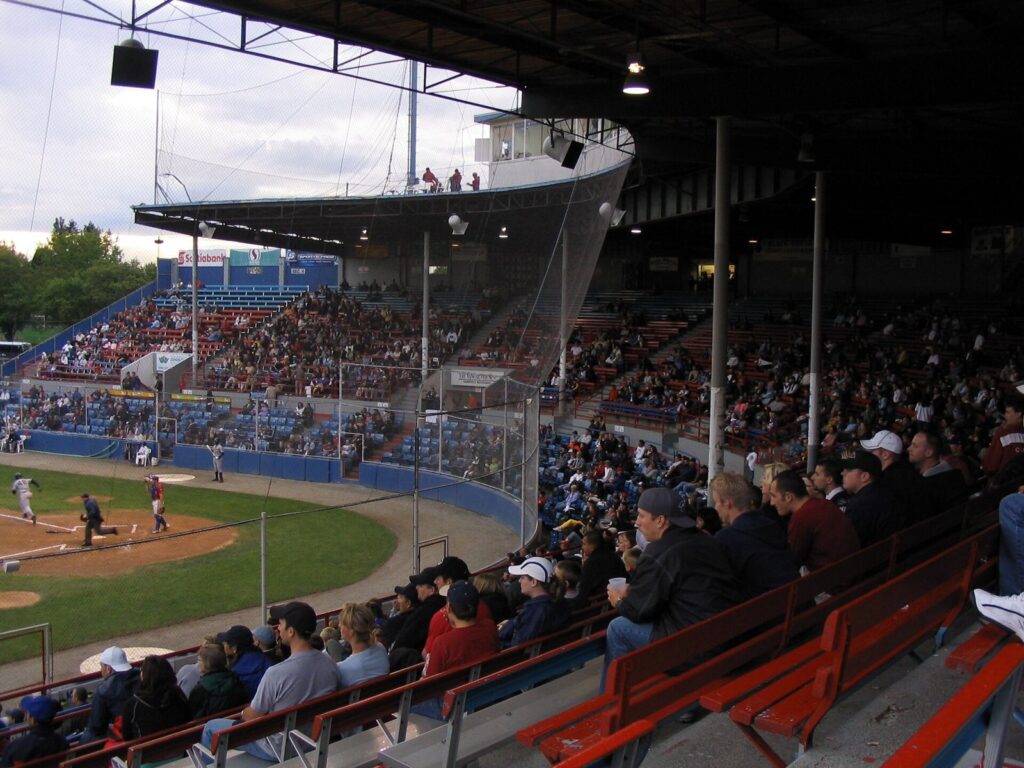
Seats down the first- and third-base lines put you closer to the dugouts and bullpens and out in the evening sun, which is exactly where you want to be in July and exactly where you don’t in a drizzle. Keep your eyes on the batter here. Netting protects the seats behind home plate, but foul balls land along the lines, and kids who bring a glove sometimes go home with a souvenir. Groups have their own areas, booked through the club, and the box office can advise on accessible seating before you buy.
How do you get to Nat Bailey Stadium?
The ballpark is at 4601 Ontario Street, on the east side of Queen Elizabeth Park in the Riley Park neighbourhood, about 6 km south of downtown. It’s an easy trip without a car.
- Canada Line: ride to King Edward station, about 10 minutes from downtown, then walk roughly 20 minutes east and south to Ontario Street, or cut through Queen Elizabeth Park if you’ve time to spare.
- Bus: the 3 Main Street bus runs a few minutes’ walk east of the ballpark; get off between 30th and 33rd Avenues and walk west to Ontario Street.
- Bike: Ontario Street is one of the city’s north–south bikeways and runs straight to the ballpark.
- Car: parking next to the stadium is limited on busy nights, and the surrounding streets are residential, so transit is less hassle.
A single adult fare within one zone costs C$3.50 if you tap a contactless card or phone, or C$2.85 with a Compass Card, and it’s valid for 90 minutes on buses and SkyTrain. Trips that start after 6:30 p.m. on weekdays, and all day on weekends, are charged as one zone, and children 12 and under ride free, which makes the trip home for a family cheaper than the hot dogs.
What’s a night at the Nat like?
Expect a small-town ballpark dropped into a big city. The crowd is a mix of families, groups from work, retirees who keep score in pencil and Blue Jays fans in their Toronto caps. Between innings there are on-field contests and giveaways, the seventh-inning stretch gets its sing-along, and the club has marked big occasions such as its home opener with fireworks. It’s a social evening as much as a sporting one; plenty of people only half watch, and nobody minds.
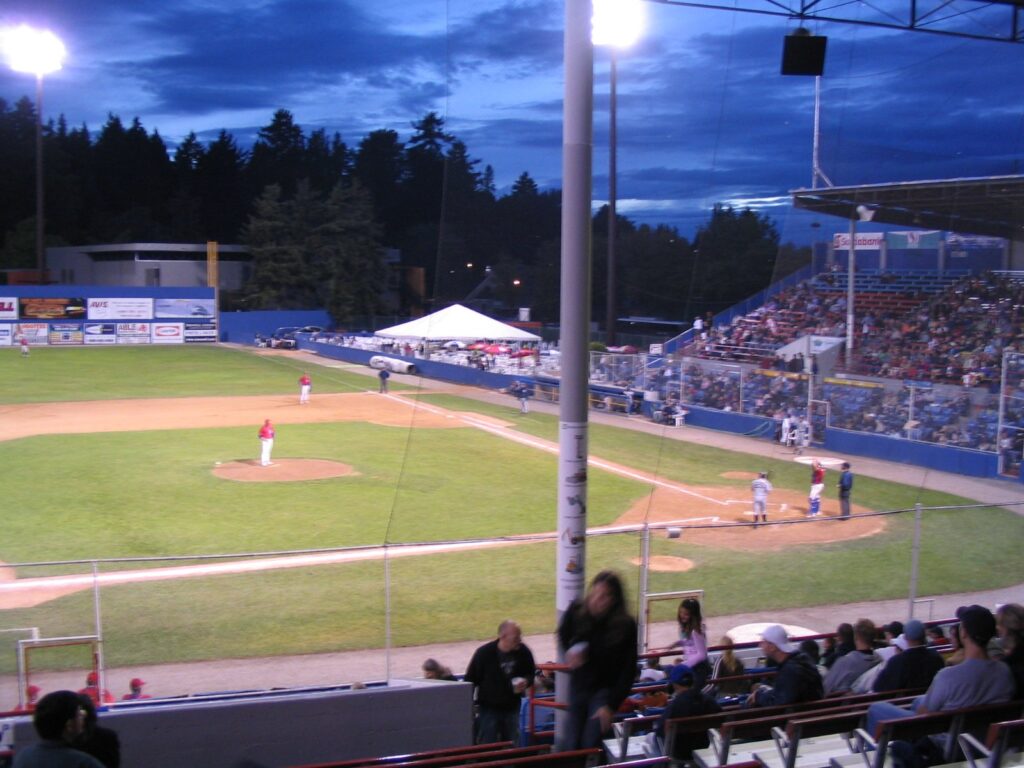
Bring a layer even in summer. Once the sun drops behind the trees the temperature follows, and the difference between the seventh inning and the first can be a sweater’s worth. Check the club’s ballpark page before you go for the current rules on bags and outside food, which can change from season to season.
How do you make a day of it?
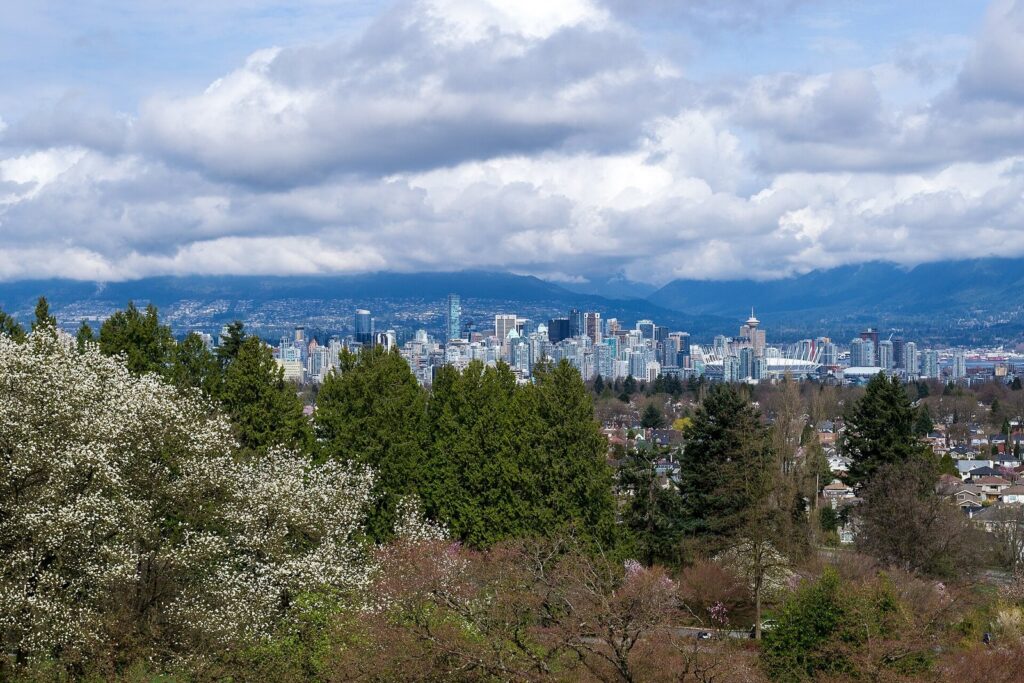
The Nat’s neighbours are the best argument for arriving early. Queen Elizabeth Park rises right behind the ballpark on Little Mountain, the highest point in the city, with the sunken Quarry Garden and views north over downtown to the North Shore mountains. Its hills are a favourite loop for running in Vancouver, and the walk up from the ballpark takes about 10 minutes.
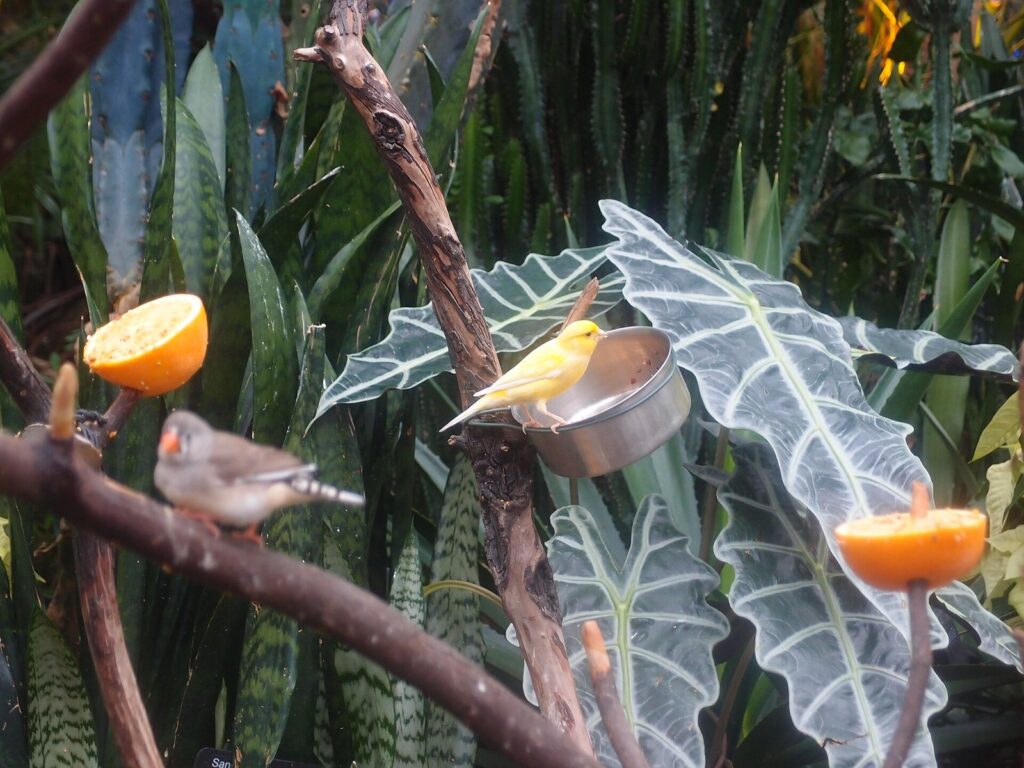
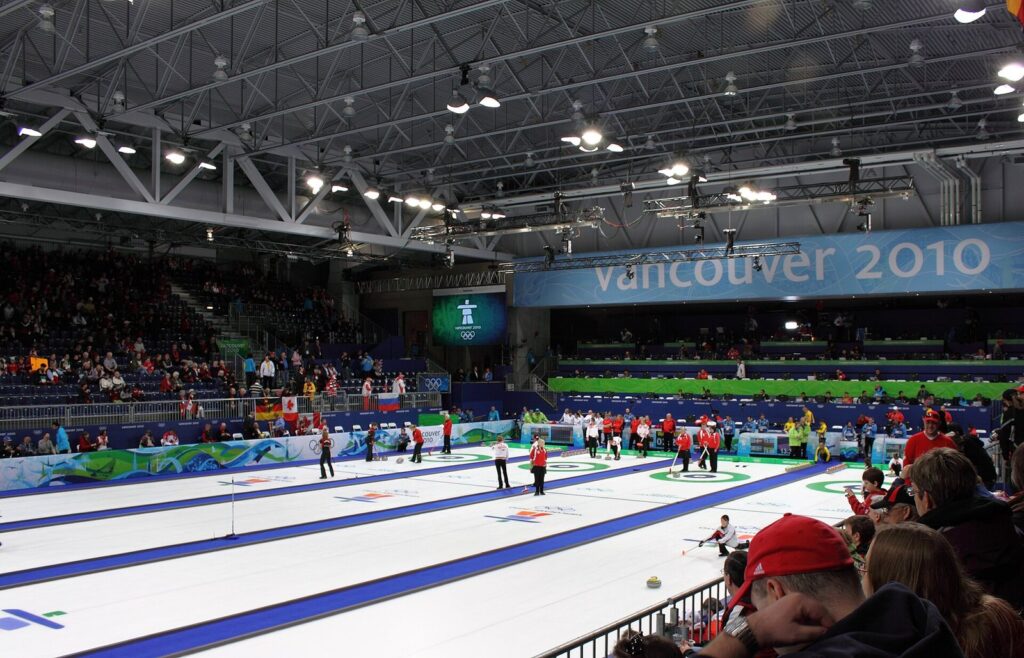
At the top of the park, the Bloedel Conservatory is a domed tropical garden with free-flying birds, koi and more than 500 exotic plants; buying adult admission online in advance saves C$1. Next to the ballpark, the Hillcrest Centre hosted curling at the 2010 Winter Games and is now a community centre with pools and rinks, one of the easier Vancouver 2010 Olympic sites to see on the way to something else. And a few blocks east, Main Street has independent cafés, restaurants and vintage shops for a pre-game meal or a post-game pint.
Is a Canadians game good for kids?
It’s one of the best family outings in the city, for three reasons: the games are shorter than hockey and football, the park is small enough to walk around when attention spans give out, and tickets cost a fraction of a Canucks night. Kids ride transit free up to age 12, and the conservatory’s birds make a good pre-game bribe. Bring sunscreen for day games, a jacket for night games and, for anyone under 10, a glove. For more outings with children, see our guide to day trips from Vancouver with kids.
How does it compare with other cheap sports in Vancouver?
The Canadians sit at the budget end of the city’s pro sports, alongside the BC Lions. The table below uses the lowest prices the clubs advertised for 2026; all of them move with demand.
| Ticket | Season | Starting price seen for 2026 | Best for |
|---|---|---|---|
| Vancouver Canadians (baseball) | April to early September | About C$24 | Summer evenings and families |
| BC Lions (CFL football) | June to October | About C$19 | Big-stadium football on a budget |
| Vancouver Whitecaps (MLS soccer) | Late winter to autumn | Varies by match | Singing supporters’ sections |
| Vancouver Canucks (NHL hockey) | October to April | Rarely cheap | The city’s main sporting event |
Our BC Lions guide covers the football side of the budget list, and the Canucks game guide covers tickets and seats at Rogers Arena. If the budget is zero, our list of free things to do in Vancouver has plenty that costs nothing.
Verdict: For a first taste of Vancouver sport on a summer trip, the Canadians are hard to beat: cheap, easy to reach and pleasant even if you don’t care who wins.
Vancouver Canadians FAQ
How much does a Vancouver Canadians game cost?
Seats for 2026 home games were advertised from about C$24, with prices varying by section and date. Group and catered areas cost more but include food. Add transit at C$3.50 each way with a contactless card, or C$2.85 with a Compass Card; children 12 and under ride free, which keeps a family night at the Nat one of the cheaper evenings out in the city.
When does the Vancouver Canadians season start?
The Northwest League season runs from early April to early September, built from six-game series that usually run Tuesday to Sunday. The 2027 schedule hadn’t been published when this guide was checked in September 2026, so look it up on the club’s site before planning a trip around a particular game or promotion.
Who are the Vancouver Canadians affiliated with?
The Canadians are the High-A affiliate of the Toronto Blue Jays and play in the Northwest League against teams from Washington and Oregon. They’ve been part of the Blue Jays system since 2011, so many of the players you’ll see at the Nat are prospects hoping to reach Toronto within a few seasons.
How do you get to Nat Bailey Stadium on transit?
Take the Canada Line to King Edward station, about 10 minutes from downtown, and walk roughly 20 minutes east to 4601 Ontario Street. Alternatively, the 3 Main Street bus stops a few minutes’ walk east of the ballpark. Evening and weekend trips are charged as one zone, and children 12 and under ride free.
Is Nat Bailey Stadium covered?
Partly. The grandstand behind home plate has a roof, so those seats stay dry in a shower, but the seats down the baselines and the field itself are open to the sky. Rain can delay or postpone games, most often in April and May, so pick the grandstand if the forecast looks doubtful.
What else is near Nat Bailey Stadium?
Queen Elizabeth Park rises right behind it, with the Quarry Garden, city views and the Bloedel Conservatory at the top. The Hillcrest Centre, a 2010 Olympic curling venue, is next door, and Main Street’s cafés, restaurants and vintage shops are a few blocks east, handy for dinner before an evening game.
Related Vancouver guides
- Vancouver sports guide: every team, venue and season in one place
- Canucks game guide: tickets, seats and game nights at Rogers Arena
- BC Lions guide: the other budget ticket in town
- Free things to do in Vancouver: when even C$24 is too much
- Day trips from Vancouver with kids: more family outings beyond the ballpark
Sources and verification
Checked on September 26, 2026 against the club, city and transit agency listed below. This guide was compiled from their published information rather than from other travel lists, and it doesn’t claim first-hand visits. The 2026 starting ticket price was the advertised rate for 2026 home games; 2027 prices and dates weren’t yet published.
- Vancouver Canadians (Minor League Baseball): single-game tickets, Rogers Field at Nat Bailey Stadium, schedule
- City of Vancouver: Bloedel Conservatory
- TransLink: fares and fare zones
Photo credits
- Canadians pitcher at Nat Bailey, 2011: photo by Richard Eriksson, Wikimedia Commons (CC BY 2.0)
- Nat Bailey Stadium grandstand, 2006: photo by Gateman1997 on en.wikipedia, Wikimedia Commons (public domain)
- Nat Bailey Stadium at dusk: photo by User Gateman1997 on en.wikipedia, Wikimedia Commons (public domain)
- View from Queen Elizabeth Park: photo by Xicotencatl, Wikimedia Commons (CC BY-SA 4.0)
- Bloedel Conservatory birds: photo by Guilhem Vellut from Annecy, France, Wikimedia Commons (CC BY 2.0)
- Vancouver Olympic Centre curling, 2010: photo by Chase N., Wikimedia Commons (CC BY-SA 2.0)
- Nat Bailey Stadium from behind home plate (featured image): photo by Los Paseos from Earth, Wikimedia Commons (CC BY-SA 2.0)