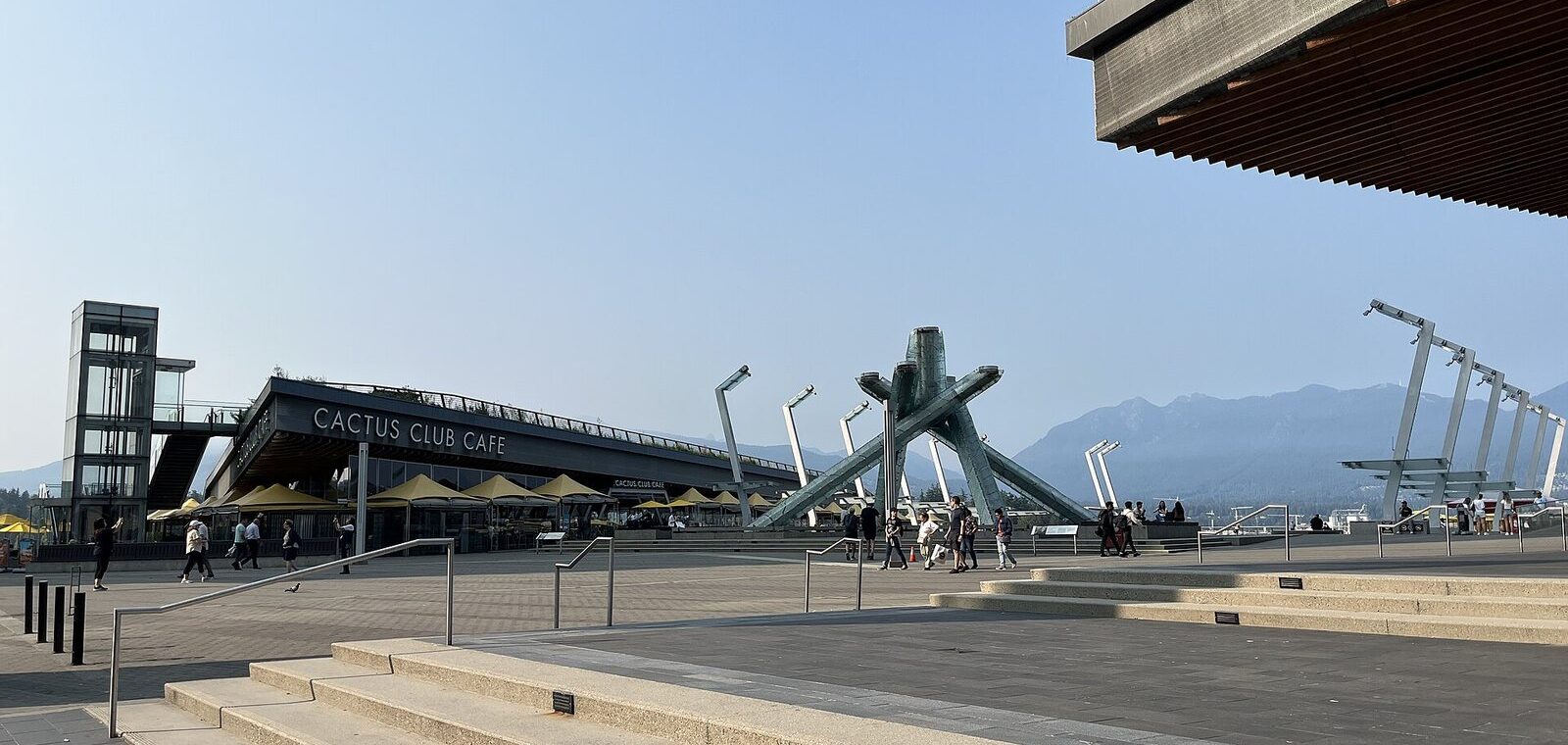
Most Vancouver Olympic sites from the 2010 Winter Games are still standing, still in use and free to see from the outside: the Olympic Cauldron on Jack Poole Plaza, BC Place where the ceremonies were held, Rogers Arena where Sidney Crosby scored the golden goal, and the old athletes’ village on False Creek. The Games stretched about 120 km, though, and the best hands-on legacies are further out: the Richmond Olympic Oval’s museum and rinks, Cypress Mountain’s slopes and, in Whistler, a bobsleigh track you can still ride.
This guide is for visitors who remember February 2010 and want to find the places, and for families after something different on a wet day. The caveat: these are working buildings now, arenas, community centres and ski areas, so what you can see depends on their day jobs, and the cauldron is lit only on special occasions. Everything was checked September 26, 2026 against official sources: the Vancouver Convention Centre, the Richmond Olympic Oval, Whistler Sport Legacies and the City of Vancouver. For today’s teams and venues, see our guide to sports in Vancouver.
The 2010 Olympic sites at a glance
| Site | Role in 2010 | What’s there now | Cost to visit |
|---|---|---|---|
| Olympic Cauldron, Jack Poole Plaza | The outdoor cauldron | A permanent landmark, lit on special occasions | Free |
| BC Place | Opening and closing ceremonies | Whitecaps, BC Lions and stadium concerts | An event ticket |
| Rogers Arena | Ice hockey, as Canada Hockey Place | The Canucks | An event ticket |
| Olympic Village | The athletes’ village | A neighbourhood on the seawall | Free |
| Pacific Coliseum | Figure skating and short track | The PWHL’s Goldeneyes | An event ticket |
| Hillcrest Centre | Curling | A community centre with pools and rinks | Drop-in fees |
| Richmond Olympic Oval | Long-track speed skating | A sport centre and the Olympic Experience museum | Free on first Thursdays, 2 to 5 p.m. |
| Cypress Mountain | Freestyle skiing and snowboard | A ski area | A lift ticket |
| Whistler Sliding Centre | Bobsleigh, luge and skeleton | Public bobsleigh and skeleton rides | Paid rides |
| Whistler Olympic Park | Nordic events, biathlon, ski jumping | Cross-country ski and snowshoe trails | A day ticket |
What can you see in downtown Vancouver?
The Olympic Cauldron on Jack Poole Plaza
The 10 m (32.8 ft) cauldron stands on Jack Poole Plaza beside the Vancouver Convention Centre, set against a backdrop of harbour and mountains. During the Games there were two cauldrons, one inside BC Place for the opening ceremony and this outdoor one, which Wayne Gretzky lit after a ride from the stadium through downtown in the back of a pickup truck. It’s now lit only for special occasions. In 2026 it burned on February 6 for the opening of the Milano Cortina Winter Olympics and again on March 6 for the Paralympics, when the lighting was scheduled from 4 to 6 p.m. Groups holding events at the Convention Centre can ask for a lighting through their event manager.
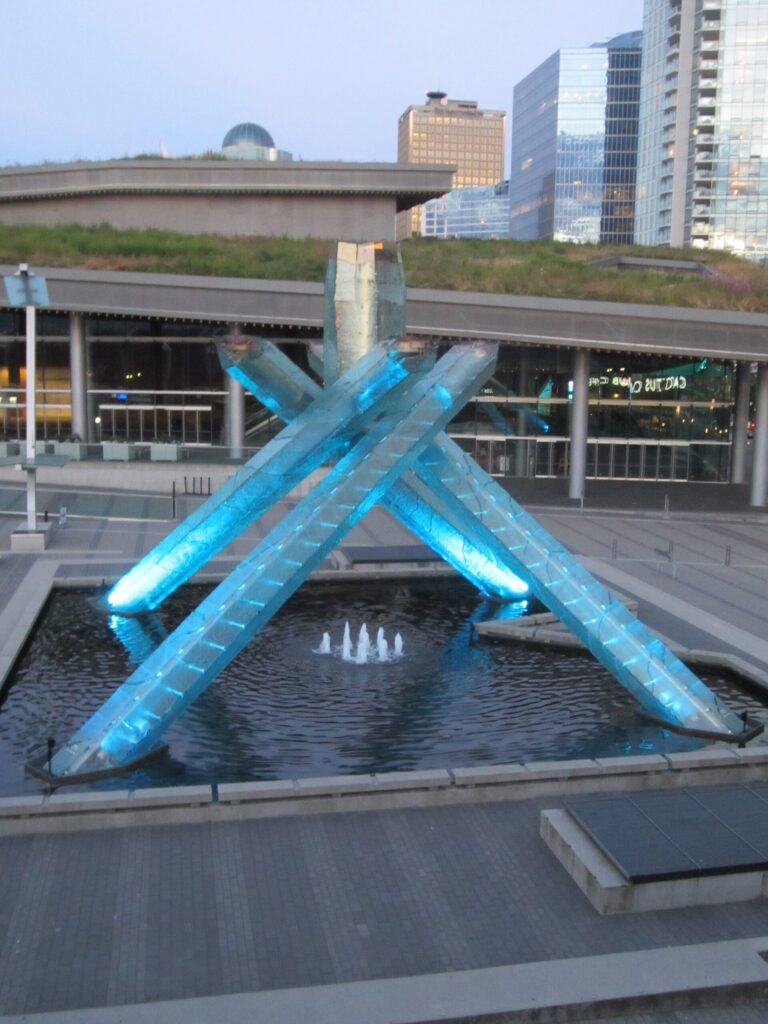
Even unlit, the plaza is worth a stop on a waterfront walk. Douglas Coupland’s pixelated Digital Orca sculpture is next door, the seaplanes land a few hundred metres away and the seawall starts right here.
BC Place
The opening and closing ceremonies filled BC Place, still under its old air-supported roof at the time; the retractable roof arrived when the stadium reopened in 2011. Today it’s home to the Whitecaps and the BC Lions and hosts big concerts too. Our BC Place Stadium guide covers the building and how to visit.
Rogers Arena
Renamed Canada Hockey Place for the Games, the Canucks’ arena hosted most of the hockey, including both of Canada’s gold-medal finals. On February 28, 2010, the last day of the Olympics, Sidney Crosby scored in overtime to beat the United States in the men’s final, the goal remembered as “the golden goal”. To go inside, you’ll need a Canucks ticket or a concert; the Rogers Arena guide explains how.
The Olympic Village
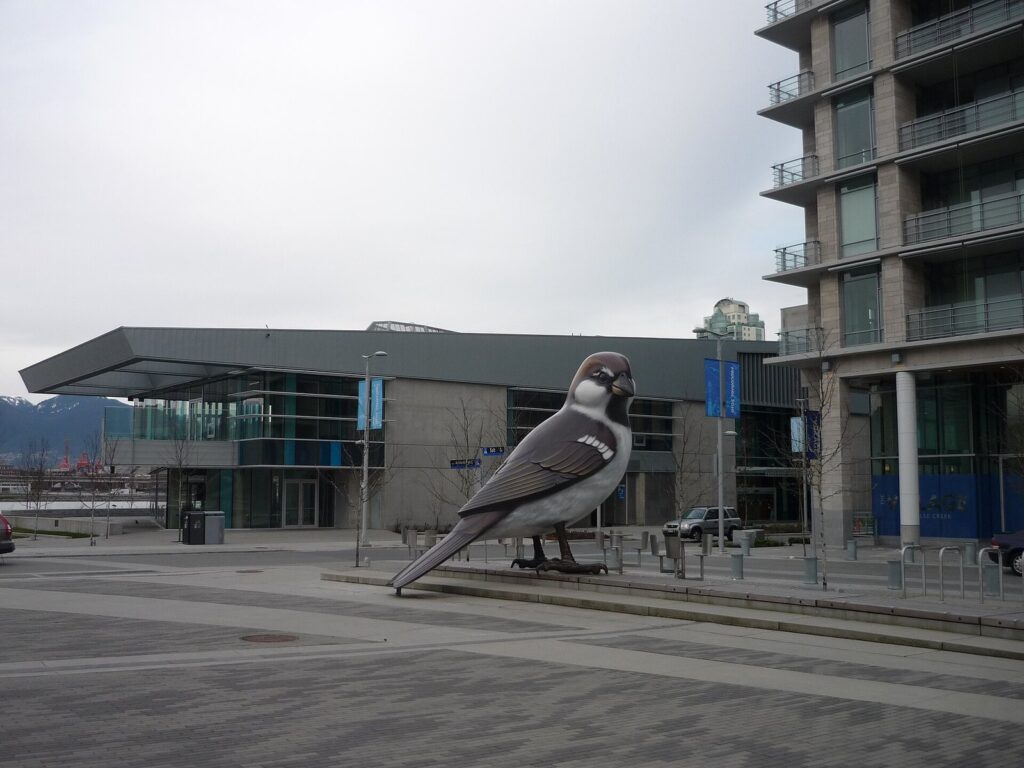
The athletes’ village on the south shore of False Creek is now a neighbourhood of apartments, cafés and a big public square, with the seawall running along the water. Look for Myfanwy MacLeod’s two giant sparrow sculptures in the square, and for the Salt Building, a 1930s heritage building that is now home to CRAFT Beer Market. Getting here is a pleasant walk along the seawall from BC Place, or a quick hop to Olympic Village station on the Canada Line.
Where are the other Vancouver venues?
Pacific Coliseum
The old arena on the PNE grounds at Hastings Park hosted figure skating and short-track speed skating. It’s still a working hockey rink and now the home of the PWHL’s Vancouver Goldeneyes, so a women’s hockey game is the easiest way to sit where the skaters did.
Hillcrest Centre
Olympic and Paralympic curling was played at the Vancouver Olympic/Paralympic Centre next to Queen Elizabeth Park. After the Games it became the Hillcrest Centre, a community centre with pools, an ice rink and a curling club, which makes it one of the few Olympic venues where anyone can pay a drop-in fee and use the building. In summer, pair it with a Vancouver Canadians game at the ballpark next door.
UBC’s Thunderbird arena
On the UBC campus, the arena now called the Doug Mitchell Thunderbird Sports Centre hosted Olympic hockey games and Paralympic sledge hockey. Today it’s the university’s rink, and varsity games and public skating sessions are the cheap way in.
Is the Richmond Olympic Oval worth the trip?
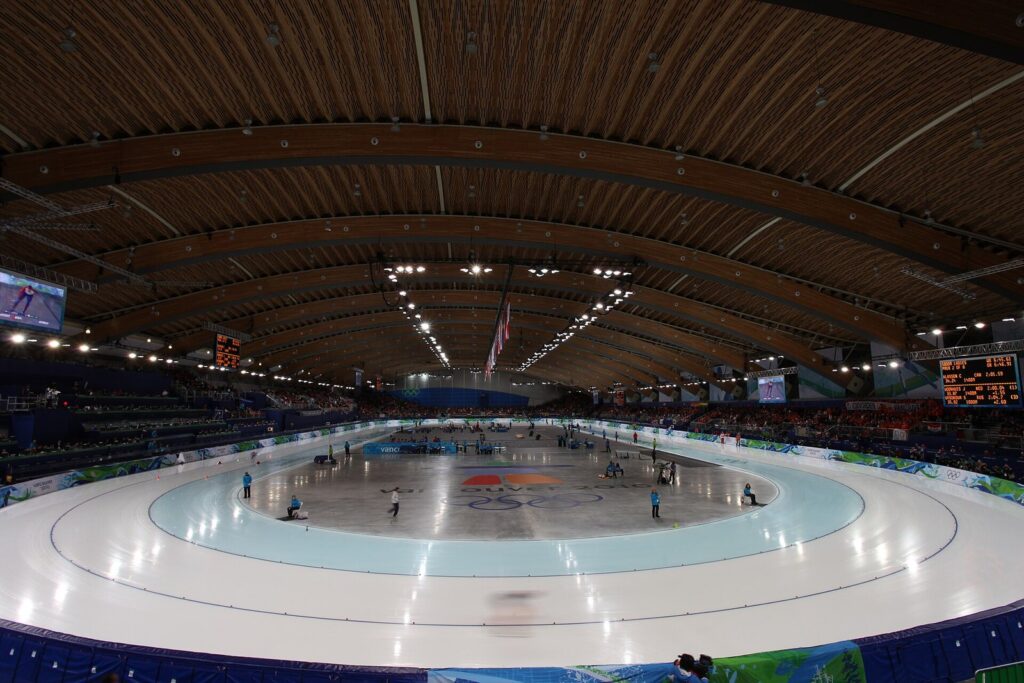
Yes, especially on the first Thursday of the month. The Richmond Olympic Oval hosted long-track speed skating in 2010 and now works as a community sport and fitness centre under a spectacular wave-shaped wooden roof, built partly from pine-beetle-killed timber. Inside, the Richmond Olympic Experience is an interactive Olympic museum, free on the first Thursday of every month from 2 to 5 p.m. and included with an Oval membership. The building also has two Olympic-size ice rinks with drop-in public skating, which you can book online up to seven days ahead.
The museum is the part most visitors come for. Beyond the Olympic torches, the medal galleries and the hockey exhibits, the real pull is four simulators that pair real equipment with wraparound screens: a bobsleigh, a sit-ski, a kayak and a Formula 1-style race car. Admission is also free on Canada Day, and Richmond residents get in free during regular hours. Before you go, check the museum’s opening days, hours and current admission on the Oval’s site, where tickets are sold online.
Getting there is easy: take the Canada Line to Lansdowne station in Richmond and walk toward the river. Trips that start after 6:30 p.m. on weekdays, and all weekend, are charged as one zone, so a Saturday visit costs the same as a ride across downtown. Verdict: worth the half-day for sports fans and families, and an easy add-on before or after a flight, since the airport is a short Canada Line ride away with a change of train at Bridgeport.
What’s left at Cypress Mountain?
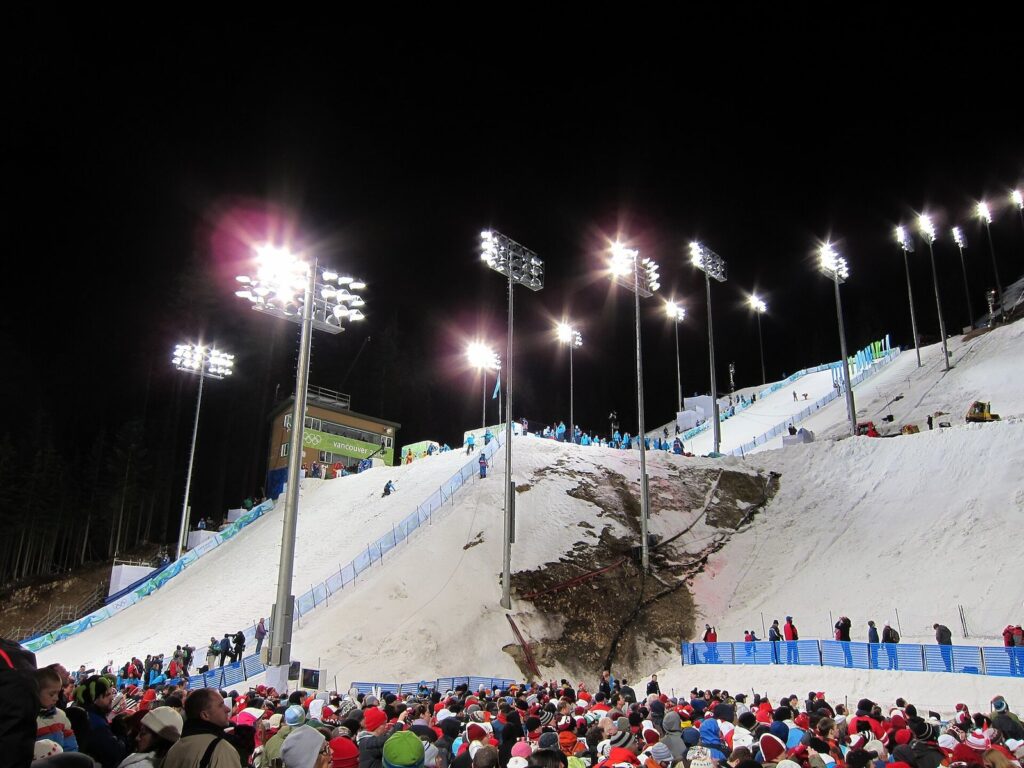
Freestyle skiing and snowboarding, from moguls and aerials to halfpipe and snowboard cross, were held at Cypress Mountain in Cypress Provincial Park above West Vancouver. It’s now one of the three North Shore ski areas, and in winter you can ski the same slopes on a regular lift ticket. In summer, the park’s trails and viewpoints are the draw, with the city laid out below.
What can you do at the Whistler Olympic venues?
Whistler hosted the alpine, sliding and Nordic events, and it has the most to do for visitors who want more than a photo. It’s about two hours’ drive up the Sea to Sky Highway; our guide to getting from Vancouver to Whistler compares the drive, buses and shuttles.
Whistler Olympic Plaza
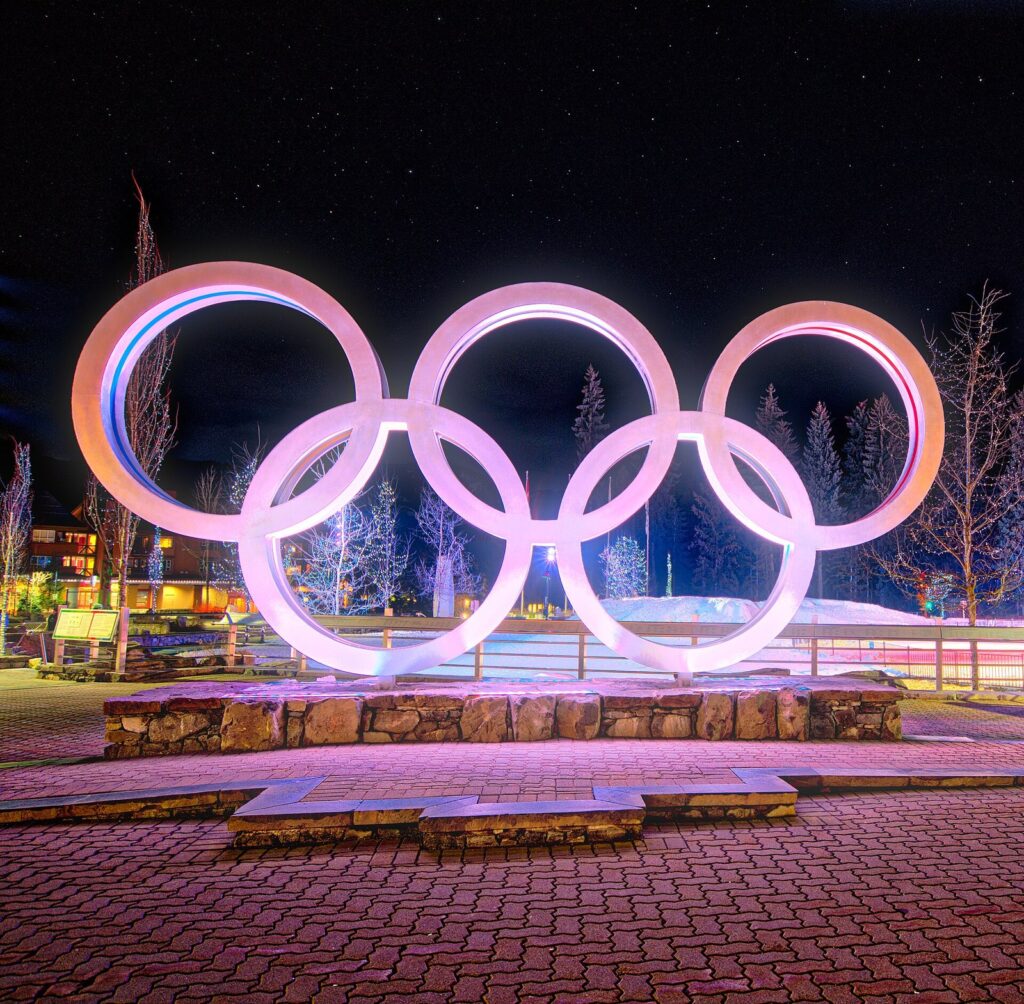
The medals plaza in Whistler Village is now a park with a giant set of Olympic rings, the most photographed legacy of the Games up here. In winter it adds a seasonal outdoor rink; in summer it hosts concerts and events.
Whistler Creekside
The alpine races ran on Whistler Mountain from the Creekside base. Today they’re simply part of Whistler Blackcomb’s terrain, so a lift ticket gets you onto the same slopes, minus the television cameras.
Whistler Sliding Centre
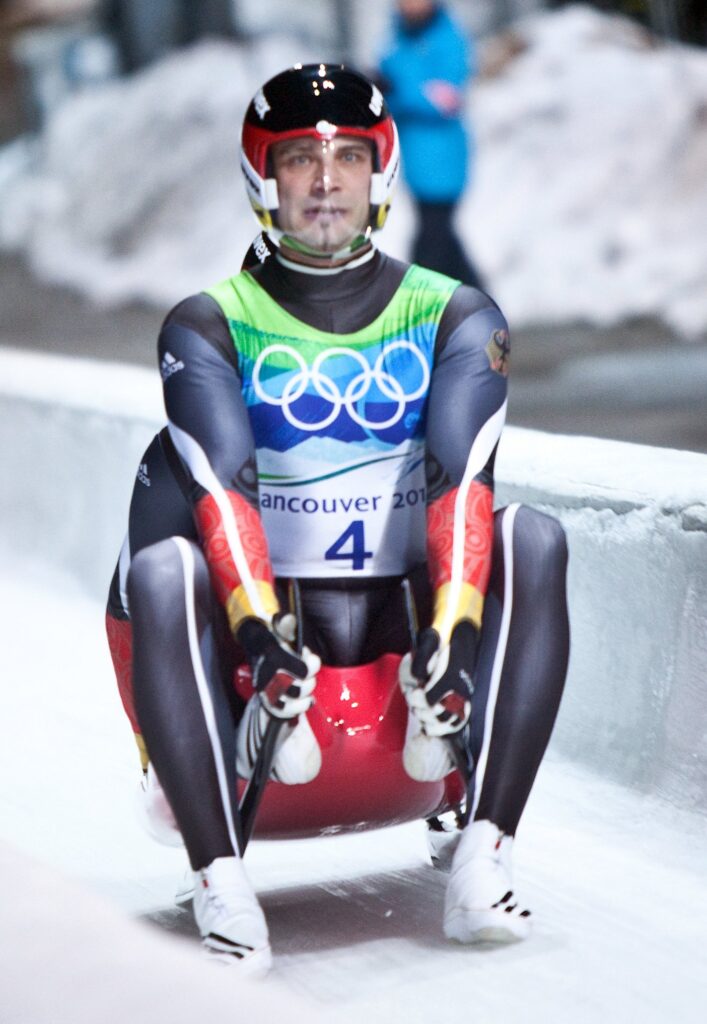
The bobsleigh, luge and skeleton track sits on the lower slopes of Blackcomb Mountain, and it’s one of the few Olympic venues anywhere where the public can ride. Summer Bobsleigh ran from June 12 to September 20, 2026, public skeleton returns in December 2026, and passenger bobsleigh is offered too; ride prices and dates are on the Whistler Sport Legacies site. Just watching costs nothing, as sightseeing is free during the published visiting hours. The track carries a sombre history: Georgian luger Nodar Kumaritashvili died in a training crash on the day of the 2010 opening ceremony, and the track was modified afterwards.
Whistler Olympic Park
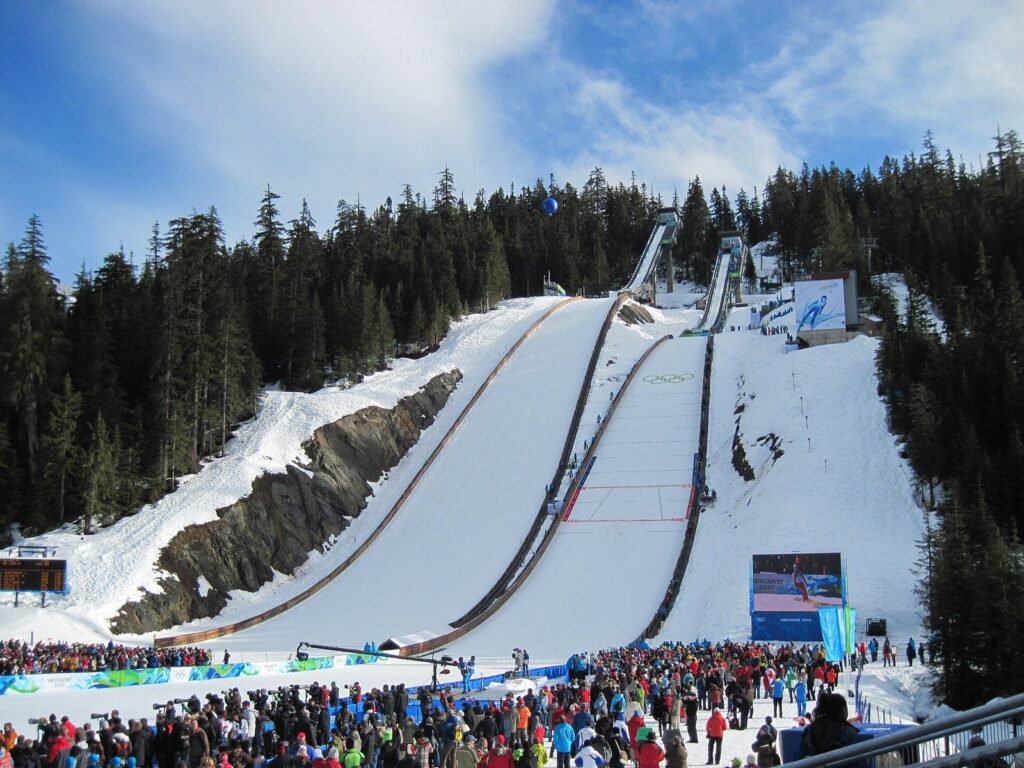
In the Callaghan Valley south-west of the village, the park that hosted ski jumping, Nordic combined, cross-country skiing and biathlon is now a cross-country and snowshoe area. The 2026-27 winter season runs from Friday, November 27, 2026 to April 4, 2027, and a day ticket covers more than 55 km of cross-country trails and 15 km of snowshoe trails, so even non-skiers can get out into the Olympic venue on snowshoes.
Where were the 2010 Paralympic venues?
The Paralympic Winter Games followed from March 12 to 21, 2010, with 502 athletes from 44 countries, and they mostly reused the Olympic venues, so the same places carry both stories. The opening ceremony filled BC Place with a sell-out crowd of 60,000. Para ice hockey, still widely called sledge hockey, was played at UBC’s Thunderbird arena, and wheelchair curling at the Vancouver Olympic/Paralympic Centre, today’s Hillcrest Centre.
Up in Whistler, Para alpine skiing ran at Whistler Creekside, and the Para biathlon and cross-country races were held at the Callaghan Valley venue, which was called Whistler Paralympic Park for those ten days. The Games closed outdoors at Whistler Medals Plaza on March 21, 2010, rather than in a stadium. If you’re walking the Village Stroll today, the Olympic Plaza and its rings are a few minutes away. At the Richmond Olympic Experience, the sit-ski simulator is the one exhibit that puts you in a Paralympian’s seat.
What should you know before you go?
- The downtown sites cost nothing. The cauldron, the Olympic Village square and the outsides of BC Place and Rogers Arena are all free and linked by the seawall. Go in daylight for photos; the cauldron’s blue night lighting is pretty, but the flames only return on announced occasions, so don’t plan an evening around them.
- Transit covers everything below Whistler. The Canada Line serves Olympic Village station and Lansdowne for the Oval. From July 1, 2026, an adult cash or contactless fare is C$3.50 for one zone and C$5.10 for two, and a DayPass is C$12.55. Richmond is a two-zone trip on weekday daytimes but one zone after 6:30 p.m. and all weekend.
- Mind the gaps in the calendar. Whistler’s Olympic venues run in seasons. Summer bobsleigh finished on September 20, public skeleton returns in December, and Whistler Olympic Park opens on November 27, so time an autumn trip around those dates.
- Winter driving rules apply. Winter tires or chains are required on the Sea to Sky Highway from October 1 to March 31, starting just north of Horseshoe Bay, so ask for them when you book a rental car. They’re just as sensible on the steep road up to Cypress.
- Richmond museum days. Look up the Olympic Experience’s opening days first, then pair a visit with a flight, since the airport is a few Canada Line stops away.
How do you plan an Olympic legacy day?
- Downtown on foot (half a day): start at the cauldron on Jack Poole Plaza, follow the waterfront and cut down to BC Place and Rogers Arena, then take the False Creek seawall to the Olympic Village for lunch. It’s about 5 km in all, and the seawall stretch is just as good at a jog; our guide to running in Vancouver maps the route.
- Richmond (two to three hours): the Canada Line to the Richmond Olympic Oval, ideally on the first Thursday of the month for the free museum afternoon, with a skate if a drop-in session fits.
- Whistler (a full day): drive the Sea to Sky, photograph the rings in Olympic Plaza and book a ride at the Sliding Centre; in winter, swap the ride for a ski or snowshoe at Whistler Olympic Park.
Why does 2010 still matter in Vancouver?
The Games changed the city more than any venue shows. The Canada Line to the airport opened in 2009 in time for them, the Sea to Sky Highway was rebuilt, and the Olympic Village kick-started the south shore of False Creek. The Four Host First Nations, the Lil’wat, Musqueam, Squamish and Tsleil-Waututh, on whose territories the venues stand, were official partners in the Games, widely described as a first for the Olympics. And Canada won 14 gold medals, then a record for any country at a Winter Games, which is why February 2010 still comes up in pubs. Our Vancouver history guide puts the Games in the longer story of the city.
Verdict: the downtown sites make a free, easy half-day for anyone with a soft spot for 2010; the Oval and Whistler’s Sliding Centre are the ones worth a special trip.
Vancouver 2010 Olympic sites FAQ
Where is the Olympic Cauldron in Vancouver, and when is it lit?
The 2010 Olympic Cauldron stands on Jack Poole Plaza beside the Vancouver Convention Centre on the Coal Harbour waterfront. It’s lit only for special occasions: in 2026 it burned on February 6 for the Milano Cortina Olympics and on March 6 for the Paralympics, the second time from 4 to 6 p.m.
Can you visit the Richmond Olympic Oval?
Yes. The Oval is a working community sport centre, and its Richmond Olympic Experience museum is free on the first Thursday of every month from 2 to 5 p.m. There are two Olympic-size ice rinks with drop-in public skating, bookable online up to seven days ahead. Ride the Canada Line to Lansdowne station and walk from there.
Can you ride the Whistler bobsleigh track?
Yes. The Whistler Sliding Centre runs public rides: Summer Bobsleigh ran from June 12 to September 20, 2026, public skeleton returns in December 2026, and passenger bobsleigh is sold as well. Popular slots can sell out, so check dates and prices with Whistler Sport Legacies and book ahead. The track is on Blackcomb Mountain, a short drive from the village.
What is Whistler Olympic Park used for now?
It’s a cross-country ski and snowshoe area in the Callaghan Valley. The 2026-27 season runs from November 27, 2026 to April 4, 2027, weather permitting, and a day ticket covers more than 55 km of cross-country trails and 15 km of snowshoe trails.
How far apart are the Vancouver Olympic venues?
The venues stretch from Richmond in the south to Whistler in the north. Everything in Vancouver itself, from the cauldron to BC Place, Rogers Arena and the Olympic Village, fits in a 5 km walk. The Richmond Oval is a Canada Line ride south, Cypress Mountain is a drive up above West Vancouver, and Whistler’s venues are about two hours up the Sea to Sky Highway, so plan Whistler as a separate day.
Were the Paralympics held at the same venues?
Mostly. The Paralympics ran from March 12 to 21, 2010, opening at BC Place in front of 60,000 people. Para ice hockey was played at UBC’s Thunderbird arena, wheelchair curling at today’s Hillcrest Centre, Para alpine at Whistler Creekside and the Nordic races at the Callaghan Valley park. The closing ceremony was held outdoors at Whistler Medals Plaza.
Where was the golden goal scored?
At Rogers Arena, called Canada Hockey Place during the Games. Sidney Crosby scored in overtime of the men’s final against the United States on February 28, 2010, the last day of the Olympics. The arena is the Canucks’ home, so a game or a concert is the way to see inside.
Related Vancouver guides
- Vancouver sports guide: the teams and venues the Games left behind
- BC Place Stadium guide: the ceremonies stadium today
- Running in Vancouver: the seawall past the Olympic Village
- Vancouver to Whistler: getting to the mountain venues
- Vancouver history: where 2010 fits in the city’s story
Sources and verification
Checked on September 26, 2026 against the venue operators and agencies listed below. This guide was compiled from their published information rather than from other travel lists, and it doesn’t claim first-hand visits. Prices for the Oval museum, Whistler rides and trail passes change by season, so check before you go.
- Vancouver Convention Centre: Olympic legacy, cauldron lighting
- Richmond Olympic Oval: Community Thursdays, drop-in ice, Richmond Olympic Experience hours and admission
- Whistler Sport Legacies: Whistler Olympic Park tickets, Whistler Sliding Centre
- City of Vancouver: host city of the 2010 Winter Games
- International Olympic Committee: Vancouver 2010
- International Paralympic Committee: Vancouver 2010 Paralympic Winter Games
- TransLink: fares and fare zones
- Government of British Columbia: winter tire and chain-up routes
Photo credits
- Olympic Cauldron, 2013: photo by Another Believer, Wikimedia Commons (CC BY-SA 3.0)
- Olympic Village sparrow sculpture, 2011: photo by Guilhem Vellut from Vancouver, Canada, Wikimedia Commons (CC BY-SA 2.0)
- Richmond Olympic Oval, 2010: photo by Robert Scoble from Half Moon Bay, USA, Wikimedia Commons (CC BY 2.0)
- Cypress Mountain aerials, 2010: photo by Se Mo, Wikimedia Commons (CC BY-SA 2.0)
- Whistler Olympic Plaza rings: photo by sbmeaper1, Wikimedia Commons (CC0)
- Luge at the Whistler Sliding Centre, 2010: photo by kris krüg from Vancouver, Canada; cropped and rotated by DCB, Wikimedia Commons (CC BY-SA 2.0)
- Whistler Olympic Park ski jumps, 2010: photo by Iwona Erskine-Kellie from Vancouver, British Columbia, Canada, Wikimedia Commons (CC BY 2.0)
- Olympic Cauldron, Jack Poole Plaza (featured image): photo by User:Tundraski, Wikimedia Commons (CC BY-SA 4.0)