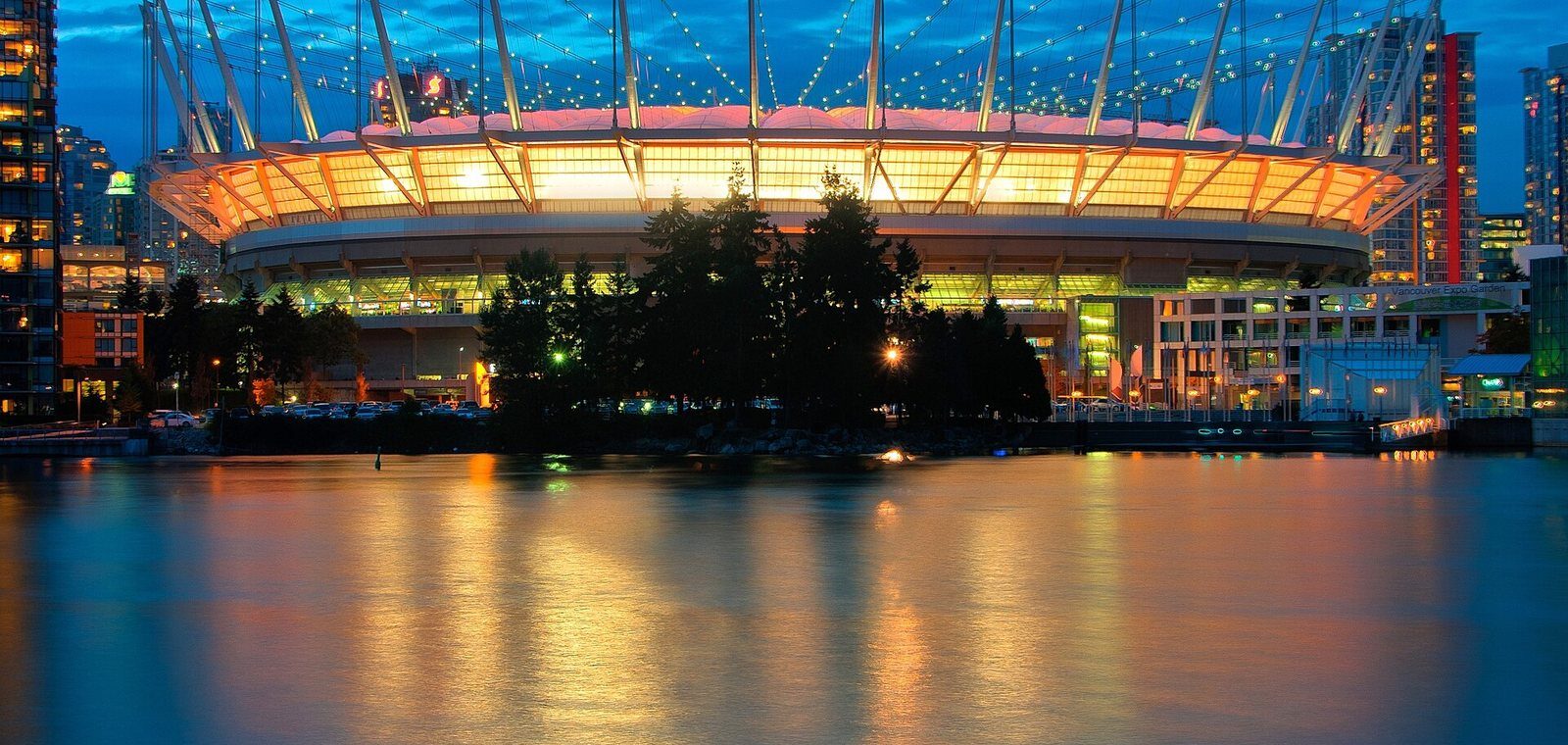
Sports in Vancouver centre on two downtown venues side by side: Rogers Arena, where the NHL’s Canucks play from late September to April, and BC Place, the roofed stadium the Whitecaps (MLS soccer) and the BC Lions (CFL football) share from late winter to November. Both are a few steps from Stadium-Chinatown SkyTrain station. Around them, there’s summer baseball with the Vancouver Canadians at Nat Bailey Stadium, the PWHL’s Goldeneyes at the Pacific Coliseum, winter lacrosse, and some of North America’s biggest mass-participation runs, so there’s a live game or race most weeks of the year.
This guide is for visitors who want to catch a game, and for fans planning a trip around one. The one caveat that matters: a Canucks game is the hardest and priciest ticket in town, while soccer, football, baseball and women’s hockey are far easier to walk into. Schedules and ticket details below were checked September 25, 2026 against the teams’ and leagues’ official sites.
What’s closed or different right now?
- A longer NHL season. The 2026-27 NHL season has grown to 84 games per team. The Canucks opened at Edmonton on September 29, host Edmonton in the home opener on Thursday, October 1, then Calgary on October 3 and Vegas on October 4. Former captain Quinn Hughes makes his first return to Vancouver on Sunday, October 25, and the Toronto Maple Leafs make their only visit on Saturday, October 31 at 4 p.m.
- Few Whitecaps home dates left. After a five-match road trip through October, the Whitecaps play San Diego FC at BC Place on Wednesday, October 28 and close the home schedule against Seattle on Sunday, November 1, before Decision Day in Montréal on November 7 and the playoffs.
- A new women’s hockey season is coming. The Goldeneyes, Vancouver’s PWHL team, open training camp on November 18, with home games at the Pacific Coliseum over the winter.
- BC Place after the World Cup. The stadium hosted seven FIFA World Cup matches this summer, drawing more than 367,000 spectators, and the Lions played two home games elsewhere to make room. It’s back to its regular tenants for the fall.
Vancouver sports at a glance
| Team | League | Venue | Season | Nearest transit | Tickets |
|---|---|---|---|---|---|
| Vancouver Canucks | NHL hockey | Rogers Arena | Late September to April, playoffs to June | Stadium-Chinatown SkyTrain | Hardest and priciest |
| Vancouver Whitecaps FC | MLS soccer | BC Place | Late February to November | Stadium-Chinatown SkyTrain | Usually available |
| BC Lions | CFL football | BC Place | June to November | Stadium-Chinatown SkyTrain | Easy |
| Vancouver Goldeneyes | PWHL women’s hockey | Pacific Coliseum | Winter to spring | Buses along East Hastings | Moderate |
| Vancouver Warriors | NLL box lacrosse | Rogers Arena | Winter to spring | Stadium-Chinatown SkyTrain | Easy |
| Vancouver Canadians | Minor league baseball | Nat Bailey Stadium | April to early September | King Edward, Canada Line | Easy and cheap |
What’s on each month?
Whenever you visit, something is playing. This is the typical year; exact dates move with each league’s schedule.
| Month | What you can see |
|---|---|
| January and February | Canucks hockey, Goldeneyes women’s hockey, Warriors lacrosse; the Whitecaps season opens in late February |
| March | Canucks, Goldeneyes, Warriors and Whitecaps |
| April | The Canucks’ regular season ends and playoffs begin; Canadians baseball opens; the Vancouver Sun Run |
| May | NHL playoffs if the Canucks qualify, Whitecaps, Canadians, the BMO Vancouver Marathon, and Bandits basketball in Langley |
| June | The BC Lions season opens; Whitecaps, Canadians and Bandits |
| July and August | Whitecaps, Lions, Canadians and Bandits; the PNE fair starts in late August |
| September | Canucks preseason and opening night, Whitecaps, Lions, and the last Canadians games |
| October | Canucks, Lions and the end of the Whitecaps’ regular season |
| November | Canucks, the Lions’ playoffs and the Grey Cup, MLS playoffs, and Goldeneyes training camp |
| December | Canucks, Goldeneyes and Warriors |
Which game is best for your trip?
- First visit, one game: the Canucks if you can get a reasonably priced seat, because hockey is the city’s heartbeat. If not, a Whitecaps match gives you a bigger crowd for less money.
- On a budget: the Canadians in summer, the Goldeneyes or the Warriors in winter. All three cost a fraction of an NHL ticket and deliver a real night out.
- With kids: an afternoon at Nat Bailey Stadium is hard to beat, with room to wander and a relaxed crowd. A Lions game under the roof is a good wet-weather alternative.
- For atmosphere: a Whitecaps derby against Seattle or Portland, or a Canucks game against Edmonton or Toronto.
- On a rainy day: everything except baseball is under a roof, so the weather never cancels a game.
How do you get Canucks game tickets?
Hockey is Vancouver’s religion, and Canucks game tickets are the most sought-after in the city. Most seats go to season-ticket holders, so what reaches the public sells through the team’s official ticketing partner and its verified resale marketplace, with prices that move with demand. A Tuesday game against a non-rival can cost a fraction of a Saturday night against the Oilers or the Maple Leafs.
- Buy from official sources. Use the Canucks’ own site and the verified resale it links to. Tickets offered on social media and classified sites are a common scam.
- Pick the right game. Weeknight games against teams from the Eastern Conference’s quieter end are the cheapest way in. Opening week, the Leafs, the Oilers and any playoff game carry the highest prices.
- Consider the upper bowl. The top level at Rogers Arena is steep but close to the ice for an NHL building, and it’s where most visitors find affordable seats.
- Compare all-in prices. Fees can add a lot at checkout, so compare the final total, not the headline number.
Arrive 45 minutes before puck drop to clear security, find food and watch the warm-ups. On a playoff run, the whole city turns blue and green, and bars fill hours before the game.
What’s a game at Rogers Arena like?
Any Rogers Arena guide starts with location: the arena sits on the edge of downtown at the east end of False Creek, a two-minute walk from Stadium-Chinatown station and 15 minutes on foot from most downtown hotels. Opened in 1995 as GM Place, it holds about 19,000 for hockey and is home to the Canucks and the Warriors, as well as most of the big arena concerts that come through the city. It was also the hockey venue for the 2010 Winter Olympics, when it was temporarily called Canada Hockey Place.
The atmosphere at a Canucks game is loud and loyal, with a crowd that knows the game. Concourse food runs from standard arena fare to local craft beer, at arena prices. After the final horn, the SkyTrain platform gets crowded; if you’re staying downtown, walking to Gastown, Chinatown or Yaletown for a drink and letting the crowds clear is the better plan. The Yaletown guide covers the closest hotels.
What’s BC Place like for a game?
Any BC Place Stadium guide starts with the roof: the stadium, opened in 1983, was rebuilt in 2011 with a cable-supported retractable roof, so games go ahead whatever the weather. With more than 50,000 seats, it has hosted the opening and closing ceremonies of the 2010 Winter Olympics, the 2015 FIFA Women’s World Cup final and, this summer, seven 2026 FIFA World Cup matches; the FIFA World Cup in Vancouver guide covers that summer.
For most Whitecaps and Lions games, the upper tier is partly curtained off, which keeps the crowd closer to the field and the noise inside. BC Place is also home to the BC Sports Hall of Fame, a museum of the province’s sporting history. Like Rogers Arena, it’s next to Stadium-Chinatown station, and Yaletown-Roundhouse on the Canada Line is an easy walk from the south side.
How do you get Whitecaps tickets?
Whitecaps tickets are usually easy to find and good value compared with hockey, and a match at BC Place is one of the best live-sport experiences in the city. The Southsiders and the club’s other supporters’ groups fill the supporters’ sections at one end of the stadium (sections 201 to 207 and 248 to 254, home fans only) with songs, flags and giant banners, while the rest of the stadium is relaxed and family-friendly. Buy from the club’s official ticketing, and pick those sections if you want to stand and sing, or the sidelines near midfield if you want to watch the game.
The 2026 regular season is nearly done at home: San Diego FC on Wednesday, October 28 at 7:30 p.m., and the Cascadia derby against Seattle on Sunday, November 1, the one to buy early. If the Whitecaps reach the playoffs, home playoff matches follow in November. The MLS season runs from late February to October, so spring and summer visitors have far more choice.
The rivalries are the matches to look for. The Whitecaps, the Seattle Sounders and the Portland Timbers compete every year for the Cascadia Cup, a trophy created by the three clubs’ supporters, and those derbies bring travelling fans, bigger crowds and the best songs of the season. The club’s history goes back to the old North American Soccer League, when the original Whitecaps won the 1979 Soccer Bowl, and the name carried through the lower leagues into MLS in 2011.
Are BC Lions games worth it?
Yes, especially for visitors who’ve never seen Canadian football. The CFL game has three downs instead of four, a longer and wider field and 12 players a side, and it’s faster and more wide-open than the American version, with plenty of passing. BC Lions tickets are easy to get, often inexpensive, and a September or October game under the roof at BC Place is a good-humoured night out. The season runs from June to early November, when the playoffs lead to the Grey Cup, Canada’s championship game.
Where can you watch baseball?
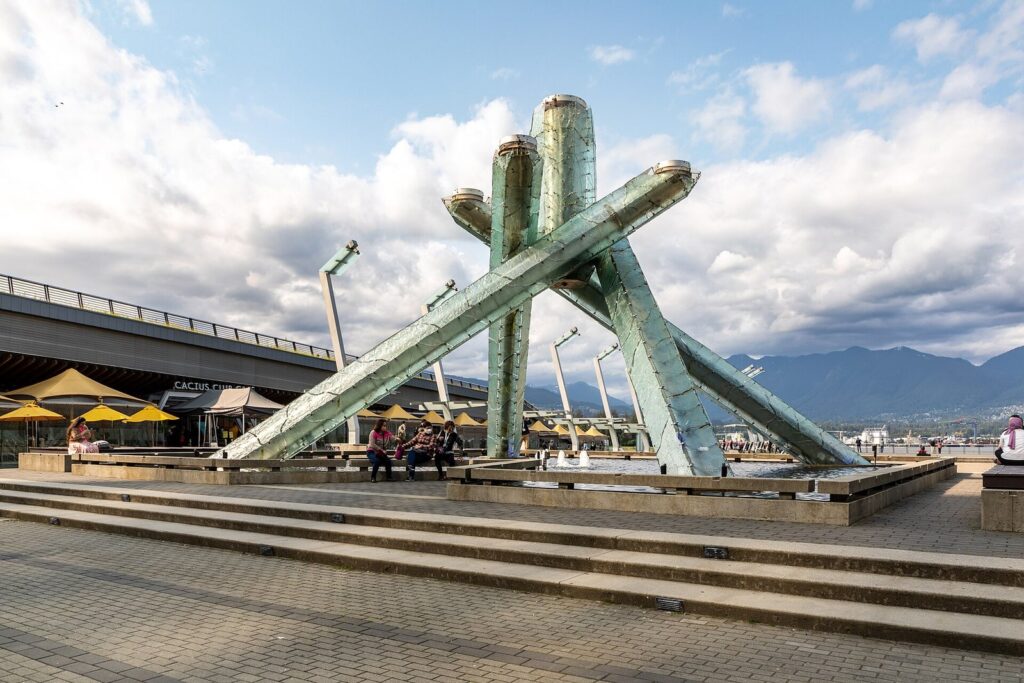
A Vancouver Canadians game at Nat Bailey Stadium is one of the city’s best summer evenings for the money. The Canadians are the Toronto Blue Jays’ High-A affiliate, playing at a small, old-fashioned ballpark from 1951 tucked beside Queen Elizabeth Park, with the North Shore mountains beyond the outfield trees. Tickets are cheap, day games are common, kids are everywhere, and nobody minds if you watch more of the sunset than the game. The season runs from April to early September, so the ballpark is quiet until spring. It’s a 10-minute walk from King Edward station on the Canada Line, and pairs nicely with the gardens next door; see the VanDusen and Queen Elizabeth Park guide.
What about women’s hockey, lacrosse and other teams?
Vancouver’s sporting calendar is broader than its big three.
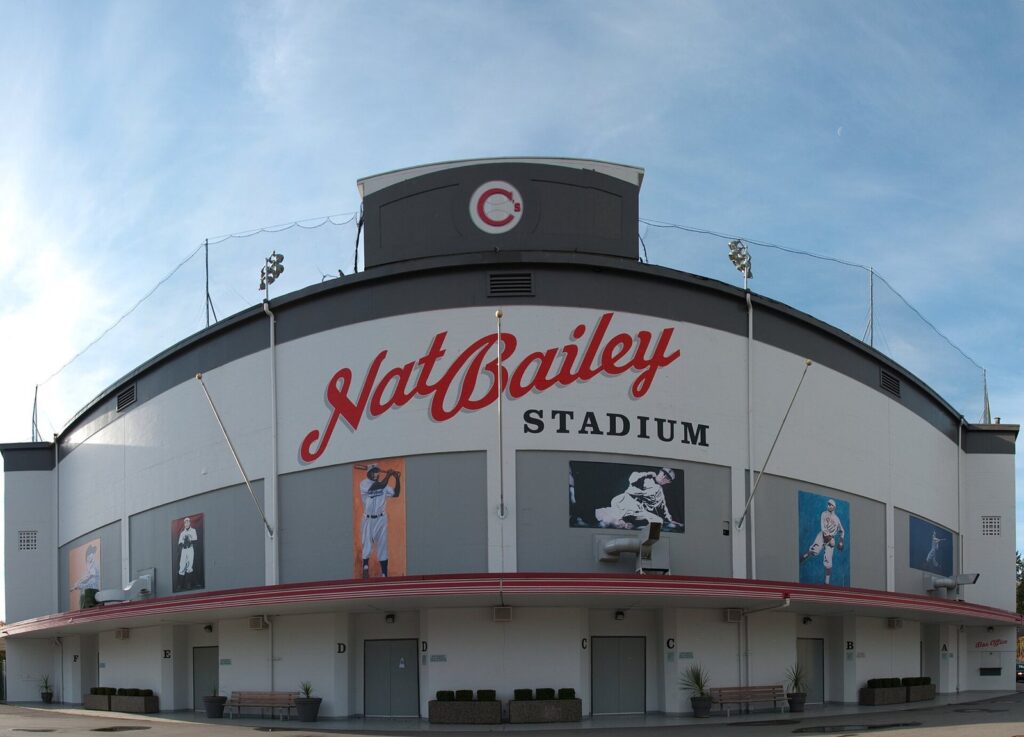
- Vancouver Goldeneyes (PWHL). The city’s professional women’s hockey team plays at the Pacific Coliseum on the PNE grounds, the old home of the Canucks and the 2010 Olympic figure-skating venue. Stars such as Sarah Nurse are on the roster, and season-ticket memberships start at C$33.50 a game, a fraction of an NHL ticket.
- What the PWHL is. The Professional Women’s Hockey League played its first season in 2024 with six teams and expanded to Vancouver and Seattle for 2025-26. The standard of play is the best women’s hockey in the world, with Olympians throughout the rosters, and games are fast, skilful and far less expensive than the NHL.
- Vancouver Warriors (NLL). Box lacrosse is fast, physical and loud, and the Warriors play winter home games at Rogers Arena, often with easy ticket availability and a party atmosphere.
- Women’s soccer. Vancouver Rise FC plays in the Northern Super League, Canada’s professional women’s league, which kicked off in 2025.
- Summer basketball. The Vancouver Bandits play in the Canadian Elite Basketball League at the Langley Events Centre, a drive out in the Fraser Valley.
- University sport. UBC’s Thunderbirds play hockey, soccer, football and more on campus, at low prices.
Which seats should you choose?
Where you sit changes the experience as much as the game does.
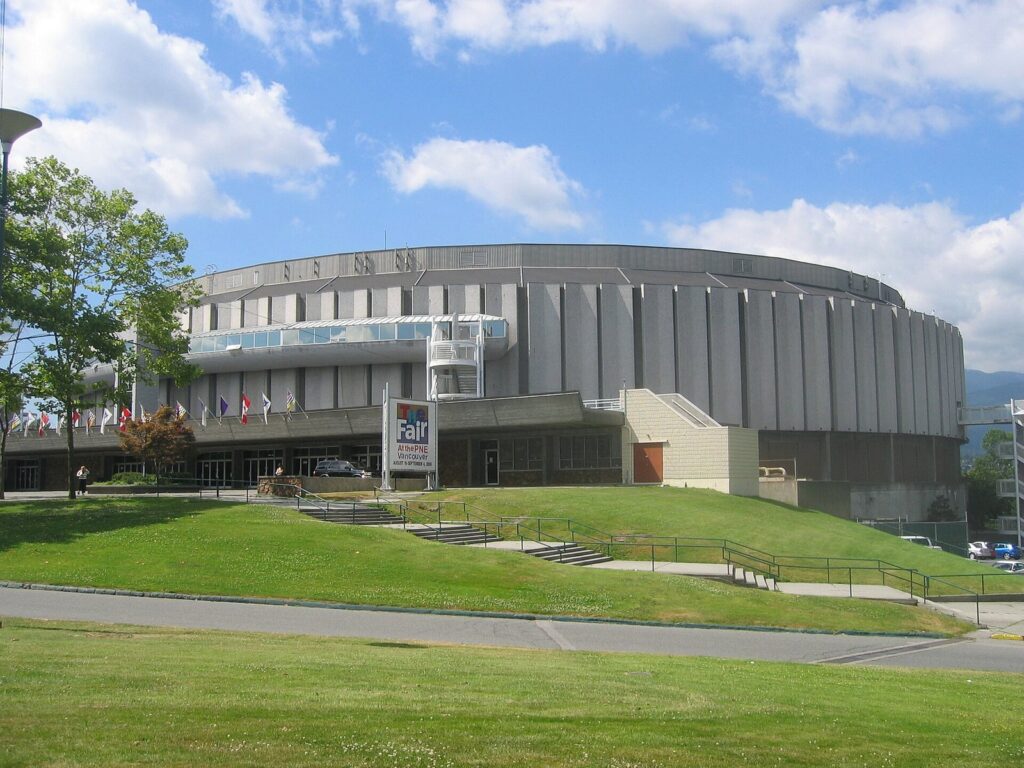
- Rogers Arena for hockey: the lower bowl puts you close enough to hear the hits, and the corners are often better value than centre ice. The upper bowl is steep, which means good sightlines down onto the ice; the end sections are the cheapest seats in the building.
- BC Place for soccer: the supporters’ sections at one end (201 to 207 and 248 to 254) stand, sing and wave flags for 90 minutes and are for home fans only; sit elsewhere if you’d rather stay in your seat. Sideline seats near midfield give the best view of the game’s shape.
- BC Place for football: sit higher than you would for soccer. Rows well up in the lower bowl let you see plays develop, while front rows sit below the players’ benches.
- Nat Bailey Stadium: nearly every seat is close. Bring a layer for the evening chill, and a glove if you’re hoping for a foul ball.
Which big events happen beyond the city?
A few of the region’s biggest sporting weekends happen outside Vancouver and make good road-trip excuses. Whistler hosts Crankworx, a mountain-biking festival, each summer, and its ski season brings World Cup-level competition to the mountains in some winters. Squamish is Canada’s rock-climbing capital, with world-class granite on the Stawamus Chief. The road trips from Vancouver guide covers getting to all of them.
Why is Vancouver so hockey-mad?
The Canucks joined the NHL in 1970 and have reached the Stanley Cup Final three times, in 1982, 1994 and 2011, losing each time; the Cup has never come to Vancouver, and every spring the city wonders whether this is the year. The towel-waving that still greets big moments dates from the 1982 playoff run. The 2011 Final ended in a Game 7 loss and a riot downtown, a night the city would rather forget, and the playoff crowds since have been better behaved. Visitors don’t need the history to enjoy a game, but it explains the intensity: hockey here isn’t entertainment so much as a shared, slightly anxious, lifelong project.
The other teams have happier records. The BC Lions have won the Grey Cup six times, most recently in 2011, and the Whitecaps’ 1979 Soccer Bowl remains a proud moment for the city’s older fans.
What should you know before you go to a game?
- Arrive early. Security lines at Rogers Arena and BC Place build in the last half-hour before the start, and the warm-ups are worth watching.
- Check the bag policy. Both venues restrict bag sizes; check the venue’s current rules before leaving your hotel so you don’t have to find somewhere to leave a backpack.
- Bring a card. Card and phone payments are the norm at concessions; don’t count on paying cash.
- Know the age rules. The legal drinking age in BC is 19, and ID checks at beer stands are routine.
- Stand for both anthems. When an American team visits, both national anthems are sung, and the crowd stands for both.
- Dress for the venue. Arenas are cool, and Nat Bailey Stadium gets chilly after sunset even in summer. Team colours are welcome everywhere: blue and green for the Canucks, blue and white for the Whitecaps, orange and black for the Lions.
- Book accessible seating through the team. Both downtown venues have accessible seating and elevators; the official ticketing sites let you select it.
Where should you eat and stay near the arenas?
The arenas sit where downtown, Chinatown, Gastown and Yaletown meet, which makes eating before a game easy. Chinatown’s bakeries and barbecue shops are two blocks east, Gastown’s restaurants and bars ten minutes north, and Yaletown’s patios a short walk south along False Creek. Book dinner for at least 90 minutes before the start on game nights, when restaurants nearby fill with jerseys. The Chinatown heritage walk makes a good pre-game stroll.
For hotels, anything in Yaletown or the eastern half of downtown is within a 15-minute walk of both venues, and on game nights, walking home beats waiting for a taxi. The downtown Vancouver hotels guide compares options by street.
Where do you watch a game in a bar?
The sports bars Vancouver fans pack on game nights cluster around the arenas in Yaletown and on the edge of Gastown, along Granville Street and in the pubs of the West End, and on a Canucks night nearly every bar in the city has the game on. Book a table for big games, especially Saturday-night hockey, and expect the room to erupt with every goal. For playoff runs, outdoor viewing parties and packed patios become part of the city’s life. The Granville Street nightlife and Gastown bars guides cover the areas, and the Vancouver nightlife guide the rest of the city.
Which concerts and live events are on?
The same arenas host most of the big shows, so concerts in Vancouver range from stadium tours at BC Place and arena shows at Rogers Arena to the Pacific Coliseum and the summer amphitheatre at the PNE. For a more intimate night, the Commodore Ballroom on Granville Street, with its famous sprung dance floor, is the city’s classic mid-sized venue, and the Orpheum hosts the Vancouver Symphony Orchestra in a restored 1927 movie palace. Check the live music venues guide for clubs and smaller rooms.
Buying concert tickets works much like sport: go through the venue’s or promoter’s official seller, expect dynamic pricing for the biggest tours, and treat any offer outside official and verified resale channels with suspicion. Big stadium shows at BC Place sometimes land on the same weekend as a Whitecaps or Lions home game, which fills downtown hotels, so check the venue calendars before booking your room.
For live events Vancouver stages beyond sport and music, the festival calendar is the place to look: film in the fall, fireworks in summer, and lights and markets in winter. The Vancouver events and festivals guide has the dates.
Where can you run, ride and play?
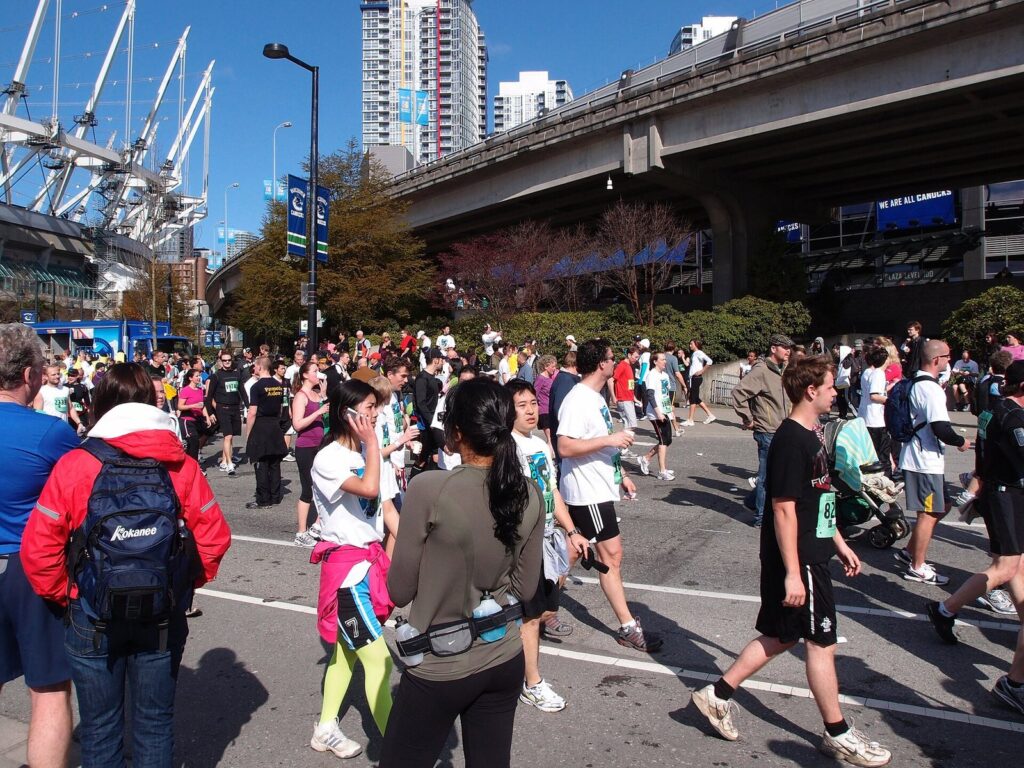
Vancouver is an active city, and joining in is often more fun than watching. Running in Vancouver means the Seawall first: a flat, car-free path around Stanley Park and along False Creek where you’ll share the early morning with half the city. The Vancouver Sun Run, a 10K through downtown in April, draws tens of thousands of runners and walkers, and the BMO Vancouver Marathon follows in May. For a steeper challenge, the Grouse Grind climbs 800 m up Grouse Mountain in 2.5 km. Visitors can join in easily: registration for the Sun Run and the marathon’s shorter races usually opens months ahead, and several running stores and community groups host free weekly social runs along the water. Cyclists should read the biking guide, and in winter, the North Shore’s ski hills are 30 minutes from downtown; see winter in Vancouver.
Which Olympic sites can you visit?
Vancouver hosted the 2010 Winter Olympics and Paralympics, and the Vancouver 2010 Olympic sites are still in everyday use. The Olympic Cauldron stands at Jack Poole Plaza beside the convention centre, lit for special occasions. BC Place hosted the ceremonies, Rogers Arena the hockey, the Pacific Coliseum figure skating and short track, and the Richmond Olympic Oval speed skating; the Oval is now a community sports centre. The athletes’ village became the Olympic Village neighbourhood on False Creek. Up the mountains, Cypress hosted freestyle skiing and snowboarding, and Whistler the alpine, sliding and Nordic events; see Cypress Mountain and skiing Whistler from Vancouver.
How do you get to and from games?
Take transit. Rogers Arena and BC Place are both next to Stadium-Chinatown station on the Expo and Millennium Lines, and BC Place is also a short walk from Yaletown-Roundhouse on the Canada Line. A one-zone tap costs C$3.50, and trips after 6:30 p.m. on weekdays and all weekend are charged as one zone anyway. Parking near the venues is limited and expensive, and ride-hail prices surge after the final whistle. From most downtown hotels, walking takes 10 to 20 minutes. The Vancouver transportation guide and the SkyTrain guide explain the network.
| Venue | Nearest station or stop | From downtown hotels | After the game |
|---|---|---|---|
| Rogers Arena | Stadium-Chinatown (Expo and Millennium Lines) | 10 to 20 minutes on foot | Walk to Gastown or Yaletown while the platform clears |
| BC Place | Stadium-Chinatown; Yaletown-Roundhouse (Canada Line) | 10 to 20 minutes on foot | Use the Canada Line if the Expo Line is packed |
| Nat Bailey Stadium | King Edward (Canada Line), then a 10-minute walk | About 20 minutes by train | Trains are rarely crowded |
| Pacific Coliseum | Buses along East Hastings Street | About 25 minutes by bus | Expect a queue at the stop after big events |
After big events, trains run extra service, but expect queues on the platform for 20 minutes or so. Coming from the airport on a game day, the Canada Line takes you straight to Yaletown-Roundhouse or Stadium-Chinatown’s neighbourhood with only a short walk.
How can you see a game on a budget?
Top-tier sport in Vancouver doesn’t have to cost NHL money. Minor league baseball at Nat Bailey Stadium is the best-value night out in summer, with low ticket prices and a ballpark where the cheap seats are still close to the action. In winter, the Goldeneyes’ season tickets start at C$33.50 a game, and single-game tickets for the Warriors and for UBC’s university teams are often cheap. BC Lions tickets are frequently discounted for lower-demand games, and Whitecaps matches against less glamorous opponents sell for far less than derbies.
For the Canucks on a budget, watch from a bar. On a big night, a sports bar near the arena gives you most of the atmosphere for the price of dinner, and the walk to Rogers Arena afterward to see the crowd spill out is free. During a playoff run, the city’s outdoor viewing parties cost nothing at all.
How do you avoid overpaying for tickets?
- Stick to official sellers. Each team links to its ticketing partner and verified resale. Screenshots and transfers from strangers are how people lose money.
- Be flexible on the date. Weeknights and less glamorous opponents are cheaper across every league.
- Watch prices move. Dynamic pricing means some games drop in the final days, while rivalry games rarely do.
- Buy single seats if you’re alone. Singles are often cheaper and easier to find than pairs.
- Look beyond the Canucks. A Whitecaps, Lions, Goldeneyes or Canadians game gives you the atmosphere for much less.
For the rest of your planning, the Vancouver travel tips guide covers money and taxes, and the neighbourhoods guide suggests where to eat before the game.
Vancouver sports FAQ
What professional sports teams does Vancouver have?
The Canucks (NHL hockey) play at Rogers Arena, and the Whitecaps (MLS soccer) and BC Lions (CFL football) share BC Place. The Goldeneyes play professional women’s hockey in the PWHL at the Pacific Coliseum, the Warriors play box lacrosse at Rogers Arena, and the Vancouver Canadians play minor league baseball at Nat Bailey Stadium.
When is hockey season in Vancouver?
The Canucks’ regular season runs from late September to April, and for 2026-27 it’s 84 games long, with the home opener on October 1. Playoffs follow from April into June for teams that qualify. The PWHL’s Goldeneyes play through the winter and spring, after training camps open in mid-November.
How much are Canucks tickets?
Prices change with demand, so there’s no fixed price. Weeknight games against less popular opponents are the cheapest, usually in the upper bowl, while Saturday nights, rivals such as Edmonton and Toronto, and playoff games cost far more. Buy from the team’s official ticketing or its verified resale, and compare the all-in price including fees.
Is BC Place indoors?
Yes, when it needs to be. BC Place has a retractable roof, installed when the stadium was rebuilt in 2011, so Whitecaps and BC Lions games go ahead in any weather. The roof is often open on warm, dry days and closed in rain or cold, and you don’t need to plan around the forecast.
What is the closest SkyTrain station to Rogers Arena?
Stadium-Chinatown station, on the Expo and Millennium Lines, is right next to Rogers Arena and a short walk from BC Place. From the Canada Line, Yaletown-Roundhouse station is about a 10-minute walk from both. After games, platforms get busy, so walking back to downtown hotels is often quicker.
Can you see a game in Vancouver in summer?
Yes. The Whitecaps and BC Lions both play home games at BC Place through the summer, and the Vancouver Canadians play baseball at Nat Bailey Stadium from April to early September. Summer also brings basketball with the Vancouver Bandits in Langley. Only NHL hockey takes the summer off.
Related Vancouver guides
- Vancouver Nightlife: where to go before and after the game
- Vancouver Events and Festivals: the year’s big dates beyond sport
- Things to Do in Vancouver: fill the rest of your trip
- Where to Stay in Vancouver: hotels within walking distance of the arenas
- Vancouver with Kids: family-friendly games and activities
Sources and verification
Checked on September 25, 2026 against the teams and leagues listed below. This guide was compiled from their published schedules and information rather than from other travel lists or ticket resellers, and it doesn’t claim first-hand attendance. Ticket prices are set by demand; check the official seller before you buy.
- Vancouver Canucks and NHL: 2026-27 regular season schedule; NHL 2026-27 schedule release
- Vancouver Whitecaps FC: 2026 MLS schedule
- BC Lions and CFL: CFL 2026 schedule
- PWHL: Vancouver Goldeneyes
- TransLink: Pricing and fare zones
Photo credits
- Olympic Cauldron, Jack Poole Plaza (2022): photo by Dietmar Rabich, Wikimedia Commons (CC BY-SA 4.0)
- Nat Bailey Stadium (2010): photo by popejon2 from Paddington, Australia, Wikimedia Commons (CC BY 2.0)
- Pacific Coliseum (2006): photo by Arnold C, Wikimedia Commons (Attribution)
- Vancouver Sun Run (2011): photo by Guilhem Vellut from Annecy, France, Wikimedia Commons (CC BY 2.0)
- BC Place reopening night, 2011 (featured image): photo by Yvrphoto, Wikimedia Commons (CC BY-SA 3.0)