The best Canada eSIM for tourists is sometimes the one you don’t buy: many American phone plans already include Canada, so check yours before spending anything. Everyone else has three sensible options. A travel eSIM app, bought and installed before you fly, gives you data when you land (on a compatible, unlocked phone), with Saily, for example, advertising 1 GB for Canada from US$5.29. A Canadian carrier’s tourist eSIM or prepaid plan, from brands such as chatr, Lucky Mobile and Koodo, adds a local phone number. And your home carrier’s roaming day pass is the no-effort choice for a short trip, if you can stomach the daily fee.
This guide is for visitors deciding how to stay connected in Vancouver without a bill shock at home. The caveat that matters: any eSIM or SIM from another provider only works if your phone is unlocked and, for an eSIM, supports it, so check both before you buy. Everything here was checked September 26, 2026 against the carriers, TransLink, YVR and the City of Vancouver. For the rest of the trip planning, see our Vancouver travel tips.
Your phone options at a glance
| Option | Best for | Canadian number? | Cost | Watch out for |
|---|---|---|---|---|
| A home plan that includes Canada | Many US visitors | No, you keep yours | Often included | High-speed data caps and fair-use limits |
| Home carrier’s roaming pass | Short trips, zero setup | No | A daily or weekly fee set by your carrier | Adds up fast on longer stays |
| Travel eSIM app | Data-only travellers who plan ahead | Usually not | Saily advertises 1 GB from US$5.29 | Data-only plans; calls go through apps |
| Canadian tourist eSIM or prepaid plan | Longer stays, local calls and texts | Yes | A monthly plan, plus tax | Needs an unlocked phone |
| Free Wi-Fi only | Light users, short city breaks | No | Free | Gaps between hotspots, no maps on the move |
Do you need an eSIM for Canada at all?
If you’re American
Start with your own plan. Many plans from the big US carriers, and plenty from their budget brands, include Canada and Mexico as part of the monthly allowance, sometimes with a cap on high-speed data before speeds slow. Log into your carrier’s app or website and look for “Canada and Mexico” or “North America” in the plan details. If it’s included, you’re done: your phone will simply connect to a Canadian network when you land or cross the border, and calls home are billed as normal.
If your plan charges for Canada, compare the carrier’s daily pass with a travel eSIM. For a weekend, the pass may be simpler; for a week or more, an eSIM is usually far cheaper.
If you’re visiting from further away
For travellers from the UK, Europe, Australia, Asia and Latin America, roaming in Canada is rarely included and day passes can cost more per day than a week of travel eSIM data. Unless your carrier has a genuinely good Canada deal, a local option is the better value. Keep your home SIM in the phone anyway, with data roaming switched off, so you still receive the text-message codes your bank sends.
How do travel eSIM apps work?
You buy a data pack online or in the provider’s app, scan a QR code or tap to install it, and it switches on when your phone first connects to a Canadian network. Setup takes a few minutes, and doing it at home over Wi-Fi, a day or two before you fly, means you land with data working. Most packs are data-only, so you’ll call and message through WhatsApp, FaceTime, Signal or similar, and your own number stays reachable for texts.
Several sellers offer Canada packs: Saily advertises one from US$5.29, and Nomad and Airalo sell them too, with bigger packs and longer validity costing more. Holafly sells unlimited-data Canada eSIMs, which suit heavy map, video and hotspot users. These travel eSIMs ride on Canada’s major networks; Nomad, for instance, names Telus and Bell as partners. Prices change often and depend on data size and validity, so compare the pack you actually need rather than the headline price.
A few habits make them painless. Label the lines clearly in your phone’s settings (“Home” and “Canada Data”), set the eSIM as your mobile data line, and turn off data roaming on your home line so you’re not charged twice. Top up in the app if you run low rather than buying a second eSIM.
Which Canadian carriers sell tourist eSIMs?
Canada has three national networks, Rogers, Bell and Telus, and each runs budget prepaid brands that visitors can use without a contract or a credit check. Their big advantage over a travel eSIM app is a Canadian phone number, which helps when restaurants, tour operators and rideshare drivers need to reach you, and makes local calls free rather than routed through an app.
- chatr Mobile sells a free tourist eSIM that visitors can activate in minutes without visiting a store, on no-commitment plans with talk, text and data across Canada.
- Lucky Mobile markets a tourist eSIM with 30-day plans that include talk, text and data, also activated in minutes.
- Koodo Mobile sells 30-day prepaid plans with instant eSIM activation through a QR-code web portal.
Plans and prices on these brands change frequently, so check the current offers on the carriers’ own sites. Tax may be added on top of the advertised price: the general rate in BC is 12%, the 5% GST plus 7% PST. A 30-day plan suits a stay of a week or more; for a long weekend, a small travel eSIM pack is usually cheaper, since you pay for a month either way.
What about a physical SIM card?
If your phone doesn’t support eSIM, the same prepaid brands sell physical SIM cards at their stores and at many electronics and phone retailers. You’ll need an unlocked phone and a few minutes to activate the plan online. Keep your home SIM somewhere safe; it’s small, easy to lose, and you’ll want it back before you fly home.
How much data will you actually use?
Less than you might fear, unless you stream. Maps, messaging, email and browsing run to roughly half a gigabyte to a gigabyte a day for most visitors. Uploading lots of photos, video calls home and using your phone as a hotspot for a laptop push that up quickly, and streaming video is the real data hog. A useful rule of thumb: a week of maps, messages and social media fits comfortably in a 5 to 10 GB pack, while anyone who works on the road or video-calls every evening should look at larger packs or unlimited options.
You can stretch any pack by letting the hotel Wi-Fi handle photo backups and app updates overnight, downloading offline maps and playlists before you head out, and switching off background refresh for apps you won’t use on the trip.
What will you use your phone for in Vancouver?
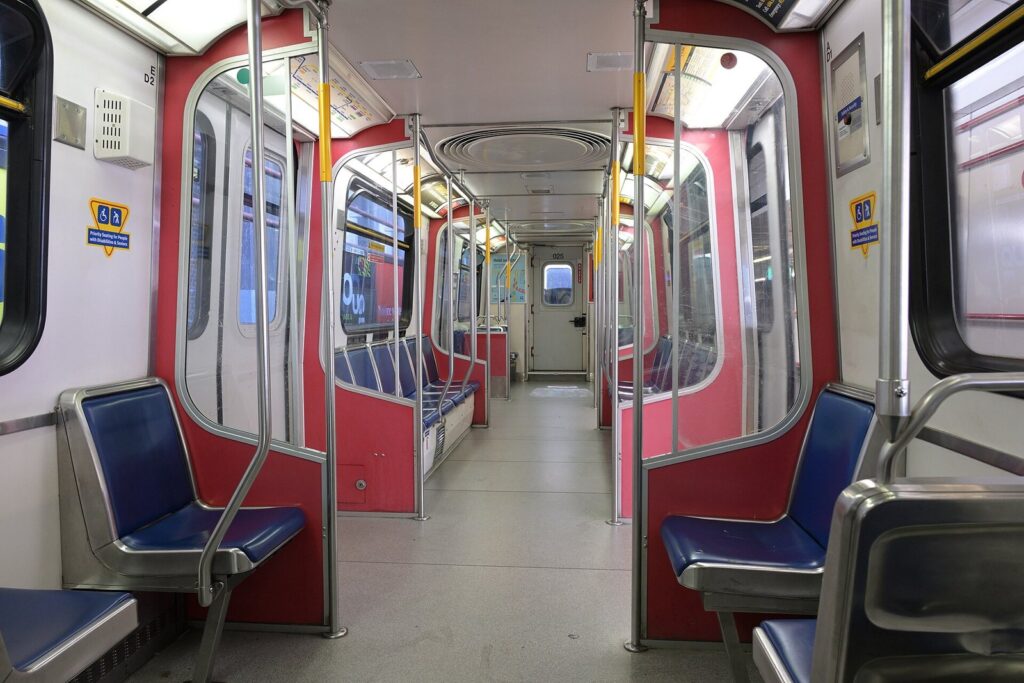
More than you might think, which is the best argument for having data rather than relying on Wi-Fi alone. You can tap a phone or contactless card at the fare gates for buses, SkyTrain and the SeaBus, so your phone doubles as a transit pass. Tickets for Canucks games at Rogers Arena and Whitecaps matches at BC Place are mobile-only, so you’ll need your phone and some battery at the gate. Rideshare pickups, restaurant waitlists, tour confirmations and the ferry schedule all live on your phone too.
That’s also the case for a Canadian number on a longer stay. Restaurants and tour operators often text when a table is ready or a pickup changes, and a local number avoids international texting charges on either side. For a short city break, an app-based data pack and your own number are usually enough.
Where can you find free Wi-Fi in Vancouver?
More places than you might expect, which makes a data-light trip realistic if you plan around it.
- The airport. YVR offers free Wi-Fi to passengers, so you can check messages and call a ride as soon as you land.
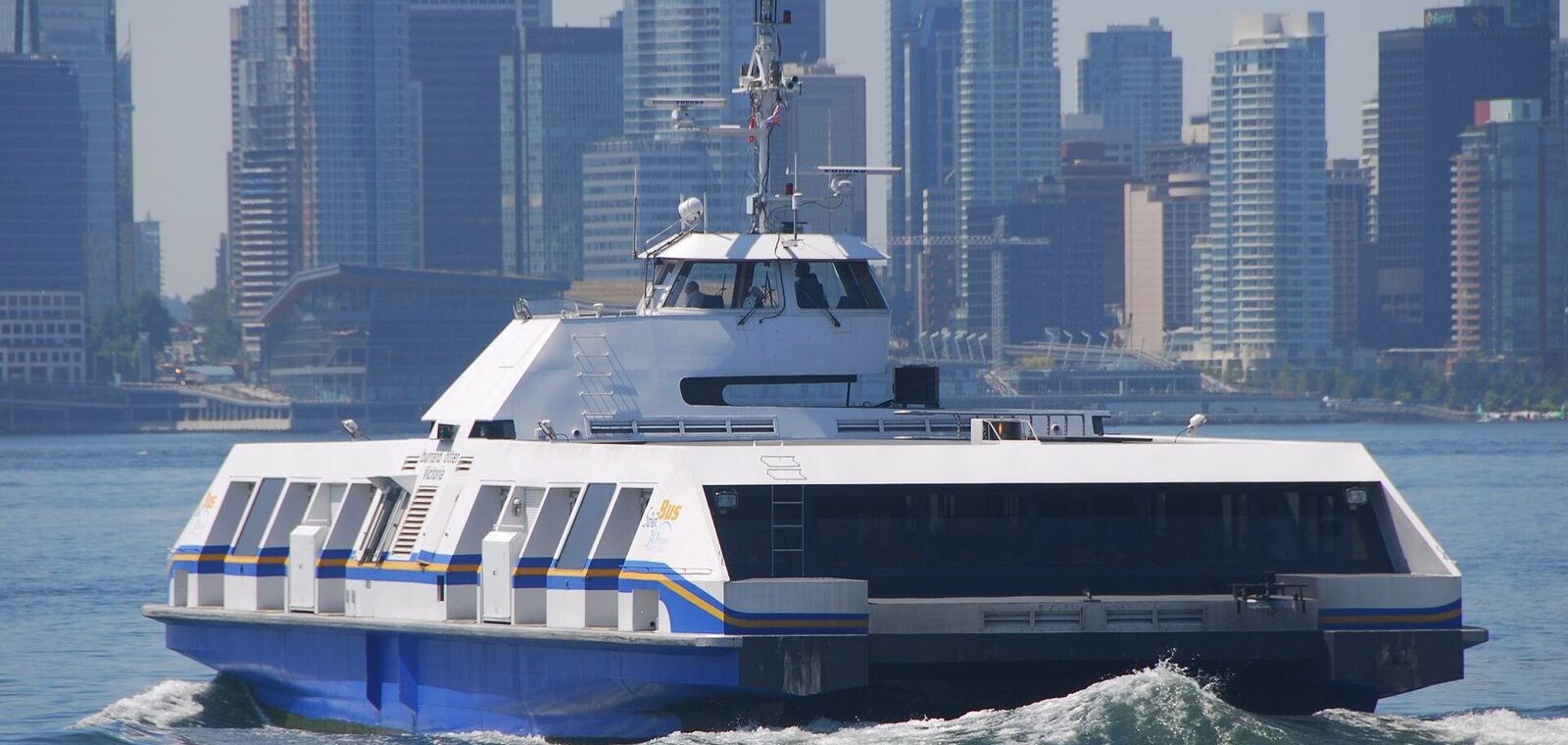
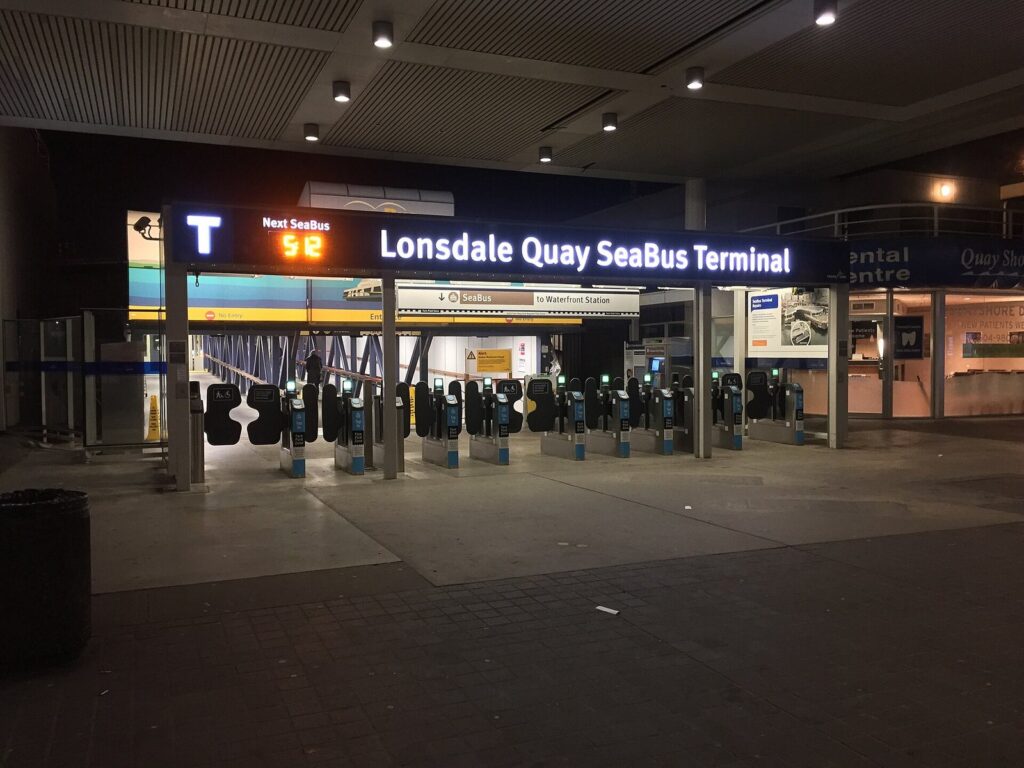
- Transit. TransLink’s free network, TransLinkWiFi, runs on every RapidBus route, most SeaBus vessels, select articulated buses and SkyTrain cars, and at the Waterfront and Lonsdale Quay SeaBus terminals, Edmonds and New Westminster stations and the Carvolth and Langley Centre exchanges.
- City hotspots. The City of Vancouver’s free public network appears as #VanWiFi, COV-Public or, in libraries, VPL, at community centres, outdoor pools, libraries and other civic sites.
- Everywhere else. Hotels, cafés, malls and most restaurants offer free Wi-Fi to customers; ask for the password when you order.
Public networks are handy but open, so avoid banking or entering passwords on them unless the site is secure, and consider a reputable VPN if you’ll lean on public Wi-Fi a lot. Turn off automatic joining for networks you don’t know.

Where is phone coverage patchy?
In the city, coverage is excellent on every major network. It thins out quickly once you head into the mountains, and that matters for safety as much as convenience.
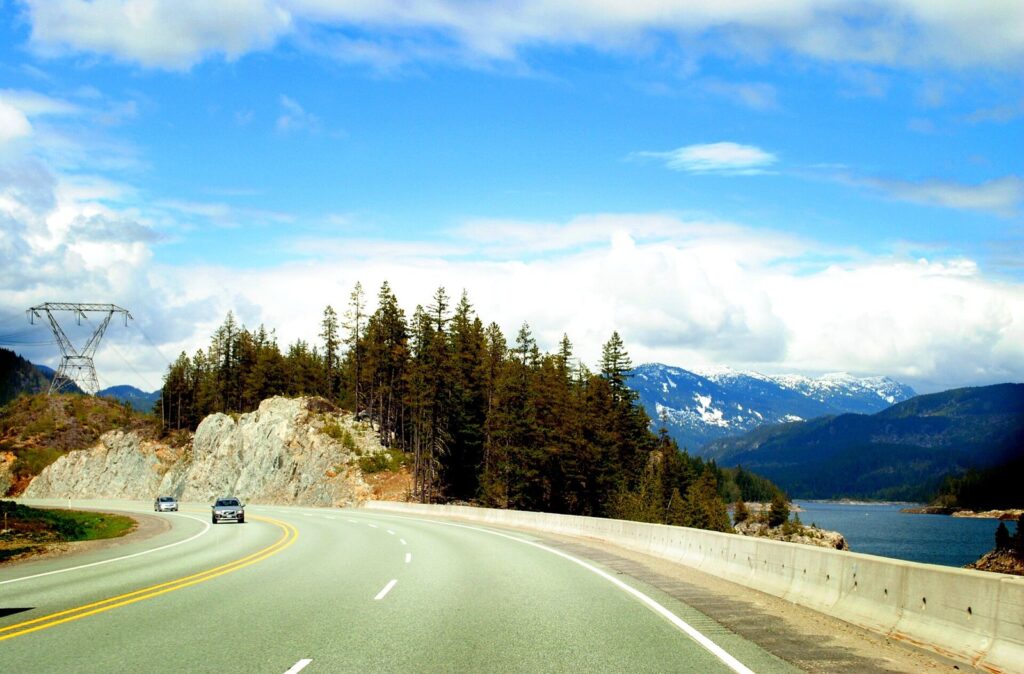
- The Sea to Sky Highway. Most of the drive to Squamish and Whistler has coverage, but expect brief dead spots in the steep sections above Howe Sound. Download offline maps before you set off.
- North Shore trails and the backcountry. Signal disappears quickly once you’re off the main ski-hill trails. Never rely on your phone as your only safety plan; tell someone your route and when you’ll be back.
- Ferries and islands. Coverage on BC Ferries crossings is generally good near the coast but can drop mid-strait, and some Gulf Island corners have weak signal.
Our guide to staying safe in Vancouver covers the rest of the mountain precautions, from trip plans to cold water.
How should you set up your phone before you fly?
- Check your phone is unlocked and supports eSIM. Your carrier can confirm the lock status; the phone’s settings show whether you can add an eSIM.
- Check your home plan’s Canada terms, especially if you’re American.
- Buy and install any eSIM at home over Wi-Fi, then leave it switched off until you land if the provider suggests it.
- Turn off data roaming on your home line once the eSIM is your data line.
- Download offline maps for Vancouver and anywhere you’re driving.
- Set up phone payments. You can tap a phone or contactless card at the fare gates for buses, SkyTrain and the SeaBus, so a working phone with a charged battery is also your transit ticket. Our guides to the Vancouver SkyTrain and the Compass Card and TransLink fares explain how it works.
- Pack a power bank. Maps, photos and tapping through fare gates drain batteries quickly on a long day out.
If you’re still sorting the paperwork side of the trip, our guide to Canada’s eTA requirements covers who needs what to enter. For emergencies, 911 works for police, fire and ambulance across Canada.
Whichever route you choose, the goal is the same: land with maps, messages and a way to call a ride, without a surprise on next month’s bill. For everything else to plan before the trip, see our complete Vancouver planning guide.
Canada eSIM and phone FAQ
Do I need an eSIM to visit Canada?
Not necessarily. Many US phone plans include Canada, and some international carriers offer roaming passes. If your plan doesn’t cover Canada affordably, a travel eSIM bought before you fly is usually the cheapest way to get data, and a Canadian carrier’s prepaid plan adds a local number. Your phone must be unlocked and eSIM-compatible for either.
Does my US phone plan work in Canada?
Often, yes. Many plans from the major US carriers and their budget brands include Canada and Mexico, sometimes with a cap on high-speed data. Check your plan details in your carrier’s app or website before you travel. If Canada isn’t included, compare the carrier’s daily pass with a travel eSIM, which is usually cheaper for trips longer than a few days.
What is the best eSIM for Canada?
It depends on what you need. For data only, travel eSIM apps such as Saily, Nomad, Airalo and Holafly sell Canada packs you can install before you fly. For a Canadian phone number, look at prepaid brands such as Lucky Mobile, which offers tourist plans, and Koodo, which sells 30-day prepaid plans. Compare data size, validity and price for your trip length rather than the headline price.
Is there free Wi-Fi in Vancouver?
Yes. YVR has free Wi-Fi, TransLink’s free TransLinkWiFi network runs on every RapidBus route, most SeaBus vessels, select SkyTrain cars and some stations, and the City’s free #VanWiFi network covers community centres, libraries and other civic sites. Most hotels, cafés and restaurants also offer free Wi-Fi to customers.
Will my phone work on the drive to Whistler?
Mostly. The Sea to Sky Highway has coverage for most of the route, but expect short dead spots in the steeper sections, and signal disappears quickly on backcountry trails. Download offline maps before you leave Vancouver, and don’t rely on your phone as your only safety plan in the mountains.
Can I keep WhatsApp working with a travel eSIM?
Yes. WhatsApp and similar apps stay linked to your usual number, so switching your mobile data to a travel eSIM doesn’t change how people reach you. Keep your home SIM active in the phone with data roaming turned off, so you can still receive text-message codes from your bank without paying for roaming data.
Related Vancouver guides
- Vancouver trip planning essentials: money, transit, safety and the rest of the groundwork
- Canada eTA and entry requirements: who needs a visa or eTA
- Vancouver SkyTrain guide: lines, stations and tips
- TransLink fares and the Compass Card: paying by phone or card
- Is Vancouver safe?: an honest guide to the city’s risks
Sources and verification
Checked on September 26, 2026 against the carriers, eSIM sellers and agencies listed below. Plan prices change often, so the figures here are the advertised starting prices on that date, not quotes.
- Canadian carriers: chatr tourist eSIM, Lucky Mobile tourist eSIM, Koodo prepaid plans
- Travel eSIM sellers: Saily, Nomad, Airalo, Holafly
- TransLink: mobile services and Wi-Fi, fares and payment
- Vancouver International Airport: free Wi-Fi
- City of Vancouver: #VanWiFi
- Destination Vancouver: tax structure
Photo credits
- Expo Line SkyTrain car, 2025: photo by 4300streetcar, Wikimedia Commons (CC BY 4.0)
- Lonsdale Quay SeaBus Terminal, 2017: photo by Cedric tsan cantonais, Wikimedia Commons (CC BY-SA 4.0)
- Central Library roof garden: photo by GoToVan from Vancouver, Canada, Wikimedia Commons (CC BY 2.0)
- Sea to Sky Highway: photo by D. Vincent Alongi, Wikimedia Commons (CC BY 2.0)
- SeaBus on Burrard Inlet (featured image): photo by Alasdair McLellan, Wikimedia Commons (CC BY-SA 3.0)