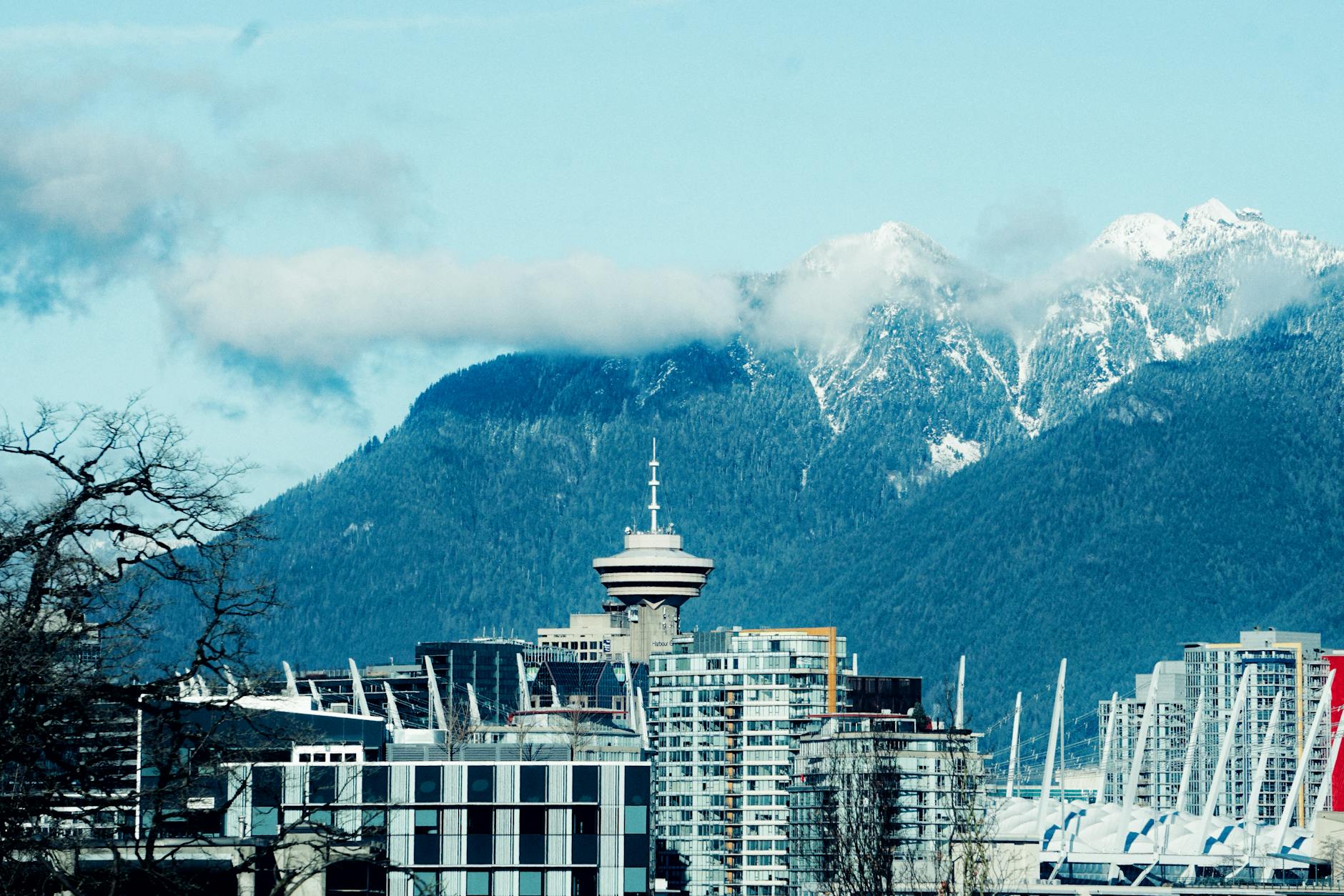
Vancouver in winter (December through February) is the city’s most divisive season. The downtown peninsula stays mild — rarely below 0 °C, more rain than snow — but the North Shore Mountains 20 minutes away hold full alpine snowpack from late November through April. The result is the unusual combination Vancouver is famous for: bike the Stanley Park Seawall in the morning, ski Grouse Mountain in the afternoon. Hotel prices drop to their annual low, the Christmas Markets and Festival of Lights run from late November, and the city quietly holds the most photogenic winter mountain views in any Canadian metro.
This 2026 guide breaks Vancouver in winter into December, January, and February with weather averages, ski conditions, festive events, what to wear, and the indoor/outdoor balance that locals navigate every winter.
Table of Contents
Vancouver in Winter: At a Glance
The 90-day window:
- Months: December, January, February
- Average daytime high: 7 °C (December and January) to 8 °C (February)
- Average rain days: 19 (December), 18 (January), 16 (February)
- Average snow days downtown: 1–2 (rare)
- Daylight: 8 h 0 m (December 21, winter solstice) to 11 h 0 m (February 28)
- Sunset times: 4:15 p.m. (December 21) to 5:45 p.m. (February 28)
- Whistler ski snowpack: Typically 1–3 metres December through March
- Hotel prices: Annual low (excluding Christmas/New Year week)
Winter is Vancouver’s gentlest weather among Canadian cities — but also its rainiest months. For year-round picture see our best time to visit Vancouver pillar.
Vancouver in December
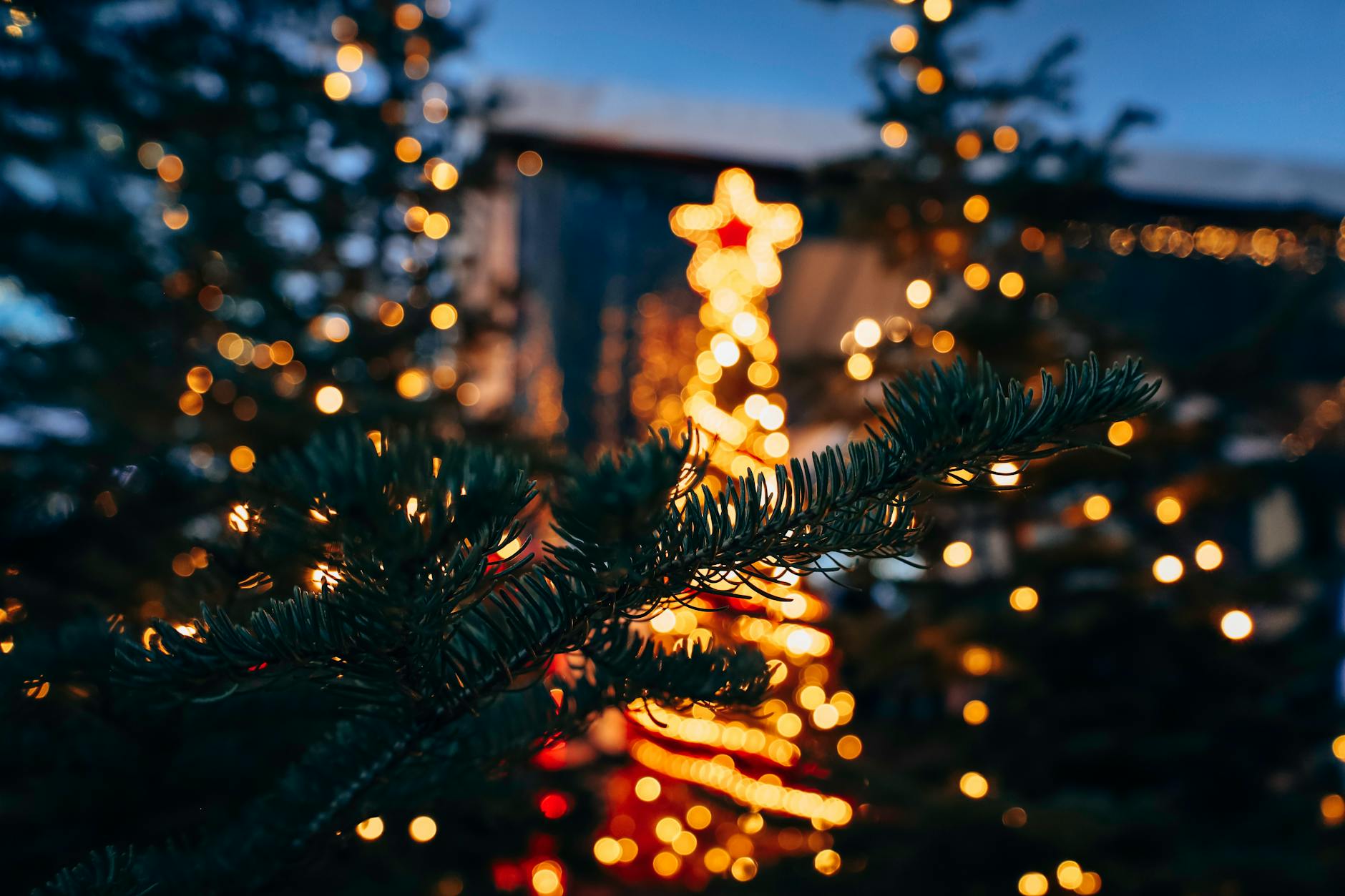
December is when Vancouver’s festive calendar hits peak — Christmas Market, Festival of Lights, Canyon Lights, and Bright Nights all overlap.
December weather:
- Average high: 7 °C (45 °F)
- Average low: 2 °C (36 °F)
- Rain days: 19 (the wettest month of the year)
- Daylight: 8 h 30 m to 8 h 0 m
- Sunset: 4:15 p.m. (December 21)
December highlights:
- Vancouver Christmas Market at Jack Poole Plaza (mid-November through Christmas Eve)
- VanDusen Festival of Lights (late November through early January) — 1.5 million LED lights
- Capilano Canyon Lights (mid-November through mid-January)
- Stanley Park Bright Nights Train (early December through New Year)
- Whistler Mountain at full ski operations
- Canada Place Lights to the Sky (free downtown light show)
- Christmas Day: most attractions closed; Christmas Eve has reduced hours
- New Year’s Eve: free fireworks at Canada Place at midnight
Best for: Visitors prioritizing festive atmosphere, skiers planning Whistler, families with kids loving the lights and Christmas Market.
Vancouver in January
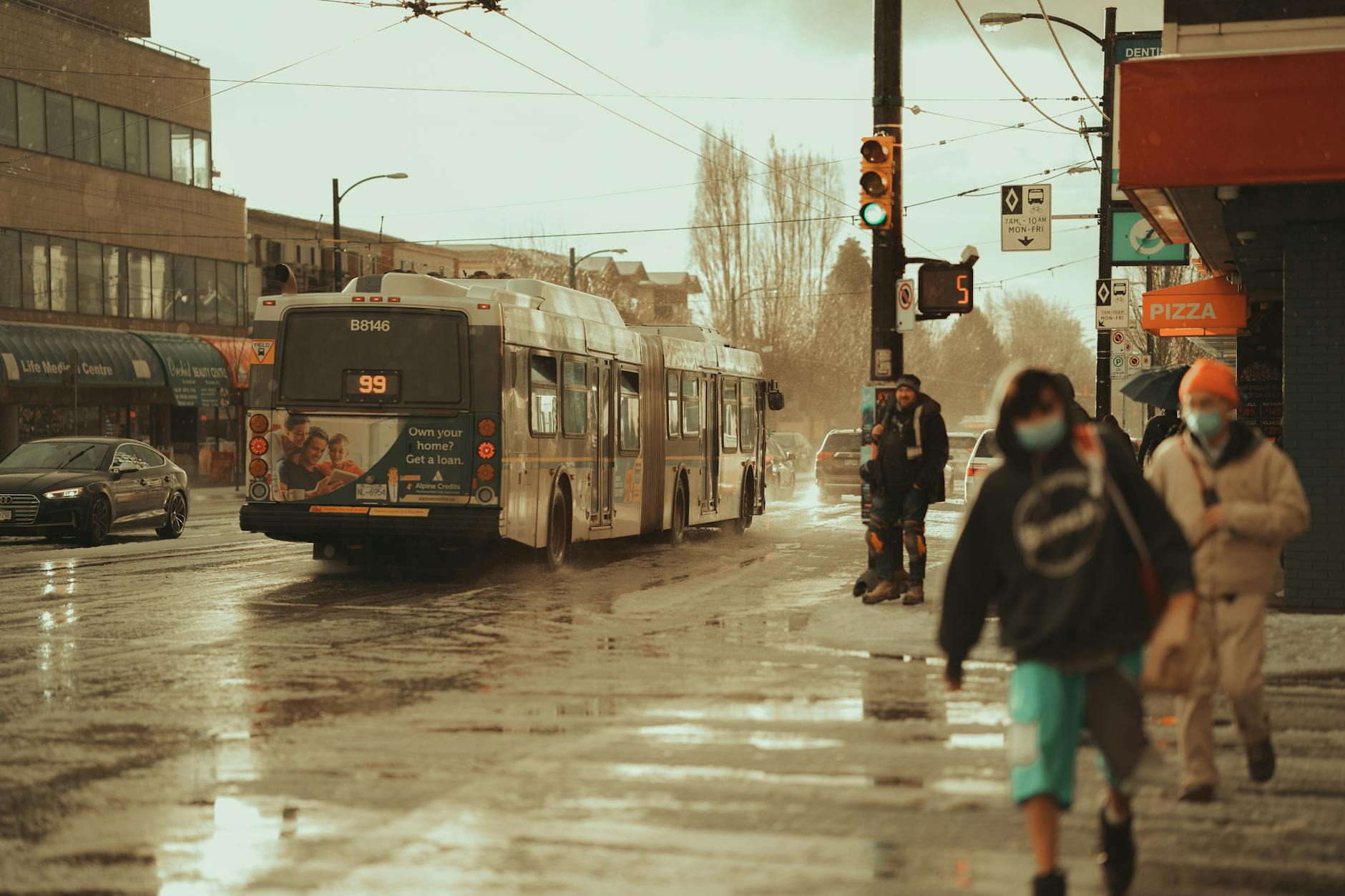
January is the quietest tourist month of the year. Rain dominates, daylight is at its shortest in early January, and most festive programming has wound down. Hotel prices are at annual lows.
January weather:
- Average high: 7 °C (45 °F)
- Average low: 2 °C (36 °F)
- Rain days: 18
- Daylight: 8 h 30 m to 9 h 30 m
January highlights:
- Whistler ski season at peak conditions
- Dine Out Vancouver Festival (mid-January through early February) — 200+ restaurants offer fixed-price menus
- PuSh International Performing Arts Festival (late January)
- Lunar New Year preparations (variable; falls in late January or February depending on year)
- Tofino storm-watching season at peak
- Hotel rates at annual lowest (excluding ski-resort hotels)
Best for: Skiers, foodies (Dine Out Vancouver), budget travellers, storm-watchers heading to Tofino.
Vancouver in February
February starts the recovery — daylight grows by 4 minutes/day, rain begins to taper slightly, and the Lunar New Year typically falls in this month.
February weather:
- Average high: 8 °C (46 °F)
- Average low: 3 °C (37 °F)
- Rain days: 16
- Daylight: 9 h 30 m to 11 h 0 m
- Sunset: 5:45 p.m. by month-end
February highlights:
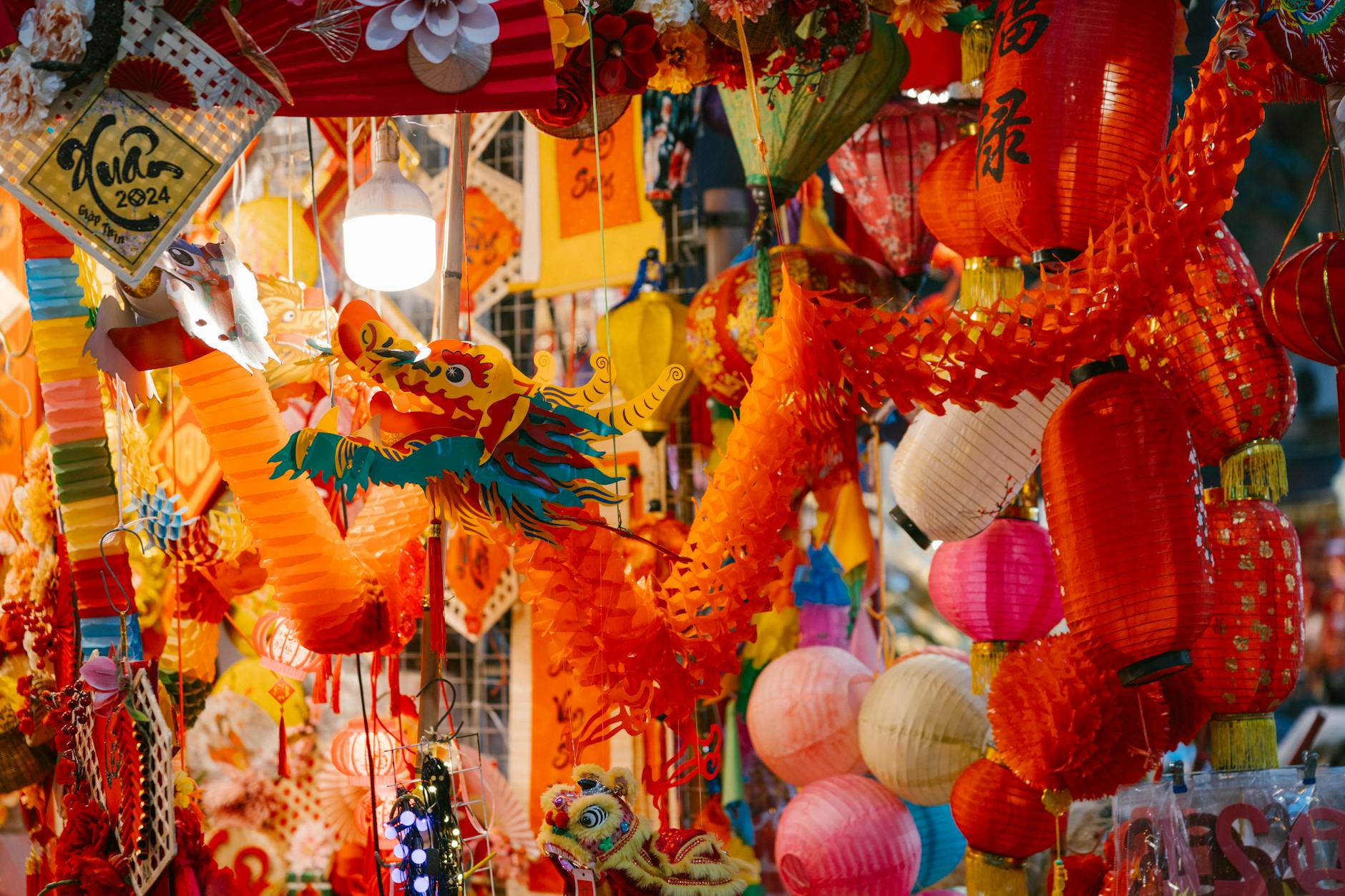
- Lunar New Year — February 22, 2026 (Year of the Horse). Parade through Chinatown; events at Sun Yat-Sen Garden.
- Family Day (BC statutory holiday, mid-February)
- Whistler ski season still at peak
- Vancouver Hot Chocolate Festival (early-late February) — 100+ specialty hot chocolate creations across the city
- Plum blossoms begin (the year’s first floral signal)
- Vancouver International Wine Festival prep (held late February through early March)
Best for: Lunar New Year celebrators, hot-chocolate lovers, skiers, foodies, those who want winter without December’s peak crowds.
Skiing Near Vancouver
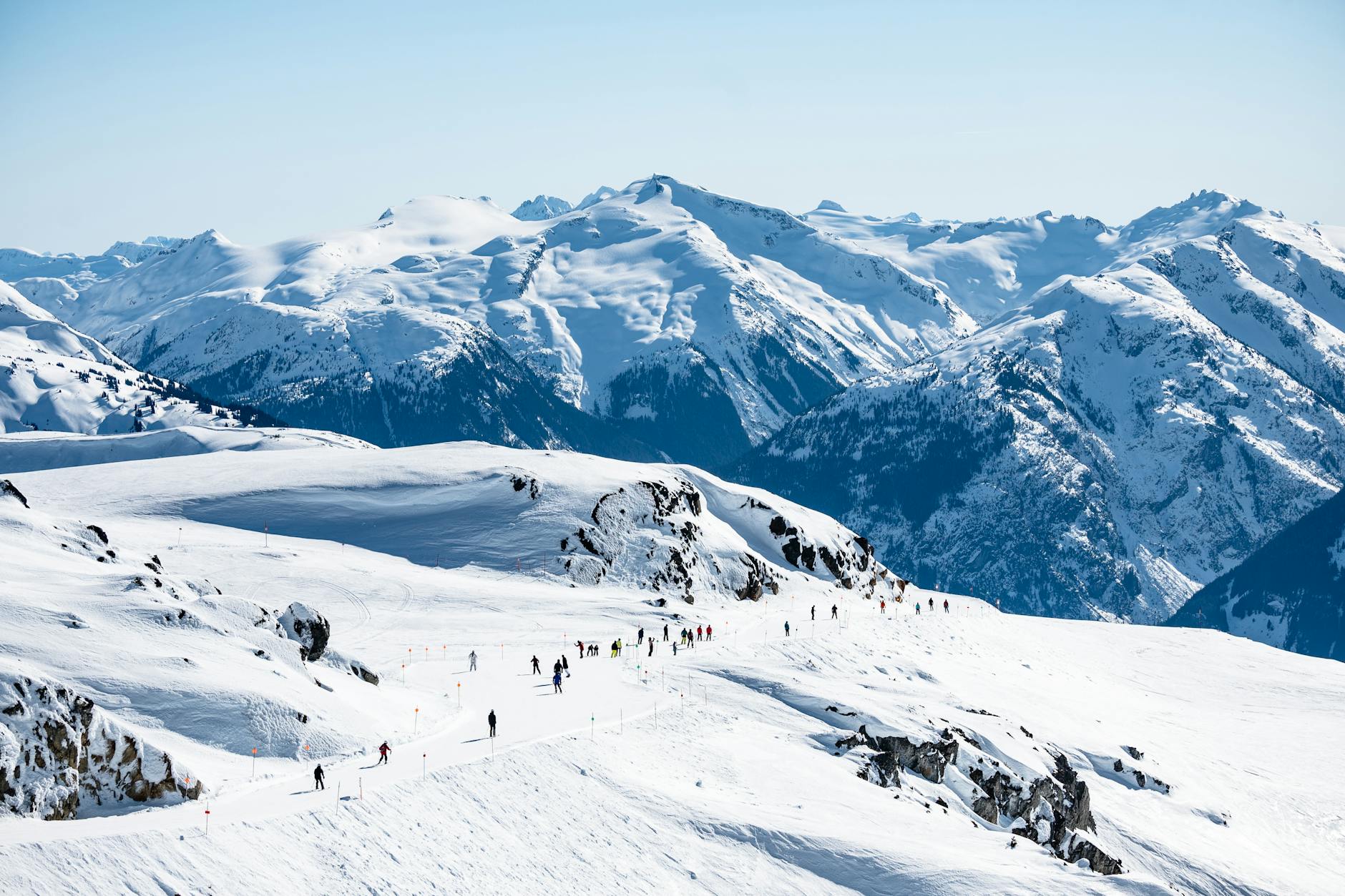
Vancouver’s most distinctive winter feature: world-class skiing within 20 minutes of downtown.
Three local ski hills (20–30 minutes from downtown):
- Grouse Mountain — North Shore; 26 runs; lift tickets about $99 adult/day in 2025/26.
- Cypress Mountain — North Shore; the largest of the three; 53 runs; lift tickets about $115 adult/day.
- Mount Seymour — North Shore; smallest, family-friendly, 39 runs; lift tickets about $88 adult/day.
Whistler-Blackcomb (90-minute drive):
- North America’s largest skiable terrain; 8,171 acres; over 200 marked runs
- Lift tickets about $109+ adult/day; multi-day passes available
- Mountain Collective and Epic Pass cover Whistler 4 days included
- PEAK 2 PEAK Gondola operates year-round
- Whistler Mountain typically opens late November; closes early-to-mid May
- Blackcomb Mountain often runs into June
For full Whistler context see our winter in Vancouver pillar and our Vancouver and Whistler itinerary.
Festive Events: Christmas Markets & Lights
Vancouver Christmas Market (mid-November through December 24, Jack Poole Plaza). 80+ vendors of European-style Christmas crafts, food, and drink. Adult admission about $20.
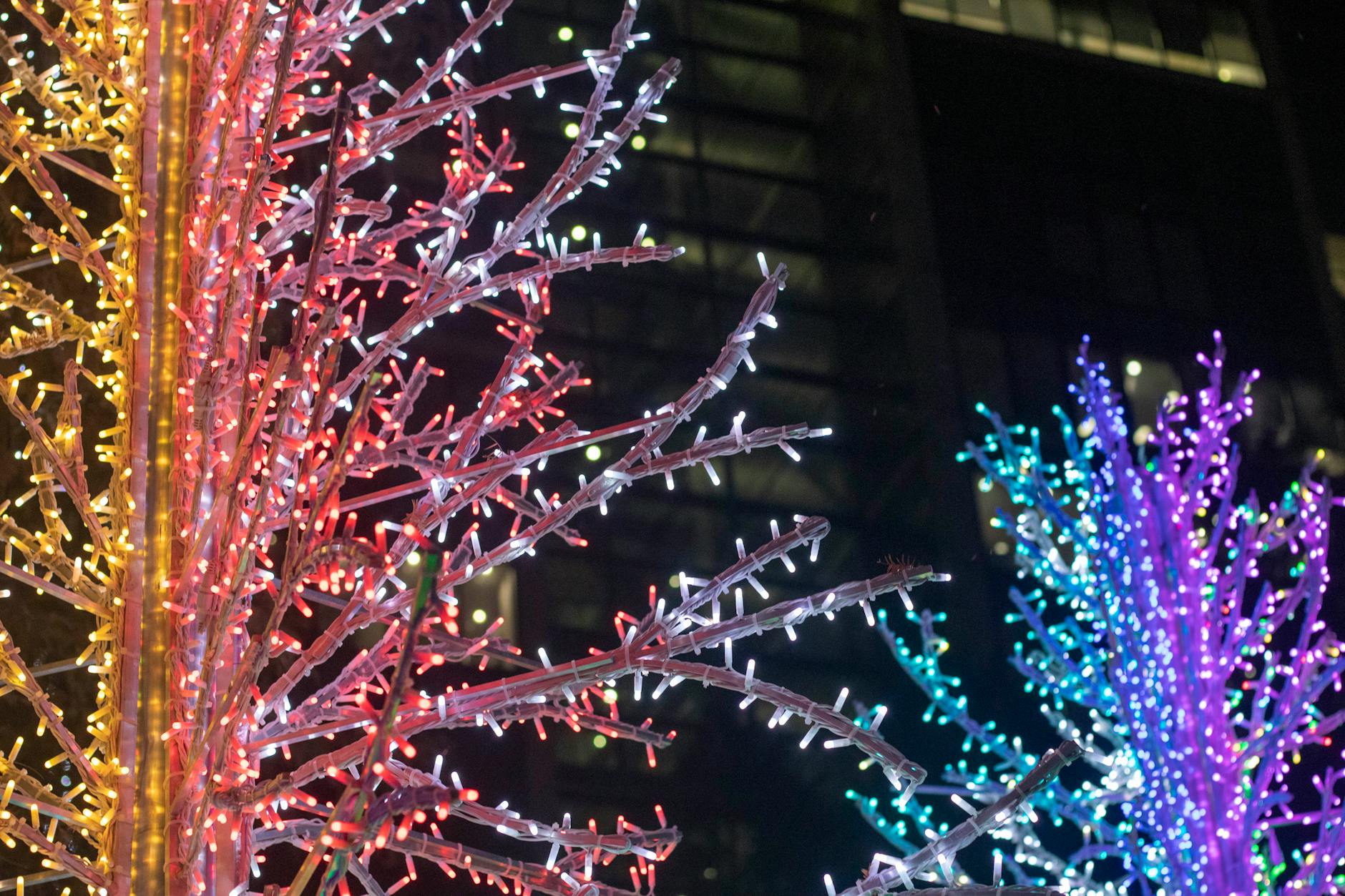
VanDusen Festival of Lights (late November through early January). 1.5 million LED lights across the 22-hectare botanical garden. Adult admission about $20–$28.
Capilano Canyon Lights (mid-November through mid-January). The entire Capilano Suspension Bridge Park illuminated with hundreds of thousands of LEDs. Included with regular Capilano admission.
Stanley Park Bright Nights Train (early December through New Year). The miniature park train converted to a Christmas-themed ride; about $13–$20 adult.
Canada Place Lights to the Sky (December). Free outdoor light show on the white sails at Canada Place.
New Year’s Eve fireworks at Canada Place (December 31, midnight). Free; massive crowds.
Lunar New Year parade (Year of the Horse, February 22, 2026). Through Chinatown; Sun Yat-Sen Garden has special programming.
For more festive events see our events and festivals pillar.
Things to Do in Vancouver Winter
Beyond skiing and festive lights:
Christmas Markets and lights events (covered above).
Indoor museum and gallery visits. Museum of Anthropology, Vancouver Art Gallery, Bill Reid Gallery, Museum of Vancouver, H.R. MacMillan Space Centre. See our things to do pillar.
Spas. Willow Stream at Fairmont Pacific Rim, Miraj Hammam in Gastown, Scandinave Spa Whistler.
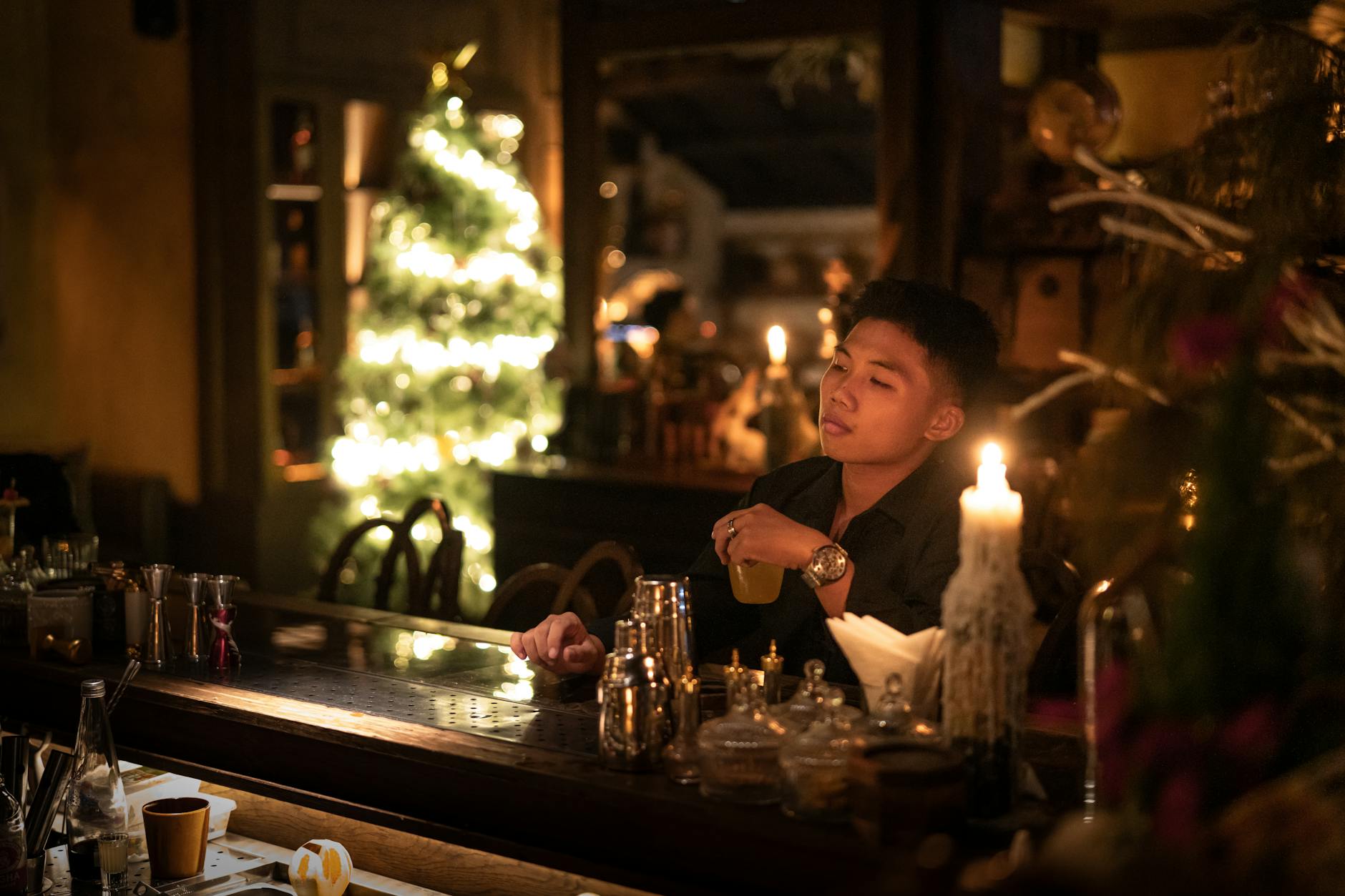
Cocktail bar tour. The Diamond, Botanist, The Keefer, Pourhouse — Vancouver’s cocktail scene is at its cosiest in winter.
Indoor swimming. Bloedel Floral Conservatory at Queen Elizabeth Park is 18 °C and tropical year-round; Kitsilano Pool is closed but Vancouver Aquatic Centre is open.
Granville Island Public Market. Fully covered; especially atmospheric on rainy days.
Stanley Park Seawall walk or bike. Yes, even in winter — fewer crowds, dramatic mountain views, the rain isn’t constant. Dress warm.
Capilano in winter. Canyon Lights makes the bridge most-magical from mid-November through mid-January.
For indoor rainy-day options see our rainy day Vancouver pillar.
Indoor Rainy-Day Vancouver in Winter
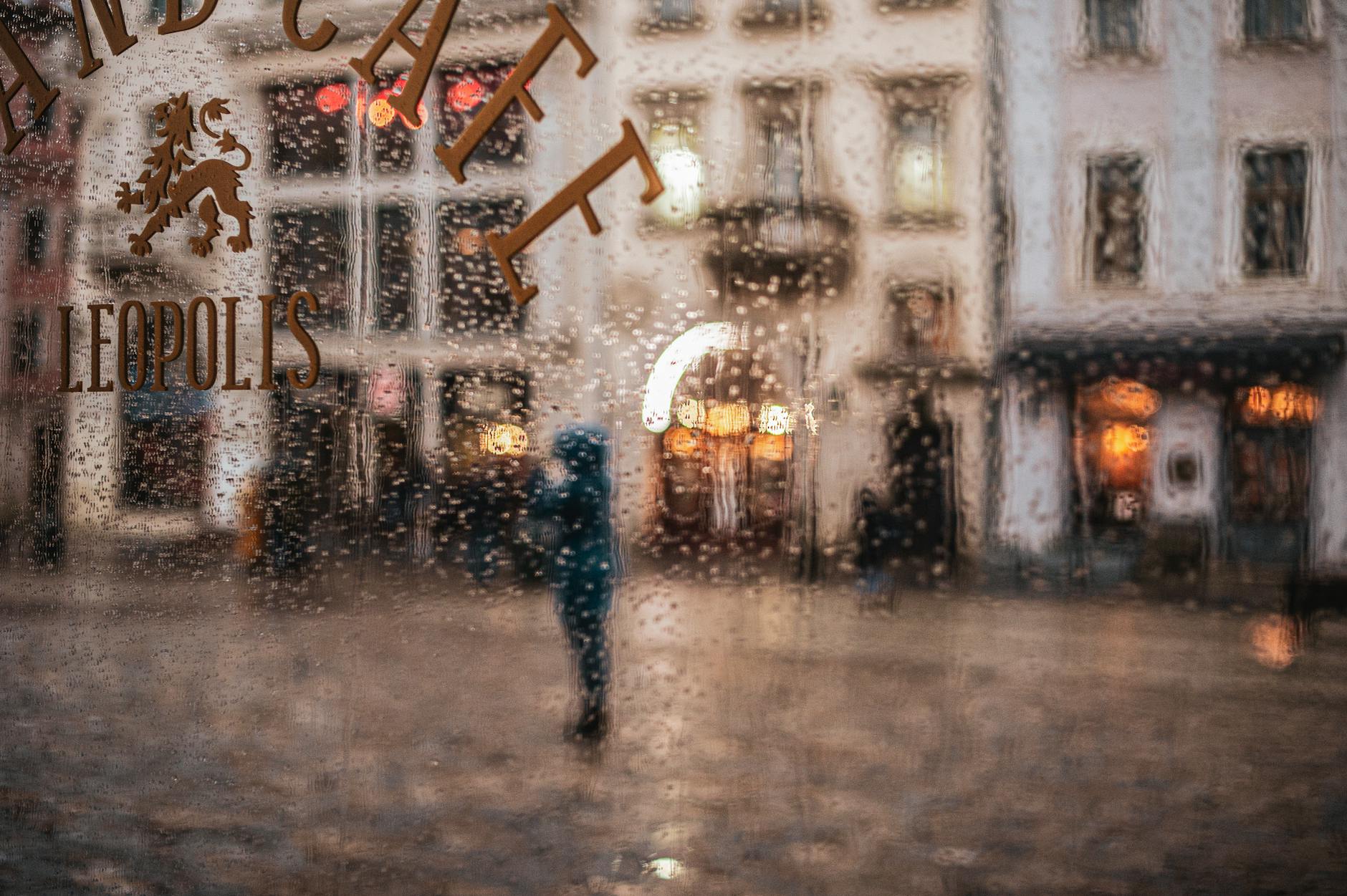
Vancouver winter is mostly rain, not snow. The reliable indoor circuit:
Morning: Vancouver Aquarium (Stanley Park; entirely indoor) OR Museum of Anthropology at UBC.
Mid-day: Granville Island Public Market (covered); Aquabus crossing 5 minutes; Granville Island Brewing tour.
Afternoon: Vancouver Lookout (indoor 360° city view); Vancouver Art Gallery (closed Tuesdays; free 4–8 p.m. on the first Friday of the month).
Evening: Cocktail bar at The Diamond or The Keefer; dinner at L’Abattoir or Bao Bei.
Detail in our rainy day Vancouver pillar.
Winter Day Trips from Vancouver
Whistler skiing. 90 minutes north on Sea-to-Sky. Mandatory winter tires October 1 to April 30. See our Vancouver and Whistler itinerary.
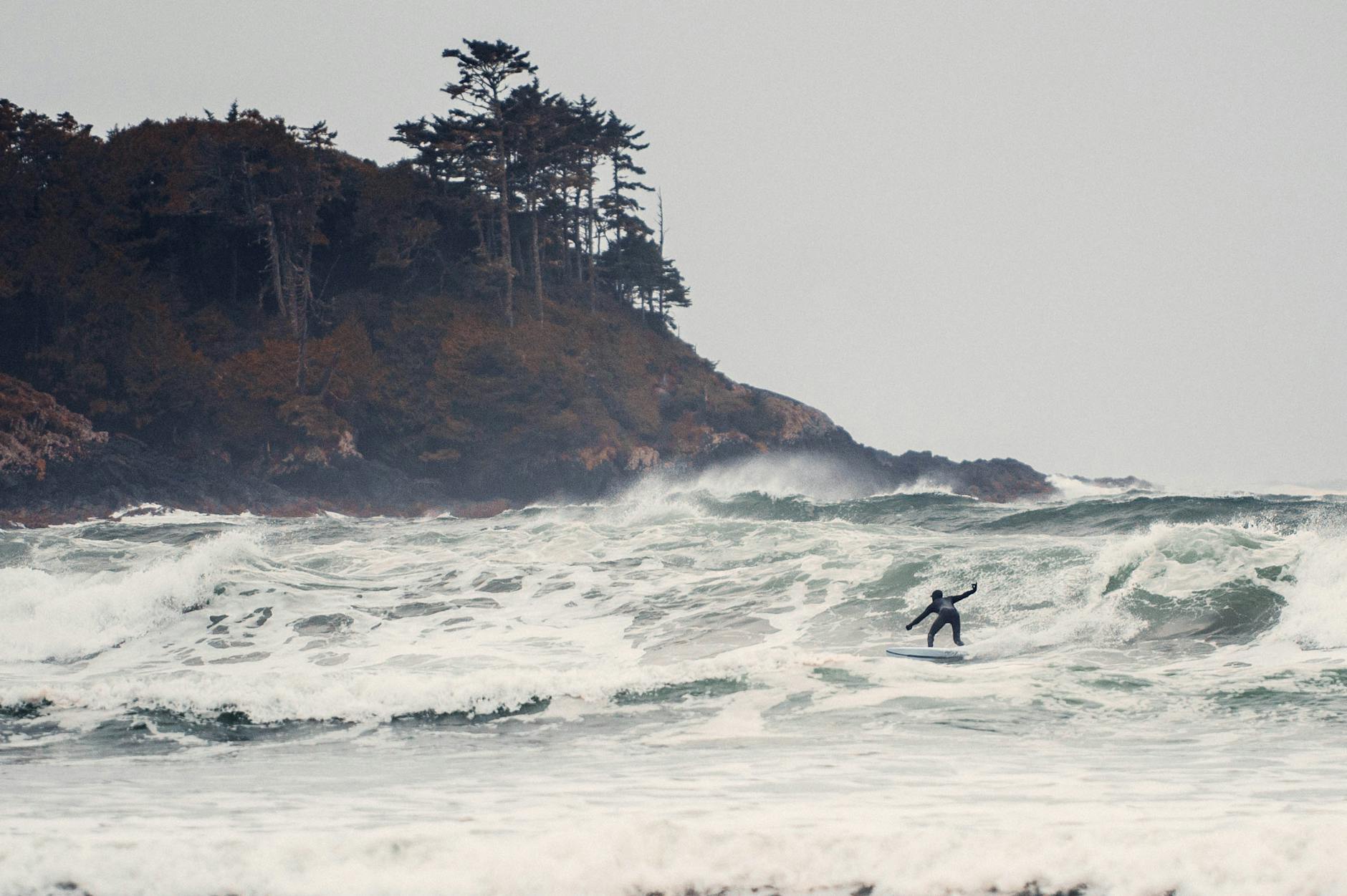
Tofino storm-watching. 6.5 hours via Vancouver Island; November-February is peak storm season. The Wickaninnish Inn was built specifically for storm-watching. See our day trips pillar.
Sea-to-Sky Gondola in Squamish. Open year-round; gorgeous in winter with snow on peaks. Weather-dependent — check before going.
Sun Peaks Resort (Kamloops, 4 hours). Quieter ski resort if you want to escape Whistler crowds.
Big White (Kelowna, 5 hours). BC’s other major ski resort.
What to Wear in Vancouver Winter
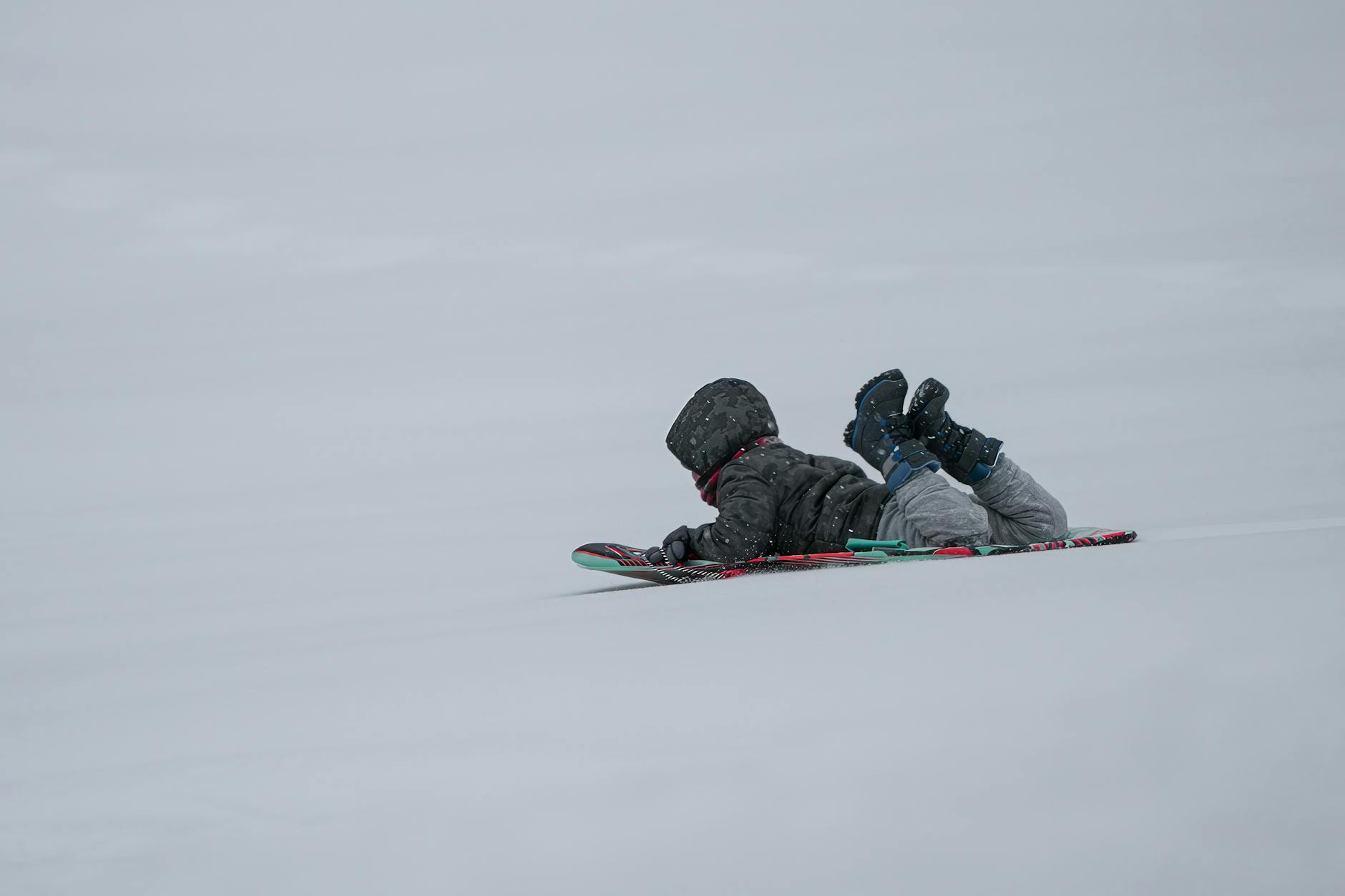
Vancouver winter is mild but rainy. The reliable kit:
- Waterproof shell jacket — non-negotiable. Vancouver gets 19 rain days in December.
- Mid-weight insulating layer — fleece or light down jacket. Heavy parkas are overkill except for ski days.
- Merino base layer — under sweater for warmth.
- Waterproof shoes or boots — sidewalks puddle constantly. Avoid suede.
- Compact umbrella — locals don’t carry; visitors find them useful.
- Beanie or wool hat — keeps rain off your face when wind blows.
- Gloves — light wool gloves for downtown; insulated for ski days.
- Wool socks — cold and damp feet are the most miserable Vancouver winter complaint.
- Scarf — for the harbor wind.
- Ski-specific gear if planning Whistler day trips.
What you don’t need: Heavy parkas (except Whistler ski days), snow pants (downtown rarely sees snow), bigger snow boots, ear muffs.

Pros & Cons of Vancouver in Winter
Pros:
- World-class skiing 20 minutes away
- Lowest hotel prices of the year (excluding Christmas/New Year week)
- Christmas Market, Festival of Lights, Canyon Lights overlap
- Lunar New Year parade and events (February)
- Dine Out Vancouver fixed-price menus (January-February)
- Tofino storm-watching season
- Indoor cocktail bars and museums at peak cosy
- Manageable crowds (lowest tourist month of the year is January)
Cons:
- Rainy — December has 19 rain days
- Short daylight — sunset 4:15 p.m. on December 21
- Outdoor activities limited (no beach, no patio dining, no Stanley Park Aquarium outdoor seal-lion shows in heavy rain)
- Many summer attractions close or reduce hours
- Stanley Park train Bright Nights closes after New Year
- Some Granville Island businesses on reduced winter schedules
- Beach season completely closed
Related Vancouver guides
Keep planning with these guides:
Vancouver in Winter FAQs
Is winter a good time to visit Vancouver?
Yes — for skiers planning Whistler day trips, festive-event lovers, foodies (Dine Out Vancouver), and budget travellers. December has the festive calendar; January-February have the cheapest hotels.
Does it snow in Vancouver in winter?
Rarely on the downtown peninsula — typically 1-2 snow days a year. The North Shore Mountains 20 minutes away have full alpine snowpack from late November through April, so snow is reliably available; you just have to drive 20 minutes to find it.
What is the weather like in Vancouver in winter?
December and January average 7 °C (45 °F) high; February 8 °C (46 °F). Rainy — 16-19 rain days per month. Daylight short — sunset 4:15 p.m. at the December 21 winter solstice. Mild compared to other Canadian cities.
Can I ski near Vancouver in winter?
Yes. Three local ski hills are within 30 minutes of downtown — Grouse Mountain, Cypress Mountain, Mount Seymour. Whistler-Blackcomb (the world-class destination) is 90 minutes north. Whistler ski season runs late November through early May.
What’s the best month for Vancouver in winter?
December for the festive calendar (Christmas Market, Festival of Lights, etc.). February for Lunar New Year and Hot Chocolate Festival. January for the lowest hotel prices and best ski conditions.
What festivals happen in Vancouver in winter?
Vancouver Christmas Market, VanDusen Festival of Lights, Capilano Canyon Lights, Stanley Park Bright Nights Train (December). Dine Out Vancouver, PuSh International Performing Arts Festival (January). Lunar New Year, Hot Chocolate Festival (February).
What should I wear in Vancouver in winter?
Waterproof shell jacket (non-negotiable), mid-weight fleece, merino base layer, waterproof shoes, beanie/wool hat, gloves, wool socks, scarf. Skip the heavy parka unless you’re doing Whistler ski days.
What’s there to do in Vancouver in winter besides skiing?
Christmas Markets and lights events, museums and galleries (MOA, Vancouver Art Gallery, Bill Reid), spas, cocktail bars, Granville Island Public Market, Indigenous-led tours, dim sum in Richmond. See our rainy day Vancouver pillar.
Winter Driving in BC: Snow Tires & Sea-to-Sky
British Columbia has stricter winter-tire rules than most North American jurisdictions. Visitors driving in winter — especially on the Sea-to-Sky Highway to Whistler — must understand the requirements.
Mandatory winter tire designations. BC requires winter tires (or chains for trucks) on most highways from October 1 through April 30. Specifically required on:
- Sea-to-Sky Highway (Highway 99) to Whistler: Mandatory year-round winter-tire designation October 1 – April 30. Police actively enforce; fines $109+ for non-compliance.
- Coquihalla Highway (Highway 5) to BC interior: Same dates and rules.
- Most BC mountain passes: Same dates and rules.
What qualifies as a winter tire. The 3-Peak Mountain Snowflake (3PMSF) symbol on the tire’s sidewall indicates a true winter tire that meets BC’s definition. M+S (mud-and-snow) tires are also acceptable on many designated highways but provide less traction in deep snow. All-season tires alone are NOT acceptable on the designated routes.
Rental car winter tires. Most major Vancouver rental companies (Enterprise, Hertz, National, Avis, Budget) include winter tires on rental vehicles October 1 – April 30 if you specifically request them. Some rental companies charge extra ($10–$25/day) for winter-tire rentals. Always confirm before booking.
Chains. Chains are an alternative to winter tires for some drivers. BC requires “approved chains” for commercial vehicles on the Sea-to-Sky Highway during winter. Personal vehicles typically use winter tires instead.
Sea-to-Sky Highway in winter. The 90-minute drive from Vancouver to Whistler is more challenging in winter:
- Black ice: Can form anywhere on the highway, especially after dark or in the early morning.
- Snow accumulation: Higher elevation sections (the Daisy Lake area) accumulate more snow than Vancouver.
- Avalanche zones: Designated avalanche-prone sections of the highway can close briefly during heavy snow events. Check DriveBC.ca for current conditions.
- Weather differences: Vancouver may be 7 °C and rainy while Whistler is -5 °C and snowing. Always check the destination weather, not just the origin.
What to do in heavy snow. Slow down, increase following distance, and avoid sudden braking. The Sea-to-Sky Highway is well-plowed but can have accumulating snow during heavy events. If conditions are very bad, pull off at the next rest area and wait for the storm to pass — plows operate continuously.
Renting in Vancouver, returning in Whistler. One-way rentals are possible but expensive ($75–$150 drop fee). Most weekend Whistler visitors rent in Vancouver, drive both ways, and return to Vancouver.
Public transit alternative. Pacific Coach Lines runs winter buses from Vancouver to Whistler ($60–$80 round-trip) — no driving needed. Whistler Skylynx is the alternative service. Both have winter bus packages with hotel-to-mountain transfers.
Vancouver Winter Layovers & Connecting Flights
Vancouver International Airport (YVR) is one of North America’s busiest gateways for Pacific Rim flights — many travelers connect through Vancouver during multi-leg journeys. Winter layovers offer the chance for a quick Vancouver visit without committing to a multi-day trip.
Layover by length:
- 2-3 hour layovers: Stay in the airport. YVR has excellent food courts, an art gallery (free public exhibits including the Bill Reid Spirit of Haida Gwaii at the international terminal), and the Salmon n’ Bannock Indigenous restaurant.
- 3-5 hour layovers: Take Canada Line SkyTrain to Bridgeport Station (Richmond) or Marine Drive (Vancouver edge) — about 12 minutes from YVR. Brief Richmond Asian food court visit possible. Or stay in YVR for shopping.
- 5-8 hour layovers: Canada Line to downtown Vancouver. Visit Vancouver Lookout (45 minutes), have a meal at Cardero’s or a Granville Street restaurant, and back to YVR with 2-hour buffer for security. Real Vancouver experience without staying overnight.
- 8+ hour layovers: Treat as a full Vancouver day. See our 1-day Vancouver itinerary; just allow 90+ minutes for international transit and YVR security.
YVR airport amenities.
- Public art: The Bill Reid “Spirit of Haida Gwaii” sculpture (the bronze on the back of old Canadian $20 bills) is in the international terminal. Free; one of Canada’s most important public art pieces.
- Salmon n’ Bannock On the Fly: Indigenous-owned restaurant in the international terminal. The only Indigenous-owned airport restaurant in any major North American airport.
- YVR Children’s Play Areas: Multiple child-friendly play areas at gates B, C, and D.
- Free Wi-Fi: 60 minutes free; longer free with a Yvr.ca account login.
- Showers: Pay shower facilities ($25/30 minutes) at the international terminal.
- Spa: Plaza Premium Lounge offers spa services starting at $50.
YVR layover hotels. If your layover requires an overnight stay, several airport hotels are within 5 minutes of YVR by free shuttle:
- Fairmont Vancouver Airport: Connected to the airport via covered walkway. From $300/night.
- Hilton Vancouver Airport: 5-minute shuttle. From $250/night.
- Pacific Gateway Hotel: 5-minute shuttle. From $200/night.
- Sandman Vancouver Airport: 10-minute shuttle. Budget option from $160/night.
YVR Plaza Premium Lounge. Open to all passengers regardless of airline class. Day passes $59 (up to 6 hours); includes shower facilities, hot food, drinks, Wi-Fi, and quiet workspace. Worth it for any layover 4+ hours.
Visa-free layovers. Most international travelers can clear Canadian customs and exit the secure area at YVR without a visa for layovers under 24 hours (Transit Without Visa program). Specific eligibility depends on your passport — check with your airline. US passport-holders move freely; Asian and European visitors typically qualify with eTAs.
YVR-to-downtown Canada Line transit. Direct service from YVR to Waterfront Station downtown. About $8.50 (includes the $5 airport surcharge for trips originating at YVR). 25 minutes. Trains every 6–8 minutes 5 a.m.–1 a.m.
Beating January Blues: Vancouver in the Darkest Month
January is Vancouver’s lowest-mood month — the festive holiday programming has wound down, daylight is at its shortest (sunset 4:30 p.m. early January), and rain is at near-peak (18 rain days). Locals develop strategies to maintain mood and energy through the winter; visitors can adopt them too.
Light therapy. Vancouver dermatologists and naturopaths recommend daily light-therapy lamps for visitors and residents who feel the seasonal-affective effects. The Lumie Brazil 250 ($230) and the Northern Light Technology Boxelite ($205) are widely available at Vancouver pharmacies and electronics stores. 30 minutes/morning during January typically alleviates symptoms.
Vitamin D supplementation. The Pacific Northwest’s combination of latitude (49 °N) and constant overcast means most residents and visitors are low in Vitamin D during winter. Local pharmacists recommend 1,000–4,000 IU daily during winter (consult a doctor for specific dosing). Available at all Vancouver pharmacies.
Indoor exercise routine. Vancouver Aquatic Centre’s heated indoor pools, the YMCA gym, and dozens of yoga studios provide year-round exercise space. Many visitors schedule one indoor exercise session per day during January to maintain routine.
The “warm beverage” tradition. Vancouver in January is the city’s hottest hot-chocolate culture. The Vancouver Hot Chocolate Festival (typically late January through mid-February) features 100+ cafés and chocolate shops creating themed hot chocolates. Each location showcases a unique creation; the festival’s “passport” lets you try multiple.
Cinema and museum days. The shortest, rainiest days are when Vancouver’s cinema and museum culture peaks. Weekend afternoons in January, the Vancouver Art Gallery, Museum of Anthropology, the Vancity Theatre, and the Cineplex VIP Cinema at Marine Gateway all have noticeably higher attendance than other months.
Whistler day trips. A Saturday day trip to Whistler in January often resets mood — the alpine sun (when present) and snow scenery contrast sharply with overcast Vancouver. Even non-skiers report Whistler’s PEAK 2 PEAK Gondola at the summit with snow as one of the most-loved January Vancouver-area experiences.
Tofino storm-watching. The dramatic Pacific storms in January are objectively beautiful — visitors who travel to Tofino during the storm-watching season (November–February) often report it as their most-memorable BC experience. The 6.5-hour drive from Vancouver is the trade-off; recommended for 3-night stays.
The “small-room cosy” tradition. Vancouver’s coffee shops and cocktail bars in January are at their most atmospheric — the warm, low-lit interiors against the dark, rainy outside is the city’s signature January mood. Specifically January-friendly venues: Nemesis Coffee (Gastown), the Sylvia Lounge (West End), and Botanist Bar (Fairmont Pacific Rim).
Annual mood-management calendar for January Vancouver.
- Week 1 (Jan 1–7): Recovering from the holidays; sleep more than usual; light exercise indoors.
- Week 2 (Jan 8–14): Begin daily light-therapy routine if needed; resume normal exercise.
- Week 3 (Jan 15–21): Vancouver Hot Chocolate Festival begins; plan one café-tasting outing per week.
- Week 4 (Jan 22–31): PuSh International Performing Arts Festival begins; cultural-programming uptick. Days are visibly lengthening (4 minutes per day).
Related reading: Best Time to Visit Vancouver · Vancouver in Spring · Vancouver in Summer · Vancouver in Fall · Winter in Vancouver Master Pillar · Rainy Day Vancouver · Events & Festivals